Bisleri Today, Maggi Yesterday, What’s Tomorrow: Is India’s Regulatory Machinery Protecting Consumers Or Creating Opportunities For Corporate Giants?

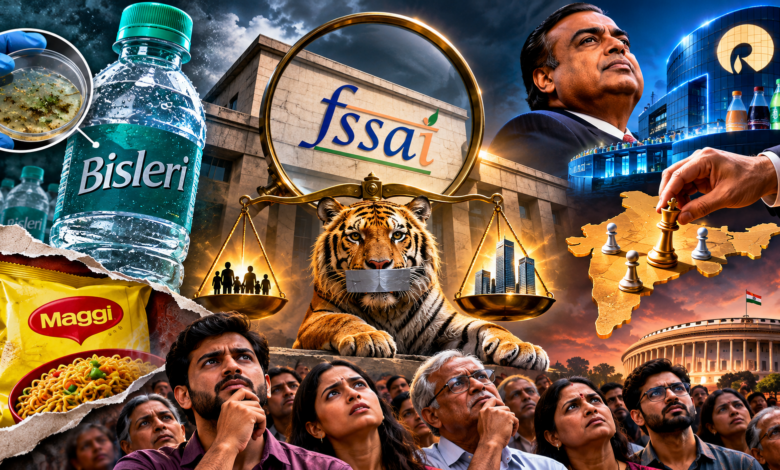
India’s packaged drinking water industry has been drawn into a controversy that raises questions extending far beyond the chemical composition of a bottle of Bisleri. On 22.11.26, the Food Safety and Standards Authority of India (FSSAI) announced that prosecution had been sanctioned against Bisleri International Private Limited following adverse laboratory findings concerning a water sample collected from its manufacturing facility in Goa. For a company whose name has become almost synonymous with packaged drinking water in India, the development represents a significant reputational challenge.
But what makes this controversy particularly intriguing is not merely the detection of potentially harmful chemical substances. It is the extraordinary chronology of the regulatory proceedings, the discrepancies between laboratory examinations, the prolonged interval between sampling and the announcement of prosecution, and the simultaneous expansion of Reliance Industries into India’s packaged drinking water market.
The controversy raises two fundamental questions. If the water manufactured by Bisleri was unsafe, why did India’s apex food safety regulator take more than a year from the collection of samples to publicly announce the sanctioning of prosecution? And why has this controversy emerged against the backdrop of one of India’s most financially powerful conglomerates attempting to establish itself in precisely the same market? The first question concerns public health, regulatory efficiency and institutional accountability. The second concerns competition, corporate concentration and the possibility of regulatory intervention creating commercially advantageous circumstances for a powerful new entrant.
India has witnessed comparable developments before. In 2015, the nationwide prohibition on Nestlé’s Maggi noodles dramatically altered the instant noodles market, while Patanjali Ayurved prepared to introduce its own competing product. In 2016 and 2017, the entry of Reliance Jio into telecommunications triggered an extraordinary confrontation between established telecom operators and the Telecom Regulatory Authority of India (TRAI), with competitors openly questioning whether the regulatory framework was being interpreted in a manner favourable to the new entrant. These episodes differed in their legal circumstances, but each exposed the enormous power that regulatory decisions possess in determining the commercial fortunes of businesses.
The Bisleri controversy must therefore be examined not merely as another food safety case but as a larger question about the functioning of India’s regulatory institutions, the protection of consumer interests and the preservation of competitive markets in an economy increasingly characterised by powerful corporate conglomerates.
The Bisleri Controversy: Six Samples, Conflicting Findings And Fourteen Months Of Regulatory Proceedings
According to Bisleri’s statement, FSSAI collected six samples from its Goa manufacturing facility on 30.09.25. Five samples complied with the applicable standards, while the sixth recorded bromate at 12 micrograms per litre against the permissible limit of 10 micrograms per litre. Bromate is a chemical compound that can form during drinking water treatment, particularly when ozone reacts with naturally occurring bromide.
Prolonged exposure to elevated concentrations carries potential carcinogenic risks, making its presence an important consideration in drinking water regulation. The detection prompted Bisleri to file an appeal on 22.11.25, following which the disputed sample was sent to a referral laboratory. Interestingly, the subsequent examination found bromate within permissible limits but identified another category of chemical contaminants, polynuclear aromatic hydrocarbons, commonly referred to as PAHs.
On 23.11.26, FSSAI clarified that the proceedings concerned Batch No. GO 270, manufactured at Bisleri’s facility in Verna Electronic City, Verna, Salcete, South Goa. The primary laboratory, Envirocare Labs, Mumbai, recorded bromate at 0.012 mg/l against the prescribed limit of 0.01 mg/l. The National Food Laboratory, Navi Mumbai, subsequently recorded PAHs at 0.000144 mg/l, while bromate was below the limit of quantification.
Under Rule 2.4.6 of the Food Safety and Standards Rules, the referral laboratory’s findings are treated as final when a food business operator challenges the primary laboratory’s findings. FSSAI also confirmed that it had prohibited the sale of the affected batch under Section 36(3) of the Food Safety and Standards Act and directed Bisleri to undertake a root cause analysis.
Bisleri, meanwhile, stated that it had independently arranged for further examination at an FSSAI-approved laboratory, which also found bromate within permissible limits. The company submitted those findings to FSSAI’s Western Regional Office through a formal communication dated 02.02.26. According to Bisleri, it received no subsequent communication and consequently understood that the matter had been closed. The company further stated that the disputed batch originated from one of the 143 manufacturing plants in its network and maintained that its products remained safe for consumption. Its independent bromate results, however, need to be distinguished from the referral laboratory’s separate PAH finding.
The procedural chronology is deeply concerning. Between the company’s submission on 02.02.26 and FSSAI’s public announcement on 22.11.26, more than nine months elapsed. What happened to the regulatory file during this period? When exactly did the referral laboratory submit its findings? When was Bisleri informed about the PAH concentration? When was the prohibition on the affected batch issued? How many bottles belonging to that batch had already reached distributors, retailers and consumers before corrective action was undertaken?
Reuters reported that a government source indicated that affected products had been recalled and subsequent examinations had revealed no quality issues. However, correspondence cited in the report also indicated that by February 2026, affected products were no longer available for recall. That makes the chronology of consumer protection measures particularly important.
What purpose does a recall serve if the products concerned have already been consumed or have disappeared from commercial circulation? How effectively can consumers protect themselves when the identity of an affected batch becomes widely known only after considerable time has elapsed? The very purpose of food safety supervision is to prevent exposure to unsafe products, not merely to document historical violations and initiate legal proceedings long after the immediate risk has passed.
Why Did FSSAI Take So Long? Is India’s Food Safety Regulator Becoming A Toothless Tiger?
The Food Safety and Standards Authority of India was established under the Food Safety and Standards Act, 2006, to consolidate food-related regulations and ensure that food manufactured, distributed, imported and sold within India meets prescribed safety standards. It was designed to function as the principal institution responsible for protecting consumers against unsafe food, misleading claims, adulteration and deficiencies in manufacturing practices. Yet, nearly two decades after the enactment of the legislation, recurring deficiencies in testing infrastructure, enforcement capacity, laboratory reporting and prosecution timelines raise serious questions about whether the institution is adequately fulfilling its mandate.
The problem is not that FSSAI lacks statutory powers. The legislation provides for inspections, sampling, seizure, licence suspension, product recalls, monetary penalties and criminal prosecution. Section 46 establishes timelines for food analysts to communicate their findings, ordinarily within fourteen days of receiving a sample, while Section 42 prescribes procedures for examining analytical reports and initiating prosecution. Section 77 ordinarily restricts the period within which a court can take cognizance of an offence to one year from its commission, although the Commissioner of Food Safety can authorise prosecution within an extended period of up to three years by recording reasons in writing.
The existence of these statutory provisions makes the Bisleri chronology particularly relevant. If the offence relates to a batch manufactured in September 2025, what is the legally applicable date of commission of the alleged offence? Was an extension under Section 77 necessary, and if so, what reasons were recorded for granting it? When did the designated officer recommend prosecution, and when did the competent authority approve that recommendation? The distinction between the date on which prosecution was sanctioned and the date on which that decision was publicly announced is equally important. These are questions concerning the regulator’s own compliance with the statutory framework it is entrusted with enforcing.
Food safety regulation cannot operate at the speed of conventional bureaucratic correspondence. A bottle of water, a packet of noodles, a carton of milk or a consignment of packaged food may reach consumers within days of manufacture. By the time a laboratory report is processed, forwarded, examined and converted into an administrative decision, the entire production batch may have been consumed. When regulatory proceedings extend over several months, the relationship between enforcement and actual consumer protection becomes increasingly tenuous.
If FSSAI possessed credible information regarding potentially unsafe drinking water, immediate risk assessment, traceability and corrective action should have been central to its response. Prosecution is important, but prosecution alone cannot undo consumption. A regulator that announces enforcement actions without explaining when the underlying public health risk was contained risks becoming an institution that records failures rather than one that effectively prevents them.
The CAG Had Already Exposed Serious Deficiencies In India’s Food Safety Machinery
The institutional problems underlying India’s food safety enforcement are neither speculative nor recent. The Comptroller and Auditor General of India, in its Report No. 37 of 2017 on the implementation of the Food Safety and Standards Act, 2006, identified substantial weaknesses in the country’s food regulation infrastructure. The audit highlighted shortages of qualified personnel, deficiencies in laboratory equipment, inadequate enforcement capacity and delayed adjudication. Fifteen of the sixteen laboratories examined in one audit test lacked qualified food analysts. The audit also identified failures in maintaining adequate information regarding laboratory personnel, considerable delays in adjudication and substantial difficulties in collecting penalties imposed on food businesses.
These findings strike at the foundation of the regulatory system. How can a food safety authority guarantee the reliability of enforcement when laboratories lack adequately qualified personnel? How can manufacturing establishments be effectively monitored when designated officers and food safety officers are insufficient in number? How can penalties deter future violations when adjudication is delayed and imposed amounts remain uncollected? The CAG’s findings exposed a system suffering from serious implementation deficiencies despite possessing a comprehensive legislative framework.
More disturbing is the evidence that such problems continued years after the 2017 audit. A subsequent CAG compliance audit concerning food safety administration in Tamil Nadu examined laboratory testing during the period 2020–23. Of the 62,170 samples examined and reported by six food analysis laboratories, reports concerning 55,091 samples, representing 88.61% of the total, were delayed beyond the prescribed period. Among them were 4,292 reports involving unsafe food. Some reports were delayed by six months to one year, others by one to two years, and one report concerning unsafe food was delayed by more than two years.
The audit explicitly connected delayed reporting with the possibility of contaminated products being consumed before regulatory intervention and the consequent impairment of recall procedures.
This was not merely an administrative inefficiency affecting paperwork. It was a public health failure arising from the inability of the enforcement system to communicate critical information within a meaningful timeframe. While state food safety authorities have direct enforcement responsibilities, FSSAI remains central to the national framework governing standards, laboratories and regulatory coordination.
Against this background, the Bisleri controversy appears to raise a familiar institutional problem. When nearly fourteen months separate sampling from a major public prosecution announcement, consumers are entitled to ask whether the regulatory machinery has become more concerned with demonstrating enforcement activity than ensuring that enforcement occurs when it is actually needed. The existence of a powerful regulatory institution means little if the machinery responsible for implementing its decisions moves more slowly than the products it regulates.
When Foreign Regulators Raise The Alarm Before India: The MDH And Everest Controversy
The 2024 controversy involving Indian spice manufacturers MDH and Everest exposed another dimension of India’s food safety challenges. In April 2024, Hong Kong’s Centre for Food Safety raised concerns regarding the presence of ethylene oxide in certain spice products marketed by the two companies. Singapore subsequently recalled Everest Fish Curry Masala following similar concerns. The developments attracted international attention and prompted Indian authorities to undertake additional sampling and scrutiny of spice manufacturing establishments.
The significance of this episode extends beyond the safety of the particular products concerned. Indian companies had developed substantial domestic and international markets, yet it was enforcement action overseas that brought the issue prominently into Indian public discourse. The controversy raised questions about the effectiveness of domestic surveillance, the monitoring of manufacturing practices and the coordination between Indian authorities responsible for domestic food safety and those overseeing exports.
Differences between national regulatory standards and testing methodologies can produce different compliance outcomes. Nevertheless, the fundamental question remains: does India’s food safety machinery possess sufficient independent surveillance capacity to identify emerging risks before overseas regulators intervene? Should Indian consumers have to wait for an international controversy before receiving detailed information concerning products manufactured within their own country?
The Bisleri episode raises a related concern about the speed of domestic intervention. In one instance, foreign regulators brought the issue into public attention; in another, the Indian regulator announced prosecution approximately fourteen months after collecting samples. Both controversies expose the importance of proactive enforcement rather than enforcement that becomes visible primarily after a public controversy.
India’s food safety framework requires more than periodic inspection drives, social media announcements and retrospective legal proceedings. Consumers need accessible laboratory findings, transparent recall records, batch-level traceability and documented timelines showing exactly when regulatory authorities became aware of a potential hazard and when they acted to contain it.
The Reliance Angle: Why India’s Packaged Drinking Water Market Has Suddenly Become So Important To The Ambani Empire
While Bisleri was navigating its regulatory dispute, Reliance Consumer Products Limited was pursuing an ambitious expansion into India’s fast-moving consumer goods and beverage markets. The Mukesh Ambani-led conglomerate, having established substantial operations across telecommunications, organised retail, digital services, petrochemicals and energy, has increasingly turned its attention towards everyday consumer products. Unlike businesses dependent on occasional purchases, the FMCG industry offers continuous consumer demand across income groups, geographical regions and retail formats. Packaged drinking water represents perhaps one of the most fundamental manifestations of that opportunity.
Reliance revived the Campa beverage brand after acquiring it in 2022, bringing an established Indian brand back into competition with multinational beverage manufacturers. Its wider beverage strategy subsequently incorporated carbonated drinks, fruit-based beverages, sports drinks and hydration products. The objective was not simply to sell another cola but to establish a diversified presence across the broader beverage consumption ecosystem.
On 19.06.25, The Economic Times reported that Reliance and its partners were planning investments of approximately Rs 6,000–8,000 crore over the following 12–15 months to expand beverage manufacturing capacity. The expansion contemplated nearly 10–12 additional greenfield and co-packing facilities. Reliance had already established manufacturing partnerships, including a facility in Guwahati with Jericho Foods and Beverages LLP, while another facility was being developed in Bihar. Its beverage portfolio included Campa, Sosyo, Spinner, Sun Crush, RasKik and Independence packaged water. The company was targeting national availability of its wider consumer portfolio by March 2027.
These developments demonstrate that Reliance’s ambitions extend well beyond carbonated soft drinks. It is attempting to establish a presence across multiple beverage categories through a combination of acquired brands, independently developed products, local manufacturing partnerships, affordable pricing and access to an extensive distribution ecosystem.
Packaged drinking water is particularly attractive because demand does not depend on persuading customers to adopt an entirely new consumption habit. Millions of consumers already purchase bottled water while travelling, attending events, visiting hospitals, eating at restaurants or working in offices. The commercial challenge is not creating the demand but capturing it from existing manufacturers.
That is where Bisleri becomes particularly significant.
Campa Sure: Reliance’s Strategy To Challenge A Rs 30,000 Crore Market
On 02.10.25, The Economic Times reported that Reliance Consumer Products was preparing to expand Campa Sure, its competitively priced packaged drinking water brand, through partnerships with regional manufacturers. The company intended to challenge a packaged water industry estimated at Rs 30,000 crore, where national brands such as Bisleri, Kinley and Aquafina competed alongside numerous regional manufacturers.
Reliance’s pricing strategy was aggressive. A one-litre Campa Sure bottle was priced at Rs 15 against the prevailing comparison price of Rs 20 for major national brands. Its two-litre bottle was priced at Rs 25 against competitors selling comparable packs for approximately Rs 30–35. The smaller 250 ml bottle was introduced at Rs 5. The proposed expansion was expected to begin in northern markets, while regional bottling partnerships would help extend manufacturing and distribution capabilities.
The significance of the pricing strategy lies in its potential to change consumer expectations. Once customers become accustomed to purchasing branded packaged drinking water at substantially lower prices, established manufacturers may face pressure to reduce prices, increase distributor incentives or undertake expensive promotional campaigns. Reliance possesses the financial resources to sustain such competition while simultaneously expanding its manufacturing footprint.
Its regional partnership strategy is equally significant. Water is a relatively heavy, low-value product, making transportation expenses an important component of the business. Establishing production close to consumption markets can significantly improve distribution economics. By partnering with existing regional manufacturers, Reliance can potentially expand more rapidly than a company attempting to construct every bottling facility independently.
Moreover, the wider Reliance ecosystem offers commercial advantages that standalone manufacturers may find difficult to replicate. Organised retail operations, relationships with neighbourhood retailers, digital commerce platforms and distribution networks provide multiple channels through which consumer products can reach customers.
But there is one obstacle that pricing, manufacturing capacity and distribution cannot immediately eliminate: consumer trust in Bisleri.
Why Weakening Consumer Confidence In Bisleri Could Transform The Competitive Landscape
Bisleri’s commercial strength is not derived merely from its ability to purify and bottle water. Its greatest asset is the confidence consumers associate with its brand. In numerous parts of India, consumers effectively use Bisleri as a generic reference to packaged drinking water. That degree of brand recognition represents decades of marketing, distribution and consumer experience.
Drinking water is fundamentally different from many discretionary consumer products. A customer purchasing a soft drink may be motivated by taste, advertising or novelty. A customer purchasing packaged drinking water is frequently motivated by safety. Consumers have no practical means of independently examining a sealed bottle for bromate, PAHs, microbial contamination or heavy metals. They purchase the product largely because they trust the manufacturer and the regulatory system responsible for supervising it.
Consequently, a competitor attempting to displace an established bottled water brand must overcome a psychological as well as a commercial barrier. Lower prices may attract customers, but concerns regarding the safety of unfamiliar products can preserve the market leader’s position.
A regulatory controversy changes that equation. Once the established brand becomes associated with contamination, its competitors can potentially benefit from consumers reconsidering their purchasing decisions. Restaurants may diversify suppliers, retailers may stock additional competing products, institutional purchasers may reconsider procurement arrangements, and distributors may allocate more shelf space to alternative brands.
The damage can extend beyond the particular manufacturing facility or production batch concerned. Most consumers encountering a headline about unsafe Bisleri water are unlikely to examine batch numbers, laboratory reports or the distinction between an original finding and a referral laboratory’s conclusion. The association between the brand and the word unsafe can itself become commercially consequential.
This is precisely why the timing, scope and presentation of FSSAI’s enforcement communication deserve scrutiny.
The Curious Timing: Is It Merely A Coincidence Or Does It Deserve A Deeper Examination?
Consider the sequence of developments. In June 2025, Reliance’s ambitious beverage manufacturing expansion became public. Effective from 22.09.25, GST on the relevant category of packaged drinking water was reduced from 18% to 5% under a broader tax rationalisation exercise. On 30.09.25, samples were collected from Bisleri’s Goa facility. On 02.10.25, Reliance’s plans to expand Campa Sure through regional manufacturing partnerships and aggressive pricing were prominently reported.
The proximity of these developments is commercially interesting. The tax environment became more favourable, a financially formidable conglomerate prepared to expand its presence, and the established market leader became the subject of food safety scrutiny.
However, a crucial chronological distinction must be maintained. The inspection occurred immediately before Reliance’s publicly reported expansion plans in October 2025, while the prosecution announcement occurred in November 2026. The two events were not simultaneous. By the time the prosecution became public, Reliance’s packaged water strategy had already been developing for more than a year.
Another relevant factor is that FSSAI had classified packaged drinking water and mineral water as high-risk food categories in November 2024, following amendments removing mandatory BIS certification requirements under its regulations. That classification preceded the Bisleri inspection and provides an independent regulatory reason for intensified sampling.
Nevertheless, the chronology raises legitimate questions about the broader enforcement environment. Was Bisleri’s Goa facility selected through a routine surveillance programme? Were comparable manufacturing facilities operated by other nationally recognised brands inspected during the same period? Did the regulator undertake equivalent sampling of regional manufacturers participating in Reliance’s bottling network? What proportion of the industry’s samples failed prescribed chemical and microbiological standards? Were prosecution proceedings initiated with equal consistency across manufacturers?
The GST reduction was available to incumbent manufacturers as well as new entrants. Similarly, the revised testing framework applies across the industry. The question is therefore not whether these policies were formally exclusive to Reliance, but whether their implementation produced unequal competitive consequences.
Could the entire sequence simply reflect a legitimate regulatory investigation occurring alongside an independent corporate expansion? Certainly. Could Reliance commercially benefit from a controversy it had no role in creating? Equally, that is entirely possible. Could selective application of regulatory scrutiny create advantages for one manufacturer over another? That possibility is precisely why comparative enforcement records matter.
There is currently no documented connection establishing that Reliance or Mukesh Ambani directed the Bisleri inspection, influenced its laboratory findings or arranged the prosecution’s timing. Establishing corporate interference would require evidence of communications, representations, conflicts of interest or departures from ordinary enforcement procedures. The existence of a commercial beneficiary must not be confused with evidence identifying the author of a regulatory decision.
Yet the larger concern cannot be dismissed merely because the regulatory decision and corporate expansion could have been independent. India’s own telecom history demonstrates how disputes regarding regulatory interpretation can become central to the transformation of an entire industry.
The Reliance Jio Precedent: When India’s Telecom Giants Openly Accused The Regulatory System Of Creating An Uneven Playing Field
September 2016: The Arrival Of Jio And The Beginning Of An Extraordinary Regulatory Battle
When Reliance Jio commenced commercial telecommunications services on 05.09.16, India’s telecom industry was transformed almost overnight. The company introduced free introductory voice, data and messaging services, challenging established operators that had spent years developing subscriber networks, acquiring spectrum and investing in infrastructure.
For Indian consumers, the arrival of Jio represented an extraordinary reduction in the cost of digital connectivity. Mobile internet became substantially more affordable, and millions of consumers gained greater access to digital services. For incumbent telecommunications companies, however, the development presented a challenge of unprecedented proportions.
Bharti Airtel, Vodafone India and Idea Cellular were no longer competing solely against another operator offering lower tariffs. They were confronting a conglomerate capable of financing a prolonged promotional strategy while building an extensive fourth-generation telecommunications network.
What followed was an intense regulatory and legal confrontation involving promotional tariffs, network interconnection, competition law, discriminatory pricing, termination charges and the interpretation of existing telecom regulations. Established operators began questioning whether the regulatory framework being applied to Jio’s market entry was consistent with the framework under which they had historically operated.
Unlike the contemporary Bisleri controversy, where a connection between regulatory proceedings and Reliance’s commercial strategy remains a question arising from timing, the Jio episode involved documented complaints, legal proceedings and direct accusations of regulatory bias by competing companies.
The 90-Day Promotional Offer Controversy: Was TRAI Interpreting Its Own Rules Too Generously?
Jio initially introduced its Welcome Offer, providing subscribers with free telecommunications services from September 2016 through the end of December 2016. It subsequently introduced the Happy New Year Offer, extending the availability of free services into 2017.
Established operators argued that the consecutive promotional schemes effectively circumvented the regulatory restrictions concerning the duration of promotional offers. Their central objection was that a company could not repeatedly introduce differently named promotional schemes while effectively continuing a commercially disruptive period of free services.
TRAI, however, concluded in January 2017 that Jio’s Welcome Offer and Happy New Year Offer were distinct schemes and that the successive offers did not violate the applicable regulatory framework. The decision allowed Jio to continue offering free services beyond the period that competing operators considered permissible.
Bharti Airtel, Vodafone and Idea challenged the regulator’s conclusions before the Telecom Disputes Settlement and Appellate Tribunal. The dispute raised a central question about the distinction between the technical form of a promotional offer and its practical commercial effect. If consumers continued receiving substantially free telecommunications services, did the introduction of a differently structured scheme fundamentally change the competitive consequences?
The tribunal’s eventual decision, delivered on 01.02.18, substantially upheld TRAI’s interpretation concerning the successive promotional offers. It rejected the contention that the schemes violated the applicable requirements concerning predatory or discriminatory pricing. Nevertheless, it identified a separate regulatory violation: Jio had failed to comply with the seven-day tariff reporting requirement in relation to the Welcome Offer.
The tribunal directed TRAI to initiate appropriate action regarding that reporting failure. It also established that telecommunications operators could not offer all services free of charge without obtaining the regulator’s prior written approval. The applicable reporting provision contemplated penalties of Rs 5,000 for each day of delay, subject to a maximum of Rs 2 lakh.
This outcome is noteworthy because it establishes an actual procedural violation, while also showing that the incumbent operators did not succeed in their broader challenge to Jio’s promotional pricing.
The commercial contrast remains striking. In an industry where promotional strategies could influence millions of subscribers and determine the long-term viability of competing operators, the statutory ceiling on the penalty for the reporting violation was Rs 2 lakh. Was the existing regulatory penalty structure commensurate with the economic scale of the businesses operating within the market? Could such a penalty meaningfully deter a corporation capable of financing investments worth thousands of crores?
The issue extends beyond Jio. Regulatory penalties that appear substantial for smaller businesses may become practically insignificant when applied to corporations operating at an entirely different financial scale.
The Interconnection Dispute: Why Were Established Telecom Operators Facing Penalties Worth Rs 3,050 Crore?
The promotional pricing controversy was only one component of the confrontation between Reliance Jio and India’s established telecommunications companies. Another major dispute concerned points of interconnection, the technical infrastructure through which calls originating on one telecommunications network are connected to subscribers using another network.
Shortly after commencing operations, Reliance Jio complained that established operators were failing to provide adequate interconnection capacity, resulting in considerable call failures for Jio subscribers. From Jio’s perspective, inadequate interconnection represented a serious obstacle to its ability to compete. A telecommunications network cannot provide a satisfactory service if subscribers are unable to communicate reliably with customers using competing networks.
The incumbent operators presented a different argument. The Cellular Operators Association of India maintained that Jio’s free calling strategy was generating unusually high and asymmetric traffic volumes, placing additional financial and operational pressure on existing telecommunications networks. The association argued that the established companies could not be expected to accommodate abnormal traffic patterns without considering the implications for network capacity and the prevailing interconnection charging framework.
The controversy subsequently escalated into regulatory proceedings. TRAI issued show-cause notices on 27.09.16 and recommended penalties amounting to approximately Rs 3,050 crore against Bharti Airtel, Vodafone and Idea Cellular. Vodafone challenged the regulatory proceedings and questioned the fairness of the process, with allegations of bias against incumbent operators and violations of natural justice attracting considerable media attention.
There was a genuine competition issue on both sides. Established operators could potentially obstruct a new entrant by refusing adequate interconnection, thereby protecting their market position. Equally, an aggressively financed entrant offering free services could substantially increase the operational burden on competitors while benefiting from regulatory intervention compelling them to accommodate the additional traffic.
In May 2017, the Competition Commission of India ordered an investigation into alleged cartelisation by Airtel, Vodafone, Idea and the Cellular Operators Association of India following Jio’s complaints. The established operators subsequently challenged the competition proceedings. The jurisdictional dispute eventually reached the Supreme Court, which held that technical and regulatory issues falling within TRAI’s domain needed to be addressed before the competition authority proceeded with its assessment.
The confrontation demonstrates how the same regulatory framework can simultaneously be invoked by a new entrant seeking protection against incumbent market power and by established companies questioning whether the entrant is receiving disproportionately favourable treatment.
The Interconnection Usage Charge Reduction: A Regulatory Decision With Enormous Commercial Consequences
Perhaps the most financially consequential regulatory development occurred in September 2017, when TRAI announced a substantial reduction in interconnection usage charges.
Before the revision, telecommunications operators paid 14 paise per minute for terminating applicable calls on competing networks. Reliance Jio, whose promotional strategy generated enormous volumes of outgoing voice traffic, advocated eliminating such charges through a bill-and-keep arrangement. Established operators, including Airtel, Vodafone and Idea, argued that the charges should instead be increased to reflect the costs associated with maintaining telecommunications infrastructure and terminating calls originating elsewhere.
On 19.09.17, TRAI announced that the applicable termination charge would be reduced from 14 paise to 6 paise per minute, effective from 01.10.17. The reduction amounted to approximately 57%. The regulator also announced a transition towards the eventual elimination of such charges.
Business Standard reported on 20.09.17 that the decision could potentially save Reliance Jio approximately Rs 3,800 crore annually, according to contemporary estimates, while placing additional pressure on the revenues and profitability of established telecommunications operators.
The decision applied uniformly across telecommunications companies. Its economic consequences, however, were far from uniform. A company generating substantially more outgoing traffic than incoming traffic stood to benefit from lower termination charges, while operators receiving significant interconnection revenues could experience financial losses.
This distinction is fundamental to understanding the relationship between regulation and competition. A regulation need not explicitly name a preferred beneficiary to produce substantially different commercial consequences for competing businesses. A change in a uniformly applicable rule can favour one business model over another, depending upon the existing structure of the market.
TRAI had legitimate technological and economic considerations in reviewing termination charges, including changes in network technology and the cost of carrying voice traffic. Nevertheless, the timing and distributional consequences of its decision generated substantial controversy.
Would a comparable regulatory change have occurred at the same pace had the new entrant possessed significantly less financial and commercial influence? Were the costs imposed upon established operators adequately considered? How did the regulator balance its objective of making telecommunications affordable against the long-term need to preserve sustainable competition?
These questions are not answered merely by demonstrating that consumers received cheaper telecommunications services. Consumer welfare encompasses affordability, but it also encompasses long-term choice, service quality, innovation and protection against excessive market concentration.
When Jio Complained, TRAI Restricted The Ability Of Established Operators To Retain Customers
Another significant development occurred in May 2017. Following representations from Reliance Jio and complaints from consumers, TRAI directed telecommunications companies to ensure that tariff offerings were non-discriminatory among subscribers belonging to the same category and that applicable tariffs were properly reported.
The decision restricted the ability of established operators to offer selectively customised retention plans to subscribers considering switching to competing networks.
Such customer retention arrangements represented an important commercial response to Jio’s inexpensive services. Operators could attempt to retain valuable customers by offering individually negotiated or specially targeted plans without necessarily reducing tariffs across their entire subscriber base.
Reliance Jio raised objections concerning such differentiated offerings, and the subsequent regulatory direction limited the practice. TRAI’s position was based on tariff transparency and non-discrimination, principles that are fundamental to consumer protection. However, the immediate competitive implications were particularly significant for incumbent companies attempting to resist subscriber migration.
The cumulative sequence was commercially consequential. Jio’s promotional offers received regulatory acceptance, established operators faced substantial proposed penalties over interconnection deficiencies, termination charges were sharply reduced, and customer retention strategies came under scrutiny.
Nevertheless, the regulatory record was not uniformly favourable to Jio. In April 2017, TRAI advised the company to withdraw its Summer Surprise promotional scheme. The competition authority also rejected complaints concerning Jio’s alleged predatory pricing on the basis that the company was not dominant in the relevant market at that stage. The eventual tribunal decision concerning its initial promotional schemes identified a reporting violation but rejected the broader predatory pricing challenge.
The historical record consequently reveals an intensely contested regulatory environment rather than a straightforward finding of institutional collusion. What it does establish is that regulatory interpretation became a defining component of one of India’s largest corporate market-entry strategies.
From Fierce Telecom Competition To An Increasingly Concentrated Industry
The consequences of the telecommunications price war extended far beyond the original regulatory disputes. Vodafone India and Idea Cellular merged in 2018. Aircel entered insolvency proceedings. Reliance Communications discontinued its consumer wireless operations, while several other operators exited, consolidated or transferred assets.
The industry’s transformation cannot be attributed exclusively to Jio. High spectrum acquisition costs, accumulated debt, technological transitions, historical licensing disputes and the subsequent adjusted gross revenue controversy contributed to the financial difficulties experienced by telecommunications companies.
Nevertheless, Jio’s entry accelerated a period of extraordinary competitive disruption. A sector that once supported numerous private telecommunications operators became increasingly concentrated around a handful of major companies.
For consumers, the transformation produced significant immediate benefits through inexpensive mobile data and widespread digital connectivity. But it also highlighted a fundamental economic paradox: aggressive competition in the short term can coexist with diminished competition in the long term.
If businesses are eliminated faster than new competitors can emerge, affordability eventually becomes dependent upon the commercial decisions of a limited number of surviving corporations. Competition that initially benefits consumers may gradually yield an oligopolistic structure in which the ability to switch between genuinely independent providers becomes increasingly restricted.
That is the broader relevance of the Jio experience to Reliance’s expansion into consumer goods. The important question is not whether Reliance should be prevented from entering new industries. On the contrary, competitive market entry can challenge established businesses and improve affordability. The question is whether the regulatory environment ensures that commercial success depends on efficiency, innovation, product quality and consumer preference rather than unequal access to institutional advantages.
Maggi In 2015, Bisleri In 2026: Has India Witnessed This Pattern Before?
The Maggi Ban That Shook India’s FMCG Industry
The controversy surrounding Nestlé’s Maggi noodles in 2015 remains one of the most consequential food safety disputes in Indian corporate history. Before the controversy, Maggi enjoyed overwhelming consumer recognition and a commanding position in the country’s instant noodles segment. Its market dominance had been built over decades, supported by extensive distribution, affordable pricing and a brand identity deeply embedded in Indian households.
The controversy originated in Uttar Pradesh, where food safety authorities examined a sample of Maggi noodles and raised concerns regarding its declaration concerning monosodium glutamate. Nestlé contested the findings, maintaining that it did not deliberately add MSG and that glutamate could naturally occur in ingredients used in the product.
The disputed sample was subsequently examined by a referral laboratory in Kolkata, which reported lead concentrations above the prescribed limit. The controversy escalated dramatically during the first half of 2015, eventually prompting nationwide regulatory intervention.
On 25.05.15, FSSAI advised states and Union Territories to collect and examine Maggi samples. Following reports of non-compliance, FSSAI issued an order on 05.06.15 directing Nestlé India to recall the affected product range.
The enforcement decision involved concerns regarding lead concentrations, MSG-related labelling and the product approval status of a Maggi oats noodles variant. Nestlé challenged the regulatory action before the Bombay High Court, while the withdrawal of its products fundamentally altered the competitive environment of India’s instant noodles industry.
There was also a familiar problem of delayed laboratory examination. According to Nestlé’s published chronology, the referral laboratory received the second sample in January 2015 and examined it between January and April, after the product’s shelf life had expired. The company argued that its own extensive testing had produced compliant lead results.
More than a decade later, the Bisleri episode again presents a situation involving an initial adverse laboratory finding, subsequent testing producing materially different chemical results, a manufacturer contesting the regulatory conclusions and a dispute concerning the timing and handling of enforcement proceedings.
How much has India’s food safety infrastructure actually improved between these two controversies? Why do laboratory reliability, sampling procedures and regulatory delays continue to feature prominently whenever major food safety cases emerge?
When The Bombay High Court Questioned FSSAI’s Regulatory Procedures
On 13.08.15, the Bombay High Court set aside the prohibition orders against Maggi, criticising the manner in which the regulatory authorities had exercised their powers. The judgment examined the principles of natural justice, the procedure followed in arriving at the decision and the reliability and statutory status of the laboratory examinations.
The court directed further testing through accredited laboratories before Nestlé could resume manufacturing and commercial distribution.
A parliamentary response dated 22.12.15 subsequently confirmed that ninety samples had been examined across three laboratories pursuant to the Bombay High Court’s directions. All ninety samples were found compliant with the applicable standards.
The government also informed Parliament that FSSAI had challenged the Bombay High Court’s judgment before the Supreme Court.
Maggi officially returned to the Indian market on 09.11.15, approximately five months after the nationwide prohibition.
Those five months, however, had already transformed the commercial landscape. Manufacturing operations had been interrupted, distribution networks disrupted, products withdrawn, consumer confidence shaken and competitors provided with an extraordinary opportunity to establish stronger positions within the category.
The Maggi case demonstrated the potentially irreversible economic consequences of regulatory decisions. A company may eventually secure judicial relief, but a favourable judgment cannot automatically restore lost sales, recover abandoned distribution opportunities or recreate the precise market conditions that existed before enforcement action.
Had Nestlé been a relatively small business without the financial resources necessary to sustain a prolonged legal battle, could it have survived a comparable regulatory intervention?
This is a particularly important consideration for smaller Indian manufacturers. A regulatory framework characterised by inconsistent procedures and lengthy disputes can become an indirect mechanism through which financially powerful corporations survive while smaller competitors disappear.
Enter Patanjali: The Timing Of Its Noodles Launch
On 16.11.15, exactly seven days after Maggi returned to the Indian market, Patanjali Ayurved launched its own instant noodles product.
The timing was commercially remarkable. India’s largest instant noodles brand had spent approximately five months outside ordinary commercial circulation, consumers had been repeatedly exposed to concerns regarding its safety, and the entire category was undergoing a reassessment.
Patanjali entered this environment with a product positioned around whole wheat ingredients, affordability and the broader health-oriented identity associated with its brand.
The company introduced its 70 gram atta noodles packet at Rs 15. Baba Ramdev announced ambitious expansion plans, including additional manufacturing facilities and a target of reaching one million retail outlets by the end of December 2015.
The commercial circumstances were particularly advantageous for an emerging domestic FMCG company. An established multinational brand had experienced one of the most severe reputational crises in its Indian operations, while Patanjali was rapidly expanding across consumer categories.
A company entering the instant noodles market under normal conditions would have faced the considerable challenge of persuading consumers to abandon a product they had purchased for years. The Maggi controversy had already disrupted that purchasing behaviour.
The parallel with the Bisleri controversy becomes apparent. In both instances, a market leader possessing substantial consumer trust encountered food safety intervention during a period in which a financially significant domestic company was seeking to establish itself in the same category.
Patanjali’s launch followed Maggi’s return rather than preceding the original ban, and Campa Sure’s expansion was announced around the time of Bisleri’s sampling rather than the prosecution announcement. Nevertheless, in both cases, disruption to an established brand’s reputation created potentially advantageous competitive circumstances for another manufacturer.
Neither chronology, on its own, establishes that the competing corporation arranged the regulatory proceedings. But both demonstrate how regulatory controversies can reduce barriers to market entry that ordinarily require years of commercial effort to overcome.
The Regulatory Twist: Patanjali’s Own Noodles Faced Product Approval Questions
What makes the Maggi–Patanjali comparison particularly interesting is that Patanjali’s noodles themselves became the subject of regulatory scrutiny almost immediately after their launch.
On 18.11.15, The Indian Express reported that FSSAI officials had raised concerns regarding the product approvals applicable to Patanjali Atta Noodles, despite the product displaying an FSSAI licence number.
A subsequent parliamentary response confirmed that FSSAI issued show-cause notices on 19.11.15 to Patanjali Ayurved Limited and AkashYog Health Products Private Limited concerning the manufacture, relabelling and marketing of Patanjali Atta Noodles without the applicable approvals.
Patanjali disputed the regulatory position, maintaining that the licensing framework applicable to its product permitted its manufacture. The wider product approval regime was itself undergoing legal and regulatory changes during that period.
Nevertheless, the development raised an uncomfortable institutional question. How could a competing noodles brand reach the market with disputed approval documentation immediately after the country’s largest noodles manufacturer had undergone a prolonged regulatory battle in which product approval constituted one of the enforcement grounds?
Were licensing requirements being communicated consistently across manufacturers? Was the regulatory framework sufficiently clear? Were comparable violations attracting comparable enforcement responses?
The relevance to Bisleri is direct. If FSSAI is prosecuting an established bottled water manufacturer following an adverse laboratory finding, the public should also have access to information concerning the inspection and testing of manufacturing facilities associated with newly emerging competitors.
Whether the company concerned is Bisleri, Campa Sure, Kinley, Aquafina or a regional manufacturer, the applicable safety standards cannot vary according to the commercial status of the brand.
Who Actually Benefited From The Maggi Ban? The Market Share Figures Tell Their Own Story
While Patanjali attracted attention because of the timing of its market entry, one of the largest measurable commercial beneficiaries of Maggi’s temporary absence was ITC’s Sunfeast YiPPee!
According to Nielsen data reported by The Economic Times on 22.02.16, Maggi’s market share declined from 77% in January 2015 to 42% in January 2016. During the latter period, ITC’s YiPPee! captured approximately 33% of the instant noodles market. Other manufacturers, including Nissin, Wai Wai and Ching’s Secret, also strengthened their competitive presence.
Maggi had consequently experienced a decline of 35 percentage points in market share over the corresponding twelve-month period.
These figures demonstrate how rapidly regulatory intervention can destroy an established competitive advantage. Decades of investment in brand development, advertising, manufacturing and distribution can be disrupted within months. Competing businesses can access consumers who would otherwise have remained loyal to the incumbent.
For ITC, the commercial opportunity emerged because it already possessed the necessary manufacturing and distribution capabilities to absorb displaced consumer demand. Its ability to benefit did not require involvement in the original food safety investigation.
The same economic mechanism could operate in the packaged drinking water market. If consumers become apprehensive about Bisleri, competing brands possessing adequate inventory, attractive pricing and extensive distribution networks could experience increased sales.
Reliance’s financial resources and distribution infrastructure make it particularly well positioned to compete for such demand.
However, the distinction between the two enforcement cases remains substantial. Maggi experienced a nationwide withdrawal, whereas the Bisleri proceedings concern an identified production batch from a particular manufacturing facility. The potential commercial consequences of the Bisleri controversy will therefore depend substantially upon consumer perception, subsequent laboratory findings, regulatory communication and the company’s response.
Beyond Bisleri, Jio And Maggi: When Regulatory Intervention Redistributes Entire Markets
The Paytm Payments Bank Episode: How Regulatory Action Strengthened An Already Concentrated Digital Payments Market
On 31.01.24, the Reserve Bank of India announced extensive business restrictions against Paytm Payments Bank following supervisory concerns. The intervention restricted several activities associated with deposits, prepaid instruments, wallets and other banking services, with the relevant deadline subsequently extended to 15.03.24.
Although the regulatory action concerned Paytm Payments Bank rather than a blanket prohibition on the Paytm application, the wider commercial consequences were substantial. Consumers and merchants experienced uncertainty regarding payment arrangements, while the company was compelled to restructure important banking partnerships.
According to NPCI data reported by Bloomberg in June 2024, Paytm’s share of UPI transactions declined from 13% in January 2024 to 8.1% in May 2024. During May, PhonePe accounted for approximately 49% of UPI transactions, while Google Pay held approximately 37%. Together, these two platforms controlled approximately 86% of the transaction volume.
The episode highlights a fundamental challenge facing regulators operating in highly concentrated industries. Necessary enforcement against one business can unintentionally strengthen the market position of its largest competitors.
The RBI’s statutory responsibility was to address regulatory deficiencies within the banking entity concerned. However, the consequences extended beyond that institution, affecting competition across the broader digital payments ecosystem.
Consumers who previously relied on Paytm could migrate to PhonePe or Google Pay, further strengthening companies that already possessed considerable market shares.
The important question is not whether RBI should have ignored compliance deficiencies to preserve Paytm’s market position. Financial regulation must be enforced. Rather, the question is whether India’s regulatory and competition authorities possess adequate mechanisms to evaluate the broader market consequences of significant enforcement decisions.
The same concern applies to bottled water. Protecting consumers from unsafe products must remain the overriding priority. But regulators must also ensure that enforcement is comprehensive, impartial and consistently applied across manufacturers, particularly when enforcement against one business could significantly benefit its competitors.
The TikTok Ban: When The Removal Of A Dominant Platform Created An Extraordinary Market Opportunity
On 29.06.20, the Indian government prohibited 59 mobile applications associated with Chinese companies, including TikTok, citing concerns regarding sovereignty, security and data protection.
TikTok had established an enormous presence in India, with approximately 200 million users frequently cited in contemporary reporting. Its popularity extended beyond metropolitan centres, allowing creators from smaller towns and rural regions to reach nationwide audiences.
The government’s decision effectively removed an established market leader from India’s short-video ecosystem. However, consumer demand for short-form video entertainment did not disappear with TikTok.
The subsequent period witnessed the rapid emergence and expansion of competing services. Instagram Reels became available in India in July 2020, while YouTube Shorts initially launched its early beta in India in September 2020. Domestic platforms such as Moj and Josh also attempted to capture displaced creators and audiences.
The economic consequences were striking. A market that would ordinarily have required competing businesses to gradually persuade millions of users to abandon an established platform suddenly became accessible to alternatives.
The restriction was based on national security considerations rather than conventional competition policy. Nevertheless, its commercial consequences demonstrate the extraordinary capacity of administrative decisions to redistribute market opportunities.
The example also exposes the distinction between the immediate opening of a market and its long-term competitive structure. Removing one dominant platform may initially encourage numerous alternatives, but businesses with substantial resources, existing user ecosystems and established advertising infrastructure can ultimately possess considerable advantages over independent competitors.
A similar distinction applies to consumer goods. If an established brand loses customer confidence, the resulting opportunity may not benefit every competitor equally. Corporations capable of financing aggressive promotional campaigns, manufacturing expansion and extensive distribution may be disproportionately positioned to absorb the displaced demand.
The ViroPharma Case: When A Competition Regulator Alleged That Regulatory Processes Were Being Used As Commercial Weapons
The issue of businesses attempting to use regulatory procedures for competitive advantage is not merely an abstract economic theory. International competition authorities have examined precisely such conduct.
In February 2017, the United States Federal Trade Commission initiated legal proceedings against Shire ViroPharma concerning its efforts to protect the market position of Vancocin HCl Capsules, a pharmaceutical product.
According to the FTC’s complaint, ViroPharma submitted 43 filings to the US Food and Drug Administration and initiated three lawsuits against the agency between 2006 and 2012. The regulator alleged that the company used repeated and unsupported petitions to delay approval of competing generic medicines and preserve its monopoly position.
The alleged strategy exploited the fact that unresolved regulatory petitions could delay the approval of competing products. The commercial objective, according to the FTC, was to preserve the company’s existing market advantage by obstructing the entry of lower-priced alternatives.
The FTC sought judicial restrictions against such conduct. Subsequent litigation involved questions concerning the commission’s statutory authority to seek injunctive relief. The allegations should consequently be understood within their legal and procedural context.
The case is conceptually important because it demonstrates how regulatory mechanisms designed to protect public health can themselves become instruments of commercial strategy.
A pharmaceutical company may genuinely believe that competing products raise safety concerns and legitimately request additional regulatory examination. However, if regulatory petitions are deliberately used to delay competition without a substantive basis, the system intended to protect consumers can instead become a mechanism for protecting corporate profitability.
The parallel with India’s consumer goods controversies lies in the importance of examining how regulatory proceedings originate. Was an inspection conducted through routine surveillance? Was it triggered by credible consumer complaints? Did another manufacturer submit representations? Were those representations independently assessed? Were similarly situated competitors subjected to equivalent scrutiny?
These questions distinguish legitimate regulatory intervention from potential exploitation of regulatory processes for commercial purposes.
Is India Moving Towards An Economy Where Corporate Power And Regulatory Decisions Are Becoming Dangerously Interconnected?
India’s economic liberalisation was premised upon competition, entrepreneurship, consumer choice and the efficient allocation of resources. Private businesses were expected to compete through superior products, technological innovation, operational efficiency and competitive pricing.
Yet the increasing presence of diversified conglomerates across telecommunications, retail, digital infrastructure, energy, media, financial services and consumer goods raises important questions regarding the evolution of that competitive framework.
A diversified corporation possesses commercial capabilities that businesses operating in a single industry may never be able to replicate. It can draw upon established infrastructure, distribution relationships, brand recognition, consumer networks and financial resources developed across multiple industries.
These advantages can produce genuine economic efficiencies. Consumers may benefit from lower prices, improved distribution and greater access to essential products. Large corporations can also finance manufacturing facilities and technological investments that smaller businesses may struggle to undertake.
However, the same advantages can become problematic if they are combined with exclusionary commercial practices, unequal regulatory treatment or disproportionate access to policymaking institutions.
A company capable of influencing multiple stages of a supply chain may possess the ability to determine how products are manufactured, distributed, promoted and sold. If the same corporate group also has substantial influence over retail infrastructure and digital consumer access, smaller manufacturers may become dependent upon commercial networks controlled by their own competitors.
This is where the distinction between capitalism and crony capitalism becomes particularly important.
Capitalism rewards businesses that compete successfully through legitimate economic activity. Crony capitalism describes an economic environment in which commercial success becomes disproportionately dependent upon preferential relationships with political or regulatory institutions.
The existence of large businesses does not itself establish crony capitalism. Nor is market leadership inherently unlawful. The danger arises when institutional decisions cease to be independent, regulatory enforcement becomes selective, and access to favourable treatment becomes a competitive asset.
An economy dominated by a few corporations can remain competitive if those businesses face credible challenges, appropriate regulation and meaningful restrictions against abuse of market power. However, if the barriers confronting smaller competitors become increasingly insurmountable, the market gradually risks shifting from open competition towards entrenched oligopoly.
In such an environment, consumers may initially welcome aggressive price reductions without recognising the potential long-term implications. Independent businesses may disappear, regional manufacturers may become dependent upon larger corporate networks, and the commercial independence of distributors and retailers may diminish.
The challenge for India is to ensure that affordable products today do not come at the expense of meaningful consumer choice tomorrow.
The Questions FSSAI Must Answer Before The Bisleri Controversy Becomes Another Unresolved Regulatory Scandal
The first responsibility of FSSAI is to explain the complete chronology of the Bisleri investigation.
The regulator must clarify when each sample was received by the respective laboratories, when the primary laboratory communicated its findings, when the referral laboratory submitted its conclusions, when the designated officer initiated the prosecution recommendation, and when the competent authority granted its approval.
The date of the prohibition concerning Batch No. GO 270 is particularly important. How many bottles were manufactured under that batch? How many had already entered commercial circulation? How many were physically recovered? When were distributors informed? Was a public advisory issued while the affected products remained available for purchase?
If the established statutory limitation period was exceeded, what written reasons were recorded for authorising prosecution within the extended period permitted under Section 77? If Bisleri submitted independent laboratory results in February 2026, what correspondence followed? Was the company’s understanding that the matter had been closed attributable to a regulatory communication failure?
The regulator must also explain the scientific difference between the original and referral laboratory findings. Was the initial bromate exceedance attributable to actual contamination, analytical variation or differences in sample handling? What were the specific PAH compounds identified? What laboratory methodology was used, and how was the integrity of the sample maintained during successive examinations?
Finally, FSSAI must provide comparative enforcement data for the entire packaged drinking water industry.
How many manufacturing facilities operated by Bisleri and its competitors were inspected during 2025 and 2026? How many samples were collected from plants manufacturing Campa Sure? How many regional bottlers associated with large corporations were examined for bromate, PAHs and other contaminants? How many adverse findings resulted in prosecution, manufacturing restrictions, licence suspensions or public announcements?
The absence of comprehensive comparative information allows regulatory controversies to become dominated by speculation. Publishing manufacturer-wise testing results, inspection frequencies and enforcement timelines would provide a far more meaningful basis for assessing the independence and consistency of India’s food safety framework.
Reliance Consumer Products must equally be prepared to demonstrate the strength of its own quality assurance infrastructure. Its regional manufacturing partnerships make standardised testing and independent oversight particularly important. Consumers purchasing a competitively priced bottle of Campa Sure deserve precisely the same assurance of safety as consumers purchasing products from established manufacturers.
A cheaper bottle of water cannot mean a cheaper standard of public health protection.
Conclusion: If Bisleri’s Water Was Unsafe, What Was FSSAI Doing For Fourteen Months?
The Bisleri controversy ultimately confronts India with two deeply uncomfortable possibilities.
The first is that a batch of drinking water failed prescribed safety requirements, while the regulatory machinery responsible for protecting consumers took an extraordinary period to publicly announce prosecution. If that is the case, the immediate question is what FSSAI was doing throughout the intervening months.
What happened to the affected products? How effectively were consumers protected? Were the bottles recalled before they were consumed? Why did the manufacturer reportedly receive no further communication after submitting its independent laboratory findings in February 2026? Why did the controversy become a subject of nationwide public attention only in November 2026?
What is the purpose of maintaining an elaborate statutory framework, an extensive licensing system and a network of authorised laboratories if enforcement information cannot reach consumers when it is most relevant to their safety?
The second possibility concerns the independence and competitive consequences of regulatory action. The collection of Bisleri samples shortly before Reliance’s packaged water expansion, the prolonged enforcement chronology and the historical experience of regulatory disputes surrounding major corporate market entries collectively justify greater transparency.
Was the timing entirely coincidental? Did ordinary administrative inefficiency produce a commercially advantageous situation for a competitor? Were enforcement standards applied uniformly? Or did some form of preferential treatment influence the process? These are distinct questions that can be answered through inspection records, laboratory documentation, regulatory correspondence and comparative enforcement data.
India cannot afford a regulatory system that is excessively slow when consumers require protection but capable of inflicting enormous commercial damage through poorly contextualised public announcements. Nor can it afford institutions whose independence becomes increasingly questioned whenever powerful corporations enter economically significant industries.
The Maggi controversy demonstrated the capacity of food safety intervention to redistribute market share. The Jio disputes exposed the commercial importance of regulatory interpretation. The Paytm episode illustrated how enforcement against one institution could strengthen an already concentrated market.
The Bisleri controversy now brings these concerns into the market for one of the most essential products consumed by human beings: drinking water.
Are Indians gradually moving towards an economic structure in which a handful of corporations control the telecommunications networks through which they communicate, the retail platforms through which they purchase goods, the digital ecosystems through which they transact and the packaged products through which they satisfy their most basic needs?
If market concentration is accompanied by selective enforcement, preferential regulatory access or institutional dependence upon powerful corporations, India risks moving towards the harsher consequences of crony capitalism, where competition exists formally but economic power becomes increasingly concentrated.
The answer is not to protect Bisleri from legitimate prosecution, prevent Reliance from competing or shield any established business from market disruption. The answer is to ensure that every manufacturer, regardless of corporate influence, receives identical regulatory treatment and that every consumer receives timely and accurate information concerning product safety.
FSSAI must establish whether it protected consumers when protection was actually required. It must explain the delays, publish the scientific findings, disclose its enforcement chronology and demonstrate that its scrutiny extends equally across competing manufacturers.
India needs regulators that are neither toothless before corporate misconduct nor arbitrary in exercising statutory authority. It needs institutions capable of protecting consumers and preserving competition without becoming instruments of commercial rivalry.
Because when citizens purchase a bottle of drinking water, they should not have to wonder whether they are paying for safe drinking water, financing a corporate market-share battle or becoming collateral damage in the struggle between powerful businesses.
The ultimate question is not simply whether Bisleri’s water was compromised.
It is whether the independence, efficiency and credibility of the regulatory machinery entrusted with protecting 1.4 billion Indians are themselves being compromised.