Big Tech’s Tobacco Moment: Why TikTok’s Settlement Could Redefine Corporate Liability Forever

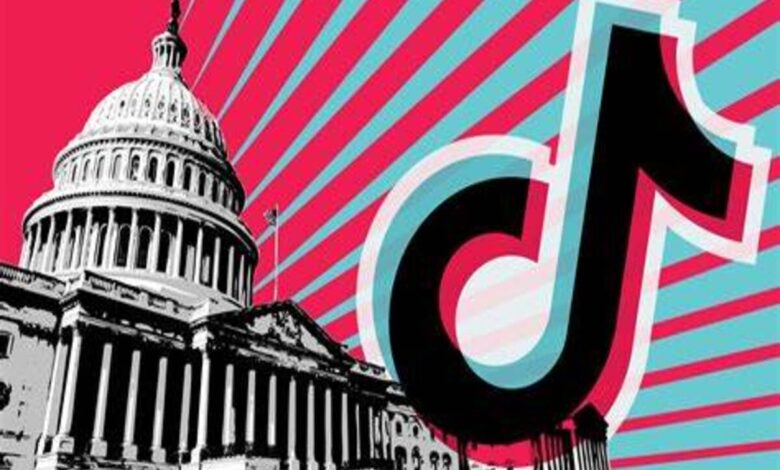
On June 30, 2026, lawyers representing a 15-year-old Florida boy known in court filings only by his initials, R.K.C., confirmed that TikTok had agreed to settle his lawsuit before it could go to trial. The teenager had alleged that he began using social media at around age eight, became addicted to it, and subsequently suffered from lost sleep, depression, and anxiety as a direct result of the platform’s design. His case originally named four defendants, YouTube, Instagram, Snapchat, and TikTok, and was slated to be the second individual trial in a sprawling Los Angeles court proceeding examining whether social media companies deliberately engineered their products to be addictive to children.
TikTok’s decision to settle rather than face a jury is not, on its own, a headline-grabbing event. Companies settle lawsuits every day, often for reasons that have nothing to do with the merits of the underlying claims. But this settlement did not happen in isolation. It happened three months after a Los Angeles jury found Meta and Google’s YouTube liable for negligent design in a nearly identical case, awarding $6 million in damages.
It happened weeks after a California judge rejected both companies’ bid for a new trial, explicitly ruling that Section 230, the law that has shielded internet platforms from liability for two decades, does not protect design choices, only user-generated content. It happened after YouTube had already quietly settled its own portion of R.K.C.’s case in June. And it happened against the backdrop of more than 3,300 similar lawsuits pending in California state courts alone, with another 2,600 in California federal court, and near-universal litigation from state attorneys general across the country.
Taken together, this is not a string of unrelated settlements. It is the shape of a legal dam beginning to crack, and the crack looks remarkably similar to one American courts have seen before.
A Familiar Playbook: What Tobacco Taught the Legal System
For most of the 20th century, tobacco companies survived thousands of lawsuits using a consistent defense: smoking was a personal choice, consumers knew the risks, and the law could not hold a company liable for an adult’s free decision to buy a legal product. That defense worked for decades, until internal documents surfaced showing that cigarette manufacturers had known about nicotine’s addictive properties for years, had researched how to manipulate nicotine delivery to maximize dependency, and had marketed specifically to teenagers who would become lifelong customers.
The legal argument shifted from “you chose to smoke” to “you engineered the product to make choice nearly impossible, and you knew it.” That shift produced the 1998 Tobacco Master Settlement Agreement, in which the major tobacco companies agreed to pay more than $206 billion over 25 years to settle claims brought by 46 states, alongside sweeping restrictions on marketing to minors.

The social media litigation unfolding right now is following an almost identical arc. For years, platforms defended themselves by arguing they were neutral hosts of user content, not responsible for what any individual posted or how any individual chose to use the product. Section 230 of the Communications Decency Act, passed in 1996, gave that argument the force of federal law, generally shielding platforms from liability over content posted by third parties. It is arguably the single most important piece of legislation in the history of the modern internet, and it is the reason platforms could scale to billions of users without being sued into oblivion over every piece of user-generated content.
But the plaintiffs suing TikTok, Meta, YouTube, and Snapchat today are not arguing that a specific video or post harmed their clients. They are arguing something structurally different: that the products themselves, independent of any content on them, were engineered using infinite scroll, autoplay, algorithmic recommendation engines, streaks, push notifications, and variable reward mechanisms specifically to maximize compulsive use among a user base whose brains are still developing. That is a product design argument, not a content argument, and it is precisely the distinction that determines whether Section 230 applies at all.
The Ruling That Changed the Calculus
The pivotal moment came on March 25, 2026, when a Los Angeles Superior Court jury delivered its verdict in a case brought by a young plaintiff identified as K.G.M., who alleged that compulsive use of Instagram and YouTube beginning in childhood led to depression and anxiety. The jury found Meta and Google’s YouTube negligent — not for content, but for the way the platforms were built and awarded $6 million in damages, with Meta held 70% responsible ($4.2 million) and Google 30% responsible ($1.8 million). It was the first time a jury had held social media companies financially liable specifically for engineering choices rather than for what users posted.
Both companies moved for a new trial. On June 10, 2026, Los Angeles Superior Court Judge Carolyn Kuhl denied those motions. Critically, Kuhl rejected the companies’ central legal defense, that Section 230 shielded them from the claims — on the grounds that the statute does not address design choices, and that the jury had been repeatedly instructed throughout the trial not to consider the content posted on the platforms, only the architecture built around it. In other words, a sitting judge drew a bright legal line between “what was posted” and “how the platform was built to keep you looking at it,” and ruled that only the former enjoys federal immunity.
That ruling is the real headline, even though the settlements are what make the news. Once a court has affirmed that design-based negligence claims can survive Section 230, every subsequent case gains leverage, and every subsequent defendant faces a sharply increased risk calculation. TikTok’s decision to settle with R.K.C. rather than risk becoming the next data point in front of a jury reads less like caution and more like an acknowledgment that the legal ground has shifted beneath the entire industry.
The Scale of What’s Coming
It is worth sitting with the sheer volume of litigation involved, because it illustrates why this moment cannot be dismissed as an isolated legal skirmish. As of mid-2026:
- More than 3,300 addiction-related lawsuits are pending in California state court alone.
- Another 2,600 cases, brought by individuals, school districts, municipalities, and states, are pending in California federal court.
- A federal multidistrict litigation proceeding in the Northern District of California, In re: Social Media Adolescent Addiction/Personal Injury Products Liability Litigation, had accumulated more than 2,400 filings by March 2026, and that number has only grown since.
- Snap alone faces more than 6,000 lawsuits tied to harms allegedly facilitated by the platform’s features, according to court filings and reporting on the litigation.
- In a separate federal case brought by a Kentucky school district, Meta, Snap, TikTok, and YouTube collectively settled before trial for a combined $27 million — a signal that even institutional plaintiffs, not just individual families, are winning meaningful settlements.
- Nearly every U.S. state has filed its own lawsuit against one or more of these companies, separate from the private litigation, generally alleging that the platforms misrepresented their safety for young users while designing them to be addictive.
This is not a handful of aggrieved families with sympathetic lawyers. This is a coordinated, nationwide legal assault comparable in scale and structure to the asbestos and tobacco litigation waves that reshaped entire industries. And unlike a single blockbuster case that a company can afford to fight to the Supreme Court on principle, thousands of parallel cases create a different kind of pressure: even a modest per-case settlement, multiplied across thousands of plaintiffs, becomes an existential balance-sheet problem rather than a one-time legal expense.
What’s Actually Being Sold: Attention, Not Video
To understand why these lawsuits are landing differently than earlier attempts to sue tech companies over content, it helps to be precise about what these companies actually sell. TikTok does not primarily sell video. Instagram does not primarily sell photos. YouTube does not primarily sell footage. What each of these companies sells, in the most literal commercial sense, is attention, packaged, measured in minutes and impressions, and resold to advertisers at a rate that scales directly with how long a user’s eyes stay on the screen.
This is the uncomfortable economic truth underlying the entire industry. A child’s attention is not just valuable, it is disproportionately valuable, because children are neurologically more susceptible to variable-reward mechanisms, socially more vulnerable to comparison and validation loops, and crucially, likely to become lifelong users if the habit forms early enough. Every additional minute a child spends scrolling is not incidental engagement; it is the literal product being manufactured and sold.

Internal company documents that have surfaced across various pieces of this litigation, echoing what tobacco litigation revealed about nicotine engineering decades earlier have repeatedly shown that engagement-maximizing features were not accidental byproducts of good design, but deliberate choices, tested and refined specifically to increase time-on-platform among the youngest, most impressionable users.
This is the deeper argument threading through all of these lawsuits, and it’s the reason “Big Tech’s tobacco moment” is more than a catchy comparison. Cigarette companies were not ultimately punished for selling tobacco — tobacco remains legal. They were punished for how they engineered the product and who they knowingly targeted with that engineering.
Social media companies are facing the same distinction: the lawsuits are not trying to outlaw video platforms or social networking. They are trying to establish that a product deliberately engineered to exploit a child’s developing brain for the purpose of maximizing ad revenue extraction constitutes a design defect — the same legal theory that applies to a car with a faulty ignition switch or a toy with a choking hazard.
Section 230’s Shrinking Shadow
For almost thirty years, Section 230 has functioned as something close to an unconditional shield. Courts routinely dismissed lawsuits against platforms at the earliest possible stage, reasoning that any claim touching on user-generated content, however the complaint was framed was fundamentally a publisher liability claim barred by the statute. That doctrine made it extraordinarily difficult for plaintiffs to get design-based claims in front of a jury at all, because defense lawyers could reliably argue that any harm traced back, at some level, to content a user saw or posted.
What changed is that plaintiffs’ lawyers, learning from years of dismissed cases, retooled their legal theory to focus explicitly and narrowly on architecture: the mechanics of infinite scroll (a page that never signals a natural stopping point), autoplay (removing the user’s decision point between videos), algorithmic amplification (recommendation systems tuned to maximize watch time rather than wellbeing), streaks (Snapchat’s daily-use gamification mechanic), and push notification design (engineered to interrupt and re-engage).
None of these features are content. They are the scaffolding around content. Judge Kuhl’s ruling — that Section 230 does not reach the platform’s design choices, and that a jury properly instructed to ignore content can still find design negligence — is the clearest judicial articulation yet that this distinction is legally real, not just a clever plaintiff’s-lawyer framing.
If that reasoning holds up on appeal, and if it is adopted by other courts hearing the thousands of pending cases, the practical effect is enormous: an entire category of claims that Section 230 was assumed to foreclose becomes viable again. That is precisely the kind of doctrinal shift that turns isolated lawsuits into an industry-reshaping wave, because it changes the settlement math for every single pending case simultaneously, not just the one in front of the jury.
Why Companies Are Choosing to Settle
There is a specific strategic logic behind TikTok and YouTube settling individual cases like R.K.C.’s while Meta and Snap proceed toward a July 27 trial. Settling an individual plaintiff’s case removes that specific set of facts from ever reaching a jury, which prevents the creation of new public verdicts, new public damage figures, and new discovery material that becomes available to the thousands of other plaintiffs waiting in line.
Every jury trial that produces a plaintiff-friendly verdict, like the $6 million K.G.M. verdict, effectively becomes a public roadmap for every other plaintiff’s lawyer handling one of the other 5,900-plus pending cases. Settling quietly, before trial, denies opposing counsel that roadmap and keeps the terms — including the dollar amount — confidential in most cases.
This is exactly the containment strategy tobacco companies eventually abandoned when the scale of litigation made case-by-case settlement unsustainable, forcing them into the comprehensive Master Settlement Agreement instead. Whether social media companies reach a similar tipping point — one comprehensive, industry-wide settlement rather than thousands of individual skirmishes — may depend on how the Meta-Snap trial in 2026 unfolds, and how many more juries return plaintiff-friendly verdicts in the meantime.
The Opinion Underneath the Data: This Is Bigger Than Any One Platform
Here is where the numbers stop telling the whole story and a judgment call becomes necessary. It would be a mistake to read this litigation wave as simply “TikTok bad” or “Meta bad” — the companies involved are not conspiratorial villains twirling mustaches over a boardroom table. They are, more mundanely, the predictable output of an advertising-funded business model that has no built-in mechanism to value a user’s wellbeing over a user’s engagement, because engagement is the only variable the model is actually optimized to measure. A platform funded by advertising has no revenue incentive to make a thirteen-year-old close the app after twenty minutes. Every structural incentive points the other way.
That is precisely why the tobacco analogy, while imperfect, is instructive rather than merely rhetorical. Tobacco companies were not uniquely evil relative to other industries; they were an industry whose core product, sold at scale without constraint, produced predictable, quantifiable public health harm, and the legal system eventually built liability frameworks to force that harm to be priced into the business model rather than externalized onto individuals and public health systems.
Social media’s harms, rising adolescent anxiety and depression rates, sleep disruption, and compulsive-use patterns that clinicians increasingly describe using addiction-adjacent language are following a similar trajectory: harms that were treated for two decades as an unfortunate but unregulated cost of a free, innovative internet are now being formally priced by juries, one verdict at a time.
The legitimate counterargument deserves airtime here too. The companies maintain, as they have throughout this litigation, that they take extensive steps to protect younger users, that correlation between social media use and adolescent mental health struggles is not the same as causation, and that design features like recommendation algorithms and notifications serve legitimate purposes — helping users find relevant content and stay connected — that predate any addiction-engineering intent.
Some public health researchers remain genuinely divided on how much of the youth mental health decline is attributable to social media design specifically versus the broader constellation of factors affecting adolescent life in the smartphone era. Juries, not researchers, are currently the ones resolving that dispute in courtrooms, and jury verdicts, however consequential, are not the same thing as scientific consensus.
Still, the direction of travel is hard to ignore. Once a court has ruled that Section 230 does not immunize design choices, and once juries start attaching real dollar figures to those design choices, the incentive structure for the entire industry begins to shift, not because executives suddenly develop a conscience, but because liability, like every other cost, eventually gets priced in. That is exactly what happened with tobacco, exactly what happened with asbestos, and arguably what is beginning to happen here.
Conclusion
TikTok’s decision to settle with a 15-year-old plaintiff rather than face a Los Angeles jury is, on the surface, a routine legal maneuver. Read against the backdrop of a $6 million jury verdict against Meta and YouTube, a judicial ruling stripping away Section 230’s protection for design choices, more than 5,900 pending California lawsuits, a $27 million school district settlement, and thousands more cases nationwide, it looks like something else entirely: the sound of an entire industry’s legal foundation shifting under an accumulated weight of litigation it can no longer simply out-lawyer or dismiss on jurisdictional technicalities.
Tobacco companies spent decades insisting that smoking was a free choice, right up until the moment courts decided that engineered addiction was not a choice at all — and that decision cost the industry over $200 billion and permanently altered how cigarettes could be marketed and sold. Social media companies are now facing an early version of that same reckoning, one jury verdict and one quiet settlement at a time.
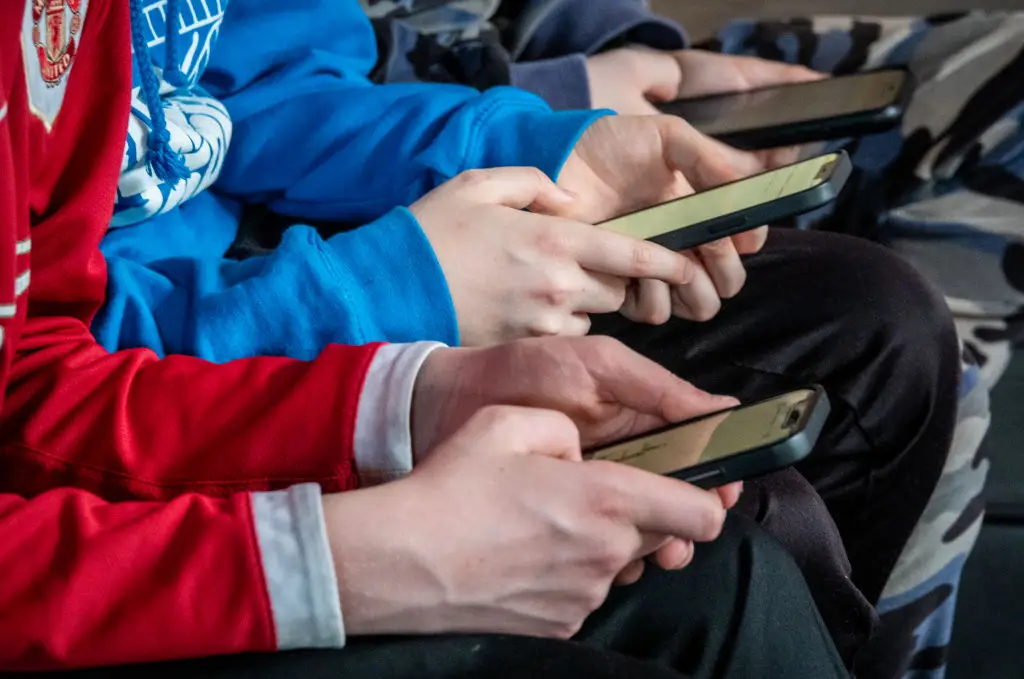
Whether this becomes a full-blown tobacco-style restructuring of the industry, or fades into a manageable cost of doing business, will depend on what happens in Los Angeles courtrooms over the next several months. But the legal argument that once seemed like a long shot — that a platform can be sued not for what a child saw, but for how the platform was built to keep that child looking — has now survived a jury, survived a motion for a new trial, and pushed one of the world’s largest technology companies to settle rather than risk finding out what a jury decides next.