Two Rules For Two Billionaires: ED, Vedanta, Adani, And The Cost Of Crony Capitalism
From CBI Raids on GVK to ED Raids on Vedanta: A Forensic Timeline of Competition That Ends the Same Way

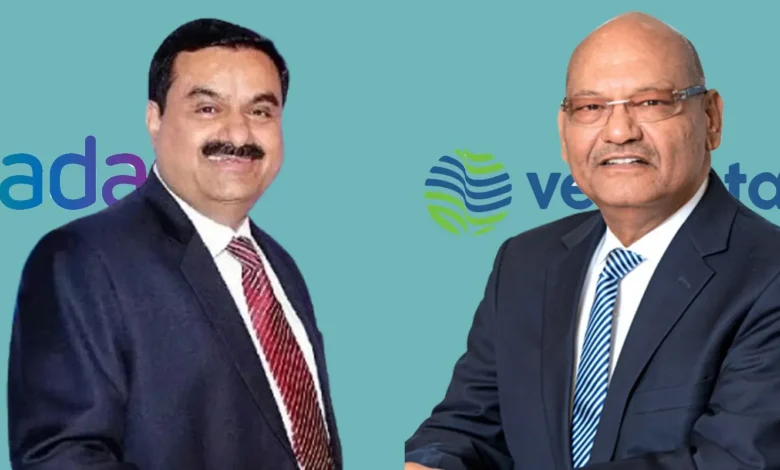
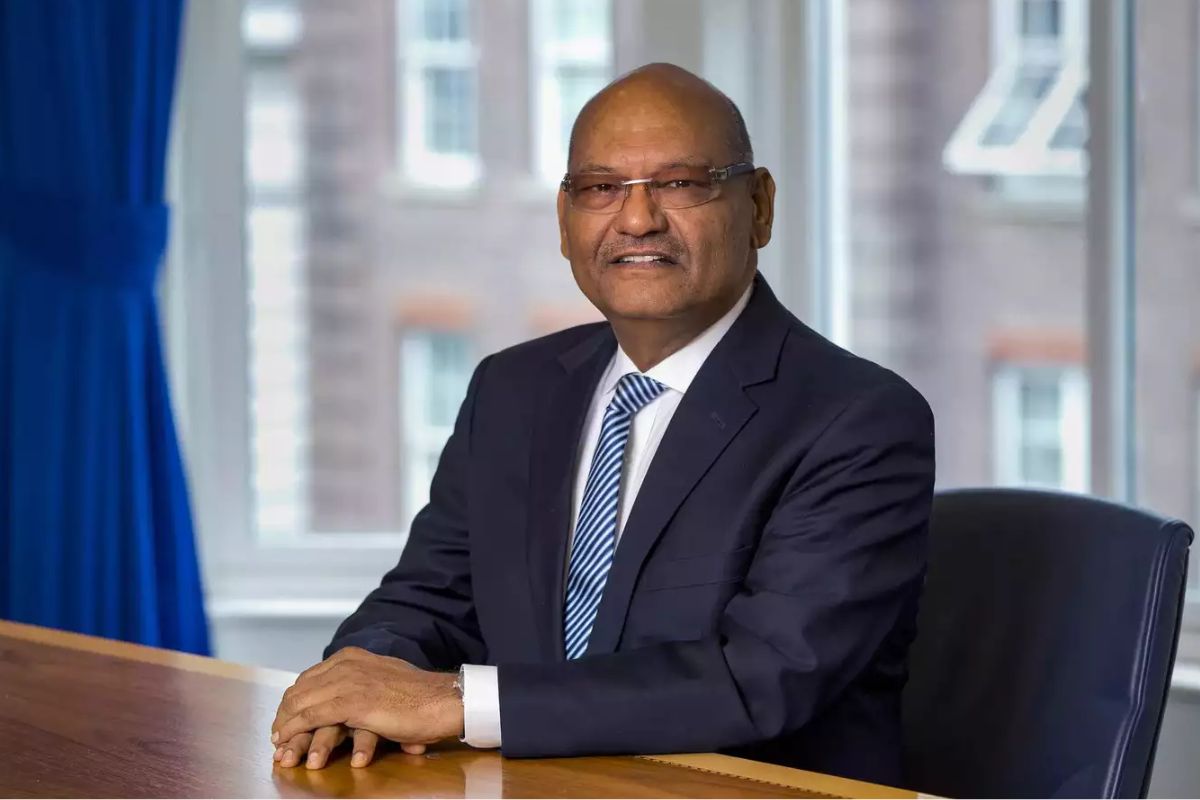
On June 2, 2026, the Enforcement Directorate conducted search operations at multiple premises of the Anil Agarwal-led Vedanta Group in Delhi, Rajasthan, and Mumbai. According to officials, the probe pertains to alleged foreign exchange violations linked to royalty payments made by Vedanta to its parent company, Vedanta Resources, and is being conducted under the civil provisions of FEMA. Vedanta issued a measured statement: “We are extending full cooperation to the authorities and are providing all information sought. The company remains committed to compliance with all applicable laws and regulations.”
Three days before those raids, Anil Agarwal was still fighting a different battle, in the Supreme Court of India, seeking a stay on one of the most contested insolvency resolutions in Indian corporate history. The timing of these two events, taken alone, proves nothing. But placed in the context of what has happened to Vedanta, to GVK, and to the architecture of major Indian asset acquisitions over the past five years, the sequence of facts raises questions that the Indian corporate governance framework has not adequately answered.
THE JAYPEE DEAL: A TALE OF TWO BIDS
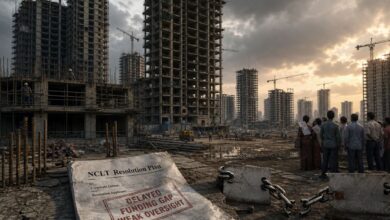
Jaiprakash Associates Limited (JAL), the flagship company of the once-powerful Jaypee Group, was admitted to insolvency proceedings in June 2024 after defaulting on loans. The total creditor claims stood at a staggering ₹57,185 crore. Its assets are significant: major real estate projects including Jaypee Greens in Greater Noida, cement manufacturing capacity, hospitality properties, and the Jaypee International Sports City near the upcoming Jewar Airport, among the most strategically valuable land parcels in the National Capital Region.
Twenty-six parties submitted expressions of interest. The race eventually narrowed to Adani Enterprises and Vedanta, with Dalmia Cement as a distant third. What happened next is a matter of public court record, not speculation.
Vedanta submitted a bid of ₹16,726 crore, higher than Adani Enterprises’ bid of ₹14,535 crore, as per submissions before the appellate tribunal. In a straightforward reading of insolvency law, a higher bid delivering better value to lenders should be preferred. The Committee of Creditors (CoC), however, chose Adani’s plan.
The CoC evaluated resolution plans on the basis of an evaluation matrix and scored the Adani Enterprises plan highest, followed by Dalmia Cement and then Vedanta. The stated rationale was not the headline bid amount but factors including Adani’s offer of approximately ₹6,000 crore upfront and a faster repayment timeline of around two years, compared to Vedanta’s payout period of up to five years.
Vedanta disputes this characterisation vigorously. Anil Agarwal publicly claimed that Vedanta had received written confirmation that it had won the bid for the Jaypee asset, but that the decision was subsequently reversed without elaboration on the reasons. He stated that Vedanta was “declared the highest bidder publicly.” This is an extraordinary allegation, that a written confirmation of a bid victory was reversed.
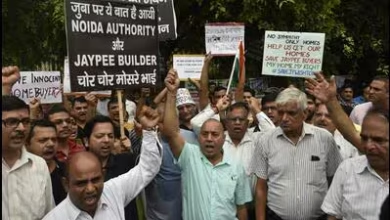
Vedanta has approached the Supreme Court seeking a stay on the Adani takeover, arguing that its offer was higher and questioning the fairness and transparency of the bidding process. The matter is now before the Supreme Court, which means India’s highest judicial authority is being asked to adjudicate whether a lower-bid resolution plan was correctly preferred over a higher one. Whatever the court decides, the very fact that this question reaches the Supreme Court indicts the process.
The implication is direct: India’s Insolvency and Bankruptcy Code was designed to maximise value recovery for lenders and creditors, including public sector banks that carry India’s taxpayers’ money. When a ₹2,191 crore lower bid defeats a higher one, even on the grounds of payment speed, the framework of the evaluation matrix must be publicly and forensically explained. It has not been.
MUMBAI AIRPORT: THE EARLIER TEMPLATE
The Jaypee dispute is not the first time this pattern has appeared. Between 2019 and 2021, the GVK Group lost control of Mumbai International Airport — India’s second busiest by passenger and cargo traffic — to the Adani Group in a sequence of events that has been documented in detail by multiple publications.
In 2019, GVK planned to sell a 79% stake to a consortium of Abu Dhabi’s investment authority, Canada’s PSP Investments, and the National Investment and Infrastructure Fund, to repay ₹5,500 crore in debt. That deal, which would have brought significant foreign institutional capital into Indian airport infrastructure, did not proceed. In June 2020, the CBI registered a case against GVK Group for criminal conspiracy and fraud over a ₹705 crore scam, followed by raids on its premises by the Enforcement Directorate in July.
In August 2020, the Adani Group signed an agreement to acquire GVK Group’s shareholding and control of Mumbai airport. By July 2021, Adani Airport Holdings had formally taken over management control of MIAL. With eight airports in its management and development portfolio, AAHL became India’s largest airport infrastructure company, accounting for 25% of airport footfalls nationwide.
To be legally precise: a CBI court found no corruption by public officials in the GVK scam in January 2023, and the case was transferred to a magistrate court. GVK’s financial difficulties were real and predated the CBI case. The debt was genuine. The deal was commercially structured. None of this is disputed.
What is observable, and what merits scrutiny, is the sequence: a group facing debt pressure is the subject of CBI and ED action, a rival acquires the distressed asset, and the criminal case ultimately produces no conviction of public officials. This sequence is not proof of coordination. It is, however, a pattern that repeats with enough consistency to demand an institutional explanation.
THE REGULATORY ASYMMETRY: OPINION, CLEARLY FRAMED
The sequence of events across the GVK-Mumbai Airport case and the Vedanta-Jaypee case reveals what appears to be a structural asymmetry in how India’s regulatory and insolvency machinery interacts with competing capitalist interests. In both cases, a group facing competitive disadvantage in acquiring a major asset has subsequently faced significant regulatory or enforcement attention. In both cases, the asset flowed to the Adani Group. Correlation is not causation, and this article does not allege that the regulatory actions were coordinated with the asset transfers.
What can be stated as opinion, anchored in documented fact, is this: when businesses observing these events, foreign institutional investors, domestic entrepreneurs, infrastructure funds, see a pattern in which regulatory pressure and asset transfers appear to move in tandem, they rationally adjust their risk calculus. They demand a higher risk premium for Indian assets. Some choose not to invest at all. The damage to India’s investment climate is not hypothetical; it is measurable.
India’s FDI inflows fell from $71.4 billion in FY2022-23 to $44.4 billion in FY2023-24 — a decline of nearly 38% in a single year, according to data from the Department for Promotion of Industry and Internal Trade (DPIIT). Multiple structural factors explain this decline, including global interest rate environments and geopolitical uncertainty. But governance perception is among them, and it is the factor most directly amenable to domestic policy correction.
The perception problem is compounded by the Hindenburg Research report on the Adani Group, published in January 2023, which alleged stock manipulation and accounting fraud across Adani Group entities. The Adani Group denied all allegations, and no Indian regulatory authority has yet formally indicted any Adani entity on the basis of those allegations. The Supreme Court-appointed expert committee found no evidence of regulatory failure in its assessment. But the reputational damage to India’s credibility as a rule-of-law investment destination landed with foreign institutional investors in a way that domestic commentary underestimated.
VEDANTA’S OWN RECORD: NOT A CLEAN SLATE
Intellectual honesty requires acknowledging what this article is not. It is not an exoneration of Vedanta or Anil Agarwal. Vedanta’s record with regulators is long and complicated. In 2004, the ED found Sterlite Industries — the predecessor entity — and its three promoter directors guilty of FERA and FEMA contraventions, resulting in the imposition of penalties on the company and its directors. The company’s Sterlite copper plant in Thoothukudi, Tamil Nadu was shut down in 2018 following protests over environmental damage, in which 13 people were killed in police firing — a human tragedy that no amount of corporate restructuring can erase.
In July 2025, US short-seller Viceroy Research shorted Vedanta Resources‘ debt, alleging that the group was draining its Indian unit, inflating profits, and posing serious risks to creditors through unsustainable practices — allegations the group called “malicious.” The royalty payment structure that is the subject of the current ED probe. payments from listed Indian entity Vedanta Ltd. to unlisted UK-domiciled parent Vedanta Resources, has been a source of minority shareholder concern for years.
The current FEMA investigation may well be justified on its own merits. The point is not that Vedanta is above scrutiny. The point is that scrutiny must be applied even-handedly, must follow the evidence rather than the competitive landscape, and must not arrive with the suspicious timing of arriving immediately after a high-profile corporate rivalry ends in a Supreme Court battle.
THE COST OF UNEVEN COMPETITION
India’s Insolvency and Bankruptcy Code was hailed, at its inception in 2016, as one of the most significant institutional reforms in decades — a framework that would finally resolve India’s banking sector’s ₹10+ lakh crore NPA crisis through transparent, time-bound resolution. In cases like Essar Steel and Bhushan Power, the IBC delivered on that promise.
The Jaypee case risks becoming a different kind of precedent. When a higher bidder goes to the Supreme Court alleging that a lower bidder was chosen through an opaque evaluation matrix, and when the losing bidder is simultaneously subjected to ED raids on a related matter, the IBC’s credibility as a neutral arbiter of distressed assets is diminished. That diminishment has a direct cost: future resolution applicants will price the political risk of losing into their bids, submitting lower offers or abstaining entirely, which means lenders — predominantly public sector banks with taxpayer capital — will recover less.
The questions India needs to publicly answer are specific. Why was a lower bid preferred over a higher one, when the IBC’s primary mandate is creditor value maximisation? What precisely is the evaluation matrix that the JAL Committee of Creditors used, and has it been made public? On what date did the ED’s current FEMA investigation into Vedanta’s royalty payments begin, and was that date before or after the Jaypee bidding contest concluded? And most importantly — are India’s regulatory agencies operating on the basis of evidence alone, or have they become instruments in corporate competition?
These are not rhetorical questions. They are the questions that every domestic entrepreneur considering a large capital deployment, and every foreign investor weighing an Indian infrastructure bet, is asking right now. The answers — or the absence of them — will do more to shape India’s investment trajectory than any number of investor summits or ease-of-doing-business rankings.
The government that builds an economy for one capitalist does not build an economy. It builds a fiefdom. And capital — unlike patriotism — is not compelled to stay.