Bisleri’s ₹3,317 Crore Water Business Faces An FSSAI Safety Challenge, Bromate, PAHs And Questions Over The Brand’s Promise Of Purity
For a brand that has spent decades selling the promise of safe drinking water, an FSSAI safety finding is an uncomfortable development. With bromate exceeding permissible limits and PAHs detected in a subsequent laboratory examination, Bisleri now faces questions over product quality, regulatory compliance and the trust behind its ₹3,300-crore business.

India’s best-known packaged drinking water brands has come under regulatory scrutiny after the Food Safety and Standards Authority of India (FSSAI) sanctioned prosecution against Bisleri International Pvt Ltd, following laboratory findings that declared a sample of its packaged drinking water unsafe.
The controversy involves two separate chemical findings, bromate exceeding permissible limits and the subsequent detection of polynuclear aromatic hydrocarbons (PAHs), a group of compounds that includes substances associated with cancer.
The matter dates back to September 2025, when food safety officials collected samples from Bisleri’s manufacturing facility in Goa. The initial laboratory examination detected bromate at levels exceeding the prescribed limit, prompting the sample to be classified as unsafe under the Food Safety and Standards Act, 2006.
The company challenged the initial finding, following which the sample was referred for further examination by a Referral Food Laboratory. However, the second round of testing did not bring the matter to a close. The referral laboratory reportedly detected polynuclear aromatic hydrocarbons (PAHs), leading to another adverse safety finding.
The development is particularly significant because the two findings concern different chemical contaminants. Bromate can form during certain water disinfection processes, while PAHs are a family of compounds associated with incomplete combustion and environmental contamination. Some members of the PAH family are recognised carcinogens.
Following the laboratory findings, FSSAI sanctioned prosecution against Bisleri. The action brings a serious food safety issue into focus, particularly given the company’s position as one of India’s most recognisable packaged drinking water brands.

Bisleri’s Defence And The Company’s Version Of The Testing Dispute
Bisleri has disputed the implications of the regulatory findings, offering its own account of the sampling process and subsequent testing.
According to the company’s statement reported on November 23, 2026, the matter concerns a batch manufactured in September 2025 at its Goa facility, where FSSAI officials collected six samples on September 30.
The company maintains that five of the six samples complied with applicable safety standards. The sixth sample reportedly recorded bromate at 12 micrograms per litre, marginally above the prescribed maximum of 10 micrograms per litre.
Bisleri challenged the initial laboratory finding and subsequently arranged independent testing through an FSSAI-approved laboratory. According to the company, the subsequent examination found bromate levels within the permissible limits. It also stated that after submitting its independent test results, it received no further communication from the regulator and understood the matter to have been closed.
The company has maintained that consumer safety remains a priority and that it will cooperate with the regulatory authorities through the appropriate process.
However, the company’s explanation leaves an important question unanswered. Its reported independent testing concerns bromate, while the regulator’s subsequent referral examination reportedly identified PAHs. These are separate chemical parameters, and a compliant bromate result does not automatically establish that the sample was free from PAHs.
The discrepancy makes the complete laboratory reports particularly important. The precise concentration of the PAHs, the individual compounds identified, the laboratory’s detection limits and the dates of the respective examinations would help establish the extent of the alleged contamination and explain the difference between the regulatory and company-commissioned findings.
For now, the two sides present different accounts of the testing dispute. Bisleri maintains that its independent results were compliant, while FSSAI has proceeded on the basis of its regulatory laboratory findings and sanctioned prosecution. The company has not thereby been convicted, and the allegations will have to be established through the appropriate legal process.
What remains clear is that the controversy has moved beyond a marginal exceedance of the bromate limit. The subsequent PAH finding has introduced a separate chemical safety concern, making transparency around the testing process and the company’s quality-control procedures central to the matter.

Bromate And PAHs, What Exactly Has Been Found And Why Are Scientists Concerned?
The two chemicals at the centre of the Bisleri controversy are very different in their composition, origins and potential effects on human health. Bromate is an inorganic chemical compound that can form during drinking water treatment, particularly when ozone is used as a disinfectant.
Ozone is effective in eliminating harmful microorganisms, but when it reacts with naturally occurring bromide in source water, it can produce bromate as an unwanted by-product. This makes the control of water treatment processes particularly important.
The health concern surrounding bromate comes from its potential to cause cellular and genetic damage.
The International Agency for Research on Cancer (IARC) classifies bromate as Group 2B, or possibly carcinogenic to humans.
This classification is based primarily on evidence from animal studies, which have demonstrated an increased incidence of tumours in the kidneys, thyroid and other tissues. Research has also associated bromate exposure with oxidative stress and DNA damage.
The second chemical finding, polynuclear aromatic hydrocarbons (PAHs), presents a different set of concerns. PAHs are a large family of organic compounds produced primarily through the incomplete combustion of materials such as coal, petroleum, wood and other organic substances.
They can enter the environment through industrial emissions, contaminated soil, atmospheric pollution and certain water distribution systems. Some PAHs are more hazardous than others, with benzo[a]pyrene classified as carcinogenic to humans.
Certain PAHs can be metabolised inside the body into compounds capable of interacting with DNA, potentially causing mutations and increasing cancer risk. However, the presence of PAHs as a chemical family does not automatically establish that every compound detected is carcinogenic. The precise substances and their concentrations matter. In Bisleri’s case, the publicly reported FSSAI findings have not yet provided sufficient detail to establish which individual PAHs were identified.

How Much Chemical Exposure Is Dangerous And What Does The Science Actually Say?
The detection of potentially hazardous chemicals in drinking water raises an obvious question: at what concentration does exposure become dangerous? The answer depends on the chemical involved, the quantity consumed, the duration of exposure and the individual’s overall exposure from other sources.
This is also the permissible limit cited in the Bisleri controversy. The company’s reported finding of 12 micrograms per litre was therefore 20% above that benchmark. However, a marginal exceedance does not establish that someone consuming the water would develop cancer. The WHO guideline is designed to minimise health risks from prolonged exposure, not to define an immediate poisoning threshold.
PAHs require a more compound-specific assessment. The WHO has established a drinking water guideline of 0.7 micrograms per litre for benzo[a]pyrene, one of the best-studied carcinogenic PAHs. This cannot automatically be applied to the entire PAH family, as different compounds have different toxicological properties.
NCBI
Consequently, the most important missing information in the Bisleri case is the referral laboratory’s detailed report. Without the individual PAH concentrations, the compounds identified and the analytical detection limits, it is not possible to quantify the potential health risk arising from the sample.
The regulatory finding is serious, but understanding its implications requires more than identifying a chemical by name. It requires establishing how much was present, how it entered the water and whether the contamination extended beyond the particular sample examined.

From An Italian Water Brand To An Indian Household Name, The Making Of Bisleri
Bisleri’s journey from an Italian bottled water brand to one of India’s most recognisable consumer businesses is an unusual story of how a product that was once considered a luxury became an everyday purchase.
The brand traces its origins to Italy, where it was established by entrepreneur Felice Bisleri, drawing its name from its founder. Its Indian journey began in 1965, when Bisleri was introduced in Mumbai. Four years later, the Parle group acquired the brand from its Italian owners, bringing it into the business fold of the Chauhan family.
The acquisition was led by Ramesh Chauhan and his brother Prakash Chauhan, who recognised an opportunity in a market where packaged drinking water was still an unfamiliar concept. At the time, Indian consumers largely depended on municipal supplies, wells and other conventional sources of drinking water.
Convincing people to pay for something they could ordinarily obtain without charge required considerable market development. Bisleri gradually changed that perception by positioning packaged water as a convenient and reliable alternative, particularly for travellers, hotels, restaurants and urban households.
Ramesh Chauhan’s contribution to the brand’s growth was central. The entrepreneur, who had already built a significant presence in India’s soft drinks business through Parle, understood the importance of distribution, packaging and brand recognition.
Bisleri subsequently expanded its product formats, introducing its 20-litre economy pack in 1991, which helped take packaged water into homes and offices. Its familiar green packaging, advertising campaigns and extensive distribution network further strengthened its identity.
The Chauhan family eventually sold its soft drinks portfolio, including Thums Up, Limca, Gold Spot and Maaza, to Coca-Cola in 1993. Bisleri, however, remained with the family.
Over the decades, the company expanded into premium spring water, soda and other beverages, while building a distribution network that made its name almost synonymous with packaged drinking water in India.

Inside Bisleri’s ₹3,317 Crore Business, Revenue, Profits And The Scale Of Its Operations
The scale of Bisleri’s business explains why the latest regulatory action carries significance beyond a single laboratory finding. Bisleri International reported revenue of approximately ₹3,317.17 crore in FY2024–25, registering an 18% increase over the previous year, according to its filed financial information.
The company reported a net profit of ₹259.15 crore and EBITDA of ₹491.54 crore during the same financial year. Its reported EBITDA margin stood at approximately 14.8%, while its net profit margin was around 7.8%.
The figures indicate a business that continues to generate substantial revenue from India’s demand for packaged drinking water and related beverages. However, the increase in revenue has not translated into higher reported net profit. For comparison, Bisleri’s FY2023–24 standalone revenue from operations was ₹2,689.69 crore, while its reported net profit stood at ₹316.95 crore.
The FY2025 figures therefore warrant closer examination of the company’s operating costs, expenses and profitability rather than relying on revenue growth alone.
Advertising has also played an important role in maintaining the brand’s market position. Bisleri has historically invested in campaigns that reinforce its association with packaged drinking water, while using its distribution reach to remain visible across retail outlets, restaurants, transport hubs and residential markets. Its business depends not only on manufacturing capacity but also on the ability to ensure that consumers can find its products wherever they purchase drinking water.
For a company generating more than ₹3,300 crore in annual revenue, product safety is therefore not merely a regulatory requirement. It is fundamental to the commercial value of the brand.
Consumers purchase packaged water because they expect it to meet prescribed quality standards, and a company whose reputation has been built over decades has considerable commercial interest in maintaining that confidence. The current controversy consequently raises questions not just about one disputed sample, but about the quality-control systems supporting a business of this scale.

The Tata Consumer Deal That Never Happened And The Future Of The Chauhan Family Business
Bisleri’s corporate history has also included an attempted ownership transition that could have placed one of India’s most recognisable packaged drinking water brands under the Tata Group.
In November 2022, Tata Consumer Products entered discussions with the Chauhan family for a potential acquisition of Bisleri International, with the proposed transaction reportedly valued at ₹6,000–7,000 crore. Ramesh Chauhan, who had spent decades building the business, was understood to be looking for a suitable successor who could take the company forward.
The proposed transaction attracted considerable attention because it would have given Tata Consumer a much larger presence in India’s packaged drinking water market. The group already had brands such as Himalayan natural mineral water, Tata Copper Plus Water and Tata Gluco, but acquiring Bisleri would have substantially strengthened its position in the category.
However, the deal never materialised. On March 17, 2023, Tata Consumer formally informed the stock exchanges that negotiations with Bisleri had ceased and that no definitive agreement or binding commitment had been entered into. Media reports attributed the breakdown to differences and uncertainty surrounding the proposed transaction, although the companies did not announce a completed valuation agreement.
Following the collapse of the negotiations, Ramesh Chauhan indicated that the family would retain the business, with his daughter Jayanti Chauhan taking a more active leadership role. She is now the company’s vice chairperson, working alongside its professional management team, including CEO Angelo George.
The episode is relevant because Bisleri remains a privately held family-controlled business with substantial commercial value and an established national presence. Its future is no longer simply about preserving a legacy brand; it also involves managing a large manufacturing and distribution operation in an increasingly competitive consumer market.
The current FSSAI controversy therefore arrives at a time when the company is continuing to build its business under the next generation of family leadership.

125 Manufacturing Plants, Nearly 6,000 Distributors And The Challenge Of Maintaining Quality Across India
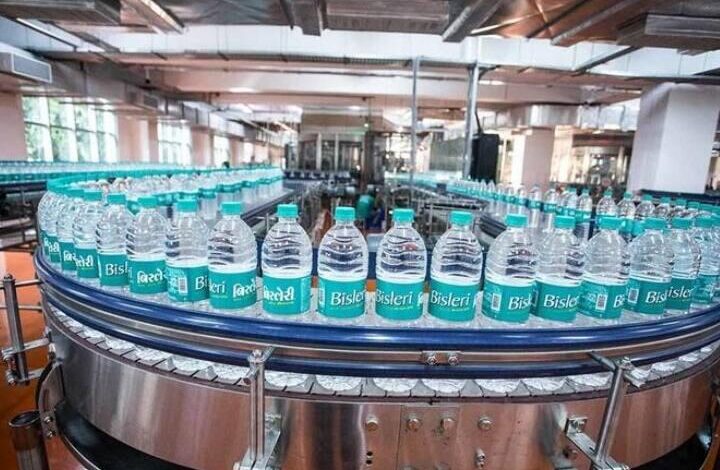
Bisleri’s operational reach is one of the biggest reasons behind its position in India’s packaged drinking water market.
According to the company’s official website, it operates 130 manufacturing plants, including 13 company-owned facilities, supported by approximately 5,980 distributors and 8,270 distribution trucks. This network allows the company to serve retail outlets, restaurants, offices and households across India and neighbouring markets.
However, operating a manufacturing and distribution network of this scale also presents a substantial quality-control challenge. Packaged drinking water is not simply a product that can be manufactured at one central facility and distributed nationwide. Water sourcing, treatment, filtration, disinfection, bottling, storage and transportation all require consistent monitoring. A failure at any stage can potentially compromise the quality of the finished product.
The Goa facility’s reported involvement in the FSSAI investigation therefore raises questions about the company’s batch-testing procedures and the extent of monitoring conducted across its manufacturing network. While the findings concerning one sample cannot be generalised to all 130 facilities, they underline the importance of independent verification and traceability.
Bisleri’s distribution network also means that product safety cannot be separated from consumer confidence. Unlike many packaged food products, drinking water offers consumers very little opportunity to identify contamination themselves. Chemical contaminants such as bromate and certain PAHs may not produce any noticeable change in taste, colour or smell.
For a company that has built its business around the promise of safe drinking water, maintaining consistent quality across every manufacturing location is therefore as important as expanding its distribution reach.

FSSAI’s Changing Regulatory Framework And Why Packaged Drinking Water Is Under Greater Scrutiny
The Bisleri controversy also comes against the backdrop of significant changes in India’s packaged drinking water regulations. In October 2024, FSSAI removed the mandatory requirement for packaged drinking water and mineral water manufacturers to obtain Bureau of Indian Standards (BIS) certification. The move did not eliminate quality requirements. Instead, the regulator introduced a more direct framework for monitoring compliance through its own food safety mechanisms.
In November 2024, FSSAI classified packaged drinking water and mineral water as high-risk food categories, bringing manufacturers under more stringent inspection and auditing requirements.
The measures included inspections before granting licences and periodic inspections of manufacturing facilities. Third-party food safety audits were also introduced for centrally licensed manufacturers.
The regulator subsequently issued a dedicated testing scheme for packaged drinking water and mineral water, effective January 1, 2026. This established additional testing requirements intended to strengthen quality assurance and monitoring across the sector.
These changes are important because packaged drinking water is a product consumed daily by millions of people, often without any independent means of verifying its chemical composition.
Regulatory oversight must therefore extend beyond checking manufacturing licences or conducting occasional inspections. It must establish whether companies consistently comply with prescribed standards and whether violations are detected and addressed promptly.
The Bisleri case puts this framework to the test. The regulator’s action demonstrates that laboratory findings can lead to prosecution, but it also raises questions about the transparency of testing results, the handling of disputed samples and the communication of potential safety concerns to consumers.

A ₹32,000 Crore Industry Built On Trust And The Competition For India’s Bottled Water Market
The controversy surrounding Bisleri comes at a time when India’s packaged drinking water industry is expanding rapidly, driven by urbanisation, rising consumption, tourism and persistent concerns about the quality of municipal water supplies.
According to the India Brand Equity Foundation (IBEF), the Indian packaged drinking water market was valued at approximately ₹32,040 crore in 2025, equivalent to $3.6 billion, and is projected to reach ₹57,850 crore by 2032.
Bisleri operates in a competitive market that includes Coca-Cola’s Kinley, PepsiCo’s Aquafina and several domestic and regional manufacturers. The entry of Reliance Consumer Products with its proposed Campa Sure packaged water brand also signals growing competition in a category where distribution, pricing and manufacturing capacity can determine market position.
However, the industry’s growth also brings a more fundamental concern. Consumers purchase packaged water because they expect it to provide a safer alternative to uncertain water sources. Unlike visible food contamination, chemical contamination may not be detectable through ordinary sensory checks. A bottle can appear perfectly clear and still fail prescribed chemical safety standards.
The Bisleri investigation has consequently attracted attention beyond the company itself. According to reports, FSSAI intends to expand testing to additional Bisleri samples across India and products from other brands. This could turn an individual company’s regulatory dispute into a wider examination of packaged drinking water quality across the industry.
For a market expected to nearly double in value over the coming years, maintaining consumer confidence will be just as important as expanding manufacturing capacity and distribution.
The Price Of Consumer Trust
Bisleri spent more than five decades establishing itself as one of India’s most recognisable packaged drinking water brands. Its growth was built on the simple proposition that consumers should be able to trust the water they purchase. The latest FSSAI action challenges that promise and places the company’s quality-control systems under scrutiny.
The company disputes aspects of the findings and has cited independent testing, while the regulator maintains that the sample was unsafe following its laboratory examination. The complete testing reports and the subsequent legal proceedings will be important in establishing the facts.
Ultimately, the issue extends beyond Bisleri. As packaged drinking water becomes an increasingly important part of India’s consumer economy, manufacturers must demonstrate that safety standards are being met consistently, regulators must enforce them transparently, and consumers must be able to trust what is inside the bottle.