How Did Tata Group Go From The Ratan Tata Era To A Leadership Confrontation Over N Chandrasekaran’s Future?
N Chandrasekaran’s future at Tata Sons is suddenly uncertain, but his possible exit is only the latest symptom of a larger shift inside the Tata Group. Since Ratan Tata’s death, the balance between Tata Trusts and Tata Sons has changed, bringing questions of control, strategy and succession sharply back into focus.

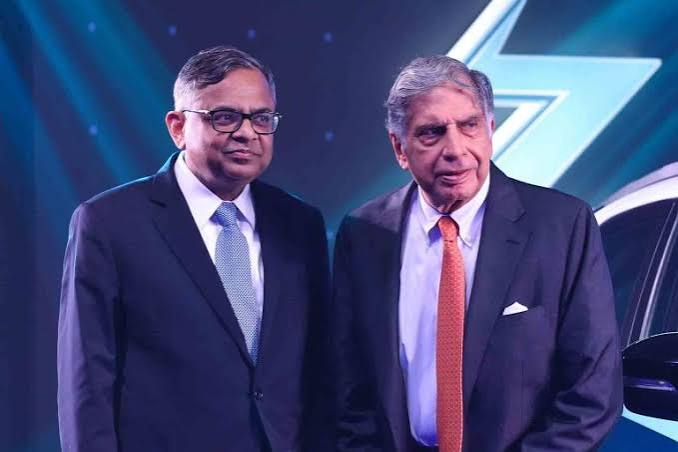
N Chandrasekaran, chairman of Tata Sons, is considering stepping down from the top post ahead of the company’s August 18 annual general meeting, according to reports, as uncertainty grows over his continuation on the Tata Sons board and tensions deepen between the company and Tata Trusts.
Chandrasekaran has discussed the possibility of stepping down with close associates, with the move potentially allowing him to avoid a contentious shareholder vote over his future, according to people familiar with the matter. No final decision has been made.
The immediate issue is his reappointment as a director of Tata Sons. Shareholders are due to vote on the matter at the August 18 AGM. Chandrasekaran’s current term as chairman runs until February 2027, but his continuation in the role depends on his remaining a director of Tata Sons.
The uncertainty follows a decision by the Tata Sons board in February to defer a call on Chandrasekaran’s reappointment as chairman after Noel Tata, chairman of Tata Trusts, raised reservations. Tata Trusts is the largest shareholder in Tata Sons, holding about 66% of the company.
What now appears to be a question over one chairman’s future, however, comes against a much wider dispute within the Tata Group – one involving the relationship between Tata Sons and Tata Trusts, questions over strategy and board representation, and disagreements over the future of some of the group’s businesses.
The August 18 AGM, therefore, is not simply about whether Chandrasekaran continues in the job. It is the latest point in a dispute that has been building for months.
This Did Not Start With The August AGM
The uncertainty around N Chandrasekaran’s future at Tata Sons did not begin with the August 18 annual general meeting. The first major sign of trouble came months earlier, when the Tata Sons board deferred a decision on his reappointment as chairman after Noel Tata raised concerns over the performance and direction of some of the group’s businesses.
The February 24 board meeting was significant because Chandrasekaran’s continuation had previously appeared relatively straightforward. He had taken charge of Tata Sons in 2017 and was serving his second term as chairman. Instead, the question of whether he should receive another term was left unresolved.
Noel Tata’s concerns reportedly included losses at some group companies and questions around the performance of newer businesses. Subsequent reports indicated that Air India, Tata Digital and other newer ventures became part of the wider discussion over capital allocation and strategy.
The disagreement did not end with the February meeting. By May, Chandrasekaran was expected to present a revised business roadmap addressing concerns around Air India, newer ventures and the group’s broader direction. The fact that such issues were being discussed alongside his reappointment showed that the question was no longer simply about an individual’s tenure.
That is what makes the latest development more consequential. What was deferred in February has now moved closer to a shareholder vote, with Chandrasekaran reportedly considering whether to step down rather than have his position tested at the August 18 meeting.
Before Noel Tata, There Was Ratan Tata
To understand the current friction inside the Tata Group, it is necessary to go back to the period when Ratan Tata was still alive and the relationship between Tata Sons and Tata Trusts operated under a very different set of circumstances.
N Chandrasekaran took charge of Tata Sons in 2017, after having served as chief executive of Tata Consultancy Services since 2009. His appointment marked the continuation of a professional-management model at the operating company, with Chandrasekaran running Tata Sons while Ratan Tata remained one of the most influential figures on the ownership and philanthropic side of the group.
That distinction matters because Tata Sons is not simply another operating company within the Tata Group. It is the principal holding company, and Tata Trusts collectively own about 66% of it. The Trusts therefore have enormous influence over the company, even though they do not directly run the group’s individual businesses.
While Ratan Tata was alive, he remained a central figure within that structure. Chandrasekaran handled the day-to-day leadership of Tata Sons and its portfolio, while Tata Trusts remained a powerful shareholder institution associated with Ratan Tata’s leadership and influence.
There was, in other words, a clear division between running the group and representing its largest shareholder.
That arrangement did not mean disagreements were impossible. But Ratan Tata’s presence provided continuity at the top of the Trusts side of the structure. The question after his death was therefore not simply who would succeed him personally. It was also how the relationship between the Trusts and Tata Sons would work without him.
That question became unavoidable in October 2024.
October 2024 Changed The Power Equation
Ratan Tata died on October 9, 2024. Two days later, Noel Tata was unanimously appointed chairman of Tata Trusts, succeeding him at the institution that holds about 66% of Tata Sons.
The change was significant because Tata Trusts is the largest shareholder of Tata Sons. Ratan Tata had been chairman of Tata Trusts while N Chandrasekaran continued to lead Tata Sons, keeping the roles of chairman of the Trusts and chairman of the holding company separate.
After Ratan Tata’s death, that arrangement continued – but with a different person at the head of Tata Trusts.
Noel Tata then joined the Tata Sons board as a nominee of Tata Trusts in October 2024. The appointment gave him a direct position on the board of the company chaired by Chandrasekaran, while he simultaneously remained chairman of the Trusts, which holds the majority stake in Tata Sons. Tata Sons’ own annual report confirms that Noel Tata was appointed as an additional director with effect from October 22, 2024, following his nomination by Tata Trusts.
That did not make Noel Tata chairman of Tata Sons. In fact, the separation between the two chairmanships remained intact. But it did mean that, after Ratan Tata’s death, the chairman of Tata Trusts was now also sitting on the board of Tata Sons.
That changed the equation at the top of the group.
Chandrasekaran continued to run Tata Sons. Noel Tata now headed the Trusts that controlled the majority of Tata Sons and also had a seat on its board.
The relationship between those two positions would become increasingly important as questions emerged over Tata Sons’ strategy, capital allocation and leadership – eventually bringing Chandrasekaran’s own future into question.
So What Exactly Is The Fight About?
The disagreement between Tata Sons and Tata Trusts is broader than the question of whether N Chandrasekaran should get another term.
At its centre are competing views over how the group should allocate capital, which businesses it should continue backing and how the holding company itself should be governed.
One of the biggest points of concern has been the performance of Tata Group’s newer businesses. Tata Sons has committed significant capital to businesses including Air India, Tata Digital, Tata Electronics, batteries and semiconductors, many of which are still in investment or turnaround phases. Tata Trusts has sought greater clarity on how these businesses will reduce losses and move towards profitability.
Air India is particularly important. The airline and Air India Express together reported a net loss of ₹22,238 crore in FY26, more than double the previous year’s loss. Chandrasekaran has maintained that rebuilding Air India is a long-term project that could take five to 10 years.
The debate also extends to Tata Sons itself. The holding company has faced questions over whether it should remain unlisted, particularly as regulatory requirements around large non-banking financial companies have raised the possibility of a mandatory listing. The issue has been discussed alongside the group’s plans for its newer businesses and its broader capital strategy.
Then there is the Shapoorji Pallonji Group. The Pallonji family has been a minority shareholder in Tata Sons for decades, and its planned exit has become another point of disagreement between the holding company and Tata Trusts. Reuters has reported that the two sides have also differed over board representation and the composition of the Tata Sons board.
Taken together, these issues explain why Chandrasekaran’s reappointment has become more complicated than a routine renewal of a chairman’s term.
The question now is not only whether Chandrasekaran should continue. It is also about what direction Tata Sons should take, how much it should spend to build businesses for the future, and how much influence Tata Trusts should have over those decisions.
And that brings the focus back to Chandrasekaran himself – the executive who has been making many of those calls since 2017.
The Chandrasekaran Question
N Chandrasekaran has not arrived at this point as an untested chairman. He has been at the helm of Tata Sons since 2017, after spending nearly three decades at Tata Consultancy Services and serving as its chief executive from 2009. His tenure has seen the group pursue an aggressive expansion into areas ranging from aviation and digital businesses to electronics and semiconductors.
There have also been major achievements during those years. Tata expanded its aviation presence, brought Air India back under the group and merged Vistara with the airline. The group also increased its push into new businesses and reorganised several of its existing operations.
But that expansion has come with a price.
Some of the newer businesses require substantial investment before they can generate meaningful returns, putting greater pressure on Tata Sons to decide how much capital should continue flowing into them and how quickly those investments should be expected to pay off.
Air India has become the clearest example. The airline remains a long-term turnaround project for the Tata Group, but its losses and continuing capital requirements have also made it one of the businesses at the centre of questions around the group’s strategy.
That is where the Chandrasekaran question becomes more complicated.
The issue facing Tata Sons is not simply whether its chairman has delivered enough during his nine years in charge. It is whether the strategy he has pursued – particularly the scale and pace of investment in newer businesses – continues to have the support of the group’s largest shareholder.
That distinction is important because Noel Tata’s reservations have reportedly not been limited to Chandrasekaran personally. The February decision to defer his third-term reappointment came alongside concerns over business performance and other strategic issues.
For Chandrasekaran, therefore, the question of a third term has become tied to a much larger question about the direction of Tata Sons itself. And that is precisely why the August 18 shareholder meeting matters.
The AGM Has Become The Battleground
The August 18 annual general meeting was expected to be a routine corporate event. Instead, it has become the immediate test of N Chandrasekaran’s position at Tata Sons.
Shareholders are scheduled to vote on his reappointment as a director of Tata Sons. That vote matters because Chandrasekaran’s current term as chairman runs until February 2027, but his continuation as chairman depends on remaining on the company’s board.
The significance of the vote goes beyond the formal agenda. Tata Sons is a private company, and Tata Trusts owns about 66% of it. The Trusts’ position therefore carries considerable weight in any decision involving the holding company and its leadership.
That is why the uncertainty surrounding Chandrasekaran’s reappointment has become so consequential. The Tata Sons board had already deferred a decision on his continuation as chairman in February after Noel Tata raised reservations. Now, with the shareholder meeting approaching, Chandrasekaran has reportedly discussed the possibility of stepping down rather than allowing his future to be determined by what could become a contentious vote. No final decision has been made.
Whatever happens on August 18, the meeting has exposed something larger than a question over one director’s reappointment.
It has brought the relationship between Tata Sons and Tata Trusts directly into focus and, with it, the question of who sets the direction for the Tata Group after Ratan Tata.
What Happens To TATA Group If Chandrasekaran Goes?
The immediate question is who would replace Chandrasekaran if he does step down. But the implications would go well beyond filling the chairman’s chair.
Chandrasekaran has been at the centre of Tata Sons since 2017, overseeing one of the group’s most ambitious periods of expansion. His departure would therefore come at a particularly complicated moment, with Air India still undergoing a costly turnaround, newer businesses requiring continued investment and Tata Sons facing unresolved questions over its future structure and strategy.
It would also force Tata Sons and Tata Trusts to face a leadership transition at a time when their relationship is already under strain. More importantly, a sudden exit would leave the group having to answer a question it has so far managed to avoid: who comes next?
A planned succession would give the board time to identify and prepare a replacement. A departure ahead of the August 18 AGM, however, could compress that process considerably and turn what was expected to be a leadership renewal into an unplanned transition. Reports currently describe Chandrasekaran’s possible exit as a consideration, not a final decision.
And there is another complication. The AGM itself is now surrounded by uncertainty over the voting rights of the Sir Ratan Tata Trust after the Maharashtra Charity Commissioner suspended the trust from decision-making pending an inquiry. That could add another layer to an already unusually complicated shareholder meeting.
Whatever happens to Chandrasekaran, the group is therefore facing something larger than a change at the top. It is facing its first major leadership test of the post-Ratan Tata era.
Was This Always Going To Happen After Ratan Tata?
For years, Ratan Tata was more than a former chairman of Tata Sons. He remained a powerful figure within the institutions that ultimately controlled the group, including Tata Trusts.
His death did not change who formally ran Tata Sons overnight. Chandrasekaran remained chairman. But it removed a figure who had been central to the balance between the Trusts and the holding company.
What followed was not an immediate rupture. Instead, the differences emerged gradually.
The Last Bit, The Question That Remains
Whatever happens to N Chandrasekaran on August 18, the Tata Group has already entered a different phase.
The immediate issue is whether Chandrasekaran remains at Tata Sons. The larger issue is what happens to the relationship between Tata Sons and Tata Trusts after Ratan Tata, whose presence had long provided continuity across the group’s ownership and management structures.
Since his death, Noel Tata has taken charge of Tata Trusts while Chandrasekaran has continued to lead Tata Sons. The two institutions now have to work through disagreements over strategy, capital allocation, board representation and leadership at a time when the group is pursuing some of its most expensive and consequential bets.
That makes Chandrasekaran’s possible departure more than a question of succession.
It could mark the first major change at the top of Tata Sons since the post-Ratan Tata structure began taking shape and could determine how much of Chandrasekaran’s strategy survives him.
For a group built over generations, the question now is no longer simply who sits in the chairman’s chair. It is who decides where Tata goes next.