BLS International Disqualified At Technical Stage For Outsourcing Visa Services At Madrid, Barcelona Spain Shows The Past Mis-Conduct And A Strong Reason Why MEA Debarred BLS International For 2 Years

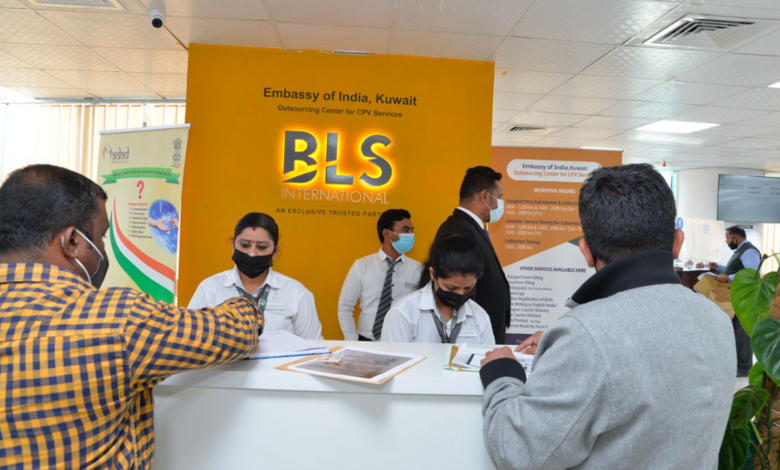
In a significant development that underscores the Indian government’s commitment to maintaining high standards in outsourced diplomatic services, the Ministry of External Affairs (MEA) recently debarred BLS International Services Ltd. from participating in future tenders for two years. This decision, effective from October 9, 2025, comes amid allegations of misconduct, including ongoing court cases and numerous complaints from visa and passport applicants. BLS International, a prominent player in the visa outsourcing industry, has faced scrutiny over its operations for years, with historical disputes revealing patterns of alleged deficiencies in service delivery, transparency, and compliance.
One pivotal episode that exemplifies these issues is the 2016 disqualification of BLS from a tender for visa outsourcing services in Spain, specifically at Madrid, Barcelona, and Las Palmas. This case, adjudicated by the Delhi High Court, highlighted concerns over BLS’s past performance, grievance handling, and overall operational integrity. The disqualification at the technical stage not only prevented BLS from advancing to the financial bid but also served as a harbinger of deeper systemic problems. By examining this incident in detail, we can understand why the MEA’s recent debarment—barring BLS from new contracts while allowing existing ones to continue—represents a culmination of longstanding grievances. This article delves into the intricacies of the 2016 Spain tender dispute, drawing connections to the 2025 debarment, and explores the broader implications for the visa outsourcing sector.
The debarment has had immediate repercussions, with BLS’s shares plummeting up to 18% on October 13, 2025, marking the company’s worst trading day since March 2020. Despite assurances from BLS that the ban will not impact its current operations or financials—claiming no material effect on ongoing contracts—the move signals a zero-tolerance policy toward entities that fail to uphold the MEA’s expectations. Sources indicate that the decision was influenced by a range of factors, including judicial findings from past litigations and persistent applicant complaints across various missions. The 2016 Spain case, in particular, stands out as a “strong reason” for this action, as it exposed alleged misconduct that the court refused to overturn, reinforcing the MEA’s rationale for the two-year exclusion.
Parties Involved, Context, and the Core Challenge
At the heart of the 2016 dispute was BLS International Services Ltd., a public limited company specializing in visa, passport, consular, and attestation services for diplomatic missions worldwide. Founded in 1983 and listed on Indian stock exchanges, BLS has positioned itself as a global leader in outsourcing solutions for governments, handling millions of applications annually. However, its engagement with the Indian government, particularly through the MEA, has been marred by controversies.
The respondents in the case were government authorities under the MEA, including the Indian Embassy in Madrid and relevant missions responsible for conducting tenders for outsourcing visa services. These entities oversee the procurement process to ensure that service providers meet stringent criteria for efficiency, security, and public trust—essential for handling sensitive diplomatic functions like visa processing.
The core challenge arose from an order dated July 13, 2016, which disqualified BLS at the technical evaluation stage of a tender for outsourcing visa, passport, and consular services in Spain. BLS had been the incumbent provider but failed to achieve the minimum technical threshold of 70% marks, scoring only 67%. This disqualification meant that BLS’s financial bid was not opened or considered, effectively sidelining the company from the contract. BLS petitioned the Delhi High Court via a writ petition, arguing that the evaluation was arbitrary, discriminatory, and influenced by past disputes that should have been set aside.
This incident was not isolated but part of a protracted litigation history dating back to 2013, reflecting ongoing tensions between BLS and the MEA. Visa outsourcing is a critical service for Indian missions abroad, involving the management of application centers, grievance redressal, and data security. Any lapses can lead to public dissatisfaction, diplomatic embarrassments, and legal challenges. The 2016 tender aimed to replace or renew services in key Spanish cities, where thousands of visa applications from tourists, students, and business travelers are processed annually.
Background Litigation History: From 2013 to 2015
The roots of the 2016 disqualification trace back to earlier tenders and court battles, painting a picture of repeated concerns over BLS’s operations. In January 2013, the MEA floated a tender for visa, passport, and consular services at Madrid and Barcelona. BLS, already providing these services since 2009, participated but was disqualified at the technical bid stage on March 14, 2013. The disqualification stemmed from allegations of misrepresentation, including claims that BLS had no stake in ARKE BLS, the entity purportedly running the centers.
BLS challenged this decision through Writ Petition (C) 1878/2013 before the Delhi High Court. On March 21, 2013, the court issued an interim order directing that BLS’s financial bid not be returned unopened, allowing the tender process to continue but restraining the award of the contract pending a full hearing. This order ensured continuity of services while the dispute was resolved.
The matter progressed to an agreed disposal on May 1, 2013. The court set aside the initial disqualification, noting that it was reached without affording BLS an opportunity to be heard—a fundamental breach of natural justice principles. The judgment directed the MEA to issue a proper show-cause notice, consider BLS’s response, grant a personal hearing, and pass a reasoned (“speaking”) order. Crucially, the decision was to be made by senior officers uninvolved in the prior evaluation. If the outcome was adverse to BLS, it would not be implemented for 15 days, allowing time for further legal remedies. Interim arrangements, with BLS continuing operations, were to persist until resolution.
Following this, on October 18, 2013, after complying with the procedural directives, the MEA again disqualified BLS from the 2013 tender. The reasons included persistent concerns over operational control and performance. BLS responded by filing another writ petition, W.P.(C) 7050/2013, challenging the fresh disqualification.
This petition lingered until October 13, 2015, when the court disposed of it based on assurances from the MEA. The respondents committed to initiating a fresh tender for Spain, permitting BLS to participate without the 2013 disqualification hindering its eligibility. The court ordered that BLS would continue operating the services until the new tender was finalized. This resolution appeared to offer BLS a clean slate, but as subsequent events showed, past issues lingered in the evaluation process.
This litigation history from 2013 to 2015 illustrates a pattern: repeated disqualifications tied to allegations of subcontracting without disclosure, inadequate stakeholder engagement, and questions over ownership stakes in operational entities. These disputes not only delayed service transitions but also eroded trust, setting the stage for the 2016 tender.
The 2016 Tender and BLS’s Disqualification
Building on the 2015 court directive, the MEA issued a fresh Request for Proposal (RFP) on January 18, 2016, for visa, passport, and consular support services at Madrid, Barcelona, and Seville. However, on February 8, 2016, the locations were amended to Madrid, Barcelona, and Las Palmas, reflecting operational needs.
BLS actively participated, submitting pre-bid queries to clarify terms. The tender process involved a two-stage evaluation: technical bids first, followed by financial bids for those qualifying with at least 70% in the technical score. The technical criteria, outlined in Annexure E of the RFP, encompassed aspects like infrastructure, staff quality, website functionality, grievance mechanisms, past performance, and client references.
Upon evaluation, BLS was informed that it scored only 67 points, falling short of the threshold. This led to its disqualification, prompting the writ petition challenging the July 13, 2016, order. BLS argued that the scoring was flawed, particularly in subjective areas, and that it should have qualified if marked fairly.
The Specific Scoring Dispute
BLS initially criticized the entire technical evaluation framework as overly subjective but narrowed its challenge to three criteria (Items 8, 9, and 10), where it received low marks: 5, 2, and 1, respectively. A comparative chart provided by the MEA revealed disparities with competitors VFS Global and CKGS (Cox & Kings Global Services).
- Criterion 8: Quality of Website & Grievance Redressal / MIS Features VFS and CKGS each scored 10, while BLS got 5. The justification cited BLS’s grievance mechanism as “lesser in quality” compared to rivals. Additionally, complaints about BLS’s services and websites in other countries like the Netherlands, USA, and China were referenced, suggesting broader dissatisfaction.
- Criterion 9: Past Performance with Mission/MEA/GOI VFS and CKGS, as newcomers to this mission, received neutral scores of 5. BLS, the incumbent, scored only 2, rated as “barely satisfactory.” Issues included BLS’s alleged unavailability for consultations in Madrid, inconsistencies in prior bidding information, and its litigation history—factors implying unreliability.
- Criterion 10: Quality of Non-GOI Client List and References VFS scored 10 with numerous strong references, CKGS got 4 with four references, and BLS received just 1 for providing only one reference tied to a single center in one country. The marking scaled with the number and strength of positive endorsements.
BLS contended that fair scoring in these areas would have pushed its total over 70, allowing its financial bid to be considered.
BLS’s Key Arguments Before the Court
In court, BLS emphasized that the low marks were arbitrary and discriminatory, rooted in past disputes that the 2015 order should have nullified. It argued:
- Penalization for earlier litigation violated the 2015 directive, which stated the 2013 disqualification “will not come in the way” of future participation.
- No documented complaints from the Spanish mission justified the low scores on website quality and past performance; BLS claimed exemplary service.
- The single mark under references was illogical, ignoring its extensive global portfolio.
BLS sought to portray the evaluation as biased, potentially influenced by malice or favoritism toward competitors.
Respondents’ Rebuttal
The MEA countered robustly, asserting no unequal treatment—all bidders faced the same framework. The criteria were pre-disclosed in the RFP, and BLS’s participation waived any right to challenge the methodology post-facto.
They alleged that BLS’s 2009 contract involved full subcontracting to another vendor, disputed by BLS but indicative of operational lapses. The 2015 order, they argued, merely ensured participation eligibility; it did not prohibit evaluating past conduct in scoring.
The MEA defended the scores as reasoned, based on evidence like complaints and internal assessments, without mala fides.
Court’s Reasoning and Approach
The Delhi High Court adopted a restrained approach, citing judicial precedents on limited interference in tenders. It accepted that BLS could not challenge the framework after participating and interpreted the 2015 order narrowly—it allowed entry but not immunity from performance scrutiny.
Reviewing the MEA’s files in camera, the court found no arbitrariness or impropriety. It invoked the “Wednesbury unreasonableness” test from CCSU v Minister for Civil Service, alongside Indian cases like Tata Cellular v Union of India, emphasizing review of process over merits absent clear bias.
The court held that BLS failed to prove illegality, irrationality, or mala fides.
Outcome and Implications
The writ petition was dismissed, with ancillary applications disposed as infructuous. This upheld the disqualification, allowing the tender to proceed without BLS.
This 2016 episode reveals a pattern of misconduct—subcontracting issues, grievance failures, and litigation—that persisted, contributing to the 2025 debarment. The MEA’s ban, amid complaints and court cases, ensures accountability, potentially reshaping the sector toward more reliable providers. While BLS maintains minimal impact, the debarment serves as a cautionary tale for outsourcing firms, highlighting the need for transparency and excellence in public service delivery.