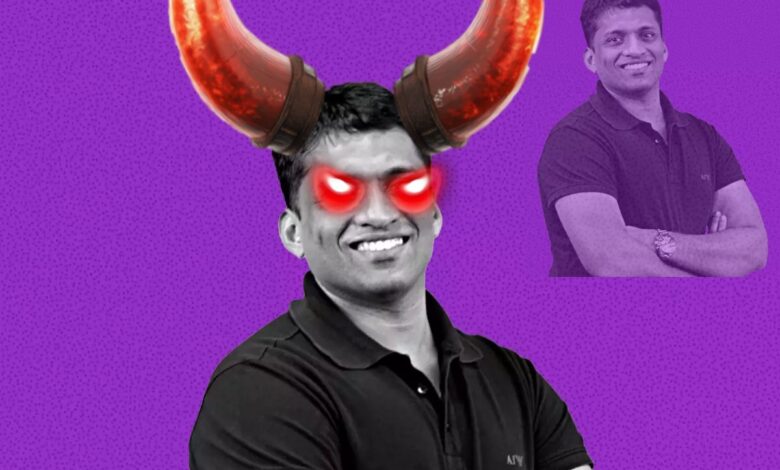
In a dramatic courtroom battle in Delaware (USA) in late 2025, lenders accused Byju’s, once India’s fastest-growing “edu‑decacorn” of “roundtripping” a missing $533 million in loan proceeds back to company insiders. According to a Delaware bankruptcy filing, Byju’s co-founder Byju Raveendran and his affiliates transferred roughly half a billion dollars from Byju’s Alpha (the U.S. loan vehicle) to a sham hedge fund and then on to overseas vehicles ultimately controlled by Raveendran.
A judge noted that the Miami‑based hedge fund (Camshaft Capital) was run by a 23‑year‑old with no investment experience and even listed a pancake house (IHOP) as its address. U.S. lenders say the money “in effect, was roundtripped right back to Byju Raveendran and his affiliates”, implying it was never used for the business purposes originally promised. Byju’s founders have flatly denied any fraud, insisting the funds were used for legitimate expansion (marketing, equipment procurement, etc.) and “not for personal use”. But the legal filings accuse the founders of playing a “game of charades” to conceal where the cash went, calling their conduct a “fraud on the Debtor and its creditors”.
This Delaware case was the latest and most explosive episode in Byju’s downfall. Not long ago (2022), Byju’s was India’s most valuable edtech start-up (peaking at a $22 billion valuation). It attracted billion-dollar investments from the likes of Prosus, SoftBank, and Mark Zuckerberg’s Chan Zuckerberg Initiative. It was the poster child of India’s online learning boom during COVID-19, promising to revolutionize education.
But by 2023‑24 a cascade of controversies and missteps unraveled this success story. Investigations by India’s regulators and courts have revealed huge foreign fund flows with scant oversight, aggressive spending on acquisitions and promotions, breaches of loan covenants, and apparent disregard for corporate governance. In short, Byju’s founders and management misled investors and, by extension, students and parents at multiple levels.
Timeline: Misuse of Funds and Governance Failures
- Nov 2021 – Byju’s parent (Think & Learn Pvt Ltd) raises a $1.2 billion Term Loan B (Byju’s Alpha) from U.S. banks to fund international expansion and acquisitions.
- Early 2023 – Operational cracks appear: Byju’s delays crediting employee provident fund (EPF) dues (over ₹123 crore remained unpaid until June 2023) and sees its auditor (Deloitte) resign in June 2023 amid missing records.
- Apr 2023 – The Enforcement Directorate (ED, India’s financial crime agency) raids Byju’s offices in Bengaluru for alleged Foreign Exchange Management Act (FEMA) violations. The ED later reported that Byju’s had received roughly ₹28,000 crore in FDI (2011–2023) and remitted almost ₹9,754 crore overseas, while failing to prepare audited accounts since FY2020–21.
- June 2023 – Byju’s delays publishing financials. The delayed audits trigger the resignation of Deloitte and three independent board members. Staff layoff notices mount: By mid-2023 over 25,000 of Byju’s then-58,000 employees had been laid off.
- Aug–Nov 2023 – Investors lose confidence. Dutch investor Prosus slashes Byju’s valuation (from $22 billion to ~$5.1 billion) and exits the board. The Chan Zuckerberg Initiative and others also resign. In September 2023 Byju’s is sued for defaulting on a ₹158 crore cricket sponsorship (BCCI). In November, U.S. lenders (via Glas Trust) sue in Delaware, alleging $533 million of their loan was hidden in a covert fund.
- Feb 2024 – A Mumbai tribunal (NCLT) bars Byju’s from using funds raised in a proposed rights issue. Investors (Prosus, Peak XV, General Atlantic, etc.) had petitioned that the rights issue was designed to dilute their stakes while promoter-linked entities were under investigation. The NCLT orders rights‐issue proceeds held in escrow pending resolution of an investor grievance suit.
- June 2024 – Byju’s defaults on the BCCI sponsorship (₹158cr) and cannot raise new funds. BCCI files a formal insolvency petition. (A ₹19 million settlement later quashes the petition, but the damage is done.) The Government’s probe (via Ministry of Corporate Affairs) wraps up: an MCA investigation finds “no evidence” of outright fraud or fund-siphoning, but flags corporate governance lapses and lack of transparency.
- Aug 2024 – India’s Supreme Court revives Byju’s insolvency proceedings after U.S. lenders petition over $1 billion of overdue loans. The judges note that Byju’s used lender money to pay off other debts (like the cricket board’s) – a point that suggests prioritizing insiders over creditors. Byju’s warns a looming “total shutdown” if insolvency proceeds.
- Oct 2024 – Founder Byju Raveendran publicly rebuts lender claims, saying Byju’s spent hundreds of millions on marketing (FIFA World Cup, Messi endorsements) and absorbing partner losses, and that “the money is someplace the lenders will never find it” was a misquoted statement. He insists none of the $533M went to him personally.
- Mar 2025 – A U.S. bankruptcy judge issues a summary judgment: he finds that Byju’s-related entities “fraudulently transferred” over $500M to Camshaft Capital, the high-risk hedge fund. That ruling clears the way for lenders to recover damages.
- Nov 2025 – Court filings by Byju’s Alpha (the U.S. loan vehicle) detail the alleged fraud: $533M was “clandestinely removed” and passed through multiple entities (even routed to Singapore). The filings claim this was part of “Raveendran’s plot to siphon…hundreds of millions of dollars of corporate assets for personal use”. Byju’s responses call these accusations “misleading” and say they will produce full records to rebut them.
Together, these events paint a timeline of growth turned crisis. Key incidents of auditor walkouts, ED raids, investor lawsuits and NCLT orders, repeatedly exposed how Byju’s pursued growth at all costs, with funds jumping across borders and boards in opaque ways. Many of the warning signs went ignored or were spun as technicalities; regulators now say they weren’t told the whole story.
Acquisitions and Squandered Investments
Byju’s strategy was once hailed as a masterstroke: grow fast by buying competitors and new offerings. Between 2019 and 2021 it spent billions of dollars on a spree of acquisitions:
- WhiteHat Jr (coding classes) – ~$300 M
- Aakash (test-prep chain) – ~$950 M
- Great Learning (professional courses) – ~$600 M
- Toppr (K–12 prep) – $150 M
- Epic (U.S. kids’ reading platform) – $500 M
- Osmo (educational games) – $120 M
Many of these were financed with fresh equity or loans. In theory, Byju’s now dominated India’s K–12 and higher-education sectors, and had an international footprint. In practice, these deals blew a hole in the company’s finances. The Ministry of Corporate Affairs later noted that from 2014–22 Byju’s deployed ₹9,025 crore on M&A, but the acquired businesses returned only ₹4,287 crore in income.
In other words, more than half of that investment never came back. Moreover, Byju’s booked ₹944 crore as “advertising and marketing expenses” (much of it paid to foreign accounts). Critics say this included lavish ad spends and sponsorships (for example, funding FIFA World Cup ads and signing Lionel Messi as ambassador) at the expense of improving core product quality or maintaining fiscal discipline.

These deals also obscured some misuse of capital. Lenders later found that Byju’s loan money went not into servers or teachers but into shell transactions. For example, the Delaware filings show $533M leaving the U.S. loan pool, supposedly via a UK procurement firm (OCI Ltd.), but then funneled through a hedge fund and back to founder-linked accounts. A sworn statement by OCI’s CEO Oliver Chapman actually “itemises down to the cent” what happened to the Alpha Funds once OCI got them and it contradicts the idea they were fully spent on tablets or marketing.
Inside Byju’s, the relentless push to deploy capital often drowned out pedagogical goals. Teachers and parents complained of pressure tactics. India’s child‑rights commission (NCPCR) in late 2022 accused Byju’s of misleading students, stealing phone numbers to hawk courses, and harassing users for renewals. Byju’s has disputed these claims, but their existence shows that the company’s “growth engine” often ran roughshod over consumers. In the end, all that spending and messaging gave little lasting proof of educational quality. Instead, it laid bare an edtech empire built more on hype than on a sustainable learning model.
Regulatory Scrutiny and Corporate Governance Lapses
Byju’s journey drew the attention of multiple regulators. The April 2023 ED raid (under the FEMA laws) exposed massive foreign fund flows with deficient documentation. ED’s showcause notice (Nov 2023) alleged Byju’s breached FEMA by delaying filings on nearly ₹8,000 crore of FDI and failing to allot shares against some investments. Report notes Byju’s itself called these filings “technical in nature” and expected only nominal penalties, yet the magnitude (over ₹9,300 crore) was startling. In essence, officials allege Byju’s made large foreign remittances and didn’t report them properly, “resulting in loss of revenue to the government”.
Meanwhile, the corporate watchdog (Ministry of Corporate Affairs) probed complaints (filed by NCPCR and others) about Byju’s finances. In June 2024 the MCA reported no conclusive evidence of deliberate fraud or siphoning, but it criticized the company’s governance. The MCA’s findings (paraphrased) were that Byju’s promoters “could have been more transparent” and that many issues were around “transparency and independence” of the board. Indeed, investor-appointed board members resigned in 2023 citing “lack of deliberations” on financial decisions. Byju’s “show cause” filings and public letters have repeatedly blamed supposed misunderstandings, but the pattern suggests systemic lapses in oversight.
An article detailed some of these warnings. For example, Byju’s hadn’t paid its EPF contributions on time (a legal obligation) until an EPFO probe forced a ₹123 crore catch-up in June 2023. Its longtime auditor quit (June 2023) saying management stonewalled access to records. All this occurred even as Byju’s deferred its annual reports, sparking red flags for any serious investor. Despite having top VC backers, Byju’s showed an internal culture hostile to scrutiny. It relied on high burn rates and promised returns that never materialized, and when outside directors objected, they were sidelined. This governance vacuum set the stage for the financial storm that followed.
Investor Revolt and Legal Battles
The edtech giant’s ultimate undoing may have been the revolt of its own investors. Many early backers (like Prosus, Sofina, and Peak XV/Sequoia) poured in cash only to see Byju’s burn through it without sufficient accountability. When Byju’s started defaulting on loan covenants and employee salaries, shareholders mobilized.
In late 2023 and early 2024, a consortium of foreign investors filed petitions in NCLT and NCLAT (Indian bankruptcy courts) accusing the founders of “oppression and mismanagement”. They sought to stop a rights issue that would dilute their stake without addressing their grievances. The tribunal agreed to escrow the new capital. Separately, U.S. lenders (via Glas Trust) took action abroad: seeking to enforce their $1.2 billion credit agreement, they forced Byju’s units into Chapter 11 in Delaware (Feb 2024) and sued in bankruptcy court (Nov 2023) over the missing $533M.
Even smaller creditors got involved. In March 2024, Ranjan Pai’s MEMG fund arbitrated against Byju’s over a $42 million loan tied to Byju’s shareholding in Aakash Education. An emergency award barred the edtech giant from selling 6% of Aakash (₹240 crore rights issue) because Byju’s hadn’t honored a share transfer commitment. Byju’s admitted it couldn’t move shares due to investor fights (and simultaneously couldn’t pay staff because new funds were blocked). These legal entanglements meant Byju’s could neither raise fresh money nor shed assets to cover liabilities.
All this came to a head by mid-2024. In India, the Board of Control for Cricket (BCCI), one of Byju’s biggest marketing partners reinstated its insolvency petition over the unsatisfied ₹158 crore deal. U.S. lenders pressed on in parallel. In August 2024, India’s Supreme Court revived the insolvency proceedings after U.S. creditors intervened. The court noted with concern that Byju’s had “used the money owed to lenders to clear the cricket board’s dues”, which is nothing but a vivid accusation that Byju’s was favoring insiders over its core financiers.
Employee Unrest and Educational Impact
Amid the boardroom and courtroom battles, the real-world impact on employees and students was severe. The edtech giant at one point employed 27,000 people (including 16,000 teachers) and taught 150 million registered students across 21 countries. These educators suddenly found themselves unpaid as Byju’s cash crunch deepened. By August 2024, thousands of teachers had not been paid for months. Over 3,000 employees filed claims with the insolvency officer, supported by WhatsApp groups of over 2,200 members organizing to recover salaries.

Some teachers even stopped classes altogether. It was reported that employees saying, “There’s no point doing charity for the company anymore”. Parents of students grew angry as classes were canceled and refunds were elusive. To publicize their plight, parents even discussed tagging Byju’s global brand ambassador Lionel Messi on social media to shame the company.
Staff attrition and layoffs accelerated. Estimates vary, but roughly half the workforce (perhaps 25,000–30,000 jobs) was cut by mid-2023. Some remaining staff allege a toxic culture and unresolved grievances. The co-CEO Divya Gokulnath (Byju’s wife) later admitted in an interview that internal reviews showed “painful lessons” about corporate culture.
For students and parents, the fallout was disillusioning. The edtech giant had touted high-tech personalized learning, but many enrolled students found billing errors, over-hyped claims, or poor post-sale support. Complaints to regulatory bodies (like the NCPCR) and consumer courts skyrocketed. Byju’s touted millions of paid users, but the unresolved complaints (over 4,390, with ~1,534 still open as of Jan 2024) and the insolvency threat damaged trust.
In the wake of Byju’s crisis, many parents became skeptical of all edtech offerings. Cuemath founder Manan Khurma warned that “investors will absolutely be more sceptical about investing in edtech” in India after the Byju’s saga. He even quoted unnamed VCs saying “we will not touch edtech again”. Demand for accountability and evidence of learning outcomes, long-simmering demands in education have suddenly become mainstream.
Historical Parallels and the Fall from Grace
Byju’s story has eerie parallels to other tech spectacles that began with lofty promises and ended in chaos. In Indian business folklore, it recalls cases like Educomp (once a pioneering edtech play that collapsed under debt) or the dot-com bubble’s many flameouts. Globally, it echoes the pattern of startups that burn through capital during boom times, only to leave behind broken systems (think WeWork or Theranos, albeit in different industries).
The key similarity: a heroic origin story – Byju Raveendran, a math teacher from Kerala, learned problems with creative shortcuts and grew popular by free coaching sessions. Investors saw an inspiring narrative and a massive market. But once corporate structures were built on that legend, the allure of cash and growth overshadowed the original mission. Instead of sustainable pedagogy, the edtech giant trajectory shows “growing too soon, too fast”, in the founder’s own words. When the inevitable reckoning came, the hype turned out to be a mirage.
This saga degraded the very idea of online education in India. For a time Byju’s had symbolized the future of learning; now its name is a cautionary one. Parents and policymakers alike have been reminded that selling education isn’t the same as delivering it. The litany of fraud and mismanagement has sullied the reputation of all edtech startups. One longtime observer summarized: “We are deeply concerned that the company may be planning to shut down operations without settling our dues.” And indeed, thousands of jobs and student outcomes now hang in the balance of legal fights rather than daily classes.
What Lies Ahead for Byju’s and Edtech
Byju’s future is very much at crossroads. In late 2024 and into 2025, various bidders have emerged (Manipal Education, UpGrad founder Ronnie Screwvala, others) to acquire parts of Think & Learn through insolvency processes. Any new owner will inherit a massive user base (150 million registrants) and expensive property (Aakash’s test-prep chain, Great Learning brand, etc.), but also enormous debts, liabilities to teachers, and a damaged brand.
The NCLT has already curtailed Byju’s capital raising (for example, striking down a ₹200 crore rights issue plan in mid‑2024). The edtech giant itself warned that a liquidation would cause a “total shutdown” of its services. Unless a rescue package can renegotiate debts and restore confidence, the company may indeed cease to function as a going concern.
Even if Byju’s is restructured, trust will take years to rebuild. The founder’s status has fallen from national icon to a collateral casualty of litigation. His claim that all funds were spent on legitimate purposes is now under court scrutiny. Prospective investors and parents will both be watching any revival skeptically. The very word “Byju’s” has become synonymous with corporate mismanagement.
For the broader Indian edtech sector, Byju’s collapse is a stark lesson. Investors have pulled back as industry leaders have acknowledged and they now demand tighter governance. Startups in this space must prove real learning outcomes and sound business models, not just user numbers and vanity metrics. Regulators may step up oversight: the ED and RBI have shown interest in FEMA compliance, and education authorities (including NCPCR and state consumer forums) are scrutinizing sales practices.
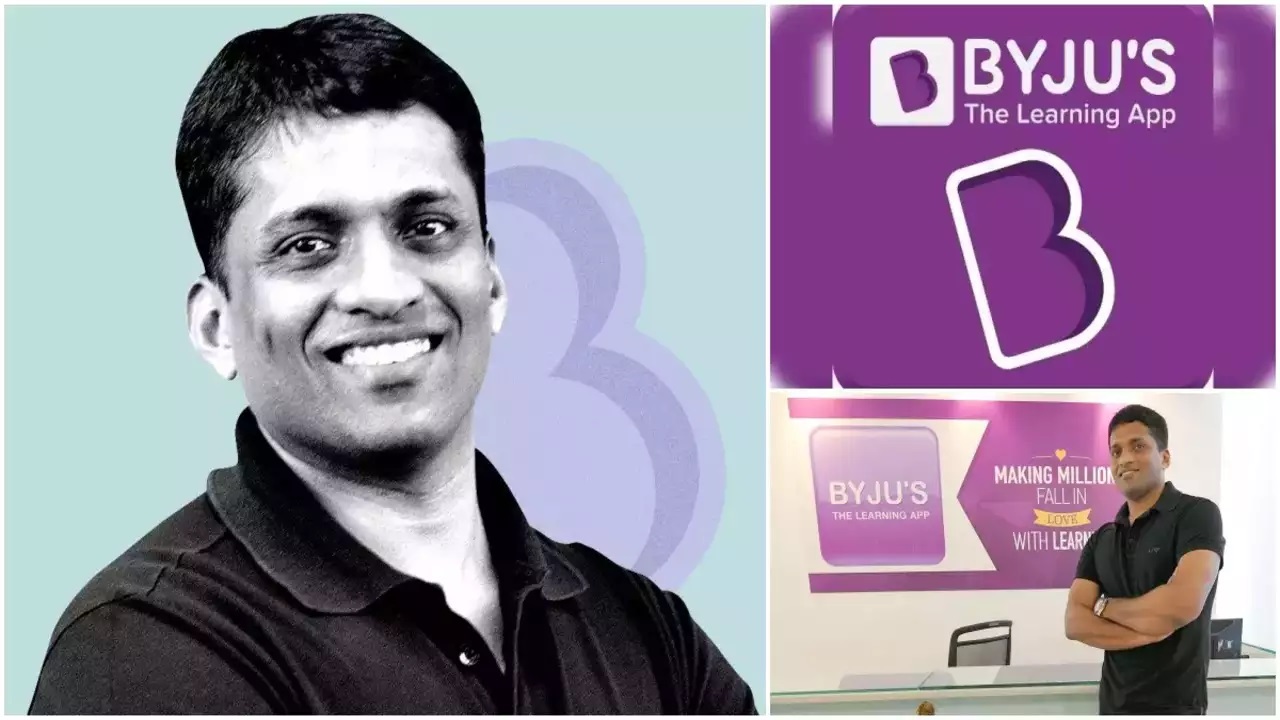
In a way, the Byju’s saga forces the whole industry to mature. If nothing else, it underscores that education is too important to be treated like a Silicon Valley cash-gusher. Parents and teachers will remember the Byju’s debacle whenever a flashy new app claims to revolutionize learning. As Cuemath’s founder said, “when we focus on retention and overall experience… we may emerge as one of the new crops of education that parents really trust”– a pointed reference to what Byju’s failed to do.
Looking back, we see an ambitious vision that was undermined by corporate avarice. The edtech giant started as a genuine attempt to democratize learning, but ended as a cautionary tale of hype overtaking substance. Its misuse of funds, from sponsoring World Cups to mysterious transfers to shell companies, was a betrayal of both investors’ money and students’ trust. In the end, Byju’s did mislead everyone it touched: not just big fund managers, but ordinary families who hoped for a better education. And that will be the hard-earned lesson it leaves behind.