CPI 2025: Ranked 91 – Explains Why India Builds Roads That Sing, But Cannot Build Roads That Survive
In CPI Index 2025, Indian scored 39 out of 100. The number may seem abstract. But drive through any Indian city, town or village, and the consequences feel painfully real. From collapsing roads to daily fatalities, governance gaps are etched into the asphalt beneath our wheels.

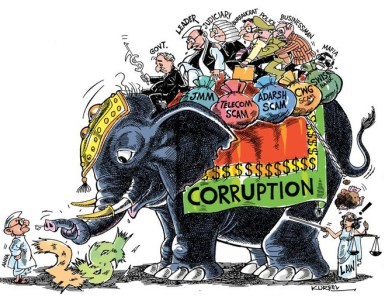
India has been ranked 91st out of 182 countries and territories in the 2025 CPI, Corruption Perceptions Index with a score of 39 out of 100, according to Transparency International. The number places the world’s fastest-growing major economy squarely in the middle of a global table that measures how clean or compromised public systems are perceived to be.
In the Asia-Pacific region, the average score stands at 45. A decade of anti-corruption promises has yielded little visible improvement. The report notes widespread public frustration, weak enforcement, opaque political funding, and unaccountable leadership across several countries. In places like the Philippines, Indonesia and Nepal, anger spilled into protests and political instability.
India has not seen that scale of upheaval over corruption in the past year. But perhaps that is not because the problem is smaller. Perhaps it is because it has been normalised.
Corruption is rarely dramatic in its daily form. It does not always announce itself through suitcase exchanges or sensational raids. More often, it seeps quietly into systems – into contracts awarded, inspections skipped, standards diluted, materials substituted, deadlines extended, and accountability deferred.
It appears in the gap between what is sanctioned on paper and what is delivered on the ground.
Does the ranking surprise anyone who drives on our roads?
Does it surprise anyone who has swerved around a crater-sized pothole days after a freshly paved stretch was inaugurated? Or anyone who has seen municipal drains overflow onto brand-new asphalt at the first spell of rain?
A corruption index score is an abstract number. But its consequences are concrete — literally. They are embedded in bitumen mixes that fail within two monsoons. They are visible in missing crash barriers, faded lane markings, and black spots that remain black year after year. They are buried beneath roads that are built for celebration, not durability.
Governance vs Civic Absurdity: The Musical Road Moment
Soon, motorists driving along Mumbai’s Coastal Road will hear something unusual beneath their tyres — the tune of “Jai Ho.”
At a cost of ₹6.21 crore plus GST, the Brihanmumbai Municipal Corporation has commissioned a Hungarian company to construct a “musical road” on the north-bound stretch from Nariman Point to Worli. As vehicles cruise at 70–80 kmph, specially engineered rumble strips will vibrate in calculated intervals, producing a recognisable melody inside the car cabin.
Signboards have already been installed 500, 100 and 60 metres ahead of the stretch to prepare motorists for the experience. Civic officials have described it as a blend of modern engineering and cultural expression. The project will be inaugurated in the presence of Maharashtra Chief Minister Devendra Fadnavis.
It is creative and novel. It will likely trend on social media, but it also raises an uncomfortable question.
In a country where open drains swallow pedestrians, where manholes remain uncovered, and where labourers fall into unmarked pits dug for repairs, what exactly are we prioritising?
Just days ago in Delhi, a 25-year-old man died after falling into a pit dug for sewer repairs in Janakpuri. Before public anger could subside, another daily wage labourer from Bihar’s Samastipur district died after falling into an uncovered 14-foot-deep manhole in Rohini’s Sector 32 – a sewer maintained by the Delhi Development Authority.
Eyewitnesses alleged that the victim lay in the pit for hours. Officials reportedly arrived in haste only after emergency calls were made. Manhole covers were brought in. Open drains were hurriedly sealed.
A case has been registered for causing death by negligence.
The contrast is jarring.
We can engineer a road that sings at 80 kmph, but we cannot ensure that a drain is covered at walking speed. We can import acoustic precision from Europe, but cannot enforce basic municipal safety protocols at home.
The issue is not the musical road itself. Innovation in infrastructure is welcome. Public spaces should have imagination, but imagination without accountability becomes spectacle.
When governance energy is invested in projects that generate applause rather than prevent deaths, the message is: presentation matters more than prevention. And this is not a Mumbai problem, not a Delhi problem but a structural problem.
The Silent Daily Disaster: 461 Deaths a Day
On the last day of November, two government buses – one travelling from Tiruppur to Karaikudi and the other from Karaikudi to Dindigul — collided head-on on the Thirupattur–Karaikudi main road in Tamil Nadu. Twelve people were killed on the spot. More than 40 were injured, including children and the elderly.
It made the news. For a day.
Then it dissolved into the statistical fog that swallows most road fatalities in India.
According to the Ministry of Road Transport and Highways (MoRTH), India recorded 4,88,583 road accidents in 2023, resulting in 1,72,890 deaths. That translates to roughly 461 deaths every single day. Nearly 55 accidents and 20 deaths every hour.
And even these numbers may be understated.
The Sample Registration System (SRS), managed by the Office of the Registrar General of India, estimated approximately 2,71,300 road accident deaths in 2022 — significantly higher than the 1,68,491 deaths reported by MoRTH for the same year. The discrepancy highlights a disturbing possibility: even the catastrophe may be undercounted.
Tamil Nadu continues to record the highest number of accidents in the country — 67,213 in 2023 alone, roughly 14% of the national total. That is about 184 accidents every day in one state.
Yet road fatalities rarely trigger sustained outrage. When an Air India aircraft crashed last June, it dominated headlines. Images of victims circulated widely. Debates erupted over aviation safety. The Directorate General of Civil Aviation responded swiftly. The nation mourned collectively.
But when 461 people die on roads every day, there are no prime-time debates. No nationwide introspection. No collective mourning. No social media profile pictures turning monochrome.
It is not because these deaths are less tragic but because they are routine. The crisis has been normalised. Fatal road traffic accidents have become part of India’s background noise – like traffic horns and construction dust. They are reported, recorded, and forgotten.
Perhaps newspapers should dedicate a daily column to road deaths, just as COVID-19 fatalities were tracked with clinical precision during the pandemic. At least then the scale would remain visible. Because unlike the virus, this crisis has shown no signs of losing its virulence.
And it is not an accident.
Road deaths are not random events. They are the cumulative outcome of design failures, poor enforcement, weak maintenance, and systemic indifference.
The roads do not merely carry vehicles. They carry the cost of governance gaps and the toll is paid in human lives.
The Infrastructure Paradox: Expressways and Erosion
India today boasts one of the fastest highway construction speeds in the world — roughly 30–34 kilometres per day. Mega projects like the Delhi–Mumbai Expressway and new coastal corridors signal ambition, scale, and engineering capacity. Ribbon cuttings are frequent. Drone shots are cinematic.
And yet, beneath this expansion story lies a contradiction.
India has over 60 lakh kilometres of roads – the second-largest network in the world. But nearly 40% of them remain unpaved or have deteriorated into gravel and mud. Around 30% of villages still lack reliable all-weather connectivity. In many regions, a single monsoon can undo years of incremental progress.
The problem is not construction alone. It is maintenance.
New highways are celebrated while older roads nearby crumble. Potholes reappear within months. Surfaces peel. Drainage fails. What was built for a 15–20 year lifespan begins to deteriorate in 2–3 years.
This creates a vicious cycle: kilometres added on paper, kilometres lost to neglect in reality.
Programmes like the Pradhan Mantri Gram Sadak Yojana have undoubtedly transformed rural connectivity. Millions gained first-time access to paved roads. School attendance improved. Market access expanded. Emergency mobility became possible.
But the backlog remains enormous and without sustained maintenance funding and accountability, the network will continue to expand and decay simultaneously.
Why Indian Roads Deteriorate
Roads do not fail overnight. They fail in layers.
At the most basic level, construction quality remains inconsistent. Between 2019 and 2024, multiple instances of structural damage across states were attributed to defects ranging from pavement cracking and rutting to retaining wall and bridge failures. These are not cosmetic flaws; they signal foundational compromise.
Poor mix design, inadequate compaction, and weak subgrade preparation reduce structural strength from day one. Bitumen content is often insufficient. Inferior aggregates are used. Drainage layers are poorly executed. When the first heavy rain arrives, water infiltrates the pavement base and accelerates deterioration.
Indian Roads Congress standards clearly prescribe material specifications and maintenance protocols. On paper, design life for many paved roads ranges between 15 and 20 years. In practice, several stretches begin showing distress within 2–3 years.
Drainage is the silent destroyer. Waterlogging weakens the base and sub-base layers, causes settlement, and leads to pothole formation. Monsoons are routinely blamed, but India has always had monsoons. The issue is not rainfall, it is preparation.
Subgrade instability adds another layer of risk. In regions with clayey soils, high groundwater tables, or poor compaction, the California Bearing Ratio often falls below design standards. Once the foundation weakens, the pavement above inevitably cracks.
Then comes overloading. An estimated one in three trucks exceeds permissible weight limits. Roads are designed for specific axle loads. When that threshold is routinely violated, fatigue damage multiplies. Service life shrinks. Maintenance costs spike. Structural failure accelerates.
None of this is unknown. None of it is technically mysterious. The science of pavement engineering is established. The problem is execution and enforcement.

The Hidden Tax on Every Indian
Road failure is not just a safety issue. It is an economic drag.
Roads carry nearly 70% of India’s freight and the vast majority of passenger traffic. When that network is inefficient, the economy absorbs the shock.
India’s logistics costs hover between 14–18% of GDP — almost double the global benchmark of around 8%. Poor road quality, congestion, and slow freight movement are major contributors. The average truck in India covers roughly 300–350 kilometres per day. In countries with smoother highways and better corridor management, trucks routinely cover 500–800 kilometres daily.
That gap translates into higher fuel consumption, longer delivery cycles, greater inventory holding costs, and inflated prices for consumers.
Even marginal improvements matter. A study in Pune found that maintaining smoother road surfaces could reduce fuel consumption by around 2.3%. Across millions of vehicles, that small percentage becomes enormous — crores of rupees saved in fuel and lower emissions.
Instead, rough roads increase braking, gear shifts, and engine strain. Vehicle wear and tear rises. Repair bills climb. Businesses factor those costs into pricing. Inflation absorbs it. Consumers pay.
This is the invisible tax of poor infrastructure and it compounds.
When trucks move slower, working capital cycles stretch. Agricultural produce takes longer to reach markets. Perishable goods spoil. Small manufacturers lose competitiveness. Export supply chains weaken.
In a country aspiring to become a manufacturing and logistics hub, road inefficiency quietly erodes productivity.
The Human Cost
When 461 people die daily on Indian roads, it is not an abstract crisis. It is breadwinners who do not return home. Children who lose parents. Families pushed into irreversible financial distress.
Road fatalities disproportionately affect the working poor – two-wheeler riders, pedestrians, cyclists, daily wage labourers. These are not insulated commuters inside reinforced cabins. They are the most exposed, travelling on the most neglected stretches.
And then there are the invisible consequences.
In villages without all-weather roads, mobility itself becomes seasonal. During monsoons, dirt tracks dissolve into sludge. Pregnant women are carried on makeshift stretchers. Patients miss emergency care. Students skip school. Farmers cannot transport produce in time. Opportunities shrink with every rainfall.
Isolation is not poetic. It is economic and generational.
A child who misses school repeatedly because a road is impassable is not merely inconvenienced. They are pushed further behind. A small farmer who cannot reach the mandi in time absorbs losses that accumulate year after year. A labourer injured in a preventable crash may never regain earning capacity.
Road neglect magnifies inequality.
Urban elites glide over expressways while peri-urban and rural communities navigate broken surfaces and waterlogged lanes. One India travels at 100 kmph. The other waits for the mud to dry.
Perhaps the most disturbing aspect is how normalised the danger has become.
Families routinely warn each other before travel: “Drive carefully.” “Watch for potholes.” “Avoid that stretch after dark.” These are not cautionary phrases in exceptional circumstances — they are daily survival instructions.
We have adjusted to risk instead of eliminating it. We have internalised road danger as fate rather than failure. And that is the deepest governance breakdown of all – when preventable harm becomes socially acceptable.

The Governance Core
If the science is known, the funding is increasing, and the ambition is visible, why does failure persist? Because accountability remains fragmented.
Road construction in India sits at the intersection of contractors, consultants, state departments, central agencies, local bodies, and auditors. Responsibility is diffused. When a road fails prematurely, blame circulates – from contractor to engineer to department to weather – until it disappears.
Earlier this year, Union Road Transport and Highways Minister Nitin Gadkari publicly criticised civil engineers for flawed Detailed Project Reports, stating that minor design mistakes were leading to major accidents and fatalities. The ministry has since pushed for stricter inspection regimes, including mandatory 100% quality control checks under EPC contracts -up from the earlier 50–60%.
These are steps in the right direction. But inspections after failure are not substitutes for enforcement before damage.
Too often, quality control becomes a paperwork exercise. Standards exist — Indian Roads Congress codes, pavement design norms, drainage specifications — but adherence depends on supervision. When oversight is weak, shortcuts become profitable.
Political incentives do not always favour maintenance. New roads bring inaugurations, visibility, and headlines. Maintenance budgets do not. A resurfaced stretch rarely attracts applause. A new expressway does.
This creates a structural bias toward expansion over durability.
Then there is the deeper issue: corruption is not always dramatic theft. It is sometimes tolerance – tolerance of substandard materials, tolerance of incomplete audits, tolerance of delayed repairs, tolerance of overloaded vehicles that quietly destroy infrastructure.
When enforcement is selective and penalties inconsistent, the system adapts to survive rather than improve.
The 91st ranking on the Corruption Perceptions Index, CPI, is not merely about bribes exchanged in backrooms. It reflects the everyday erosion of institutional discipline.