Did Atanu Chakraborty’s Resignation On Moral Grounds Hints On The Misconduct Of The CEO In Lilavati Case. Is The Lilavati Fraud Case Story True Due To Which Interim Chairman Resigned?
An account of HDFC Bank's gathering governance crisis — from a chairman's cryptic resignation to a CEO's FIR, a pattern of regulatory penalties, and the questions India's largest private lender refuses to answer

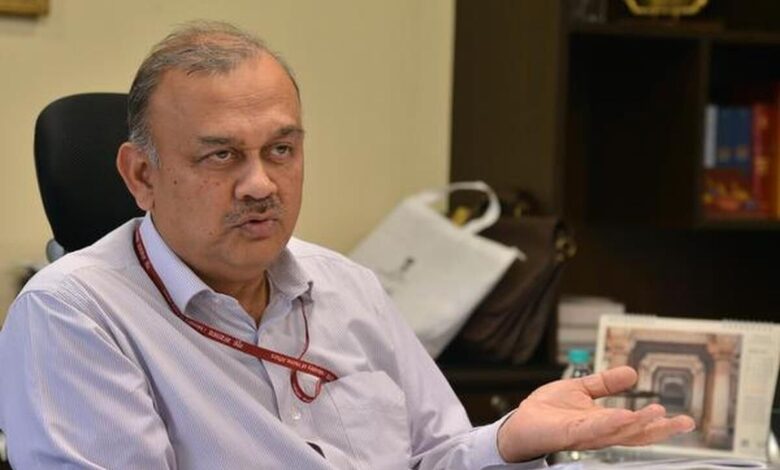
The Silence That Spoke Loudest: What Did Atanu Chakraborty Know, and Did the Lilavati Storm Force His Exit?
On the evening of March 18, 2026, a letter arrived at the registered offices of HDFC Bank that contained perhaps the most consequential sentence written about any Indian financial institution in recent memory. Atanu Chakraborty, the bank’s part-time chairman since 2021, resigned unexpectedly, writing: “Certain happenings and practices within the bank, that I have observed over last two years, are not in congruence with my personal values and ethics.“
Eleven words — “not in congruence with my personal values and ethics” — and nothing more. No allegation named. No practice identified. No person accused. Just an extraordinarily senior figure, a 1985-batch IAS officer who retired as Secretary of the Department of Economic Affairs, walking away from the chairmanship of India’s largest private sector bank and leaving behind a sentence that raises more questions than any press release could answer.
The resignation sent the stock tumbling to its 52-week low of ₹772 on the BSE, before recovering slightly to around ₹803.90 in noon trading, still down close to 5%. By the time markets opened on March 19, 2026, HDFC Bank’s ADRs on the New York Stock Exchange had plunged 7.3% to settle at $26.6 per scrip. Shares of HDFC Bank dived nearly 9% in Thursday morning trade, with the stock tanking 8.41% to ₹772 — its 52-week low on the BSE.
The markets, in other words, understood the gravity of what Chakraborty had not said, even before anyone could piece together what he might have meant. And the question that India’s banking folks, institutional investors, and regulatory observers must now ask is direct and unavoidable: what, precisely, did Atanu Chakraborty witness over those two years that he observed — and is the Lilavati Hospital Trust scandal involving HDFC Bank’s sitting CEO one of those “happenings and practices”?
This article does not claim to know the answer. What it does, through the documented public record, is assemble the evidence that makes the question impossible to avoid.
Part One: The Resignation and What It Left Unsaid
To appreciate the significance of Chakraborty’s departure, one must first understand who he is and what his position represented within the bank’s governance structure. Chakraborty, a 1985-batch IAS officer of the Gujarat cadre, retired as Secretary of the Department of Economic Affairs in April 2020. Prior to that, he was Secretary of the Department of Investment and Public Asset Management (DIPAM). He was appointed part-time chairman effective May 5, 2021, almost a year after his retirement. His term was extended for another three years in 2024 till May 4, 2027.
This is not, in other words, a man who had served his term and left gracefully. This is the first time that the part-time chairman of HDFC Bank left mid-way, raising concerns over its functioning. He had three years remaining on a term that had been explicitly renewed with RBI approval as recently as 2024. The deliberateness of walking away from that position, mid-term, with immediate effect, rather than waiting out a resignation notice or allowing for a managed transition, signals that whatever Chakraborty observed was not something he could continue to preside over in good conscience.
InGovern Research Services founder and MD Shriram Subramanian, one of India’s most respected corporate governance experts, told Business Today: “That the Chairman has to write this sort of a letter saying that the bank’s practices are not aligned with his governance or his ethics is definitely a big surprise.” He argued that “HDFC Bank should constitute a committee of independent directors to reach out to Atanu Chakraborty and come out with a white paper on the matter. The management cannot just say that all is hunky-dory and wish it away, because it’s a big telling statement by the chairman.”
During an investor call on the day of the resignation, interim part-time chairman Keki Mistry said that Chakraborty had not provided the board with any evidence or details of the alleged unethical practices. The RBI, for its part, moved swiftly to calm nerves — stating that HDFC Bank has “sound financials” and is run by a professional board and competent management.
But here is the question that the RBI’s reassurance cannot answer: if Chakraborty’s concerns had no substance, why did a man of his stature and institutional standing choose to destroy his public legacy of quiet, dignified service with a resignation letter that could not be read as anything other than a serious institutional indictment? And if his concerns had substance, why did the board not know what those concerns were — and is that claim of ignorance itself an answer that satisfies the governance standards that India’s largest private bank is supposed to embody?
JPMorgan, in its assessment, said that while Chakraborty “has not alleged any misconduct, the negative perception may weigh on the stock until clarity emerges.” Clarity, as of the writing of this article, has not emerged from within the bank’s walls.
Part Two: The Lilavati Scandal and the Twelve Months That Preceded the Resignation
Chakraborty’s resignation letter specifies that the happenings and practices he observed were those “over last two years.” Two years measured backward from March 2026 takes us to approximately March 2024. The timeline of the Lilavati Trust controversy, which directly involves the conduct of HDFC Bank’s sitting Managing Director and CEO Sashidhar Jagdishan, sits squarely within that two-year window.

The facts of the Lilavati controversy, as established through FIRs, court orders, and public statements, are as follows.
The Lilavati Kirtilal Mehta Medical Trust (LKMM Trust), which manages Mumbai’s renowned Lilavati Hospital, filed a ₹1,000 crore civil defamation lawsuit against HDFC Bank’s MD and CEO Sashidhar Jagdishan in June 2025, over a series of what the Trust called “malicious, false, and defamatory statements” made against the Trust and its Permanent Trustee, Prashant Mehta.
The allegations went considerably further than defamation. The LKMM Trust had previously lodged a criminal FIR against Jagdishan, accusing him of financial fraud. The Trust alleged that of the ₹14.42 crore misappropriated by its trustees, ₹2.05 crore were received by Jagdishan. The complaint alleged that this payment was not coincidental or innocent. According to the Trust’s allegations, Jagdishan allegedly accepted the ₹2.05 crore in exchange for providing financial advice to help the Chetan Mehta Group retain illegal and undue control over the Trust’s governance. The Trust accused Jagdishan of misusing his position as the head of a leading private bank to interfere in the internal affairs of a charitable organisation.
The Trust made additional allegations that, if substantiated, would represent a serious abuse of corporate position. The Trust accused the bank of offering ₹1.5 crore to hospital staff in the name of Corporate Social Responsibility (CSR), claiming it was an attempt to destroy evidence and interfere with the investigation.
In addition to the civil defamation suit, the Trust filed a criminal complaint before the Metropolitan Magistrate in Girgaon, who issued notice to the CEO, spokesperson, and Corporate Communication Head of HDFC Bank.
Then came a development that must be placed on record without embellishment, because the facts speak more powerfully than any editorial comment. When Jagdishan moved the Bombay High Court to quash the FIR, the matter was first listed before a bench of Justices AS Gadkari and Rajesh Patil — and Justice Patil recused himself. Later that day, it was mentioned before a bench led by Justice Sarang Kotwal, who also recused.
Over the following days, Justices Revati Mohite Dere, GS Kulkarni, Arif Doctor, BP Colabawalla, MM Sathaye, RI Chagla, and Sharmila Deshmukh all recused from hearing the case. When ten judges of one of India’s most important High Courts step away from a single matter involving the CEO of a major private bank, what does that pattern of recusal tell us about the institutional weight that surrounds this case?
The Supreme Court, on July 4, 2025, refused to entertain Jagdishan’s plea challenging the FIR. A bench of Justices P S Narasimha and R Mahadevan noted that the matter was already listed for hearing before the Bombay High Court and said they were not inclined to entertain the matter.
By November 17, 2025, fresh reports emerged of the Mumbai Police’s Economic Offences Wing planning summons for all accused in the case, including the HDFC Bank CEO, for questioning in a case involving the alleged diversion of over ₹1,300 crore in trust funds.
All of this — the FIR, the defamation suit, the EOW investigation, the parade of judicial recusals, the Supreme Court’s refusal to intervene — unfolded between mid-2025 and November 2025. Chakraborty’s letter speaks of “happenings and practices” observed over “the last two years.” The Lilavati scandal sits within that window. The question this investigation asks is not rhetorical: is it reasonable, or even responsible, to assume that the chairman of HDFC Bank was unaware of an FIR filed against the bank’s own CEO — and if he was aware, can the existence of that FIR and the governance questions it raises be entirely excluded from what his conscience ultimately could not accommodate?
HDFC Bank has denied all allegations connected to the Lilavati matter. The bank called the allegations “absurd” and argued that the Trust’s actions were motivated by the bank’s recovery efforts against loan defaulters connected to the Mehta family. The counter-narrative presented by the bank centres on a 1995 loan extended to Splendour Gems Limited, a Mehta family-promoted company, which defaulted in 2001. As of May 2025, outstanding dues reportedly stood at around ₹65 crore, including interest accumulated over two decades.
The bank maintains that the timing of the accusations coincides with its aggressive recovery efforts. These are facts the reader must weigh. But the question is not merely whether the bank’s counter-narrative is credible — it is whether a sitting chairman, reading news coverage of his bank’s CEO being summoned by an Economic Offences Wing and having an FIR upheld by the Supreme Court, would have found those “happenings and practices” congruent with his personal values and ethics. That question has no comfortable answer.
Part Three: A Pattern That Precedes the Crisis — The Accumulating Regulatory Record
If the Lilavati matter were the only governance cloud hanging over HDFC Bank, it might be possible to characterise Chakraborty’s resignation as being specifically, exclusively about that one situation. But the documented regulatory record over the two years of his “observation window” presents a more troubling picture — one that suggests the Lilavati controversy was not an isolated incident within an otherwise well-governed institution, but one peak in a longer and more concerning terrain.
In September 2024, the RBI took action that is particularly significant in context. The Reserve Bank of India imposed a ₹1 crore penalty on HDFC Bank for violating guidelines related to the engagement of recovery agents. The bank’s recovery agents were found to have contacted customers outside of stipulated hours, disrupting their privacy and causing inconvenience. Specifically, HDFC’s agents were found to be calling defaulters beyond permissible hours — past 7 PM and before 7 AM — and using what the RBI characterised as inappropriate conduct toward borrowers.
This was not the only penalty. By an order dated March 24, 2025, the RBI imposed a monetary penalty of ₹75 lakh on HDFC Bank for non-compliance with certain directions on Know Your Customer (KYC) norms. The penalty, as one report characterised it, essentially penalised the bank for making ordinary customers run from branch to branch with endless document demands.
The pattern of regulatory non-compliance extends into specific, documented customer harm. In one 2019 case, an engineer presented proof he had paid his credit card bill, but HDFC continued to call him 20 times in a single day, threatening to wreck his CIBIL score. A Bengaluru court ultimately ordered HDFC to pay ₹60,000 in compensation for “mental agony.”
Then there is the NRI customer scandal, which broke in mid-2025 and represents a category of alleged misconduct that is distinctly more serious than aggressive collection practices. In July 2025, media reported that four NRI customers had filed economic-offences complaints against HDFC, accusing its Middle East branches of misusing ₹25–30 crore of their fixed deposits to buy high-risk Credit Suisse AT1 bonds.
In one case, HDFC officials allegedly “fraudulently inflated” a customer’s annual income from $40,000 to $1,40,000 to make him eligible for these bonds. The customers allege they were misled with promises of 12–13% returns and were not given full agreements to review. When Credit Suisse collapsed in 2023 and wrote off the bonds, HDFC wrote off the loans collateralised against them and seized the customers’ fixed deposits.
When examined as a sequence rather than as isolated incidents, these events — the recovery agent violations, the KYC non-compliance, the NRI bond controversy, and the Lilavati FIR against the bank’s own CEO — form a pattern that spans almost precisely the two-year window that Chakraborty’s resignation letter references. Is it possible that a part-time chairman sitting on the board of a bank during this period would have been unaware of all of these developments? And if he was aware of them, is it possible that his decision to leave was shaped not by any single event, but by the cumulative weight of a pattern that made his continued presence untenable?
Part Four: The Merger’s Shadow — The Questions Chakraborty Himself Raised
There is one other dimension of Chakraborty’s resignation letter that deserves careful attention, because it suggests that his concerns may have extended beyond conduct and into strategy.
In his resignation letter, Chakraborty acknowledged: “I joined the Board of HDFC Bank in May 2021. My tenure on the Board saw momentous events like the merger of the bank with HDFC Ltd that created a conglomerate under the bank. This strategic initiative made HDFC Bank the second largest Bank in the country. Though, the benefits of merger are yet to fully fructify.”
Chakraborty also referred to the bank’s merger, saying that its full benefits are yet to be realised, and indicated that the integration process may still be facing challenges with the expected gains not having fully come through.
The merger between HDFC Ltd and HDFC Bank, which became effective on July 1, 2023, created a financial behemoth with a combined balance sheet of over ₹18 lakh crore. HDFC Bank reported a balance sheet size of ₹39.1 lakh crore as of March 31, 2025, and ₹40.89 lakh crore as of December 31, 2025.
The scale is not in question. What Chakraborty appears to be saying, in language calibrated to be diplomatically vague while directionally clear, is that the strategy and the governance around the post-merger integration has not produced what he believed it should have produced. One must ask: were the “happenings and practices” that troubled him connected, at least in part, to how the merged entity’s management has conducted itself during the integration period — a period that coincides precisely with the same window in which the Lilavati controversy, the NRI bond allegations, and the regulatory penalties all accumulated?
Corporate governance expert Shriram Subramanian identified this gap explicitly: “Whether there was just a difference of opinion on a few things or perhaps there were major concerns over how things were run, is still not clear in his resignation. It could be the result of multiple things.”
Part Five: The Board-Management Question That JPMorgan Named
Of all the professional reactions to Chakraborty’s resignation, JPMorgan’s assessment was the most precise in naming the structural concern that the letter raises. JPMorgan stated that Chakraborty’s reasons of “values and ethics misalignment” raises concerns over “Board-Management alignment,” noting that while “he has not alleged any misconduct, the negative perception may weigh on the stock until clarity emerges.”
“Board-Management alignment” is a specific and significant term in the vocabulary of corporate governance. It refers to the relationship between a company’s board — which is supposed to represent shareholders and act as a check on management — and the management team that runs day-to-day operations. When the two are aligned, the board’s governance function is effective, and management operates within boundaries that the board can monitor and enforce. When they are misaligned, management can operate in ways that the board either does not know about or cannot effectively constrain — which is precisely the governance failure that leads to the kinds of institutional problems this article has documented.

The question that JPMorgan’s “Board-Management alignment” framing opens is one that the public record cannot yet answer definitively: was Atanu Chakraborty aware of the Lilavati matter and its implications, and did he raise concerns within the board about how the bank was responding to it? Was he aware of the NRI bond controversy and did he question whether the bank’s handling of those complaints met the ethical standards he had been appointed, by the RBI itself, to uphold?
Did his “observation” of the bank’s practices over two years lead him to conclusions that he could not reconcile with remaining in the chair — and is the bank’s assurance that no evidence or details were provided to the board an indication that the governance mechanisms were working, or an indication that they were not?
“That is precisely my concern that the management will sort of swipe it under the carpet and say that there are no concerns per se,” Shriram Subramanian told Business Today.
Part Six: The Institutional Stakes
The importance of these questions extends well beyond HDFC Bank’s shareholder register and beyond the careers of the individuals involved. HDFC Bank commands significant weightage in key indices — approximately 13–14% in Bank Nifty and around 8% in Nifty 50. It is designated as a Domestically Systemically Important Bank (D-SIB) by the RBI — which is precisely the category of financial institution whose governance failures, when they occur, do not stay within the institution but propagate outward into the broader financial system and the millions of ordinary depositors, borrowers, and investors who depend on it.
HDFC Bank’s size, D-SIB status, and central role in India’s financial system make this more than a boardroom event. It is a test of how a major institution handles doubt, reassures stakeholders, and protects credibility when questions arise at the top.
The RBI’s reassurance that the bank has “sound financials” is important and should not be dismissed — financial soundness is not in question here, and a governance controversy, however serious, is a different category of concern from solvency stress. But the two are not entirely separable. Governance determines conduct, and conduct over time determines whether a financially sound institution remains the trustworthy, credible steward of public deposits that its balance sheet size implies. The questions raised by Chakraborty’s resignation, by the Lilavati controversy, by the pattern of regulatory penalties, and by the NRI bond allegations are governance questions — and governance is precisely the domain that a chairman is appointed to oversee.
Conclusion: The Questions That Cannot Be Wished Away
This article does not conclude that Atanu Chakraborty resigned because of the Lilavati scandal. It concludes something both more modest and more consequential: that the publicly documented record makes it impossible to responsibly discuss his resignation without asking whether the Lilavati scandal — in which an FIR alleges that the bank’s sitting CEO accepted a bribe of ₹2.05 crore, in which ten High Court judges recused, in which the Supreme Court declined to intervene, and in which the Economic Offences Wing was preparing summons as recently as November 2025 — was among the “happenings and practices” that a man of Atanu Chakraborty’s documented integrity could not, in good conscience, continue to preside over.
The bank has said the board received no evidence or details. The governance expert community has said the bank must not be allowed to sweep this under the carpet. The markets have said, in the only language markets speak, that eleven words and a resignation have consequences that a press release cannot undo. And the regulatory record has said, through a ₹1 crore penalty, a ₹75 lakh penalty, multiple consumer forum judgments, and an active EOW investigation into the bank’s own CEO, that the institutions charged with overseeing HDFC Bank have found reason, repeatedly, to intervene.
What did Atanu Chakraborty know? What did he observe? And what, specifically, crossed the line that he had determined he would not cross?
India’s banking regulators, its institutional investors, its financial press, and — most importantly — its depositors and customers deserve answers to those questions. The bank’s assurance that everything is sound is not, by itself, an answer. A chairman who resigned over ethics named no wrongdoing but named everything by naming ethics. The burden of explanation now falls on the institution, not on the man who walked away from it.