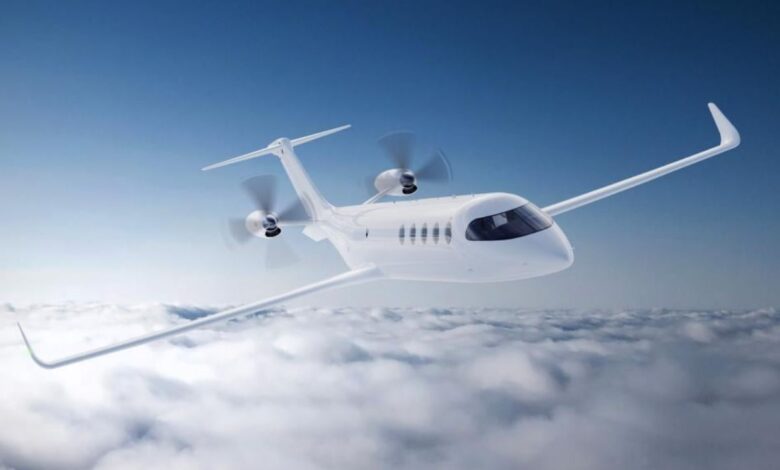
Introduction: India’s Electric Aviation Revolution Takes Flight
India stands on the cusp of an aviation revolution as electric aircraft developers race to transform the nation’s congested urban landscapes into three-dimensional transportation networks. In 2026, the convergence of technological maturation, regulatory support, and massive urban congestion has created the perfect conditions for electric vertical takeoff and landing aircraft to transition from science fiction to commercial reality. The Indian government’s progressive stance on advanced air mobility, combined with the Directorate General of Civil Aviation issuing airworthiness criteria for eVTOL certification, signals that India is positioning itself as a global hub for electric aviation development and deployment.
The market opportunity is staggering. With over 1.4 billion people, some of the world’s most congested cities, and a rapidly growing middle class eager for innovative mobility solutions, India represents what many industry experts believe will become the largest eVTOL market globally. Cities like Bengaluru, where traveling just two kilometers can take two hours during peak traffic, demonstrate the urgent need for alternative transportation modes. Electric aircraft promise to reduce hour-long commutes to mere minutes while operating with zero emissions, minimal noise pollution, and significantly lower infrastructure requirements compared to traditional aviation.
1. The ePlane Company: IIT Madras Innovation Soars to Billion-Dollar Heights
The ePlane Company represents the pinnacle of Indian academic innovation transitioning to commercial success. Incubated at the prestigious Indian Institute of Technology Madras and founded by aerospace professor Satya Chakravarthy in 2019, the company has achieved milestones that position it as India’s most advanced electric aircraft developer. The startup holds a synergistic lift patent in eight countries and became the first private Indian company to receive Design Organisation Approval from the Directorate General of Civil Aviation for electric aircraft, with type certification already in progress since December 2024.
The company’s flagship product, the e200x air taxi, utilizes a revolutionary lift-plus-cruise configuration that combines winged architecture with vertical rotors, enabling the aircraft to achieve superior range compared to pure multicopter designs. This innovative approach allows the e200x to complete up to sixty trips daily on a single charge, transforming economics for urban air mobility operators.
With a compact wingspan of just eight meters, the aircraft can operate from tighter spaces than competing designs, making it ideal for dense urban environments. The e200x is designed to carry a pilot, paramedic, and patient with stretcher in ambulance configuration, or three to four passengers in air taxi mode, with an initial range of 110 kilometers that will extend beyond 200 kilometers in future versions.
In February 2025, ePlane secured a transformative billion-dollar deal with International Critical-Care Air Transfer Team to supply 788 air ambulances for deployment across every district in India. This agreement validates the commercial viability of the company’s technology and provides a clear path to scale production. The company has raised 21.5 million dollars from investors including Speciale Invest, Micelio, and Antares Ventures, with co-leads from Naval Ravikant and participation from prestigious funds.
Professor Chakravarthy, who also serves as co-founder and advisor to space technology startups Agnikul and GalaxEye, brings exceptional technical credentials and entrepreneurial experience. The company recently partnered with Dubai-based Empire Aviation Group to accelerate deployment across India, UAE, Thailand, and Indonesia, and plans to commence commercial operations in late 2026 with initial production capacity of 100 units annually while seeking an additional 100 million dollars for development and certification.
2. Sarla Aviation: Former Lilium Veterans Build India’s Most Advanced eVTOL
Sarla Aviation emerged in January 2024 when German aerospace designer Adrian Schmidt and automotive design expert Rakesh Gaonkar, both veterans of European eVTOL pioneer Lilium, relocated to Bengaluru after identifying India as the ideal market for their flying taxi vision. Named after Sarla Thakral, India’s first female pilot who earned her license in 1936, the company embodies the pioneering spirit required to establish a new industry. Joined by software engineer Shivam Chauhan, the founding team combined deep expertise from companies including Mercedes-Benz, Volkswagen, BMW, Audi, Nio, General Motors, Mahindra, and Citroën to create India’s most internationally experienced aerospace startup.
The company’s flagship aircraft, Shunya, which means zero in Hindi, is a six-passenger hybrid-electric air taxi designed specifically for Indian market conditions. Unlike competitors focused on pure electric propulsion with limited range, Sarla prioritized payload capacity and versatility, reasoning that in India’s dense cities, shorter range combined with higher passenger capacity at attractive pricing represents the optimal product-market fit. The aircraft features seven electric propulsion units powered by two battery packs for fully electric urban flights up to 150 kilometers, plus a sustainable aviation fuel tank that extends total range to 800 kilometers for regional routes, all while achieving speeds up to 250 kilometers per hour.
In December 2024, Sarla began ground testing of its half-scale prototype, the Sylla SYL-X1, featuring a 7.5-meter wingspan and representing India’s largest privately developed eVTOL at this scale. The company developed this sophisticated prototype in just nine months with significantly lower capital expenditure compared to most global eVTOL programs, demonstrating exceptional engineering efficiency. Sarla has raised 12.2 million dollars in funding led by Accel, with participation from Indian entrepreneurial luminaries including Flipkart co-founder Binny Bansal, Zerodha co-founder Nikhil Kamath, and Swiggy co-founder Sriharsha Majety.
The company signed a memorandum of understanding with the Andhra Pradesh government in November 2025 to build the world’s largest dedicated eVTOL manufacturing facility. This ambitious 500-acre giga campus in Thimmasamudram village, Anantapur district, represents an initial investment of 145 million dollars with plans for significant additional capital.
The facility will house India’s first integrated ecosystem for eVTOL manufacturing, flight testing, certification, training, and maintenance, including production lines for composites, powertrains, landing gear, and flight control systems, plus India’s largest wind tunnel, a dedicated two-kilometer runway, and capacity to produce up to 1,000 aircraft annually. With commercial operations targeted for 2028 beginning with airport transfers in Bengaluru followed by expansion to Mumbai, Delhi, and Pune, Sarla Aviation is positioning itself to become India’s Airbus for the electric aviation era.
3. CSIR-National Aerospace Laboratories: Indigenous Electric Trainer Aircraft Pioneer
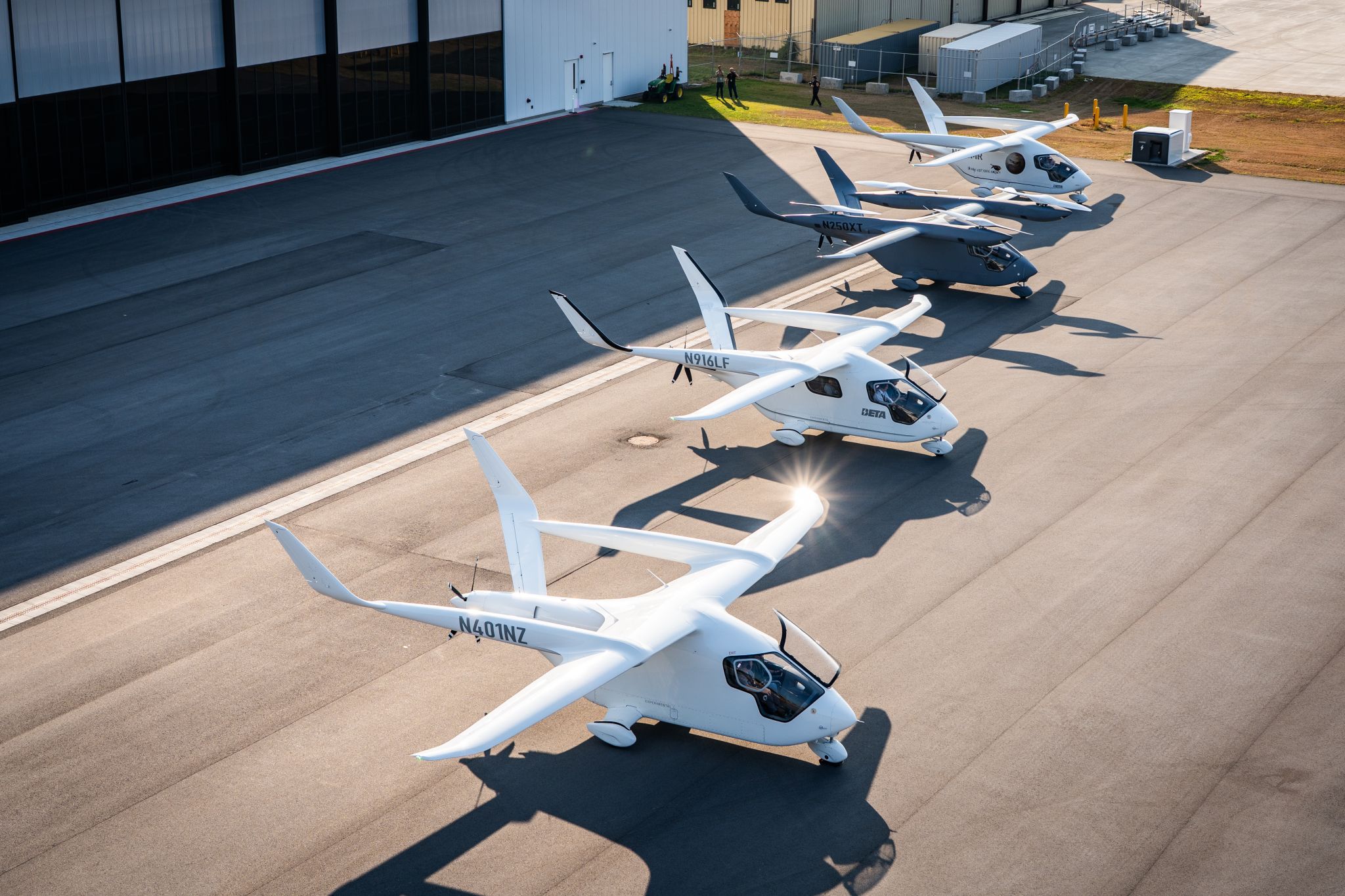
The Council of Scientific and Industrial Research’s National Aerospace Laboratories in Bengaluru represents India’s government-backed effort to develop indigenous electric aircraft capabilities. NAL is advancing the E-Hansa Technology Demonstrator, India’s first domestically designed and manufactured electric trainer aircraft, marking a pivotal step in building homegrown electric aviation expertise. The project focuses on developing an in-house electric powertrain and composite airframe, with projections indicating the final aircraft will cost approximately two crore rupees, roughly fifty percent cheaper than imported alternatives.
According to NAL Director Dr. Abhay Anant Pashilkar, the E-Hansa program emphasizes complete indigenization to dramatically reduce costs while building national capability in electric propulsion systems. The aircraft will be built on the upgraded Hansa-NG platform, featuring advanced glass cockpits for digital displays and enhanced situational awareness, a bubble canopy for improved pilot comfort and panoramic visibility, electrically operated flaps, and a lightweight composite airframe. Unlike previous Hansa variants that used imported engines, E-Hansa will pioneer Indian electric propulsion technology, creating multiple technical challenges but establishing foundational capabilities for future electric aircraft development.
Union Minister of State for Science and Technology Dr. Jitendra Singh announced that E-Hansa represents a critical component of India’s green aviation goals and commitment to clean energy propulsion. The powerplant is expected to undergo testing within the next year, with the maiden flight targeted in three to five years. The Indian Institute of Space Science and Technology is collaborating on the project, bringing additional expertise in advanced materials and systems integration. As a government initiative aligned with the Make in India program, E-Hansa focuses on building national capability and training infrastructure rather than immediate commercial deployment, establishing the technical foundation upon which private companies can build advanced electric aircraft programs.
4. BluJ Aero: Hydrogen-Electric Propulsion Redefines Range and Capability
BluJ Aero, headquartered in Hyderabad, has distinguished itself by pioneering hydrogen-electric propulsion technology that achieves four times the range efficiency of pure battery-powered systems. Founded in 2022 by Maruthi Amardeep Sri Vatsavaya and Utham Kumar Dharmapuri, both aerospace veterans with seventeen years of experience at companies including GE Global Research, Collins Aerospace, Skyroot Aerospace, and Boeing, the company is building what it calls India’s first hydrogen-electric vertical takeoff and landing aircraft for both cargo and passenger applications.
In October 2024, BluJ conducted the first full-scale flight demonstration of its eVTOL prototype at Nadergul Airfield near Hyderabad, showcasing what the company claims is India’s largest privately built aircraft. This technology demonstrator, with an all-up weight of approximately 500 kilograms, validated the company’s proprietary hydrogen-electric propulsion system combining high-power density lithium-ion batteries with high-energy-density fuel cells and lightweight Type-IV hydrogen storage tanks. The company manufactures aircraft structures using eighty percent carbon fiber reinforced polymer by weight, providing the highest strength-to-weight ratio while remaining at least three times lighter than aluminum, with all structural design and manufacturing handled in-house for complete control over design-for-manufacturing, quality, timelines, and production costs.
BluJ’s first commercial product, REACH, is an autonomous cargo eVTOL designed to carry 100-kilogram payloads over 250-kilometer distances, targeting launch by 2026 for applications including oil and gas logistics, medical supply delivery to remote areas, and e-commerce same-day delivery. The company envisions eventually scaling to a passenger aircraft called Hop capable of carrying seven passengers over 600 to 700 kilometers. Routes like Hyderabad-Warangal, Bengaluru-Mysuru, Chennai-Pondicherry, and Mumbai-Pune could be completed in under thirty-nine minutes without requiring traditional airport infrastructure.
The company raised 2.25 million dollars in May 2023 from Rainmatter Capital by Zerodha, Endiya Partners, and Ideaspring Capital, and is currently in discussions to raise an additional ten to twelve million dollars. BluJ has garnered significant government attention, with demonstrations for Union Civil Aviation Minister Ram Mohan Naidu and Andhra Pradesh Chief Minister Chandrababu Naidu at the Amaravati Drone Summit 2024.
Recognition as a Deep Tech winner in the Space, Satellite and Defence Tech category by NASSCOM in 2024 validates the company’s technological innovation. With current team strength of approximately 35 employees and plans to expand manufacturing capacity to 500 aircraft annually by 2027-28, BluJ is pursuing a defense variant for high-altitude relief and supply missions, leveraging its aircraft’s capability to operate from 5,000-meter elevations and climb an additional 1,000 meters.
5. JetSetGo-Vertical Aerospace Partnership: Bringing British eVTOL Excellence to India
JetSetGo, one of India’s leading private aviation operators, has emerged as a critical player in the electric aircraft ecosystem through its strategic partnership with British aerospace technology pioneer Vertical Aerospace. In February 2026, the companies signed a memorandum of understanding for JetSetGo to pre-order fifty Valo aircraft alongside a comprehensive collaboration to develop advanced air mobility services tailored for the Indian market. This partnership represents the most significant international collaboration bringing proven eVTOL technology to India with local operational expertise.
Vertical Aerospace, a publicly traded company developing one of the world’s most advanced eVTOL aircraft, is targeting type certification of Valo by 2028 under UK and European regulators, with global validations to follow that could enable early commercial rollout of advanced air mobility services in India subject to regulatory approvals. The Valo aircraft is designed to fly up to 160 kilometers at speeds around 240 kilometers per hour with zero operating emissions, engineered to meet airliner-level safety standards. Vertical is also developing a hybrid-electric variant offering increased range and mission flexibility, particularly well-suited to use cases across India’s diverse geography.
Beyond aircraft acquisition, the partnership encompasses joint development of route networks, operating models, regulatory engagement, and commercial planning specifically for India’s metro and short-haul regional corridors. JetSetGo will lead comprehensive market research, technical evaluations, and feasibility studies across select routes to assess real-world viability before commercial launch. This strategic approach ensures that when services commence, they will be optimized for Indian market conditions, regulatory requirements, and customer expectations.
JetSetGo CEO Kanika Tekriwal expressed optimism that Valo’s focus on fast, low-cost, and easily accessible travel solutions aligns perfectly with India’s air travel demands, particularly for congested metropolitan areas and underserved regional routes. The partnership benefits from timing alignment with the Indian government’s work on certification and infrastructure frameworks for advanced air mobility, creating regulatory pathways for electric aviation solutions. As India prepares policies and operational frameworks for eVTOLs, having an experienced private aviation operator collaborating with a leading international manufacturer positions this partnership to be among the first to commercialize electric air taxi services in India.
6. InterGlobe Enterprises-Archer Aviation Alliance: IndiGo Parent Brings American Innovation
InterGlobe Enterprises, the parent company of IndiGo, India’s largest airline, partnered with California-based Archer Aviation in November 2023 to launch an all-electric air taxi service in India. This collaboration brings together InterGlobe’s deep understanding of Indian aviation markets and operational expertise with Archer’s advanced eVTOL technology and manufacturing capabilities. The partnership announced plans to deploy up to 200 Midnight eVTOL aircraft, which can carry four passengers plus a pilot, with service launch targeted for 2026.

Archer Aviation, which counts Boeing and United Airlines among its investors, secured Federal Aviation Administration certification in August 2024 to begin testing eVTOL flights in the United States and signed agreements to provide aircraft to the U.S. Air Force in a 142-million-dollar deal. This pedigree brings proven technology and regulatory experience to the Indian market. The Midnight aircraft is designed specifically to replace urban car commutes with electric flights, targeting operational costs competitive with premium ride-hailing services.
According to Archer CEO Adam Goldstein, India represents one of the largest opportunities for eVTOL aircraft utilization globally given its 1.4 billion population and cities facing some of the world’s greatest congestion challenges. The company’s all-electric Midnight aircraft is engineered to provide revolutionary transportation solutions addressing these congestion issues while operating with zero emissions. InterGlobe Group Managing Director Rahul Bhatia emphasized excitement about bringing an effective, futuristic, and sustainable transport solution through Archer’s electric aircraft to India.
Initial service plans include routes like Connaught Place in New Delhi to Gurugram in Haryana, potentially reducing what is currently a lengthy commute by car to just seven minutes by air. The partnership represents a vote of confidence from one of India’s most successful aviation companies in the viability of electric air mobility, bringing capital, operational expertise, and market access that could accelerate mainstream adoption of eVTOL technology across India.
7. Vinata Aeromobility: Chennai’s Hybrid Flying Car Vision
Vinata Aeromobility, founded in 2021 by Yogesh Ramanathan and Dhivya Iyer in Chennai, represents India’s earliest entrant into the flying car segment with an ambitious vision to develop fully autonomous hybrid-electric vertical takeoff and landing vehicles that function as both aircraft and road vehicles. Named after the concept of creating versatile aerial mobility solutions, the company aims to revolutionize urban transportation through vehicles that can navigate both ground and air domains.
The Vinata flying car concept is designed as a two-passenger autonomous hybrid-electric quad-copter featuring artificial intelligence-enabled cockpits, four road wheels for ground mobility, and distributed electric propulsion for flight operations. The proposed vehicle is expected to weigh approximately 1,100 kilograms empty with a takeoff weight of 1,300 kilograms, capable of carrying 250 kilograms of payload at speeds up to 120 kilometers per hour with approximately sixty minutes of flight endurance. The company emphasizes that their design prioritizes safety through redundant systems, user-friendly operation, sustainability through hybrid propulsion combining bio-fuels and electric batteries, and affordability with projected costs around four to five crore rupees.
Vinata presented a prototype model to India’s Civil Aviation Minister in September 2021, receiving encouraging feedback about potential applications for transporting people and cargo as well as providing medical emergency services. The company’s vision includes establishing vertiports for vertical takeoff and landing operations across urban areas, creating infrastructure for a new dimension of transportation. Initial funding came from founder family sources, with the company seeking external investment to develop full-scale models and establish manufacturing facilities.
While the company has faced delays in achieving its original timeline of commercial flights by 2025, it represents the entrepreneurial ambition and technical creativity emerging from India’s aerospace startup ecosystem. The hybrid approach combining road and air capabilities, though technically challenging, addresses the practical concern of last-mile connectivity that pure aircraft face. As of 2026, Vinata continues developing its technology under Directorate General of Civil Aviation guidelines, working toward demonstrating flight-worthy prototypes that could establish India’s presence in the flying car segment.
8. Garuda Aerospace: Drone Expertise Expanding Into Passenger eVTOLs
Garuda Aerospace, one of India’s largest drone manufacturers and service providers, has begun exploring expansion into passenger eVTOL development, leveraging its extensive experience in unmanned aerial systems. Founded by Agnishwar Jayaprakash, the company has established itself as a leader in commercial drone applications across agriculture, defense, logistics, and surveillance sectors, operating thousands of drones and training hundreds of pilots nationwide. This operational foundation in autonomous flight systems and regulatory navigation positions Garuda to potentially transition capabilities toward crewed electric aircraft.
The company’s expertise in battery management systems, electric propulsion, autonomous navigation, and compliance with aviation authorities creates natural synergies with eVTOL development. Garuda’s existing relationships with government agencies, defense forces, and private enterprises provide potential early customers for cargo and utility eVTOL applications before expanding to passenger services. The company’s drone manufacturing facilities and supply chain relationships offer infrastructure that could be leveraged for eVTOL production at scale.
While Garuda has not yet publicly announced specific eVTOL aircraft models or timelines comparable to dedicated startups like ePlane or Sarla, industry observers note that the company’s strong position in unmanned aviation, combined with India’s growing advanced air mobility ecosystem, makes expansion into eVTOLs a logical strategic evolution. The company’s ability to quickly scale operations and navigate regulatory requirements could accelerate development once it commits resources to passenger aircraft programs.
9. Tata Advanced Systems Limited: Defense Giant Eyes Electric Aviation
Tata Advanced Systems Limited, part of the Tata Group conglomerate and a major player in India’s aerospace and defense manufacturing, represents potential corporate entry into electric aircraft development. With extensive experience manufacturing components for global aerospace companies, operating helicopter assembly facilities under license, and developing indigenous unmanned aerial vehicles, TASL possesses infrastructure and expertise that could be redirected toward eVTOL development as the market matures.
The company’s existing partnerships with international aerospace manufacturers, access to Tata Group’s capital resources, and relationships with Indian military and civilian aviation authorities position it to potentially become a major electric aircraft manufacturer if market conditions warrant investment. TASL’s manufacturing facilities in Hyderabad and other locations could be expanded or repurposed for eVTOL production, while its engineering teams have proven capabilities in integrating complex aerospace systems.
While TASL has not publicly announced dedicated eVTOL development programs as of early 2026, the company’s strategic position in India’s aerospace ecosystem makes it a candidate for future involvement through direct development, partnerships with startups like ePlane or Sarla, or licensed production of international designs. The Tata Group’s historical pattern of entering emerging industries and building scaled operations suggests that electric aviation could eventually attract corporate commitment if regulatory frameworks solidify and market viability becomes clearer.
10. Mahindra Aerospace: Utility Aircraft Heritage Meets Electric Future
Mahindra Aerospace, the aviation division of Mahindra Group, brings decades of experience manufacturing light utility aircraft and providing aerospace components to global customers. The company currently produces turboprop aircraft suitable for regional connectivity, cargo transport, and specialized applications, creating a foundation of aviation manufacturing expertise and regulatory knowledge. As electric propulsion technologies mature, Mahindra Aerospace represents an established Indian manufacturer positioned to potentially develop electric aircraft leveraging its existing capabilities.
The company’s experience with composite materials, systems integration, certification processes, and after-sales support creates institutional knowledge applicable to eVTOL development. Mahindra’s automotive division’s growing expertise in electric vehicle powertrains, battery management systems, and electric motor technologies could provide synergies with aerospace electrification efforts. The conglomerate’s historical willingness to invest in emerging technologies and long-term strategic bets suggests potential future involvement in electric aviation.
While Mahindra Aerospace has not publicly announced specific eVTOL aircraft programs comparable to dedicated startups, the company’s position in India’s aerospace industry and Mahindra Group’s broader electrification strategy across automotive and other sectors make it a logical candidate for electric aircraft development. Industry observers note that established aerospace manufacturers often enter new segments through partnerships, acquisitions, or gradual capability building rather than dramatic announcements, suggesting Mahindra could be positioning behind the scenes for eventual market entry.
The Future of Electric Aviation in India
India’s electric aircraft ecosystem in 2026 represents a compelling mixture of indigenous innovation, international collaboration, government support, and entrepreneurial ambition. The convergence of critical factors including regulatory framework development by the Directorate General of Civil Aviation, massive urban congestion creating clear market demand, growing investor confidence demonstrated by substantial funding rounds, and technical talent from world-class institutions like IIT Madras and experienced aerospace professionals has created conditions for India to become a global leader in advanced air mobility.
The diversity of approaches across developers, from ePlane’s compact urban air taxi to BluJ’s long-range hydrogen-electric cargo aircraft to Sarla’s hybrid passenger vehicle, demonstrates healthy ecosystem development with different companies pursuing distinct market segments and technical strategies. International partnerships bringing proven technologies from Vertical Aerospace and Archer Aviation complement indigenous development efforts, creating knowledge transfer and accelerating overall market maturation.
Challenges remain substantial, including finalizing comprehensive regulatory frameworks, building vertiport infrastructure, achieving public acceptance of aircraft flying over cities, developing maintenance and repair ecosystems, training sufficient pilots and maintenance personnel, and demonstrating economic viability at commercial scale. However, the progress achieved by 2026 suggests that India is on track to see commercial eVTOL operations begin in selected corridors within the next few years, gradually expanding as technology proves itself and infrastructure develops.
The electric aircraft developers profiled in this analysis are building more than just new vehicles; they are constructing an entirely new dimension of transportation infrastructure that could fundamentally transform how Indians move through their cities and regions. As 2026 progresses toward the anticipated commercial launches in late 2026 and 2028, India stands poised to demonstrate that sustainable, efficient, three-dimensional urban mobility is not science fiction but an emerging reality that could reshape transportation globally.