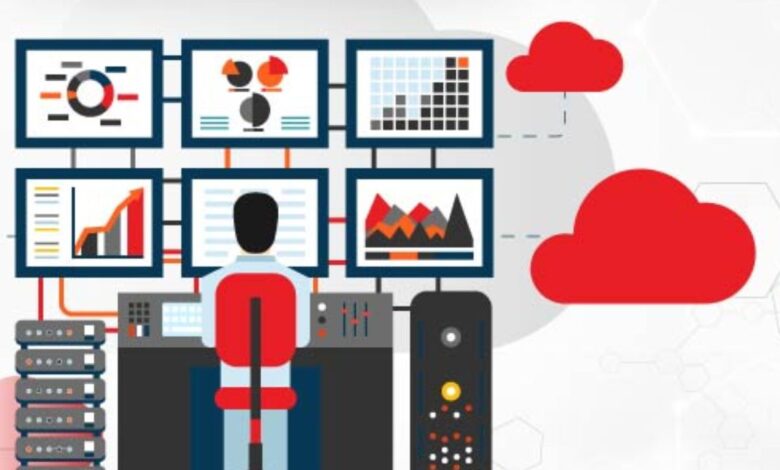
In 2026, enterprise IT monitoring has evolved from a reactive necessity to a proactive business imperative. As Indian enterprises accelerate their digital transformation journeys, the complexity of IT infrastructure has grown exponentially. Organizations are now managing hybrid multi-cloud environments, microservices architectures, containerized applications, and distributed systems that span on-premises data centers, public clouds, and edge locations.
According to recent industry reports, over 80% of Indian enterprises have adopted hybrid or multi-cloud strategies, making comprehensive monitoring and observability non-negotiable. Modern IT monitoring tools have become the backbone of performance optimization, user experience management, security compliance, and revenue protection. The tools featured in this comprehensive guide represent the best enterprise IT monitoring solutions available in India for 2026, selected based on their capabilities, market presence, feature sets, and suitability for Indian enterprises.
Why Enterprise IT Monitoring Matters in 2026
The digital economy demands near-perfect uptime and performance. A single minute of downtime can cost enterprises thousands or even millions of rupees in lost revenue and damaged reputation. Modern monitoring solutions provide real-time visibility into application performance, infrastructure health, user experience, security threats, and business metrics. They enable IT teams to detect and resolve issues before they impact end-users, optimize resource utilization, ensure compliance with regulatory requirements, and make data-driven decisions about infrastructure investments.
1. Datadog
Overview: Datadog continues to dominate the cloud-native monitoring space in 2026 and is extensively used by Indian startups, SaaS companies, and mid-to-large enterprises. This comprehensive observability platform provides unified monitoring across infrastructure, applications, logs, and user experience.
Key Features: Full-stack observability with infrastructure monitoring for hosts, containers, and serverless functions; application performance monitoring with distributed tracing; log management with advanced analytics; real user monitoring and synthetic testing; network performance monitoring; security monitoring and threat detection; over 650+ integrations with cloud platforms, databases, and third-party services; AI-powered anomaly detection and intelligent alerting.
Ideal For: Cloud-native organizations heavily invested in AWS, Azure, GCP, Kubernetes, microservices, and serverless architectures. DevOps teams requiring unified visibility across their entire technology stack.
Pricing: Consumption-based pricing model with free tier available. Infrastructure monitoring starts at approximately $15 per host per month, with additional costs for APM, log management, and other features.
2. Dynatrace
Overview: Dynatrace remains the most advanced AI-powered observability platform globally, offering automatic discovery, instrumentation, and real-time root cause analysis. In 2026, Dynatrace has introduced agentic operations capabilities that anchor probabilistic AI to deterministic truth, making it ideal for large enterprises requiring autonomous monitoring at scale.
Key Features: Davis AI engine for automated anomaly detection and root cause analysis; automatic and intelligent observability with auto-discovery and instrumentation; full-stack monitoring from infrastructure to user experience; application security monitoring; business analytics integration; AIOps capabilities for predictive insights; support for cloud, hybrid, and on-premises environments.
Ideal For: Large enterprises with complex, distributed environments requiring autonomous monitoring, predictive analytics, and minimal manual configuration. Organizations prioritizing AI-driven automation.
Pricing: Consumption-based model. Full-stack monitoring starts at approximately $58 per month per 8GB host. Infrastructure monitoring begins at around $29 per month per host.
3. New Relic
Overview: New Relic has evolved from its APM roots into a comprehensive full-stack observability platform. The platform is widely adopted by Indian product engineering teams and development organizations focused on rapid iteration and DevOps practices.
Key Features: All-in-one observability platform with unified data model; application performance monitoring with code-level diagnostics; infrastructure monitoring and cloud integrations; log management with centralized logging; real user monitoring and synthetic checks; mobile application monitoring; Kubernetes monitoring and container insights; query language for custom analysis.
Ideal For: Product engineering teams seeking a single unified tool with straightforward pricing. Organizations transitioning from legacy monitoring to modern observability.
Pricing: Simplified consumption-based pricing with a free tier for up to 100GB data ingest per month. Standard tier includes comprehensive features with pay-as-you-go data ingestion pricing.
4. ManageEngine (Site24x7 / Applications Manager)
Overview: ManageEngine offers cost-effective observability and APM solutions specifically tailored for Indian enterprises, SMBs, and IT operations teams. As part of Zoho Corporation, ManageEngine has a strong presence in India with local support and data centers.
Key Features: Comprehensive monitoring for websites, servers, networks, applications, and cloud resources; integrated data centers in India for compliance and low latency; application dependency mapping; synthetic monitoring and real user monitoring; cloud monitoring for AWS, Azure, GCP, and OCI; network performance analysis and configuration management; log management and audit trails; mobile monitoring and IT service management integration.
Ideal For: Indian enterprises seeking affordable, scalable alternatives to global platforms. Organizations requiring local data residency and support. SMBs and mid-market companies with budget constraints.
Pricing: Competitive pricing structure with Professional edition for under 500 applications and Enterprise edition supporting up to 10,000 monitors. Transparent pricing with no hidden costs.
5. Grafana Cloud
Overview: The Grafana ecosystem remains the top choice for organizations wanting full control over their observability pipeline. Grafana Cloud offers a managed solution built on the powerful LGTM stack (Loki, Grafana, Tempo, Mimir) with over 25 million users worldwide.
Key Features: Scalable metrics storage with Grafana Mimir; log aggregation with Grafana Loki; distributed tracing with Grafana Tempo; comprehensive visualization and dashboards; extensive plugin ecosystem with hundreds of data source integrations; alerting and notification management; OpenTelemetry support; self-managed or fully managed deployment options.
Ideal For: Engineering teams with strong DevOps maturity seeking high customizability and control. Organizations committed to open-source technologies and vendor independence.
Pricing: Free tier available with generous limits. Paid plans start based on usage with consumption-based pricing for metrics, logs, and traces.
6. SolarWinds (Network Performance Monitor / Observability)
Overview: SolarWinds provides enterprise-grade network monitoring and observability solutions with a strong focus on on-premises and hybrid environments. The platform is well-established in Indian enterprises, particularly in sectors requiring robust network performance monitoring.
Key Features: Comprehensive network performance monitoring with PerfStack correlation engine; NetPath for end-to-end path visualization; network configuration and change management; server and application monitoring; database performance analysis; log management and analytics; customizable dashboards and reporting; integration with ITSM platforms.
Ideal For: Mid-market and enterprise organizations with complex network infrastructures. IT teams requiring deep network visibility and troubleshooting capabilities. Organizations with significant on-premises infrastructure.
Pricing: Node-based licensing model with predictable costs as infrastructure grows. Network Performance Monitor pricing starts at several thousand dollars based on the number of network elements.

7. PRTG Network Monitor
Overview: PRTG Network Monitor by Paessler offers an all-in-one monitoring solution trusted by over 500,000 users across 170 countries. It provides comprehensive visibility into IT infrastructure with a focus on ease of deployment and use.
Key Features: Unified monitoring of networks, servers, applications, databases, and virtual environments; sensor-based monitoring with pre-configured sensors for common technologies; auto-discovery for automatic network device detection; customizable dashboards with drag-and-drop interface; bandwidth monitoring and traffic analysis; SNMP, WMI, NetFlow, and packet sniffing capabilities; mobile apps for on-the-go monitoring.
Ideal For: Small to medium-sized businesses seeking straightforward, all-in-one monitoring. Organizations prioritizing quick deployment and ease of use over extensive customization.
Pricing: Sensor-based licensing with perpetual licenses available. Free version supports up to 100 sensors. Commercial licenses range from 500 sensors to unlimited sensors with varying price points.
8. Splunk Observability Cloud
Overview: Splunk has evolved from its log analytics roots to offer a comprehensive cloud-native observability suite. The platform is particularly strong in log-heavy analytics and is widely adopted by large enterprises requiring extensive data analysis capabilities.
Key Features: Infrastructure monitoring with real-time metrics; application performance monitoring and distributed tracing; log management with powerful search and analytics; real user monitoring and synthetic monitoring; NoSample distributed tracing for 100% transaction visibility; AI-driven insights and anomaly detection; integration with Splunk Enterprise for security and compliance.
Ideal For: Large enterprises requiring comprehensive log analytics combined with observability. Organizations with existing Splunk deployments for security and compliance. Data-intensive environments needing advanced analytics.
Pricing: Subscription-based pricing with various tiers based on data volume and features. Enterprise pricing available on request.
9. Zabbix
Overview: Zabbix is a mature, enterprise-class open-source monitoring solution that has been continuously developed since 2001. It provides comprehensive monitoring capabilities without licensing costs, making it attractive for cost-conscious Indian enterprises.
Key Features: Distributed monitoring architecture for large-scale deployments; agent-based and agentless monitoring; monitoring of networks, servers, virtual machines, cloud services, and applications; flexible alerting with escalation and notification mechanisms; auto-discovery of devices and network topology mapping; customizable dashboards and visualization; historical data storage and trending; REST API for integrations.
Ideal For: Organizations seeking to eliminate monitoring license costs. Enterprises with technical teams capable of managing open-source infrastructure. Companies requiring high customization and control.
Pricing: Open-source and free under GPL license. Commercial support, training, and consulting services available from Zabbix LLC. Optional enterprise subscription for additional features and support.
10. NetApp Data Infrastructure Insights
Overview: NetApp Data Infrastructure Insights delivers a unified, AI-powered monitoring solution specifically designed for proactive management and cost optimization across hybrid multi-cloud environments. It excels in storage and data infrastructure visibility.
Key Features: Comprehensive infrastructure monitoring across storage, compute, and network; AI-driven analytics for predictive insights and capacity planning; multi-cloud and hybrid cloud support; cost optimization recommendations; performance troubleshooting and root cause analysis; integration with NetApp storage systems and third-party infrastructure; customizable dashboards and reporting.
Ideal For: Enterprises with significant storage and data infrastructure requirements. Organizations using NetApp systems or requiring deep storage visibility. Companies prioritizing cost optimization in hybrid cloud environments.
Pricing: Subscription-based model with pricing based on monitored capacity and features. Contact NetApp for enterprise pricing.
Key Selection Criteria for Choosing the Right Monitoring Tool
Selecting the right enterprise IT monitoring tool requires careful consideration of multiple factors. Technology stack compatibility is paramount—ensure the tool supports your specific infrastructure components, cloud platforms, applications, databases, and technologies. Evaluate whether you need monitoring for on-premises environments, cloud services, or hybrid deployments.
Scalability should match your growth trajectory. Consider both current and future monitoring needs as your infrastructure expands. Some tools charge per host or node, while others use sensor-based or consumption-based pricing models. Calculate total cost of ownership over multiple years, including licensing, implementation, training, and operational costs.
Data residency and compliance requirements are critical for Indian enterprises, especially in regulated sectors like BFSI, healthcare, and government. Verify whether the monitoring solution offers local data centers in India and meets relevant compliance standards such as RBI guidelines, HIPAA, or ISO certifications.
Team expertise and learning curve matter significantly. Some platforms require extensive training and specialized skills, while others prioritize ease of use and rapid deployment. Assess your team’s capabilities and the vendor’s training and support offerings. Integration capabilities with your existing tools, ITSM platforms, collaboration software, and automation frameworks should also influence your decision.
Future Trends in Enterprise IT Monitoring for 2026 and Beyond
The IT monitoring landscape continues to evolve rapidly. AI and machine learning integration has moved from experimental to essential, with platforms increasingly offering automated anomaly detection, predictive analytics, intelligent root cause analysis, and automated remediation capabilities. The shift from monitoring to observability represents a fundamental change in approach—modern platforms provide unified views across metrics, logs, traces, and events with context-aware insights.
Business-centric monitoring is gaining prominence, with tools correlating IT performance metrics directly with business outcomes and revenue impact. Cloud-native architectures demand specialized monitoring for containers, Kubernetes, serverless functions, and microservices. Edge computing monitoring is emerging as a critical capability as organizations deploy applications closer to end-users.
Security observability is becoming integral to monitoring platforms, with integrated security monitoring, threat detection, and compliance reporting becoming standard features rather than add-ons.
Conclusion
The enterprise IT monitoring tools featured in this guide represent the best solutions available for Indian organizations in 2026. Each platform offers unique strengths—from Datadog’s cloud-native excellence and Dynatrace’s AI-powered automation to ManageEngine’s cost-effective local presence and Zabbix’s open-source flexibility.
The key to successful monitoring implementation lies in selecting a solution that aligns with your specific requirements, technical environment, team capabilities, and budget constraints. As digital transformation accelerates and IT environments become increasingly complex, investing in robust monitoring and observability capabilities is no longer optional—it’s essential for maintaining competitive advantage, ensuring customer satisfaction, and protecting business continuity.
Whether you choose an enterprise platform like Dynatrace for maximum automation, a cloud-native solution like Datadog for modern applications, a cost-effective option like ManageEngine for budget consciousness, or an open-source alternative like Zabbix for flexibility, the important step is to move from reactive break-fix approaches to proactive, intelligent monitoring that empowers your organization to deliver exceptional digital experiences consistently.