Extradition Of ‘Alex’ From Romania To India In Torres Jewellery Money Laundering Case

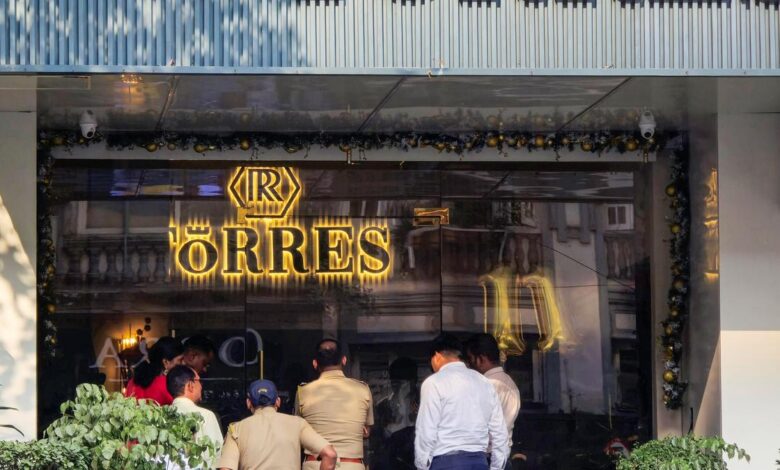
Torres Jewellery Money Laundering Case: ED Brings Ukrainian Accused Oleksandr Zapichenko Back to India in ₹177 Crore Fraud Investigation
The Enforcement Directorate (ED) has secured the extradition of Ukrainian national Oleksandr Zapichenko, also known as Alex, from Romania to India in connection with the ₹177.12 crore Torres Jewellery money laundering case. Zapichenko arrived at Mumbai Airport at 4:45 PM on November 17, 2026, after a three-member ED team escorted him from Romania through the United Arab Emirates.
The extradition was facilitated by the Central Bureau of Investigation (CBI), India’s nodal agency for Interpol-related matters, in coordination with the Ministry of External Affairs and Romanian authorities. Zapichenko is among the key accused in the investigation into Platinum Hern Private Limited, the company operating the Torres Jewellery brand, which attracted thousands of customers through jewellery-linked investment schemes promising exceptionally high returns and referral bonuses.
The ED has identified proceeds of crime worth ₹177.12 crore and says that money collected from customers was diverted through hawala operators and converted into USDT cryptocurrency rather than being utilised for legitimate business purposes. Zapichenko’s return follows an Interpol Red Notice, a non-bailable warrant issued by a Mumbai Special PMLA Court on November 3, 2025, and his provisional arrest in Romania on May 23, 2026.
The Bucharest court ordered his extradition, a decision subsequently upheld by the Bucharest Court of Appeals. While the extradition marks a major international breakthrough, the case continues to expose the disturbing scale of an investment operation that turned an ordinary jewellery-shopping proposition into a financial nightmare for thousands of Indian customers.
The Torres Jewellery controversy first became a public crisis in January 2025, when distressed investors began gathering outside the company’s showrooms in Mumbai, Navi Mumbai and neighbouring areas after the promised payments stopped arriving. What had been marketed as an attractive opportunity to earn regular returns through jewellery purchases suddenly became a source of enormous financial anxiety. Customers who had invested their savings, borrowed money or brought relatives and acquaintances into the schemes found themselves confronting closed or unresponsive outlets and unanswered questions about their money.
The Dadar showroom, which had become the focal point of the controversy, witnessed crowds of investors demanding repayment. The episode was particularly disturbing because the business had not presented itself as an obscure financial operation. It operated through physical jewellery showrooms, promotional activities and customer-facing investment arrangements, creating an appearance of an organised commercial enterprise. The collapse raised serious questions about how a jewellery retailer could attract such large sums by promising returns that were far removed from the ordinary economics of the jewellery business.
At the centre of the investigation is Platinum Hern Private Limited, which operated under the Torres Jewellery brand. The company reportedly began expanding its operations through showrooms and investment-linked jewellery sales during 2024. Customers were attracted through offers involving gold, silver, diamonds and moissanite stones.
Moissanite, a gemstone that resembles a diamond but is materially different from natural diamonds, featured prominently in the company’s sales and promotional arrangements. The problem was not merely the difference between the market value of a gemstone and the price charged to customers. The larger concern was the manner in which jewellery purchases were connected to promises of extraordinary financial returns.
The ED’s investigation has described a business model involving low-value jewellery sold at substantially inflated prices, exceptionally high returns and referral bonuses. In effect, the attraction extended beyond owning jewellery. Customers were encouraged to believe that their purchases could generate regular income, turning retail transactions into what appeared to be an investment opportunity.
The returns associated with the schemes were extraordinary. Contemporary reports described weekly payouts ranging from approximately 2% to 9% under different arrangements, while subsequent reporting cited promises reaching 6% to 11% a week in certain investment plans. Such figures should immediately raise questions about the commercial foundation of any investment proposition. A weekly return of 5% on ₹1 lakh amounts to ₹5,000 every week. At 9%, the weekly payout becomes ₹9,000. These are exceptionally high commitments for a business ostensibly dealing in jewellery.
The referral component further expanded the operation by encouraging existing customers to bring in new participants. The attraction of receiving both investment returns and additional referral incentives helped create a network of customers who were also effectively promoting the business to others. The structure placed enormous importance on continually attracting fresh money. Once payments began failing, the confidence built through earlier payouts and promotional promises collapsed rapidly.
The company’s promotional strategy also contributed to the appearance of credibility. The ED’s January 24, 2025 press release stated that the company conducted seminars and advertised its schemes on social media. It also organised lucky draws offering expensive rewards, including cars and mobile phones, without the requisite licences, according to the agency. Such activities created a marketing environment in which the business could appear larger and more established than an ordinary jewellery retailer.
For customers unfamiliar with the risks of investment-linked schemes, the combination of physical outlets, promotional events, attractive rewards and regular payout promises could make the proposition appear convincing. The most concerning aspect of the Torres episode is how a business selling consumer products allegedly used those products as the foundation for a much larger financial operation.
The crisis became visible in late December 2024, when customers reportedly began experiencing difficulties receiving promised payments. By January 6, 2025, investors had gathered outside Torres Jewellery outlets, including its Dadar showroom. One of the principal complaints was filed by Pradipkumar Vaishya, a vegetable wholesaler, who reportedly invested approximately ₹4.55 crore along with family members and friends.
The case registered at Shivaji Park Police Station became an important part of the investigation. Other complaints followed in Navi Mumbai, Thane and neighbouring areas, including those registered at APMC, Rabodi and Navghar police stations. The growing number of complaints eventually brought the Mumbai Police Economic Offences Wing into the investigation.
The financial scale that subsequently emerged was staggering. According to the Mumbai Police Economic Offences Wing investigation, the Dadar flagship outlet alone had 15,018 investors who collectively lost approximately ₹149.66 crore. This figure is particularly significant because it concerns a single outlet rather than the entire Torres operation. Other earlier police-related reporting referred to 14,157 investors and losses of approximately ₹142.58 crore.
The figures reflect different investigative reporting stages and victim-accounting details, but both illustrate the extraordinary number of people affected. The ED, meanwhile, has identified ₹177.12 crore as proceeds of crime in the money laundering investigation. These figures should not be confused with one another: investor losses, proceeds of crime, seized assets and frozen bank balances represent different financial categories.
The ED initiated its investigation under the Prevention of Money Laundering Act following the registration of FIRs by the police. On January 24, 2025, the agency conducted searches at 13 locations across Mumbai and Jaipur. During these operations, bank accounts containing approximately ₹21.75 crore were frozen, and incriminating documents and digital evidence were seized.
The searches covered premises associated with Platinum Hern Private Limited, its directors and other entities connected with the investigation. One of the significant disclosures concerned ₹13.78 crore received in Platinum Hern’s bank accounts from various dummy entities linked to Lallan Jamedar Singh. According to the ED, this money was used to establish Torres Jewellery’s business operations in Mumbai. The finding raises serious questions about the financial arrangements through which the company began its operations and the entities involved in providing its initial funding.
Another important part of the investigation concerns the alleged movement of money through hawala operators and cryptocurrency intermediaries. The ED’s investigation has identified a chain in which cash collected from Torres showrooms was allegedly diverted through informal financial channels and converted into USDT, a cryptocurrency issued by Tether. The agency has specifically identified Alpesh Pravinchandra Khara as an important intermediary in this arrangement.
Khara was arrested by the ED on March 26, 2025. According to the agency, he acted on Zapichenko’s instructions and facilitated the collection of cash from the showrooms, followed by its conversion into USDT. The investigation reportedly examined communications through Telegram groups, codes allegedly shared with showroom cashiers and the movement of funds through cryptocurrency wallets. The use of such mechanisms makes the case considerably more serious than a conventional dispute involving non-payment of investment returns.
The cryptocurrency dimension also highlights the complexity of tracing money once it moves beyond conventional banking channels. USDT is a stablecoin designed to maintain a value close to the US dollar. It can be transferred between digital wallets and cryptocurrency platforms, making it a convenient mechanism for moving value across borders. The ED’s investigation has examined cryptocurrency accounts and wallet-related transactions connected with the alleged financial network.
Earlier reporting also indicated that investigators were examining the possibility of proxy wallets being used to conceal the identities of the actual beneficiaries. In a case involving substantial cash collections, hawala intermediaries and cryptocurrency conversions, the financial trail becomes a crucial part of establishing where the money ultimately went.
The investigation expanded further on May 9, 2025, when the ED conducted searches at four premises associated with hawala and angadia operators in Mumbai and Surat. The operation resulted in the seizure of approximately ₹6.30 crore in cash and the recovery of digital devices and other incriminating material. This action was particularly important because it extended the investigation beyond the immediate management of Torres Jewellery to the intermediaries allegedly involved in moving the money.
The earlier freezing of ₹21.75 crore in bank accounts and the subsequent seizure of ₹6.30 crore in cash demonstrate the scale of the financial investigation. However, these amounts cannot automatically be treated as money already recovered and returned to investors.
The ED filed its prosecution complaint before the Special PMLA Court in Mumbai on May 22, 2025. The court took cognisance of the complaint on July 29, 2025. The agency’s investigation had therefore progressed into the judicial process well before Zapichenko was brought back to India. The Mumbai Police Economic Offences Wing had also filed a massive 27,147-page chargesheet in March 2025, naming eight accused persons and entities.
Those named in the police investigation included Platinum Hern Private Limited, Tazagul Khasatova alias Tanya, Valentina Ganesh Kumar, Sarvesh Ashok Surve, Tausif Reyaz, Alpesh Khara, Lallan Singh and Armen Atian. Several foreign nationals were also identified as wanted accused. The police investigation reportedly examined the company’s financial transactions, operational arrangements, customer collections and the role of individuals associated with the business.
Zapichenko’s extradition is particularly important because the ED has described him as one of the key individuals involved in directing the collection and diversion of funds. The agency’s case places him within the alleged financial structure through which customer money was collected and subsequently moved through hawala and cryptocurrency channels. A non-bailable warrant was issued against him by the Special PMLA Court on November 3, 2025, after which an Interpol Red Notice was pursued. He was provisionally arrested in Romania on May 23, 2026.
Following proceedings before Romanian judicial authorities, the Bucharest court ordered his extradition, and the Bucharest Court of Appeals upheld the decision. A three-member ED team subsequently brought him to India through the UAE on November 17, 2026. The CBI, which coordinates Interpol-related matters in India, played an important role in facilitating the international process, alongside the Ministry of External Affairs and Romanian authorities.
The extradition also brings renewed attention to the other foreign nationals associated with the investigation. Ukrainian national Olena Stoian has been described in investigative reporting as another key figure in the alleged financial structuring of Platinum Hern. India has sought her extradition from Moldova, where she was reportedly detained following international action. Other wanted individuals have also been traced to different countries.
Sagar Paresh Mehta, associated with the investigation into the movement of cash, was reported to have been arrested in Dubai in August 2026, with subsequent extradition-related proceedings initiated. Lurchenko Igor was earlier traced to Ukraine following an Interpol Blue Corner Notice. These international developments show that the Torres investigation has extended well beyond the jurisdiction of the Mumbai Police and involves a network of individuals spread across different countries.
The controversy surrounding the company’s internal management is another troubling dimension. Tausif Reyaz, also known as John Carter, who was identified as the company’s CEO, and chartered accountant Abhishek Gupta reportedly claimed that they had identified financial irregularities before the public collapse. According to a January 2025 report by The Indian Express, they claimed to have prepared a 154-page report and submitted it to Mumbai Police through complaints made on December 30, 2024, and January 2, 3 and 4, 2025.
The company, meanwhile, reportedly accused them of inducing employees to commit fraud. The competing claims placed the company’s internal management under scrutiny and raised questions about who knew about the financial irregularities, when they became aware of them and what role individual employees and directors played in the business.
The larger concern is the vulnerability of ordinary customers to investment propositions presented through familiar consumer businesses. Jewellery is traditionally purchased as an asset, a gift or a form of personal savings. When a retailer combines jewellery sales with promises of extraordinary weekly returns, the distinction between a genuine commercial transaction and a high-risk investment arrangement becomes blurred for customers.
Torres Jewellery‘s physical showrooms, promotional activities and referral incentives helped bring the proposition into the everyday lives of people who might never have approached a conventional investment platform. The consequences were devastating for customers who believed that their money was being placed into a profitable business.
The recovery of investors’ money remains another major concern. The Mumbai Police investigation reportedly identified properties worth approximately ₹32 crore that were seized during the proceedings, while the ED froze bank accounts worth ₹21.75 crore during its January 2025 searches.
These are significant amounts, but they remain far below the ₹177.12 crore in proceeds of crime identified by the ED. The difference highlights the enormous challenge of tracing and recovering money in cases involving cash, multiple intermediaries and cryptocurrency. The existence of frozen accounts and seized properties does not automatically mean that investors have received compensation.
Zapichenko’s return to India is undoubtedly a major development in the Torres Jewellery case. It demonstrates that moving outside India’s borders does not necessarily place an accused person beyond the reach of an investigation. However, the extradition also brings the focus back to the thousands of customers whose money disappeared when the promised returns stopped. The ₹177.12 crore figure, the Dadar outlet’s reported ₹149.66 crore investor losses and the extensive network of financial intermediaries paint a disturbing picture of the scale of the operation.
The case is no longer merely about a jewellery showroom that failed to honour its promises. It concerns an alleged financial network involving inflated jewellery valuations, extraordinary returns, referral-based customer recruitment, cash collections, hawala transactions and cryptocurrency conversions. With Zapichenko now in India and the money laundering proceedings already before the Special PMLA Court, the Torres investigation has entered another significant phase. Yet the most important measure of its eventual outcome will remain the extent to which the financial trail is established, the accused are brought through the judicial process and the money lost by thousands of customers is accounted for.