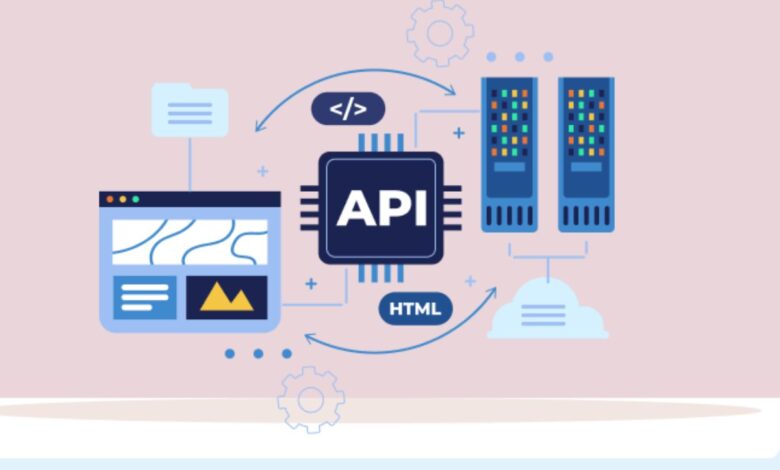
India’s financial technology landscape has undergone a remarkable transformation over the past decade, evolving from a heavily cash-dependent economy into one of the world’s most dynamic digital financial ecosystems. At the heart of this revolution stands a critical infrastructure layer that most consumers never see but increasingly rely upon every day: financial API aggregators. These platforms serve as the invisible connective tissue linking banks, financial institutions, fintech applications, and end users, enabling seamless data sharing and transaction processing across a previously fragmented landscape.
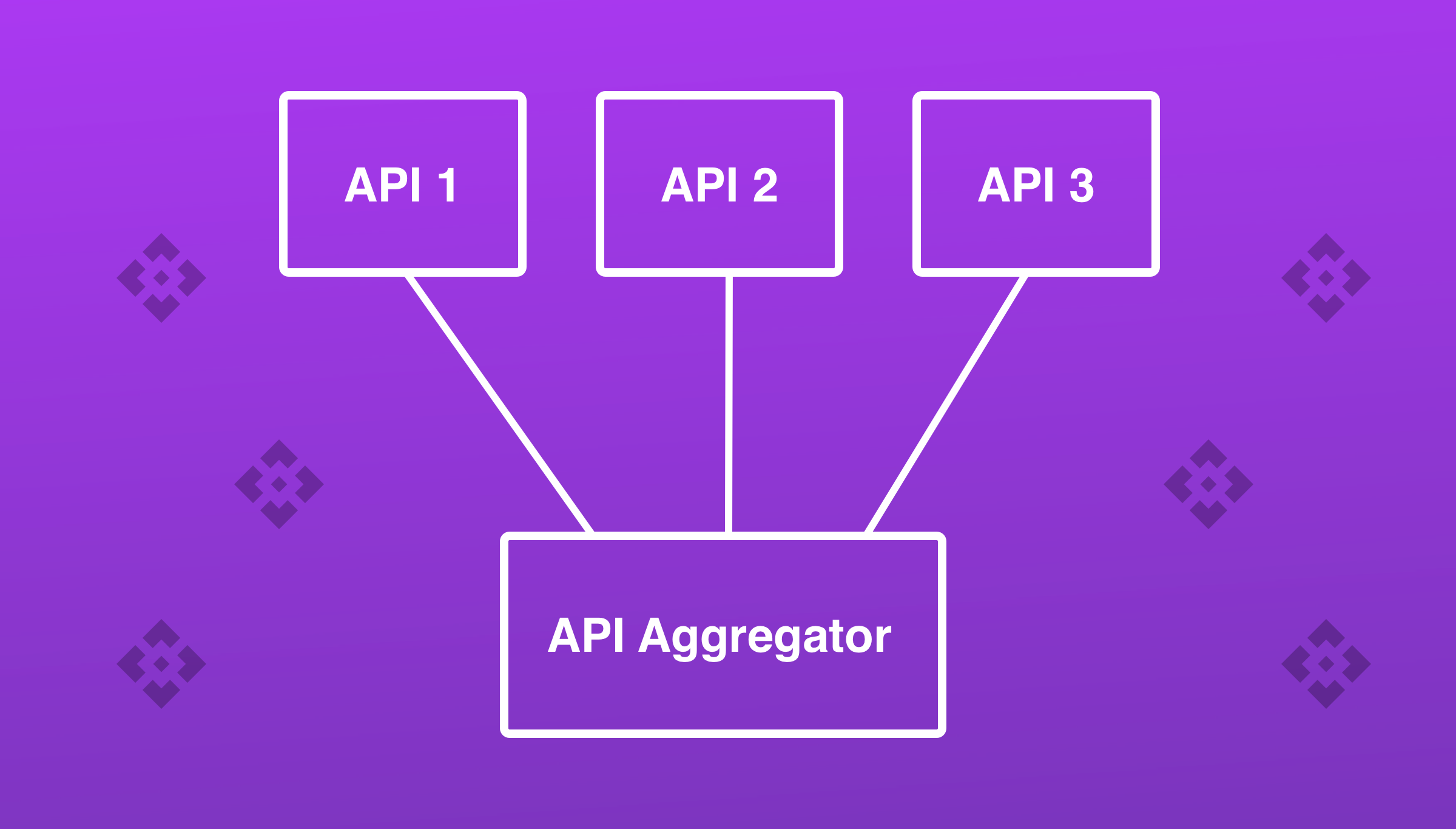
Financial API aggregators fundamentally solve a complex problem. India hosts thousands of financial institutions including public sector banks, private banks, non-banking financial companies, insurance providers, mutual fund houses, and pension funds. Each maintains its own technology systems, data formats, and access protocols. For a fintech startup seeking to build a lending application or personal finance manager, directly integrating with hundreds of individual institutions would require years of engineering effort and ongoing maintenance nightmares. API aggregators eliminate this complexity by providing single integration points that connect to multiple financial institutions simultaneously, dramatically reducing time to market and technical overhead.
The Indian market presents unique characteristics that shape its API aggregator ecosystem differently from Western counterparts. The Reserve Bank of India’s introduction of the Account Aggregator framework in 2021 created a consent-based financial data sharing architecture unlike anything implemented elsewhere globally. This regulated infrastructure positions India as a global leader in open finance, moving beyond the European Union’s Payment Services Directive approach toward a more comprehensive vision of user-controlled financial data portability. As of 2026, the Account Aggregator network encompasses entities regulated not only by the RBI but also by SEBI, IRDAI, and PFRDA, creating a truly unified financial data ecosystem spanning banking, securities, insurance, and pensions.
Understanding who dominates this critical infrastructure layer helps businesses make informed technology decisions and provides insight into how India’s financial future is being built. This comprehensive analysis examines the top ten financial API aggregators operating in India in 2026, exploring their unique value propositions, technical capabilities, market positioning, and strategic importance within the broader fintech ecosystem.
1. Setu (Agya Technologies)
Setu has established itself as India’s leading fintech infrastructure provider, powering some of the country’s most prominent digital businesses including Flipkart, PhonePe, and Google Pay. The platform’s comprehensive approach addresses multiple financial infrastructure needs through distinct product lines spanning data access, payments, and identity verification. What distinguishes Setu within the crowded fintech infrastructure space is its developer-first philosophy combined with deep regulatory expertise, enabling rapid integration without compromising compliance.
The company’s OneMoney platform serves as an Account Aggregator licensed by the RBI, facilitating secure, consent-based financial data sharing between Financial Information Users and Financial Information Providers. Setu has invested heavily in creating seamless developer experiences, providing high-quality mock data for testing, comprehensive API documentation, and pre-built customizable user interfaces for consent management. This attention to developer experience significantly reduces integration complexity, allowing fintech companies to implement Account Aggregator functionality in days rather than months.
Beyond the Account Aggregator framework, Setu offers bill payment APIs, UPI infrastructure, and digital lending solutions through partnerships with regulated entities. The platform’s modular architecture allows businesses to adopt individual components or comprehensive solutions depending on their specific requirements. Setu’s technical infrastructure handles massive scale reliably, processing millions of transactions daily for India’s largest digital platforms while maintaining the security and uptime standards essential for financial services.
For businesses evaluating financial API aggregators, Setu represents the gold standard in terms of technical maturity, regulatory compliance, developer experience, and proven scale. The platform particularly appeals to growth-stage startups and established technology companies that require robust infrastructure capable of supporting rapid expansion while navigating India’s complex regulatory environment.
2. Perfios (Anumati Account Aggregator)
Perfios established its reputation as a financial data analytics powerhouse long before the Account Aggregator framework emerged, working with banks and NBFCs to provide credit decisioning insights. With Anumati, its RBI-licensed Account Aggregator platform, Perfios extends this expertise into regulated consent-based data sharing, leveraging relationships built over years of serving institutional clients. Anumati received its NBFC-AA license from the RBI in November 2021 and has since become one of the most widely integrated Account Aggregators in India.
The platform’s strength lies in institutional relationships and analytical depth. Perfios works extensively with major private sector banks including HDFC Bank, Axis Bank, and ICICI Bank, along with prominent NBFCs and insurance companies. This institutional focus means Anumati excels in enterprise deployments where governance, security, and regulatory compliance receive paramount importance. The platform provides comprehensive audit trails, detailed consent management dashboards, and sophisticated reporting capabilities that enterprise risk and compliance teams require.
Perfios differentiates through its Perfios Credit Gateway, which bundles Anumati with broader lending infrastructure compliant with the Open Credit Enablement Network standards. This integrated approach allows lenders to deploy complete digital lending workflows rather than assembling disparate components from multiple vendors. For enterprises seeking comprehensive solutions with single-vendor accountability, this bundled model offers significant operational advantages despite potentially higher costs compared to point solutions.
The company’s long operational history in financial data analytics translates to deep domain expertise that newer entrants cannot easily replicate. Perfios understands the nuances of Indian bank statement formats, GST data structures, and credit bureau reporting better than almost anyone in the market. This knowledge base enables Anumati to provide not just data transport but intelligent data processing that delivers actionable insights rather than raw information dumps.
3. CAMSFinServ Account Aggregator
CAMSFinServ brings the institutional credibility of CAMS, India’s largest mutual fund registrar handling records for over seventy million investors, into the Account Aggregator ecosystem. This pedigree matters significantly in financial services where trust and track record influence technology adoption decisions. CAMSFinServ received its NBFC-AA license from the RBI and has positioned itself as the trusted choice for regulated financial institutions requiring proven governance and operational excellence.
The platform’s partnership with Sterling Software, a fully owned subsidiary of the CAMS Group, resulted in Finduit, a plug-and-play solution specifically designed to simplify onboarding for Financial Information Providers and Financial Information Users. Finduit addresses a common pain point in Account Aggregator adoption: the technical complexity of implementing RBI-mandated APIs, digital signatures, and encryption protocols. By providing ReBIT-compliant architecture as a managed service, CAMSFinServ enables financial institutions to participate in the Account Aggregator ecosystem without maintaining specialized technical expertise in-house.
CAMSFinServ particularly appeals to conservative financial institutions including public sector banks, large NBFCs, and insurance companies that prioritize risk management and regulatory compliance over rapid innovation. The platform’s operational discipline, backed by CAMS’s decades of experience handling sensitive financial records, provides assurance that data handling, consent management, and audit trail maintenance meet institutional standards.
For businesses operating in regulated sectors or serving institutional clients that demand vendor risk assessments and compliance certifications, CAMSFinServ’s institutional backing and proven operational track record justify potential premium pricing compared to startup alternatives. The platform represents the safe, conservative choice that reduces perceived implementation risk even if it sacrifices some cutting-edge features available from more innovative competitors.
4. Finvu (Cookiejar Technologies)
Finvu distinguished itself as one of India’s earliest Account Aggregators, launching consumer-facing applications before the broader ecosystem fully matured. This first-mover advantage enabled Finvu to establish relationships with both users and Financial Information Users while competitors were still navigating regulatory approval processes. The platform’s consumer-centric approach, manifested through intuitive mobile applications with transparent consent workflows, helped educate Indian users about data portability concepts and establish trust in the Account Aggregator model.
The company’s direct-to-consumer strategy differentiates it from predominantly business-to-business Account Aggregators. Finvu maintains active user acquisition efforts, building a base of registered individuals who have already completed KYC verification and linked their financial accounts. This pre-existing user base provides immediate value to Financial Information Users integrating with Finvu, as users can grant consent for data sharing without friction related to Account Aggregator registration and account linking.
Finvu has secured partnerships with prominent fintech companies including FinBox, Fold Money, and various lending platforms. The platform’s focus on user experience extends beyond the consumer application into developer tools, providing clear documentation and responsive technical support that appeals to startup and mid-market fintech companies. Finvu’s pricing structure and partnership approach make it accessible to smaller fintechs that might find enterprise-focused Account Aggregators prohibitively expensive or complex.
For businesses targeting retail consumers with personal finance management, lending, or wealth management applications, Finvu’s consumer-first orientation and established user base provide strategic advantages. The platform’s user acquisition capabilities mean Financial Information Users can leverage Finvu’s marketing efforts rather than bearing the entire burden of educating users about Account Aggregator concepts.
5. FinBox
FinBox operates differently from pure Account Aggregators, positioning itself as a comprehensive digital lending and credit infrastructure provider. The platform offers a risk intelligence suite alongside end-to-end API infrastructure for launching tailored credit products, combining data aggregation with analytical capabilities that transform raw financial information into actionable credit decisions. This integrated approach particularly appeals to companies building lending products that need not just data access but sophisticated underwriting capabilities.
The platform’s Device Connect SDK addresses a critical challenge in emerging market lending: assessing creditworthiness for consumers lacking traditional credit histories. By analyzing device metadata, app usage patterns, and behavioral signals with user consent, FinBox enables lenders to evaluate risk for previously underserved segments. This alternative data approach complements traditional financial data from Account Aggregators, providing a more complete risk picture especially for first-time borrowers or gig economy workers with irregular income patterns.
FinBox provides pre-built integrations with multiple Account Aggregators, banks, NBFCs, and credit bureaus, eliminating the need for lending platforms to manage numerous direct integrations. The platform’s decisioning automation capabilities allow lenders to configure custom underwriting rules, automatically fetch required data, and approve or reject applications without manual intervention. For businesses seeking to automate lending workflows end-to-end rather than simply accessing financial data, FinBox’s comprehensive suite delivers significant value.
The platform particularly excels for embedded finance use cases where non-financial companies integrate lending into their core products. E-commerce marketplaces offering buy-now-pay-later, gig economy platforms providing earned wage access, or SaaS companies enabling vendor financing all benefit from FinBox’s complete infrastructure approach that bundles data access, risk assessment, and lending operations into cohesive workflows.

6. Karza Technologies
Karza Technologies has established itself as the verification and authentication specialist within India’s fintech infrastructure landscape. While not purely a financial API aggregator in the Account Aggregator sense, Karza provides comprehensive API access to critical data sources including KYC databases, GST records, bank account verification, PAN validation, and numerous other government and financial datasets. This multi-source aggregation capability makes Karza essential infrastructure for onboarding, compliance, and fraud prevention workflows.
The platform’s strength lies in breadth and depth of data source coverage. Karza maintains integrations with government databases, credit bureaus, utility providers, and specialized information repositories, providing developers with single API endpoints that abstract the complexity of dealing with dozens of underlying data providers. This aggregation dramatically simplifies compliance workflows, allowing fintech companies to verify customer identities, validate bank accounts, and assess fraud risk through unified interfaces rather than managing separate integrations for each verification requirement.
Karza’s API reliability and uptime prove critical for customer-facing workflows where verification delays directly impact conversion rates and user experience. The platform invests heavily in monitoring, redundancy, and failover mechanisms to ensure government database outages or third-party issues do not cascade into application failures. For businesses where onboarding friction significantly impacts growth metrics, this operational excellence justifies Karza’s market positioning.
The platform finds particular adoption among lending fintechs, digital banks, insurance companies, and wealth management platforms where regulatory compliance mandates comprehensive customer due diligence. Karza’s ability to automate what previously required manual document collection and verification delivers substantial operational cost savings while improving compliance consistency and reducing fraud exposure.
7. Plaid
Plaid represents the global standard in open banking infrastructure, connecting to over twelve thousand financial institutions across twenty-plus countries and enabling more than one hundred million people worldwide to access financial services. While originally focused on North American and European markets, Plaid has expanded into India, bringing its proven technology platform and extensive experience to the Indian open banking ecosystem. The company’s entry validates India’s market importance and provides Indian businesses with access to best-in-class global infrastructure.
Plaid’s core value proposition centers on removing the complexity of direct bank integrations through a unified API that standardizes access across disparate financial institutions. The platform handles authentication, data formatting, error handling, and ongoing maintenance, allowing developers to focus on building customer-facing features rather than managing integration infrastructure. For Indian fintechs with international ambitions or global companies expanding into India, Plaid’s consistent API across geographies dramatically simplifies multi-market deployments.
The platform provides comprehensive functionality spanning account linking, identity verification, transaction enrichment, and payment initiation. Plaid’s transaction enrichment capabilities automatically categorize spending, identify merchants, and extract structured data from unstructured transaction descriptions. This intelligence layer proves particularly valuable for personal finance management applications, expense tracking tools, and cash flow analysis platforms that need to make sense of messy transactional data.
While Plaid’s international focus means it may lack some India-specific features or data sources available from purely domestic players, its global scale provides advantages including extensive developer resources, mature SDKs across programming languages and platforms, and proven security and compliance frameworks tested across multiple regulatory environments. For businesses requiring multi-country financial data infrastructure or those valuing global vendor relationships, Plaid represents a strategic choice despite potentially higher costs compared to India-focused alternatives.
8. Decentro
Decentro positions itself as India’s full-stack banking infrastructure platform, offering modular APIs spanning payments, collections, KYC, account verification, and financial data access. The platform’s comprehensive scope enables businesses to build complete financial products using Decentro’s infrastructure rather than stitching together services from multiple vendors. This unified approach particularly appeals to startups and mid-market companies that value vendor consolidation and simplified technical architecture.
The company’s payment infrastructure supports UPI, NEFT, RTGS, and IMPS transfers alongside virtual account creation for payment collection. Decentro differentiates through workflow automation capabilities that allow businesses to configure complex financial operations without custom coding. For example, automated vendor payout workflows that verify beneficiary accounts, check compliance requirements, and execute transfers based on configured business rules all happen through Decentro’s platform without requiring custom development.
Decentro’s Account Aggregator integration provides access to consented financial data alongside the platform’s other capabilities, enabling businesses to build complete lending or wealth management workflows on a single infrastructure foundation. The platform’s pricing model typically charges based on API calls rather than percentage-based fees, making cost structures more predictable and potentially more economical for high-volume use cases compared to transaction-percentage pricing common in payments.
For technology companies building embedded finance features or fintech startups creating digital banking experiences, Decentro’s comprehensive infrastructure and developer-friendly approach reduces time to market while maintaining the flexibility to customize experiences. The platform particularly suits businesses that prioritize API quality, documentation depth, and responsive technical support over brand recognition or extensive sales support.
9. OneMoney
OneMoney operates as an RBI-licensed Account Aggregator with particular strength in consumer-facing applications and user experience design. The platform’s mobile application provides intuitive interfaces for account linking, consent management, and data access tracking, making the complex Account Aggregator framework accessible to mainstream consumers unfamiliar with fintech concepts. This consumer focus differentiates OneMoney from predominantly enterprise-oriented Account Aggregators.
The platform has secured partnerships with prominent fintechs and lending platforms, providing these businesses with access to OneMoney’s registered user base. OneMoney’s approach emphasizes transparency and user empowerment, clearly communicating data usage purposes, access durations, and privacy protections. This trust-building approach proves essential in India’s market where data privacy concerns increasingly influence consumer technology adoption decisions following high-profile breaches and privacy scandals.
OneMoney provides developer tools that balance ease of integration with comprehensive functionality. The platform’s APIs support the full Account Aggregator workflow including user registration, consent creation and management, data retrieval, and consent revocation. Technical documentation includes code samples, integration guides, and testing environments that enable developers to implement Account Aggregator functionality without extensive specialized knowledge of the underlying technical specifications.
For businesses building consumer-focused financial applications where user trust and experience quality significantly impact adoption, OneMoney’s consumer-centric approach and established user base provide tangible advantages. The platform particularly suits personal finance management tools, budgeting applications, and consumer lending products where seamless user experiences directly influence conversion rates and customer satisfaction.
10. Yodlee
Yodlee pioneered account aggregation globally, establishing data connectivity infrastructure before most competitors entered the market. Yodlee operates at massive scale, connecting to thousands of financial institutions worldwide and processing billions of data points daily. The company’s entry into India brings decades of account aggregation expertise and proven enterprise-grade infrastructure to the Indian market, providing an alternative to newer domestic players for businesses prioritizing operational maturity.
Yodlee’s platform specializes in financial data enrichment and analytics, transforming raw account and transaction data into actionable insights. The company’s categorization engines, spending pattern analysis, and cash flow forecasting capabilities prove particularly valuable for wealth management platforms, robo-advisors, and personal finance applications that need to deliver intelligent recommendations based on comprehensive financial pictures. This analytical depth differentiates Yodlee from platforms focused primarily on data transport.
The platform’s global presence enables multi-country financial data aggregation through unified APIs, critical for businesses serving internationally mobile customers or operating across multiple markets. Yodlee’s extensive experience navigating different regulatory environments, data formats, and financial institution idiosyncrasies translates to robust, reliable data connectivity that handles edge cases newer platforms may overlook.
While Yodlee’s international heritage means some India-specific features or local integrations may lag purely domestic competitors, the platform’s proven track record serving major financial institutions globally provides assurance around security, compliance, and operational excellence. For enterprises requiring vendor stability and proven scale or businesses with international operations requiring consistent global infrastructure, Yodlee represents a strategic choice despite potentially premium pricing.
The Account Aggregator Framework: India’s Unique Advantage
Understanding financial API aggregators in India requires appreciating the Account Aggregator framework’s transformative impact on the ecosystem. Unlike open banking mandates in other jurisdictions that primarily focus on payment initiation and account information access, India’s approach creates comprehensive financial data portability spanning banking, securities, insurance, pensions, and tax records. This breadth positions India’s open finance infrastructure ahead of most global markets in terms of regulatory clarity and technical standardization.
The framework’s consent-based architecture ensures users maintain complete control over their financial data, explicitly approving each data sharing request with full visibility into what information is being shared, with whom, for what purpose, and for how long. Account Aggregators operate on a data-blind principle, meaning they cannot view or store the encrypted financial information passing through their infrastructure. This design builds user trust while enabling innovation, a delicate balance many other jurisdictions struggle to achieve.
As of 2026, fourteen Account Aggregators have received full operational approval from the RBI, with additional entities awaiting in-principle clearance. The ecosystem has expanded dramatically from its tentative beginnings, now connecting hundreds of Financial Information Providers and thousands of Financial Information Users. Transaction volumes continue growing exponentially as awareness increases and use cases proliferate beyond initial lending applications into wealth management, tax filing, insurance underwriting, and comprehensive personal finance management.
Selecting the Right Financial API Aggregator
Choosing among financial API aggregators requires careful evaluation aligned with specific business requirements, technical capabilities, and strategic priorities. Several factors warrant consideration when making this consequential infrastructure decision.
Integration complexity and developer experience significantly impact time to market and ongoing maintenance costs. Platforms providing comprehensive documentation, responsive technical support, high-quality testing environments, and well-designed SDKs enable faster implementation and reduce engineering burden. Conversely, poorly documented APIs with inadequate support can inflate development costs and delay launches regardless of pricing advantages.
Data coverage and freshness determine whether platforms can actually serve your use case. Verify that potential aggregators maintain connections to the specific financial institutions your customers use and can access the particular data types your application requires. Real-time data access proves critical for some use cases while periodic batch updates suffice for others, influencing platform selection.
Pricing structures vary dramatically across platforms, with models including per-API-call charges, monthly subscription fees, transaction percentage fees, or hybrid approaches. Carefully model costs at expected scale, as platforms appearing economical at low volumes may become prohibitively expensive as usage grows, while enterprise-focused platforms with substantial minimum commitments may offer better economics at scale.
Regulatory compliance and security certifications matter especially for businesses in regulated sectors or handling sensitive data. Verify platforms maintain relevant compliance certifications, conduct regular security audits, and demonstrate robust data protection practices. For Account Aggregators specifically, confirm active NBFC-AA licensing from the RBI and membership in industry self-regulatory organizations.
Vendor stability and roadmap alignment influence long-term satisfaction. Evaluate platform funding, customer traction, product development velocity, and strategic direction to ensure alignment with your business trajectory. Betting on a failing vendor or platform pursuing divergent strategic priorities creates future migration costs and disruption.
Conclusion
Financial API aggregators represent critical infrastructure enabling India’s fintech revolution, transforming what were previously closed, proprietary financial data silos into an open, interoperable ecosystem built on user consent and data portability. The platforms profiled here span different market segments, technical approaches, and strategic positioning, collectively providing Indian businesses with world-class options for accessing financial data and building innovative services.
The uniquely Indian Account Aggregator framework positions the country as a global leader in regulated open finance, offering a blueprint other jurisdictions may emulate. As adoption accelerates through 2026 and beyond, these platforms will increasingly power financial experiences that seamlessly span institutions, product categories, and use cases, making financial data work for users rather than remaining locked in institutional databases.
For businesses building in India’s fintech ecosystem, selecting appropriate financial API infrastructure represents a foundational decision influencing technical architecture, time to market, regulatory compliance, and long-term scalability. The diversity of capable platforms profiled here ensures suitable options exist across the spectrum of business requirements, from early-stage startups requiring cost-effective, developer-friendly solutions to enterprises demanding proven scale and institutional-grade governance. Careful evaluation aligned with specific needs, combined with the comprehensive market understanding this article provides, positions technology leaders to make informed infrastructure decisions that accelerate innovation while maintaining the security and compliance financial services demand.