From EV Dreams To ED Nightmares, How Gensol’s Jaggi Brothers Got Tangled In The Mahadev Web, Stock Shenanigans. May Head To NCLT For Resolution Under IBC

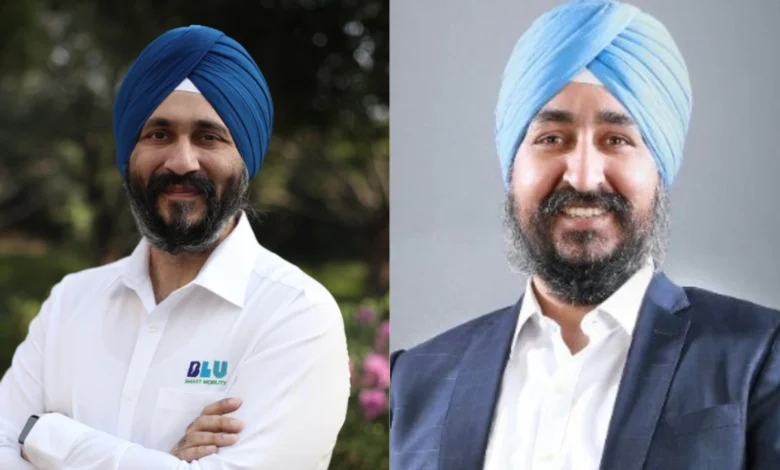
What started as a clean-energy crusade by Gensol Engineering’s Jaggi brothers has now spiraled into one of the dirtiest corporate thrillers of the year. Mahadev Booking Application case is back in focus as The Directorate of Enforcement (ED) is likely to summon the promoters of Gensol Engineering, brothers Anmol and Puneet Singh Jaggi, in the case.
The Mahadev Betting App Case is a high-profile scandal involving an online betting platform that enabled illegal gambling on various games, including poker, card games, badminton, tennis, football, and cricket. The app was operated by Dubai-based Saurabh Chandrakar, a former juice seller, and his accomplice Ravi Uppal, both of whom hail from Chhattisgarh, according to the Enforcement Directorate (ED). There are other Kingpins in this scam .This scam worth more than 40000 crore.
Coming back to the Jaggi brothers, the agency has not yet written to the duo to join the probe. ED recently froze more than 500,000 Gensol shares in the matter, as its suspects artificial price fluctuations in stocks. This is through Dubai-based entity Zenith Multi Trading DMCC, ED suspects. The firm is linked to Mahadev betting case accused Hari Shankar Tibrewal.
“The probe has reveaaled stock manipulation using tainted funds in the Mahadev app case, which were received in Gensol Engineering through the FPI (foreign portfolio investor) routes. The probe will ascertain whether the promoters were aware of this fact,” said a senior government official.
On Monday, ED said it had attached fresh securities and demat accounts of more than Rs 573 crore in the Mahadev illegal online betting application case. “This includes shares of Gensol Engineering,” said another person.
According to shareholding data filed with the Bombay Stock Exchange, ED’s Raipur Zonal Office holds 520,063 shares, or 1.37% of GEL’s equity, as of the quarter ended December 2024. The shares, classified under the ‘government holding’ category, were earlier held by Dubai-based Zenith Multi.
)
The Raipur unit is investigating irregularities linked to the Mahadev case.
On April 16, ED, searched more than 50 places in New Delhi, Mumbai, Ahmedabad, Indore, Jaipur and Sambalpur. These include the New Delhi residence of EaseMyTrip founder Nishant Pitti, the people said.
In a statement on Monday, the agency said, “ED investigation revealed that funds/POC (proceeds of crime) so generated by these betting platforms were being transferred out of India and, later, deployed in the Indian stock market in the name of ‘FPIs’ (which are based out of Mauritius, Dubai, etc). The funds were deployed/introduced in certain companies for causing ‘artificial price fluctuations’ of certain ‘SME (small and medium enterprises) sector securities’ so as to cheat common investors. Some of these investments have been identified and frozen during searches.”
The focus of the ED probe is to uncover the modus operandi of the alleged stock price manipulation.
Gensol, BluSmart May Head to NCLT as Lenders Explore IBC Route
The promoters of scam-hit Gensol Engineering and its electric mobility associate BluSmart Mobility may soon face insolvency proceedings, as lenders consider initiating resolution under the Insolvency and Bankruptcy Code (IBC) to safeguard their interests.
According to sources, lenders are examining the IBC route as a viable option to ensure business continuity and asset recovery.
“The cars owned by Gensol and leased to BluSmart are in good condition, and there are close to 3,000 drivers. This presents a case for a potential takeover as a running business. IBC could emerge as the preferred route for creditors,” said M.S. Sahoo, former chairperson of the Insolvency and Bankruptcy Board of India (IBBI).
Other recovery mechanisms, such as asset seizure under the SARFAESI Act, may prove to be cumbersome, making IBC a more streamlined alternative.
Experts noted that the IBC route may help preserve the operations of both companies as going concerns under new ownership or management. With the Jaggi brothers – Anmol and Puneet Singh Jaggi – currently barred from accessing the capital markets under a Securities and Exchange Board of India (SEBI) order dated April 15, the existing management may not be in a position to continue running the businesses, reducing the likelihood of resistance to insolvency proceedings.
“The key question is who will initiate the petition. Secured lenders may focus on strengthening their position, while unsecured creditors, including bondholders or even operational creditors, may approach the NCLT directly,” said turnaround expert Sridhar Ramchandran.
Admission of the insolvency application would trigger a moratorium, providing temporary relief to stakeholders and allowing space for a revival plan to be explored.
Nipun Singhvi, managing partner at NSA Legal, stated, “Resolution under IBC would mean a court-appointed Resolution Professional (RP) assumes control of the company, thereby halting any further siphoning of funds. The RP can also move for reversal of fraudulent transactions.”
Debt Exposure Under Scanner
The move towards insolvency comes in the wake of significant findings by SEBI earlier this month. The regulator revealed that Gensol defaulted on loans amounting to ₹57.9 crore from Indian Renewable Energy Development Agency (IREDA) and ₹13.67 crore from Power Finance Corporation (PFC).
Between FY22 and FY24, Gensol’s exposure to these two public-sector lenders surged from less than ₹36 crore to ₹977.75 crore – a nearly 30-fold increase. Of this, ₹663.89 crore was sanctioned for the procurement of 6,400 electric vehicles to be leased to BluSmart. However, only 4,704 EVs were purchased, leaving around ₹263 crore unaccounted for.
In addition to these institutional lenders, Gensol and its associated entities were found to have multiple transactions with related parties and vendors. One such vendor, Go-Auto, disclosed that outstanding payments from Gensol had crossed ₹50 crore. In a statement recorded before SEBI on March 24, 2025, Go-Auto Managing Director Ajay Agarwal confirmed that due to pending dues, no further EV deliveries would be made to Gensol.
The ongoing investigations and financial irregularities have prompted stakeholders to explore legal and procedural measures to recover dues and secure the future of the EV leasing and mobility businesses.
Corporate-Governance Collapse at Gensol Triggers Forensic Audit, Sebi Tightens Grip
Meanwhile, market regulator SEBI has ordered a forensic audit into the financial affairs of Gensol Engineering, BluSmart Mobility, and other associated entities. The audit, expected to take up to six months, could unearth more irregularities, with early indications already pointing to deep-rooted governance failures.
According to SEBI’s April 15 order, what has emerged is not just a case of financial mismanagement, but a complete collapse of corporate-governance norms.
“The promoters were running a listed public company as if it were a proprietary firm,” SEBI Whole Time Member Ashwani Bhatia noted in his strongly worded order.
The regulator observed that funds were being routed through related parties for purposes unrelated to the core business, effectively treating company accounts like a personal piggy bank. The most glaring example of this was in the electric vehicle leasing business, where large sums earmarked for EV purchases were allegedly siphoned off or left unaccounted.
But the concern runs deeper.
SEBI’s order underlined that while the fund diversion occurred in the context of the EV vertical, the risk it created is systemic. Gensol, which boasts a significant order book in the renewable EPC (engineering, procurement, and construction) space, primarily with public-sector and government clients, now risks losing credibility. These capital-intensive contracts require not just financial discipline, but also timely execution and an untarnished reputation, both now in question.
As part of its interim measures, SEBI has barred the Jaggi brothers, Anmol and Puneet, from serving as directors or holding any key managerial positions in Gensol until further notice.
Falsified Filings and Rating Downgrades
The crisis has already spooked credit-rating agencies. In March, agencies downgraded Gensol’s ratings after lenders reported delays in debt servicing, a sharp contrast to Gensol’s own submissions, which had repeatedly claimed that all was well. In fact, Gensol had been regularly sending “no-default” statements to rating agency ICRA, suggesting smooth debt repayments.
That impression came crashing down when ICRA discovered that certain documents provided by Gensol to reflect its repayment history were apparently fabricated. This revelation not only raised red flags on Gensol’s liquidity claims but also cast serious doubts on the company’s internal compliance mechanisms.
With a forensic audit underway, multiple state-owned lenders on alert, and SEBI breathing down its neck, Gensol, once a promising player in the renewable space, finds itself in a credibility crisis. The fallout could also have broader implications for India’s clean-energy ambitions, especially if major EPC contracts get disrupted.
Lenders are now weighing their options with caution, knowing well that what lies beneath the surface may be far more troubling than what has already come to light.
The Last Bit,
A Startup Dream Derailed and a Wake-Up Call for India’s Entrepreneurial Ecosystem
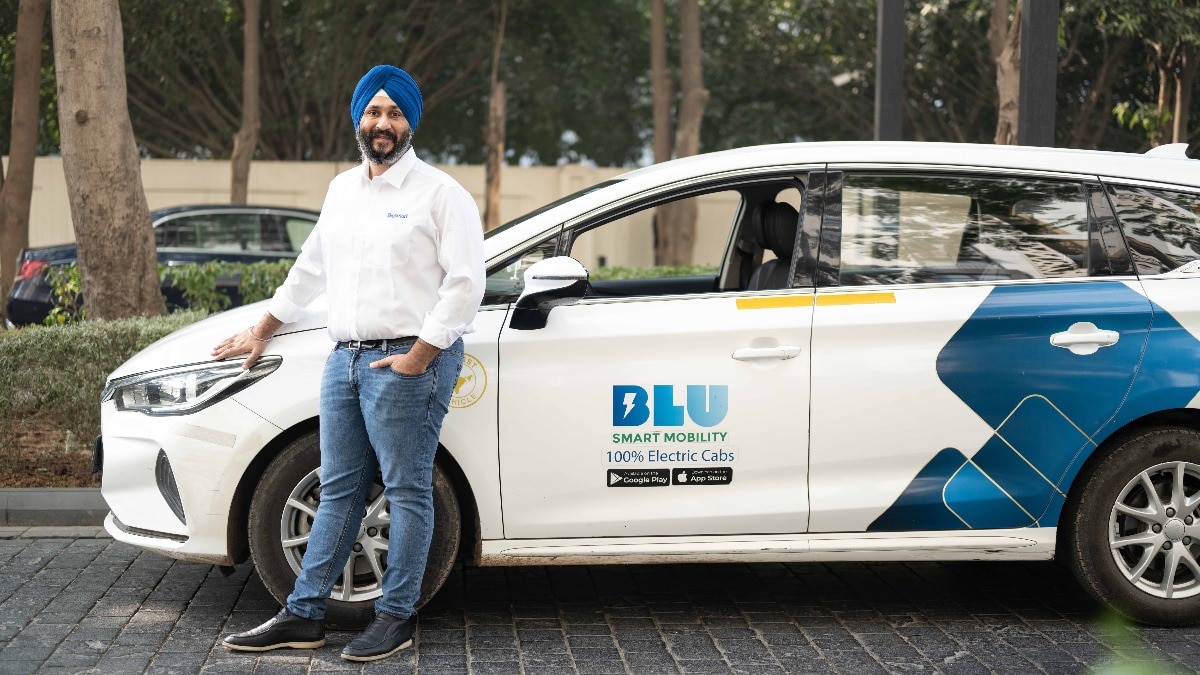
What began as a promising narrative of India’s clean energy and smart mobility ambitions, Gensol Engineering and BluSmart Mobility, has unraveled into an example of what happens when ambition is not matched by ethics, governance, and responsibility.
From defaulted loans and unverifiable vehicle purchases to falsified documents, siphoning of public funds, and a blatant disregard for corporate-governance norms, the collapse of the Gensol-BluSmart empire is not just a company-specific failure. It’s an indictment of systemic lapses within India’s startup ecosystem.
The fact that a listed company could allegedly operate with such opacity, using public money to fund related-party ventures while misrepresenting facts to both regulators and credit agencies, exposes a glaring regulatory blind spot.
SEBI’s strong intervention and the prospect of insolvency under the IBC are welcome steps, but they come after significant financial and reputational damage has already been done.
For state-backed lenders like IREDA and PFC, who found themselves nearly ₹1,000 crore deep in exposure in just two years, it raises uncomfortable questions. How did due diligence fail so catastrophically? Why were red flags missed as funds ballooned 30 times in such a short span?
But beyond the boardrooms, audits, and tribunals, this debacle reflects poorly on the broader startup sector in India, a sector often celebrated as the face of “New India” and one that commands immense trust from both investors and policymakers. For every responsible founder building a business with integrity, the Jaggi brothers’ alleged actions chip away at the ecosystem’s credibility.
India’s startup story, already weathering funding winters, valuation corrections, and global scrutiny cannot afford reputational landmines like these. If governance remains an afterthought and financial discipline optional, then stories like Gensol will keep surfacing, and investor trust will continue to erode.
This is no longer just about a failed company. It is about a failed culture that allowed hype to override honesty. If India wants to be taken seriously as a startup superpower, it must now prove that it can police its success stories and punish its failures.