From Hindustan To Briberystan: How India Is Becoming Vishwaguru?
Bribery's New Silk Road: India’s Decaying Republic, Brain Drain and the Great Corruption Seesaw

Introducing The Stench Beneath the Shining Tricolour!
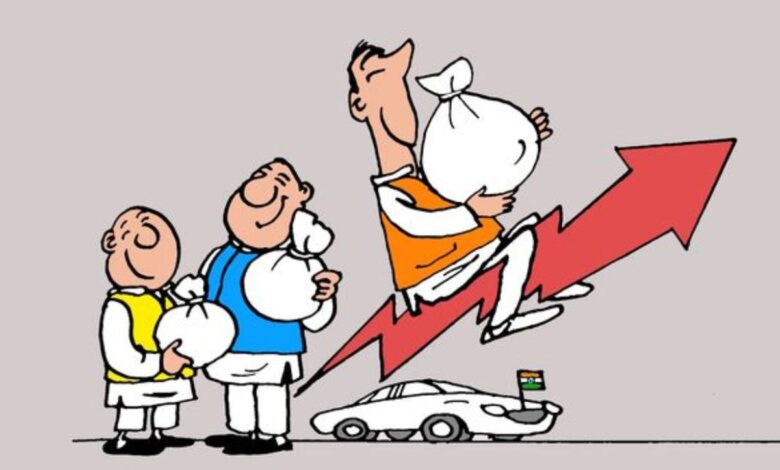
India likes to celebrate its software engineers, its startups and its rising billion‑dollar valuations. Politicians boast of a “new India” sprinting onto the global stage. Yet there is an elephant in the room whose stench suffocates both foreign investors and Indian citizens: systemic corruption. Satirists might quip that the tricolour should include a fourth band of grey to represent the dirt hidden beneath the shining veneer.
“How is India failing on the global platform because of corruption?”
Reported cases show that bribery is not the occasional aberration of a few “bad apples” but a structural feature of Indian public administration. What makes the situation more tragic is that many of those responsible for enforcing the law are themselves implicated in graft, extortion and tax terror campaigns.
In what follows, we describe individual documented cases of corruption, examine the government’s response (or lack thereof), and explore the links between these scandals and the exodus of wealth and talent from Indian soil. The tone is intentionally satirical and, at times, biting because the seriousness of the subject demands more than polite euphemisms. Yet there is sensitivity too; sensitivity to the millions of honest Indians watching helplessly as greed tramples their dreams.
The Wintrack Saga – When a Logistics Firm Said “Enough”
The immediate spark for this article was the story of a relatively small logistics company that dared to speak publicly about corruption. In October 2025, Wintrack Inc, a Tamil Nadu‑based firm dealing in international cargo, announced on social media that it would cease all import and export operations in India. According to the firm, customs officials at Chennai port had subjected it to “repeated and unjustified harassment” and even retaliation after the company exposed bribery practices earlier that year. Wintrack alleged that over a 45‑day period the officials demanded bribes totalling more than ₹210,000 (about USD 2,500) on a shipment worth USD 6,993, with one officer even offering a “10 % discount” on the bribe if payment was made promptly.

The allegations would have been dismissed as a disgruntled vendor’s exaggeration but for two factors: first, the firm published proof of payments and named specific officers in the Special Investigation and Intelligence Branch (SIIB) of Chennai customs; and second, the story went viral, drawing responses from politicians and entrepreneurs.
Member of Parliament Shashi Tharoor called the episode “truly dismaying” and said corruption remains rampant because bribes are considered the price of doing business. Mohandas Pai, former CFO of Infosys, called out Finance Minister Nirmala Sitharaman on social media, accusing the government of failing to stamp out systemic corruption at ports and allowing “tax terrorism” to flourish. He cited official budget data showing that ₹30 lakh crore (₹3 trillion) was stuck in tax disputes, of which only ₹15 crore was recoverable. “You have also failed to stop TAX TERRORISM,” he wrote.
A Flood of #MyCustomsStory Posts
If Wintrack had expected the authorities to respond with humility, it was mistaken. While the Ministry of Finance announced that a senior officer would conduct a “fair, transparent and fact‑based inquiry”, industry voices noted that complaints of customs harassment have circulated for years. Importers and business owners across India began sharing personal experiences under the hashtag #MyCustomsStory. A businessman named Udhaya Sambath claimed a friend paid ₹47,000 as a bribe to Chennai customs to release a consignment. Another importer reported that demands can be 10–50 % of shipment value, with officials threatening to subject goods to time‑consuming scrutiny if payments aren’t made. Entrepreneurs in Rajkot alleged that customs officers demand ₹5–7 lakh for clearances under the MOOWR scheme.
Such stories depict not an isolated incident but a pattern of extortion. Industry insiders confirmed that “organised corruption” is rampant in customs zones across India, stating that without “greasing the palms” of appraisers and deputy commissioners no importer can survive. Harsh personal accounts further illustrate the humiliation: one person shared that after declaring a book as a gift, customs officers insisted he pay a fee based on the book’s online price. Another recalled being extorted to buy a bottle of premium whisky to have his device released. Others said bribes sometimes take the form of smartphones for BIS certificates and that thousands of shipments from China were cleared without compliance by paying off officers.
Government Response – Damage Control or Genuine Action?
Public outrage forced the Ministry of Finance to order an inquiry, yet scepticism abounds. Chennai Customs issued a rebuttal claiming that Wintrack misclassified goods and that no bribe was demanded. The government’s dual stance of promising probes while defending officials typifies how corruption complaints are often handled; by deflecting blame onto the accuser or diluting responsibility through bureaucratic processes. Even if the inquiry results in disciplinary action, the deeper question remains, why must companies risk retaliation and potential ruin simply to clear goods? The Wintrack saga is symptomatic of an environment where bribery is an unofficial tax, sanctioned by silence if not by policy.
A Parade of Scandals – Documented Cases That Erode Confidence
The cynic might retort that one customs scandal does not define an entire nation. Unfortunately, the Wintrack case sits atop a long list of documented corruption scandals implicating politicians, bureaucrats and corporate magnates. To understand why brain and wealth drain is accelerating, it is essential to revisit these cases not merely as historical footnotes but as ongoing wounds that undermine rule of law.
The 2G Spectrum Allocation Scam (2008)
Perhaps the most infamous corruption scandal of the 2000s was the allocation of second‑generation (2G) telecom licences. Then telecom minister A. Raja was accused of selling licences at throwaway prices by arbitrarily advancing the cut‑off date and favouring select firms. The Comptroller and Auditor General (CAG) estimated the loss to the exchequer at ₹1,760 billion (US$25 billion). Evidence suggested that bribes were paid and that licences went to ineligible companies.

In a bizarre twist, all accused were acquitted by a special court in 2017, which declared that the prosecution failed to prove the case. The Central Bureau of Investigation (CBI) appealed, and in March 2024, the Delhi High Court agreed to re‑examine evidence. The case is emblematic of India’s anticorruption drama: massive losses, alleged ministerial complicity and decades‑long court battles that rarely yield definitive justice. Meanwhile, the message to investors is clear, one can obtain scarce resources through patronage rather than open bidding, and accountability may never arrive.
Coal Allocation (“Coalgate”) Scam (2004–2012)
In the early 2000s the UPA government allocated coal blocks to private and public sector companies without competitive bidding. A leaked CAG draft report said the flawed allocation process resulted in a windfall gain of ₹10,673 billion (US$130 billion) for the beneficiaries. The final report estimated the loss to the exchequer at ₹1,856 billion (US$22 billion). The CBI investigated whether public officials colluded with companies to make wrongful gains and filed multiple FIRs. The scandal paralysed Parliament and led to accusations of both ministerial negligence and corruption. However, only a handful of convictions have resulted, and political accountability has been fleeting.
Commonwealth Games 2010 Corruption
India’s attempt to showcase itself as a sporting powerhouse during the 2010 Commonwealth Games resulted instead in a litany of irregularities. Reports by India’s Central Vigilance Commission (CVC) identified 53 corruption cases related to contracts. The government appointed a committee led by former CAG V. K. Shunglu, but investigations dragged on.
The most prominent arrest was that of Suresh Kalmadi, head of the Games organising committee, charged with conspiracy and cheating for awarding a time‑scoring contract to a Swiss firm at inflated prices. Kalmadi spent nine months in jail before being released on bail, and the legal process continues. A decade later, many of the irregularities have faded from public memory, but the message remains: mega events are opportunities for mega graft.
Punjab National Bank (PNB) Scam and Nirav Modi’s Flight (2018)
In 2018, one of India’s largest banks discovered that it had been issuing fraudulent Letters of Undertaking (LoUs) for years. The scam, estimated at ₹12,000 crore (US$1.4 billion), involved diamond merchants Nirav Modi and his uncle Mehul Choksi. They colluded with PNB officials to issue LoUs without entering the transactions into the bank’s core system, enabling them to get loans from overseas banks. When the scam surfaced, both Modi and Choksi fled abroad. The CBI and Enforcement Directorate charged them with criminal conspiracy, breach of trust and money laundering. The case underscores how bank officials can circumvent controls and how high‑profile fugitives exploit India’s weak extradition record.
Fodder Scam – Lalu Prasad Yadav’s Conviction
The Fodder Scam dates back to the 1990s when officials in Bihar siphoned off money intended for cattle fodder. Estimates of the embezzlement run around ₹940 crore (US$570 million). Former Bihar Chief Minister Lalu Prasad Yadav was among those convicted, along with numerous civil servants. The scam revealed a nexus between politicians and bureaucrats; funds were drawn based on fake vouchers for medicine and fodder for non‑existent animals. More than 500 convictions have been secured over decades, yet the breadth of the scheme indicates systemic rot rather than a single “bad actor.”
Delhi Liquor Policy Case (2022–2024)
A more recent scandal is the Delhi excise policy case. Opposition parties alleged that the 2022 liquor policy offered extraordinary profit margins to wholesalers and extended licences in return for kickbacks. The Enforcement Directorate claimed that the policy guaranteed a 12 % profit margin for wholesalers and required a 6 % kickback to Aam Aadmi Party (AAP) ministers. According to the ED, a group dubbed the “South Group” allegedly paid ₹100 crore in advance to secure undue favours.
The ED later arrested several AAP leaders, including deputy chief minister Manish Sisodia and communications head Vijay Nair. Even Chief Minister Arvind Kejriwal was arrested after skipping multiple ED summons. While the case is ongoing, it has raised serious concerns about the integrity of local governments and the reach of moneyed liquor lobbies.
Vijay Mallya and the Kingfisher Airlines Loan Default
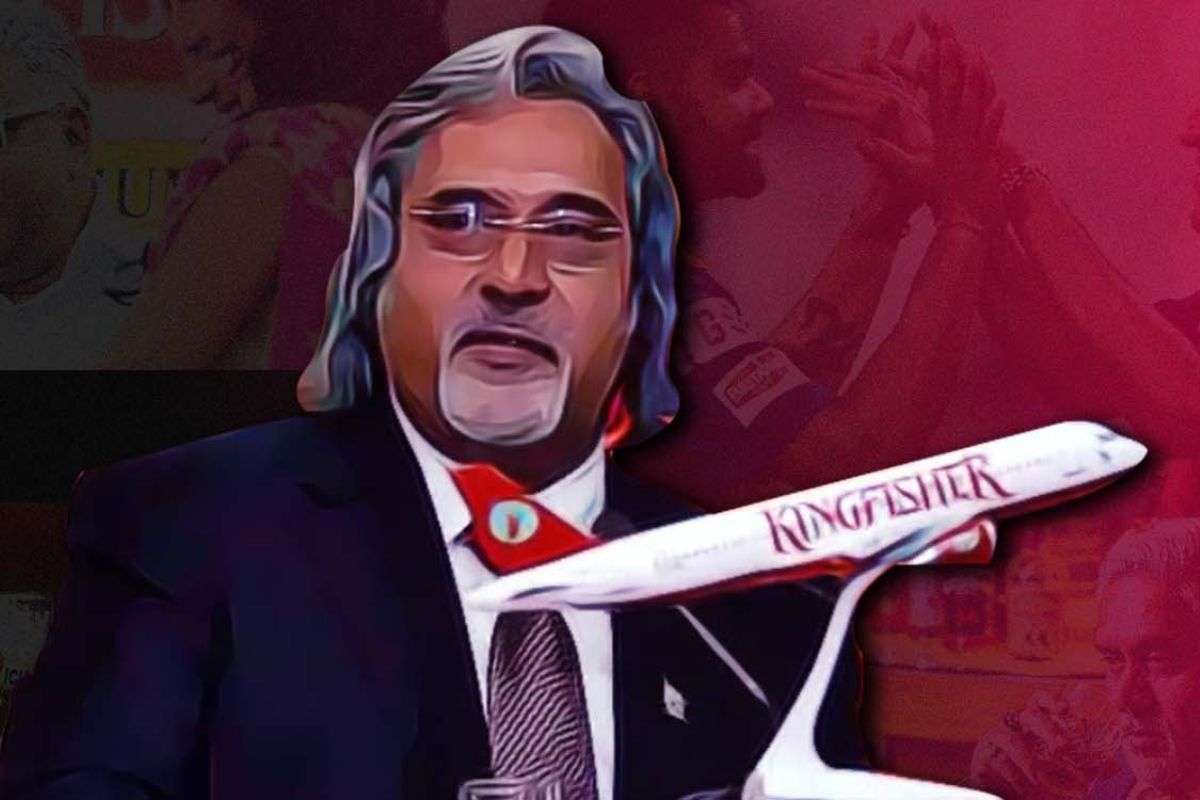
Another case that continues to haunt Indian banking is the default of Kingfisher Airlines. The airline, controlled by businessman Vijay Mallya, borrowed more than ₹9,000 crore from Indian banks between 2007 and 2012. Investigations later found that bank officials extended loans without proper due diligence and that the airline diverted funds. When Kingfisher collapsed, Mallya fled to the United Kingdom. He has fought extradition for years, while Indian banks have struggled to recover the money. The case highlights how politically connected industrialists can obtain large loans without adequate security and then abscond with impunity.
The Bofors Kickbacks Scandal
Long before the 2G scandal, India’s defence procurement process was rocked by allegations that Swedish arms manufacturer Bofors AB paid ₹64 crore in bribes to Indian politicians and officials to secure a contract for artillery guns. Reports by Swedish Radio in 1987 linked the payoffs to then Prime Minister Rajiv Gandhi, although concrete evidence remained elusive. A recent book claims that bureaucrats coached Bofors executives on how to absolve the prime minister and that the Central Bureau of Investigation sought evidence from U.S. authorities. The scandal strained India’s reputation for defence procurement integrity and set the template for future allegations of middlemen and secret commissions.
The Adani FCPA Case – International Dimension of Indian Bribery
In November 2024, the U.S. Department of Justice (DOJ) unsealed an indictment charging Gautam S. Adani, chairman of India’s Adani Group, and seven other executives with conspiring to pay more than $250 million in bribes to Indian government officials in order to secure solar energy contracts. The indictment also alleged securities fraud and wire fraud, accusing the defendants of lying to investors and obstructing justice. Although the allegations are yet to be proven, the case demonstrates how corruption involving Indian officials can trigger enforcement actions under foreign laws such as the U.S. Foreign Corrupt Practices Act (FCPA).
The DOJ’s statement emphasised that the defendants sought to enrich themselves through bribery and deception. Whether the Indian government will cooperate fully with U.S. authorities remains to be seen. The global scrutiny underscores that the rot is not confined within Indian borders; it can taint international perceptions of Indian businesses and hamper cross‑border partnerships.
Additional Incidents – Border Bribes and Customs Arrests
Beyond high‑profile scams, routine corruption pervades law enforcement agencies tasked with guarding borders and preventing smuggling. In August 2025, the CBI arrested Krishna Kumar, a superintendent of customs at Mumbai’s Sahar Air Cargo complex, after he accepted a ₹10.2 lakh bribe. He had allegedly blocked a consignment using a pseudonymous email and then offered to clear it in exchange for money, claiming most of the bribe was meant for his seniors. The CBI said Kumar and other public servants demanded bribes at the rate of ₹10 per kilogram of imported cargo. Audio recordings captured him pressuring the complainant to pay outstanding bribes for previous clearances.
Even more disturbing is judicial recognition that border guards facilitate illegal immigration for a fee. In July 2021, the Supreme Court of India upheld the dismissal of a Border Security Force (BSF) jawan who was found to have allowed Bangladeshis to cross into India. The court noted that, although the issue is often denied officially, armed forces personnel accept bribes to let illegal migrants enter. The bench described infiltration as a serious internal security problem and cited affidavits showing that millions of Bangladeshi nationals had illegally crossed the border, occupying land and depriving Indians of jobs. When border guards collude with smugglers and traffickers, national security becomes a casualty of corruption.
Tax Terrorism and Regulatory Harassment – Another Form of Extortion
For many businesses, the threat of corruption comes not only from demands for bribes but also from arbitrary tax assessments, sometimes referred to as “tax terrorism.” This term gained traction during the UPA era when retrospective tax demands were issued to multinationals, but it has not vanished under the current government.
As noted earlier, Mohandas Pai accused the government of failing to stop tax terrorism. Using the Finance Ministry’s own budget data, he wrote that ₹30 lakh crore (₹3 trillion) was stuck in tax disputes and that only a tiny fraction was recoverable. He urged the government to curb harassment by tax authorities and end the practice of slapping businesses with exorbitant demands on flimsy grounds.
This complaint was echoed by India’s main opposition party, the Indian National Congress, which described tax demands as “tax terrorism” aimed at crippling its finances ahead of the 2024 election. In March 2024, Congress said it received an additional tax demand of ₹18.2 billion (US$218 million). Treasurer Ajay Maken told reporters the party would challenge the notice in court, calling the demands an attempt to weaken the party during campaign season. Congress also claimed its bank accounts were frozen over a tax dispute from 2018–2019. Although the tax department defended its actions, citing violations of exemption laws, the episode illustrates how state machinery can be deployed to intimidate political opponents.
Brain and Wealth Drain – When Corruption Drives Away Capital and Talent
Millionaire Exodus – Data and Motivation
If corruption and tax harassment were merely domestic irritants, one might expect businesses to grumble but ultimately stay. However, there is growing evidence that wealthy individuals and entrepreneurs are voting with their feet. The Henley Private Wealth Migration Report 2025 projected that 3,500 Indian millionaires would relocate abroad in 2025, taking $26 billion in investable wealth with them. This constitutes a significant outflow of capital from a developing country that needs investment to create jobs.
The report identifies several reasons for the exodus: poor infrastructure, limited financial‑growth opportunities, corruption and high taxes. Another analysis notes that high‑net‑worth individuals (HNWIs) seek destinations such as the UAE, Malta and Portugal where taxes are low, infrastructure is modern and the quality of life is better. The article concludes that the departure of 3,500 millionaires is a “bad sign for India” and calls for measures to retain them.
Tax Narrative vs. Reality
Critics sometimes argue that stories about millionaire migration are overstated. The Tax Justice Network contends that Indian millionaires leaving in 2023 represented only 0.77 % of their population, a proportion comparable to migration from many other countries. Nevertheless, the report acknowledges that the discourse around a “wealth exodus” gained traction in mainstream media. Even if the absolute number of migrating millionaires is not massive, the symbolism matters. When the wealthy choose to renounce Indian citizenship or shift residency to tax havens, it signals lack of confidence in domestic governance and resonates with aspiring entrepreneurs.
The Brain Drain – Beyond Money
Wealth flight is only part of the story; the more pernicious phenomenon is brain drain, the emigration of skilled workers, scientists, doctors and engineers. There is anecdotal evidence that many young professionals leave because they are disillusioned with corruption, nepotism and lack of meritocracy in India. While precise numbers are hard to pin down, surveys consistently show that students and professionals seeking opportunities abroad cite corruption and bureaucratic hurdles as factors for leaving. For example, even a modest statement like the one from a California resident recounting being harassed by customs when relocating to India – a man said customs demanded proof for a gifted book and insisted he pay to have it released – can deter others from returning home.
When companies like Wintrack pack up and leave, the message to talented Indians abroad is chilling: if a business cannot get goods cleared without paying bribes, what hope does an individual have? The cumulative effect is a self‑perpetuating cycle: corruption reduces opportunities, causing talent to leave, which further weakens institutions and encourages more corruption.
India’s Failure to Control Corruption at Borders and Ports
Bribery in Customs and Ports
Customs houses, ports and airports represent the front lines of international trade. That these nodes are rife with graft is no secret. As noted earlier, importers allege that customs officers demand bribes worth 10–50 % of shipment value, sometimes disguised as “facilitation fees.” The India Today investigation revealed multiple individuals speaking of paying ₹47,000 to have goods released or being forced to gift smartphones or liquor. A customs clearance veteran admitted that without paying bribes to appraisers and deputy commissioners, “no importer or CHA can survive in India”.
Authorities occasionally arrest corrupt officials, as in the case of Mumbai customs superintendent Krishna Kumar, who accepted a ₹10.2 lakh bribe and had set a rate of ₹10 per kilogram of imported cargo. Yet such cases appear to be the tip of the iceberg. The very existence of a price list for clearing shipments implies an organised racket rather than a few rogue agents. Worse, the CBI said Kumar told the complainant that the majority of the bribe would go to his superiors, suggesting that corruption flows upward in the hierarchy.
Corruption at the Border – National Security Implications
The Supreme Court’s 2021 observation that BSF personnel take bribes to allow illegal migrants across the India–Bangladesh border is startling. The court noted that infiltration has become a serious internal security issue and that millions of Bangladeshi nationals have crossed over, occupying land and competing with Indians for jobs. That a soldier entrusted with national security would risk the country’s safety for a bribe highlights how corruption is not just an economic problem but a threat to sovereignty.
When infiltration is facilitated by corrupt border guards, entire communities suffer. The Supreme Court’s ruling implies that infiltration persists partly because of collusion among security personnel and smugglers. Without systemic reform, any border infrastructure improvements or political agreements may be undermined by the simple act of handing over money at a checkpoint.
The Role of Lax Enforcement and Political Complicity
The thread that connects all these cases is not just the presence of corruption but the laxity of enforcement. Indian authorities respond with inquiries, committees and investigations, yet rarely with convictions or structural reform. Some reasons include:
Political Protection and Influence – High‑profile accused often have political connections. In the 2G and Coalgate scandals, fingers pointed at ministers and coalition allies. Cases drag on, witnesses turn hostile, and appeals continue for decades, weakening public trust.
Weak Investigative Agencies – The CBI and ED are sometimes accused of being tools of the government. Their independence is suspect, especially when investigations align conveniently with political cycles. For example, critics alleged that tax raids on opposition figures are timed to elections, feeding the narrative of “tax terrorism”.
Overburdened Judiciary – India’s courts are clogged with millions of cases. Even when investigations yield evidence, judicial processes may take years. Meanwhile, accused individuals often obtain bail and continue their political or business careers.
Normalization of Corruption – Bribery is often seen as a cost of doing business. When importers claim that demands of 10–50 % of shipment value are the norm[1], the state implicitly condones extortion by doing nothing to punish it. Such normalisation erodes the moral authority of laws and encourages more corruption.
The Government as Perpetrator and Referee
Ironically, the very institutions that should combat corruption are sometimes participants in it. When Mohandas Pai accused the government of failing to stop tax terrorism and noted that ₹30 lakh crore remained stuck in tax disputes, he pointed to the government’s role in perpetuating extractive practices. The state is both the bribe‑taker (through corrupt officials) and the bribe‑facilitator (by not punishing offenders).
Likewise, when a U.S. indictment alleges that the chairman of one of India’s largest conglomerates conspired to pay $250 million in bribes to Indian officials, it implies that the corruption extended to top levels of governance. The involvement of officials across sectors – from ports to energy contracts, from liquor policy to telecommunication – indicates a systemic problem rather than isolated cases.
Global Repercussions – Investor Confidence and Diplomatic Fallout
Reputation Damage
Corruption scandals erode India’s global reputation. The country’s ranking on Transparency International’s Corruption Perceptions Index (CPI) 2024 was 38 out of 100, showing modest improvement but still reflecting endemic corruption. When major newspapers and agencies report that a logistics firm is leaving India due to customs bribes, or that a U.S. court indicted a leading Indian tycoon for paying bribes, foreign investors take note.
Investor Hesitation
Investors are not solely concerned about moral issues; they worry about regulatory certainty. Arbitrary tax demands, retrospective laws and shifting regulations create unpredictability. The Wintrack case shows that even small firms can be crippled by corrupt officials, while the 2G and coal scandals demonstrate how licences and resources can be arbitrarily allocated or revoked. Multinationals weigh such risks against potential returns. Many may choose to invest in countries with more transparent regimes, depriving India of capital that could create jobs.
Diplomacy and Foreign Law Enforcement
International implications arise when foreign authorities prosecute corruption involving Indian officials. The U.S. DOJ’s indictment in the Adani case, for instance, may strain India–U.S. relations. Likewise, when banks or fund managers consider Indian investments, they factor in the risk of FCPA violations. Countries that host large Indian diasporas, such as the United Arab Emirates, the United States and the United Kingdom, are also impacted by the exodus of Indian wealth. When wealthy Indians migrate with capital to these nations, it influences bilateral relations, economic policy and domestic debates on immigration.
Why Do Indians Keep Leaving? – The Human Perspective
Stories of Frustration and Defeat
Beyond statistics, the brain and wealth drain is best illustrated by personal stories. A young entrepreneur invests time and money into building a startup only to face endless inspections and demands for “chai‑paani.” An NRI returning home is humiliated at customs, his gift held hostage by a bribe demand. A logistics firm like Wintrack, after paying bribes and exposing corruption twice, finds its operations crippled by retaliatory harassment. When such stories circulate on social media, they fuel a collective sense of futility.
Professionals who studied abroad may decide not to return because their skills will not be rewarded on merit. Doctors see appointments going to politically connected individuals; scientists witness research funds diverted by bureaucrats; engineers watch infrastructure projects given to cronies. Even those who remain in India often dream of leaving for countries where the rule of law is stronger.
Economic Opportunity Costs
There is also an economic argument: corruption acts as a tax on productivity. When importers pay 10–50 % extra to bribe customs, those costs get passed on to consumers or reduce profitability. When bank loans are granted to friends of politicians who then default, legitimate businesses are starved of capital. When multi‑crore projects are awarded to incompetent bidders due to bribes, infrastructure quality suffers, making Indian cities less livable and pushing skilled workers away. Corruption thus inflates the cost of living, depresses wages and reduces the returns to honest labour. It is no wonder that HNWIs and professionals seek better returns and cleaner systems abroad.
Social Trust Erosion
Finally, brain and wealth drain has a psychological dimension: corruption breeds cynicism. When citizens believe that success depends on connections rather than competence, they disengage from public life. Civic participation declines, voter turnout drops and the social contract frays. People with means and talent may feel no obligation to fix a system that seems beyond repair. By leaving, they conserve their energy for more promising environments. This emigration, in turn, reduces the pressure on domestic institutions to reform.
Institutional Culture and Political Will
However, reforms will fail unless there is political will. India’s political class must stop shielding corrupt colleagues. Parties must commit to internal accountability, refusing to nominate individuals with pending corruption charges. Civil society and media have roles to play in sustaining pressure for reform.
Education and cultural change are also important. Citizens should reject the view that paying a bribe is acceptable or efficient. Ethical training in schools and workplaces, combined with enforcement, can shift norms over time.
Finally, India must recognise that corruption is a national security issue. When border guards accept bribes to allow illegal migrants, the consequences extend beyond commerce. When customs officials extort cargo importers, trade suffers. Curbing corruption is not just about ranking on the CPI but about defending sovereignty and ensuring prosperity.
At the end – Will the Government Take Action or Just Pretend?
This piece has painted a bleak picture: repeated, documented cases of corruption across sectors; lax enforcement and political complicity; citizens and companies harassed by customs, tax and law enforcement authorities; and a growing exodus of wealth and talent. India’s global aspirations are undermined not by foreign conspiracies but by internal rot. The satirical tone of the title is thus justified: a “New Silk Road” not of trade but of bribes, on which money and opportunity depart India while corrupt officials stand as toll collectors.
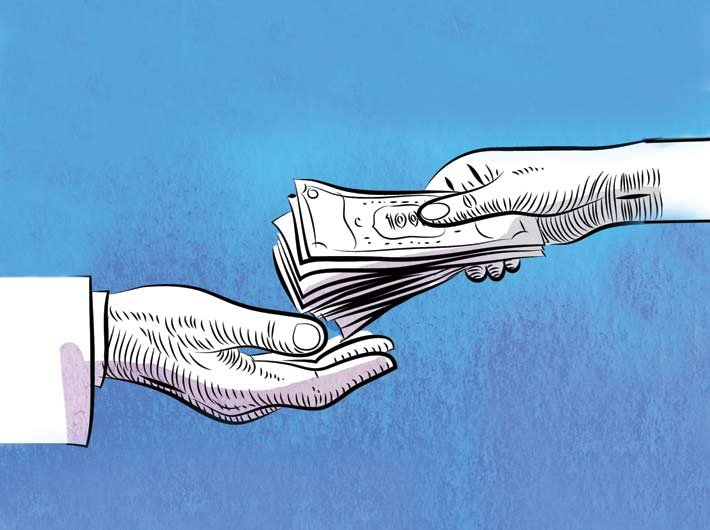
Whether the Indian government will address this crisis remains uncertain. While ministers vow zero tolerance and order inquiries, actions speak louder than words. The Wintrack saga may prove a turning point if the investigation punishes wrongdoing and reforms customs procedures. But if it becomes another entry in the long list of unresolved scandals, the brain and wealth drain will continue, and India will continue to be perceived as a nation where bribery is not just an aberration but a way of life.
The choice lies with those in power: either confront corruption decisively or continue to pretend while the country’s brightest minds and biggest fortunes quietly exit through the back door.