From Liberation Day To Legal Mayday. Trump’s $34 Billion Tariff Blunder On Thin Ice But Who’s Really Paying The Price?

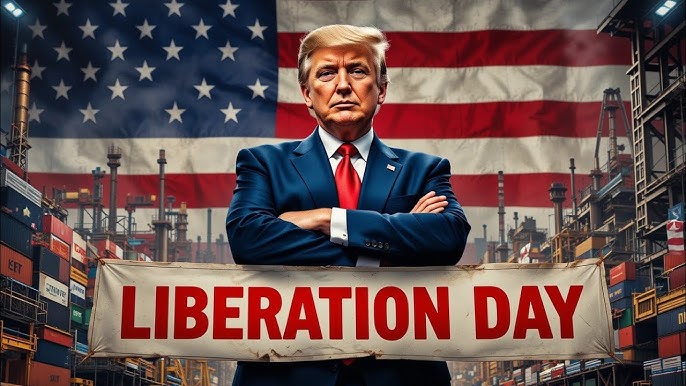
Even as a legal tug-of-war over tariffs gains ground, Trump’s trade power is facing it’s toughest test yet as a federal appeals court on Thursday temporarily reinstated one of the most sweeping tariff measures introduced under President Donald Trump – just a day after a U.S. trade court ruled that he had overstepped his authority in imposing them.
The U.S. Court of Appeals for the Federal Circuit in Washington issued a stay on the lower court’s decision, giving the administration time to appeal. The court has set a tight timeline: plaintiffs must respond by June 5, with the government’s reply due by June 9.
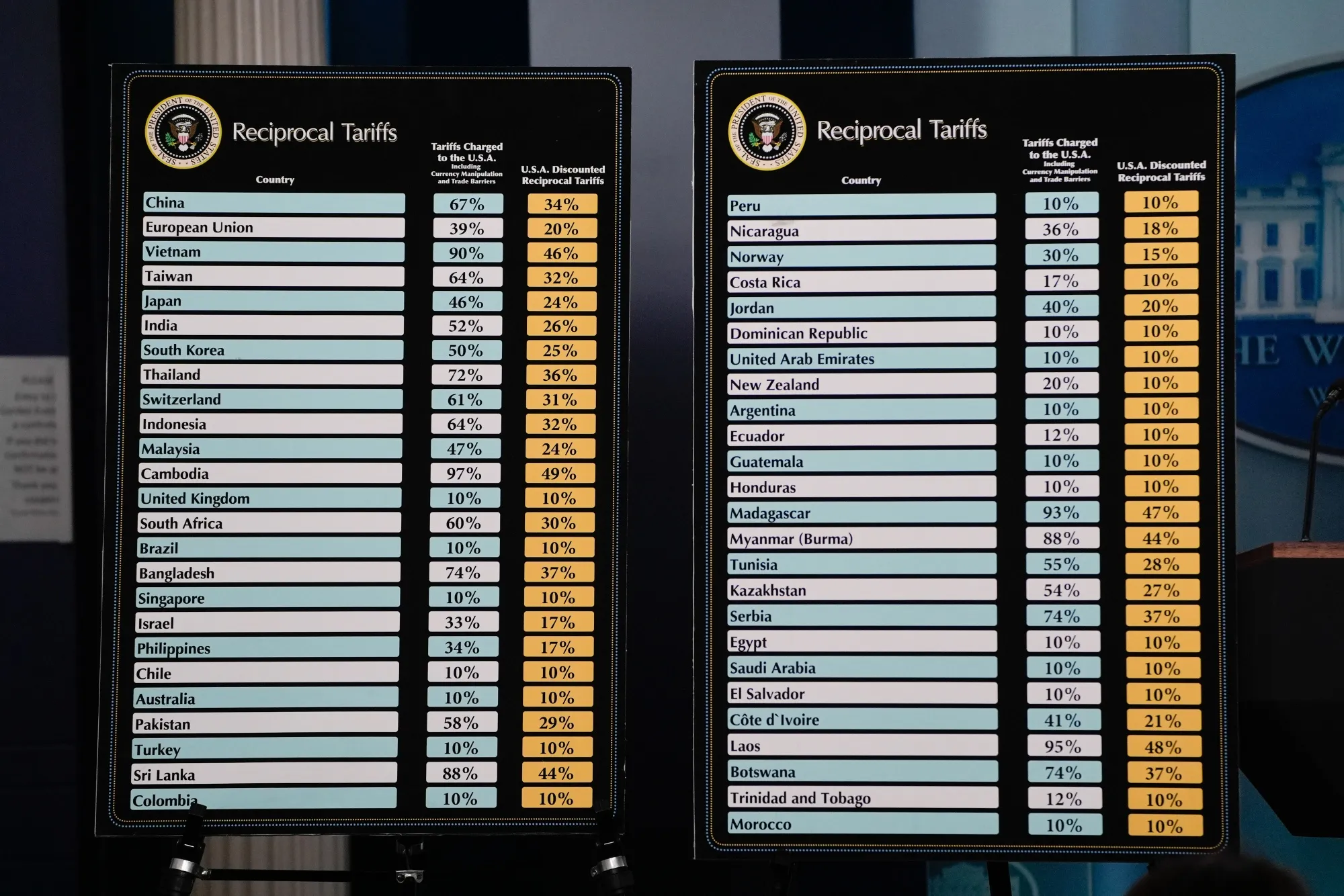
At the heart of the controversy are the so-called “Liberation Day” tariffs – a broad set of duties Trump aimed at most U.S. trading partners, including an additional layer of tariffs on goods from Canada, Mexico, and China. Trump had linked those specific levies to his claims that the three nations were failing to stop the flow of fentanyl into the United States.
But on Wednesday, the U.S. Court of International Trade dealt a surprise blow to Trump’s trade legacy. A three-judge panel ruled that the Constitution grants Congress (not the president) the authority to impose tariffs. The court held that Trump had exceeded his powers by invoking the International Emergency Economic Powers Act (IEEPA), a statute intended to address national emergencies, not as a tool for trade leverage.
Despite the ruling, officials from the Trump camp remained defiant. Senior administration sources indicated confidence in overturning the decision on appeal and hinted at other presidential powers they might invoke to push the tariffs through.
In classic Trump fashion, the president took to social media to slam the court’s decision, calling it “horrible” and “Country threatening.” He warned that requiring congressional approval for such tariffs would “destroy Presidential Power,” and claimed foreign countries were celebrating the ruling, everyone except the U.S., he said.
Reaction from global partners was measured. The British government called it an internal matter for the U.S. legal system, while Germany and the European Commission refrained from comment altogether. Canadian Prime Minister Mark Carney, however, pointed out that the ruling echoed Canada’s long-standing view that Trump’s tariffs were unlawful.
Financial markets, accustomed to the volatility surrounding Trump-era trade policy, showed muted relief after the initial court ruling. But analysts were quick to caution that the legal battle is far from over. An analysis found that these tariffs have already cost U.S. companies more than $34 billion through lost sales and higher input costs.
Some of Trump’s earlier tariffs, such as those on steel, aluminum, and cars, remain untouched by the ruling, as they were enacted under separate national security statutes.
The Liberty Justice Center, representing five small businesses challenging the tariffs, called the appeals court’s stay merely a procedural step. Their lead counsel, Jeffrey Schwab, expressed confidence that the higher court would ultimately side with the plaintiffs, citing irreversible harm such as severed supplier ties, costly supply chain shifts, and existential threats to the businesses involved.
In a separate but related case, another federal court also ruled on Thursday that Trump had misused the IEEPA in setting his so-called “reciprocal” tariffs, a 10% duty on goods from most countries, and 25% on imports from Canada, Mexico, and China. However, that ruling applied only to the toy company that brought the case and has also been appealed by the administration.

Uncertainty Lingers as Trade Tensions Simmer
After rattling global markets with a sweeping tariff announcement on April 2, President Donald Trump hit the brakes pausing most import duties for 90 days and promising to negotiate bilateral deals. But aside from a recent agreement with the UK, no major deals have materialized. And now, with a U.S. trade court ruling throwing a wrench into Trump’s tariff push and an appeals process underway, analysts say countries like Japan may think twice before rushing into any agreements.
“Unless the administration wins the appeal soon, the biggest upside is time — and a cap on how far the tariffs can go for now,” said George Lagarias, chief economist at Forvis Mazars. Currently, tariffs are capped at 15%, a level that has held since Trump temporarily eased duties on Chinese goods earlier this month. Before Trump returned to office in January, the effective U.S. tariff rate hovered between 2% and 3%. The court ruling would have reduced it to about 6%, but thanks to the emergency stay, the 15% level remains, at least for now.
In the meantime, the ongoing trade war continues to shake businesses across industries. From luxury goods and sneakers to appliances and autos, rising raw material costs are squeezing margins. Major names like Diageo, GM, and Ford have already pulled back their financial forecasts. Even global companies like Honda, Campari, Roche, and Novartis are considering shifting operations or expanding in the U.S. to dodge the tariff hit.
Legal Setbacks May Slow Trump, But Not Stop Him
While the trade court’s decision may have slowed Trump’s global tariff push, legal experts say it’s far from over. If the current legal pathway is blocked, expect the administration to pivot to other tools in its arsenal.
“This isn’t the end — it’s just the beginning,” said Dan Ujczo, a U.S.-Canada trade specialist at law firm Thompson Hine. “The administration could revise the executive orders to better align with the court’s reasoning.”
The core issue stems from Trump’s use of the International Emergency Economic Powers Act (IEEPA) – a 1977 law typically used for sanctions, not trade wars. Its appeal lay in speed and flexibility, allowing Trump to bypass the lengthy investigations and public comment periods required by other trade laws.
Now that a Manhattan-based court has ruled Trump exceeded his authority under IEEPA, the administration is eyeing alternatives. White House trade adviser Peter Navarro said they’re prepared to invoke other statutes – including Section 232 (used previously for steel, aluminum, and autos), Section 301 (used during Trump’s first term against China), or even obscure laws like Section 338 of the Tariff Act of 1930 or Section 122 of the Trade Act of 1974.
“If IEEPA’s off the table,” Navarro said, “we’ve got other ways. So even if we lose, we’ll just come at it from another angle.”
Trump’s Tariff Options Still Abound Despite Court Setback
Even as a U.S. trade court challenges the legality of Donald Trump’s use of the International Emergency Economic Powers Act (IEEPA) to impose sweeping tariffs, the president still has multiple paths to pursue his aggressive trade agenda and legal experts warn he is likely to do just that.
One such option is Section 122 of the Trade Act of 1974, which allows the president to impose tariffs of up to 15% for 150 days in order to address balance-of-payments issues or prevent major depreciation of the U.S. dollar. However, continuing the tariffs beyond that window would require Congressional approval, a politically tricky hurdle.
Ironically, Section 122 itself was born out of a similar overreach. In 1971, President Richard Nixon used the Trading With the Enemy Act of 1917 — IEEPA’s precursor — to impose a 10% global tariff. That move spurred the creation of more structured legal authorities like Section 122. Many experts had pointed to Nixon’s actions as a legal template for Trump’s use of IEEPA, until a recent court ruling determined he had overstepped.
Still, the Trump team remains defiant. “The big picture is we have a very strong case with IEEPA,” White House trade adviser Peter Navarro stated. “But if we lose, we’ll just take another route. Nothing’s really changed.”
The $34 Billion Toll on Global Businesses
As legal strategies evolve, the economic toll is becoming clearer. According to a review of corporate disclosures, Trump’s trade war has already cost companies over $34 billion in lost sales and increased expenses, a figure that’s only expected to grow.
Data compiled from 32 companies on the S&P 500, three major European firms, and 21 Japanese businesses in the Nikkei 225. The damage includes profit warnings and spending freezes from global names like Apple, Ford, Porsche, and Sony. Economists say the true cost could be two or three times higher, as not all impacts are immediately quantifiable.
“You can safely double or triple those numbers,” said Jeffrey Sonnenfeld of the Yale School of Management. “The ripple effects are far larger than most people realize — from weaker consumer spending to rising inflation expectations.”
Though a temporary pause in the U.S.-China tariff conflict has provided some relief, and Trump has eased threats against Europe, businesses remain in limbo. Uncertainty continues to cloud decisions around investment, pricing, and supply chains.
Many companies are responding by rerouting supply chains, investing in nearshoring, and exploring alternative markets, moves that add significant costs. Among the 42 firms that cut forecasts this quarter, 16 either suspended or withdrew earnings guidance altogether.
Walmart, for instance, refused to issue a profit forecast and warned of price hikes — a move that drew public criticism from Trump himself. Volvo Cars withdrew its forecast for the next two years. United Airlines, meanwhile, issued two different financial outlooks, citing “unpredictable macro conditions.”
)
Tariffs: Still Trump’s Favorite Weapon
Trump continues to argue that tariffs are a powerful lever, one that can shrink the trade deficit, revive U.S. manufacturing, and pressure countries like Mexico to curb illegal immigration and drug trafficking.
“The Administration has consistently maintained that the United States has the leverage to make our trading partners ultimately bear the cost of tariffs,” said White House spokesperson Kush Desai.
Earnings Uncertain, Costs Surging, and That Cozy Night In?
Not So Cozy Anymore. The T word has returned – and it’s not one to be taken lightly. In corporate boardrooms and Wall Street war rooms, “tariff” is now discussed as frequently as “revenue” and “recession.”
In the latest earnings season, a staggering 72% of S&P 500 companies referenced tariffs during their calls, up from just 30% in the previous quarter. Europe isn’t far behind: 219 companies on the STOXX 600 rang the tariff bell, and Japan’s Nikkei 225 saw a near fivefold jump in mentions – from 12 to 58. When corporate playbooks are rewritten by policy pronouncements, numbers begin to blur and forecasts vanish into thin air.
Wall Street, ever the optimist until proven otherwise, now expects S&P 500 profits to rise just 5.1% per quarter through the rest of the year less than half the growth rate from a year ago. The optimism might seem generous.
Industries that rely heavily on sprawling, complex supply chains – automakers, airlines, consumer goods importers – are bleeding. Aluminum, semiconductors, and a slew of other raw materials now carry surcharges slapped on by tariff wars that stretch across the Pacific and Atlantic. Rebuilding factories stateside, once pitched as patriotic, now looks expensive and logistically maddening.
Take Kimberly-Clark, the name behind Kleenex. It slashed its annual profit forecast and flagged an eye-watering $300 million in tariff-related costs. Days later, it attempted to flip the story, announcing a $2 billion investment to expand U.S. manufacturing. Is this confidence or simply hedging bets? Either way, it’s money redirected under pressure.
Global giants are trimming fat where they can. Diageo, which makes Johnnie Walker and Don Julio, will cut $500 million in costs and sell assets by 2028 to brace for a $150 million annual hit to operating profits – thanks to just a 10% import tariff. That’s not a rounding error, it’s a strategic overhaul.
And then there’s the everyday impact:
“Tariffs could significantly drive up the cost of a nice night out—or even a cozy night in,” warned Zak Stambor of eMarketer.

Global Airlines Buckle Up for a Bumpy Ride: Trade Wars, Net-Zero, and Detours Through Geopolitics
Meanwhile, the skies may look clear, but global airline CEOs landing in New Delhi for the IATA Annual Summit are flying straight into turbulence, the kind that upends balance sheets and strategic roadmaps.
With passenger numbers soaring past pre-pandemic levels, the aviation sector should be cruising. But instead, cost clouds are gathering: trade wars, carbon mandates, supply snarls, delivery delays, and escalating regional conflicts. The only thing rising faster than fuel prices once did? Anxiety.
At the center of the storm is Donald Trump’s resurgent trade war, which has shattered the long-standing tariff-free truce in the aerospace industry.
Airlines, already juggling razor-thin margins, now face the possibility of paying a premium on everything from jet engines to electronics to spare parts. Global carriers, especially in Asia and Europe, still report healthy demand, but U.S. airlines are facing a softening in travel appetite. The American flyer, it seems, is more cautious – possibly grounded by inflation fatigue and geopolitical dread.
“You can’t ignore the pinch in people’s wallets,” says Aengus Kelly, CEO of AerCap. And he’s right. Even full cabins can’t hide the fact that yields — the average fare per seat sold — are facing pressure. Airlines are having to price creatively, sometimes sacrificing margins just to maintain load factors.
Adding to the headwinds is the uncertain path to net-zero aviation. The rhetoric is ambitious, the deadlines fast approaching, and the technology still in catch-up mode. Jet fuel alternatives, sustainable aviation fuel (SAF), and electric aircraft all sound good on panels and press releases. But scaling them while turning a profit? That’s the rub.
And just when you thought things couldn’t get more complicated, India’s border tensions with Pakistan have forced costly airspace detours, with ripple effects across Asia-bound routes. Throw in recent aviation safety scares in Kazakhstan, South Korea, and the U.S., and suddenly, the narrative isn’t just about carbon and costs — it’s about control and credibility.
Yet there are tailwinds, falling fuel prices and a weakening dollar have temporarily buffered some of the turbulence. But how long before those too shift direction?