Monsoon Mayhem in the Millennium City Gurugram…
On a rainy night in July 2025, Gurugram, the gleaming city of glass towers and luxury condos, found itself drowning, literally. In just two hours of torrential monsoon downpour, 8 people lost their lives in waterlogged streets that turned deadly. A software engineer skidded on a flooded road into an exposed live wire and was electrocuted, a food delivery rider stepped into ankle-deep water and was fatally shocked by a charged pole, and an auto-rickshaw driver was “sucked” head-first into an open manhole by surging runoff.
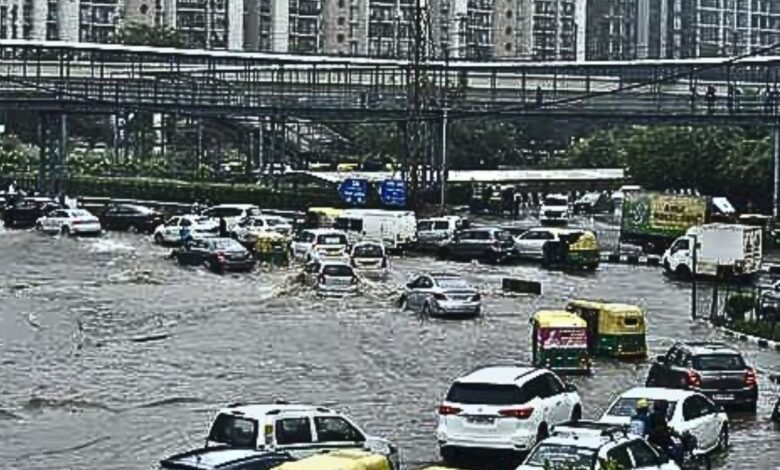
By morning, the city’s underpasses had become swimming pools, cars floated like tubs, and anger swelled as fast as the sewage. Residents waded through waist-deep muck, asking how an urban hub home to Fortune-500 offices and ₹100-crore penthouses could collapse from a single rainstorm. The deputy commissioner had to urge all corporate offices to declare a work-from-home day as main roads turned to rivers.
This chaos has become alarmingly routine in Gurugram. Every monsoon, the so-called “Millennium City”, which boasts more millionaires and Mercedes than most of India, drowns in its own ambition and apathy. In 2016, a mere 52 mm of rain caused the infamous “Gurujam,” a gridlock so epic it took commuters 24 hours to get home. Politicians vowed “Never again,” swearing to make the city waterlogging-free. Yet almost a decade and hundreds of crores later, 2025 brought a haunting repeat where 133 mm of rain in 90 minutes submerged entire stretches of NH-48 and key junctions like Hero Honda Chowk and Rajiv Chowk.
Viral images showed the Rajiv Chowk underpass turned into a debris-filled pond, cars bobbing like paper boats. Social media buzzed with dark humor as residents renamed the city “Jalgram” (water-town) and joked that Gurugram had become “India’s unintended answer to Venice”, minus the romance. Memes showed sites like Udyog Vihar rebranded as “Udyog Vihar Lake,” and a snarky tweet quipped, “Who buys ₹10 crore flats in Gurgaon without checking the drainage? 30 minutes of rain and it’s Venice out here.” The monsoon mayhem has written Gurugram’s obituary so often that one frustrated netizen simply wrote, “RIP Gurgaon, this is hell, not millennium city.”
Beyond the humor lies seething outrage. Residents and even officials likened these deaths to murder. “These were not accidents. They were avoidable deaths caused by criminal indifference,” fumed former MP Raj Babbar, calling it “institutional murder” that a city selling million-dollar dream homes can’t build a working drain. Another local leader echoed that the floodwaters on the roads were effectively “corruption flowing unchecked”, a man-made disaster, not an act of god.
Indeed, Gurugram’s story is a cruel irony where a city that symbolizes modern prosperity, yet every monsoon exposes the medieval state of its civic infrastructure. Even the Indus Valley civilization’s cities like Harappa had better drainage 4,500 years ago than Gurugram does today. In an online video that went viral, a resident standing knee-deep in filthy water outside an upscale residence delivers a scathing verdict that “21st-century Gurugram is a shame compared to Harappa and Mohenjodaro, famous for their drains”. With folded arms, she asks, “Where are our taxes going? Down the drain, literally.” Her question is both literal and figurative, and it haunts every waterlogged street about “How did it come to this?”
Hundreds of Crores Down the Drain, Literally…
For years, the Municipal Corporation of Gurugram (MCG) and Haryana authorities have responded to public anger with the same script of big budgets, grand projects, and bold claims that “next year will be different.” According to official data, over ₹500 crore has been poured into Gurugram’s drainage infrastructure in the past nine years alone. In fact, MCG reports show ₹503 crore spent from 2016 to mid-2025 on cleaning and building drains.
The spending only accelerated as the city kept flooding. In the last fiscal year (2024–25) alone, ₹74 crore, nearly a quarter of the entire 9-year expenditure, was dumped into drains and sewers. And yet, as taxpayers waded through filthy water this monsoon, they were left asking exactly what that money achieved. “Nine years and ₹500 crores later, we’re still sinking,” observed one local resident bitterly.
The MCG’s own breakdown of expenses is astonishing. ₹256.2 crore went into sewer line repairs, ₹222.3 crore into new drainage networks, and ₹24.8 crore on maintaining stormwater drains. Paper-wise, that should have bought Gurugram a world-class drainage system. Reality-wise, it bought almost nothing. After each cloudburst, the city drowns exactly as it did a decade ago and the only thing flowing freely is public money, straight into the gutter.
Residents are understandably furious. “This is a colossal waste of taxpayers’ money,” said Sanjay Lal Mathur of Ambience Lagoon, as he watched his upscale condo’s access road turn into a moat. “Nothing has changed since 2016,” he added, only the year Gurugram’s name was changed from Gurgaon, but apparently that was easier than fixing its drains. Others openly suspect where the funds went. “Either the civic body is hopelessly inept at managing drainage, or it is siphoning off funds meant for public welfare,” one resident scoffed.
The data gives credence to the latter. In an internal audit last year, a routine stormwater drain project was found to be so shoddily executed that 60% of the work had been done incorrectly. The contractor had used substandard materials and violated tender specs at every step. The chief engineer’s report on that fiasco bluntly pointed to “connivance between officials and the contractor” and misappropriation of funds.
The project was literally a drain to nowhere, 60% built and not even connected to any master drain, making it utterly useless. It took a media expose and the engineer’s audit for the MCG Commissioner to suspend a junior engineer and recommend action against others in that case. It was a rare instance of accountability; more often than not, shoddy works get whitewashed and “band-aid solutions” that last until the next monsoon are applied.
The pattern is painfully consistent. Take the city’s three main stormwater channels, known prosaically as Leg-1, Leg-2, and Leg-3 (the Badshahpur drain), which are meant to carry rainwater out to the Najafgarh drain. These natural drainage lines existed for centuries when Gurugram was still a gaon (village), but today they lie choked and encroached. A detailed Hindustan Times investigation found that encroachments and obstructions in these channels are a major reason the city floods. Leg-3 (Badshahpur drain), for instance, is the city’s longest drain (28 km) and crucial backbone for stormwater evacuation. In 2018, after yet another flood disaster, the state sanctioned a ₹453 crore project to widen and desilt the overburdened Badshahpur drain.
But 5 monsoons later, that project remains stalled and unfinished, its funds presumably languishing or lost. Similarly, in 2020 the Gurugram Metropolitan Development Authority (GMDA) drafted a ₹290 crore plan to build new stormwater catchment vaults and revive lost lakes in the Aravalli hills to absorb runoff. That ambitious plan is still largely on paper. Another ₹50 crore was earmarked just for routine drain desilting and maintenance since 2018, and yet drains remained clogged when the rains arrived.
By the GMDA’s own admission, a host of big-ticket drainage works have overshot deadlines or barely begun. A ₹15 crore trunk drain in Sector 9A approved in 2021–22 is still incomplete, and ₹124 crore of new drains in new sectors (68–80, 37C–D, 112–115) approved in 2024 are in early stages. Major infrastructure upgrades like an extra stormwater channel along the Dwarka Expressway or a pumping station at problematic junctions keep missing their completion dates. In short, the government’s flood-control projects progress at a glacial pace, until the next deluge triggers fresh promises.
Officials, of course, insist they are doing a lot, at least on paper. Chief Minister Manohar Lal Khattar even claimed in Parliament that aside from some “seasonal waterlogging,” Gurugram faces no major civic issues. Khattar boasted that the number of critical waterlogging points in the city was cut from 90 in 2019 to 30 in 2024. And indeed, before this monsoon, authorities rolled out their usual PR of 141 heavy-duty pumps and 77 suction tankers deployed, desilting drives “completed,” and a “comprehensive drainage master plan” underway. But residents have heard it all before.
“They conduct pre-monsoon desilting every year, but nothing changes,” says Ritu Bhariok, a local advocate who has tracked civic failures. “It’s the same story of corruption, collusion, and cheap materials,” she lamented after wading through her flooded colony yet again. The MCG’s spokesperson will dutifully issue statements about how “all possible efforts” are being made, how “door-to-door garbage collection will start soon” and how citizens should refrain from littering.
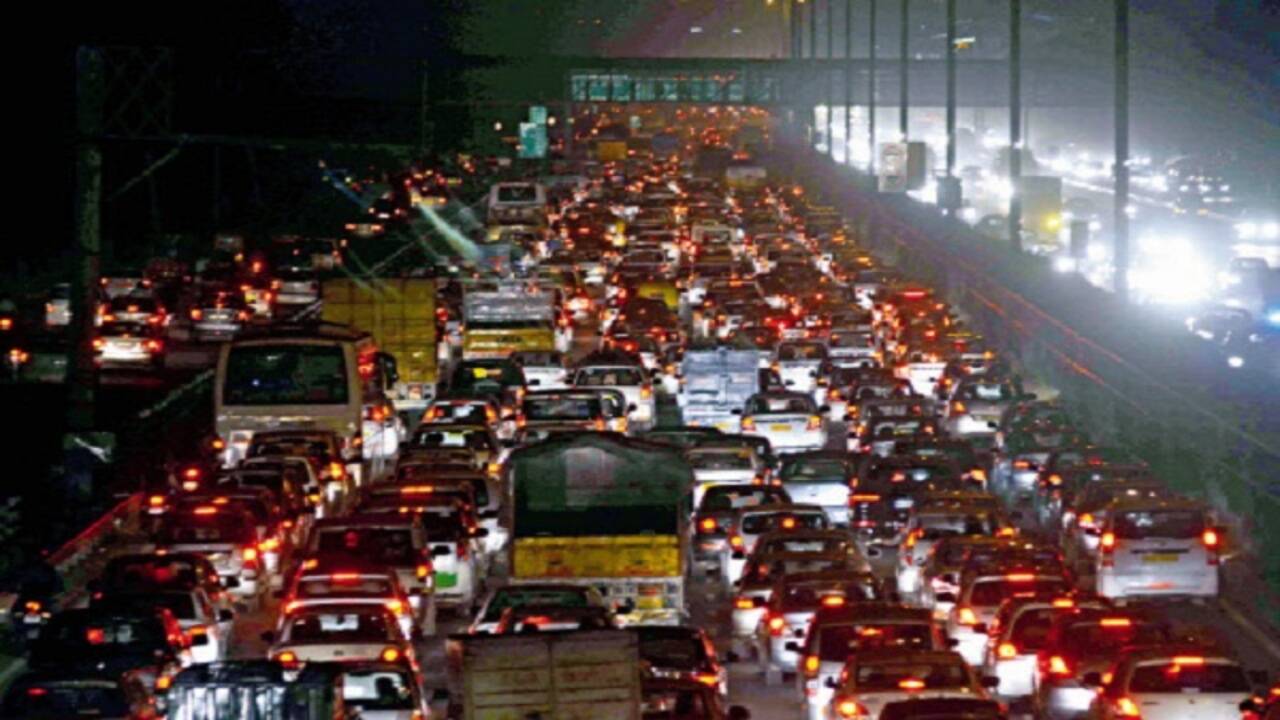
But these words ring hollow when residents have to form human chains to rescue neighbors from drowning cars, or when families tragically lose loved ones to open pits and live wires. As one irate citizen group put it in a report that “9 years, ₹500 crores, and we still need boats to navigate our streets. Where has the money gone?”.
Corruption Lies Beneath the Surface
The people of Gurugram have a dark joke that the only thing flowing freely in the city’s drains is money. There is a palpable sense that corruption is the Hydra under all those potholes and puddles. Every monsoon disaster is followed by revelations that seem to confirm these suspicions. In one instance, an internal inquiry found that contractors tasked (and paid) for drain desilting had simply faked the work, billing the city for truckloads of silt that were never removed. They even forged weighbridge slips to show phantom debris removal, while the drains remained clogged.
This kind of scam isn’t unique to Gurugram. A similar drain desilting scam in Guwahati saw 12 officials chargesheeted for a ₹20 crore fraud, but it shows how easily public funds can evaporate into private pockets under the guise of “infrastructure development.” Gurugram’s residents have watched new drains and roads being built and immediately collapsing, and they know something is rotten.
“There are multiple agencies, but no coordination between them,” notes Praveen Yadav, an RWA leader, “and every inch of the city has been sold to builders”. He points out that haphazard construction and unchecked paving have completely disregarded natural drainage paths, all enabled by a nexus of greased palms and turning a blind eye. “Every year, a huge amount of money is spent, but we fail,” Yadav said bluntly. “Imagine living in a house worth crores while you’re moving around with buckets, throwing water out of your swanky basement.” His frustration echoes across upscale condominiums where residents in designer shoes find themselves ankle-deep in sewage.
The chorus of “corruption” is now coming from all quarters. After a young man from Uttar Pradesh died in a Gurugram sewer this July, even opposition politicians seized the moment. A regional party demanded a ₹1 crore compensation for the family and blasted the ruling government’s “corrupt mismanagement” that led to the tragedy. Kumari Selja, a former Union minister, pointed out that under the central AMRUT urban renewal scheme, crores were given to Haryana for new drains and sewer lines, yet the first rain in cities like Gurugram or Sirsa still leaves neighborhoods looking like lakes.
“Smart City projects worth crores are only on paper, and on the ground nothing has changed,” Selja said, accusing the BJP-led government of negligence and demanding “Why have independent audits not been conducted? How many contractors and officials have been held accountable?”Those are uncomfortable questions and the answer to the latter is virtually none. In Gurugram, it’s exceedingly rare for an official to face serious consequences for infrastructural failures. Public memory is short, and political will even shorter.
The MCG Commissioner will make token announcements. For example, after this year’s deluge, he vowed to “penalise and blacklist” any road contractors who delivered poor work. But locals cynically note that the same companies keep getting contracts year after year, even as their previous work disintegrates.
Even when corruption isn’t proven on paper, the outcomes scream of it. Consider one telling detail where a stormwater drain in New Gurugram was 60% built without permission to connect to the main outlet; meaning the contractor either ignorantly or deliberately built a useless drain. Who approves such farcical work? Likewise, roads freshly re-laid just months before have collapsed in the very first rain. One viral video showed a prime Golf Course Extension Road stretch, lined by condos worth ₹15+ crore, submerged in water and breaking apart.
Corruption, only corruption!” tweeted an irate resident, tagging the Chief Minister and Prime Minister in desperation. The video of luxury cars plowing through knee-high water outside the ₹100-crore Camellias apartments, Gurgaon’s most expensive address, was symbolic. Here were the ultra-rich, owners of India’s costliest flats, stuck in the same filthy water as everyone else, asking where the hell their tax money went.
The civic authorities’ failure was so stark that even mainstream media ran headlines like “Videos of Waterlogging in Gurugram’s Posh ₹100-Crore Flat Area Go Viral”, noting that even the richest enclaves weren’t spared waist-deep flooding. When those who usually live above the problems start getting drenched in them, it’s a sign that no one is truly safe from the rot.
What does the government say to all this? Typically, they deflect blame. Some officials privately whisper about “uncooperative citizens” who throw garbage in drains (indeed, plastic and trash clog many gullies, compounding the problem). Publicly, there’s a lot of buck-passing. The city’s multiple overlapping bodies (MCG, GMDA, PWD, HSVP, NHAI) point fingers at each other’s jurisdiction. When pressed hard, politicians tend to resort to whataboutism.
A BJP spokesperson, for instance, responded to criticism by claiming “Unlike previous governments that just sold land to fuel corruption, we (the current government) are cleaning drains and building new ones”. He listed ongoing projects and said Gurugram is witnessing an infrastructural transformation that should have happened years ago. Perhaps he forgot that his own party has governed Haryana for the last 9 years, the same period in which ₹500+ crore was spent to seemingly no effect. The truth shrewdly observed, is that drainage is simply not a glamorous issue for those in power.
Politicians love cutting ribbons on new highways, metro lines, and shiny flyovers. Those make for great photo-ops. But no minister wants to be pictured inaugurating a new sewer line. “Which politician will green-flag a drain? Drains are useful, but they make publicity nullah and void,” a columnist quipped, using the Hindi word for drain. The result is that storm drains remain invisible and under-prioritized, until they fail spectacularly. And in the shadows where no one is looking, corruption finds its playground. The drain that never gets built properly, the road repair that washes away, the same contracts issued over and over with no accountability.
Gurugram’s citizens are left to literally mop up the mess. As one furious resident said during a protest, “We have more bouncers outside pubs here than activists outside the municipal office. Everyone complains, no one resists.” It’s a harsh assessment of public apathy, but not entirely untrue. The outrage surges and then subsides with the floodwaters, and “business as usual” resumes contracts, kickbacks, and all, until the next monsoon brings the next disaster.
Gaddhagram: City of Potholes and Craters
If the flooded drains are a nightmare during monsoons, the roads of Gurugram are a nightmare year-round. It’s no wonder frustrated locals have rechristened the city “Gaddhagram”, gaddha in Hindi means pothole. Drive through Gurugram and you’ll feel it. Luxury SUVs zigzagging like drunkards to avoid crater-sized potholes, sedans scraping their bellies on broken tarmac, two-wheeler riders skidding and falling in muddy pits. “Gurugram is a city of potholes and garbage,” said Subodh Kumar, a Sector-15 resident, summing it up bluntly.
The description isn’t an exaggeration. After this monsoon’s first heavy showers, over 300 potholes were mapped across various roads, many big enough to blow tires and bend axles. In July 2025, a freshly repaired slip-road on the Southern Peripheral Road caved in for the third time in a year, opening up a 30-metre-wide sinkhole that swallowed an entire truck. Photographs of the scene looked apocalyptic as the truck’s front cabin jutting out of a giant crater filled with rainwater.

Engineers sheepishly blamed “water infiltration” and soil instability, but locals knew better that this was shoddy construction coming back to bite. “This road is a death trap,” remarked commuter Ajay Rana, who was stuck for two hours because of that cave-in. It became emblematic of Gurugram’s broader road crisis. Tens of crores spent on new roads or recarpeting, only for them to disintegrate after one monsoon.
The Tribune reported in August 2025 that in the past year the city spent over ₹200 crore on road repair and re-carpeting, yet just a few monsoon spells undid ₹80 crore worth of that work as roads cracked up again. Around 40 stretches were severely damaged by rain, from posh Golf Course Road to internal sector lanes. Residents in New Gurugram, a cluster of booming residential sectors with flats costing ₹2–10 crore found their newly laid roads turning into mini-ponds and “moon surfaces” full of craters. The situation got so bad that even newspapers abroad carried tongue-in-cheek headlines like “Gurgaon roads worse than Uganda”, after a viral tweet compared them unfavorably to African hinterlands.
The humiliation stings, but residents say it’s well-deserved. “We live in flats worth ₹4 crore, but during monsoons we can’t even get milk and bread delivered,” says Meenakshi Yadav of Sector 93. Delivery boys on bikes refuse to enter her colony because the access road is often underwater or broken; several have been injured in accidents. School buses, ambulances, everyone is wary of venturing in when it rains, effectively marooning entire upscale neighborhoods. Imagine paying a fortune for a “premium” apartment only to have your address blacklisted by Uber drivers due to cratered roads. That is daily life in Gaddhagram.
Why are the roads so bad? The answers are familiar of poor construction, lack of oversight, and yes, corruption. Contractors often use sub-standard materials (as seen in that audit where lean concrete was used instead of the required rich mix, just to cut costs). With multiple agencies in charge, there is a diffusion of responsibility. The municipal corporation blames the development authority, which blames the state public works department, and round and round it goes. Meanwhile, the blacktop on the roads literally rounds and rounds into loose gravel. After public fury peaked this year, the MCG commissioner made a promise that any contractor who fails to deliver quality will be blacklisted.
“Roads once repaired now will not have any complaints,” asserted Commissioner Pradeep Dahiya. Yet residents note they’ve heard this before. “Monsoon is a double whammy for us; we suffer when it rains, and then for months after as roads stay broken,” said Praveen Malik, president of a united RWA federation. “The authorities do quick-fix patchwork that comes off in the second spell of rain.
Despite multi-crore tenders, the road is gone by the next monsoon,” he said, calling out the sheer wastage of public money. Indeed, the MCG’s own budget shows an annual road development allocation four times higher than before, ₹80 crore this year, and GMDA with another ₹500 crore for flyovers and underpasses, yet not even basic pothole-free commutes are ensured.
Gurugram’s glittering condominium ads like to sell the city as a slice of Los Angeles or Singapore. The ground reality is closer to a defensive driving course through an obstacle track of potholes, punctures, and peril. Exposed rebar and gaping cracks on flyovers threaten life and limb. Traffic lights often conk out (or are obscured by floodwater), so jams get worse.
After every storm, social media fills with images of broken stretches, overturned vehicles, and hapless commuters. One striking photo from this monsoon showed residents of an upscale South City enclave literally planting rice saplings in a water-filled pothole as a form of protest, wryly suggesting that if the government won’t fix the roads, they might as well farm on them. Another photo captured a man fishing in a giant puddle on Golf Course Road, the city’s pride, just to troll the authorities. Humorous as these acts are, they underscore the despair and cynicism.
Gurugram’s urbanites increasingly feel like they are on their own. They pool money to fix internal colony roads, hire private garbage collectors, install diesel generators to cope with power cuts, and even set up community pumps to drain water. “We’re touted as India’s biggest luxury housing market, but nobody wants to buy my apartment now,” says Rakesh Saini of Sector 66. “The access road is a crater field. We ourselves had to pave our internal street.” In a city that collects 30% house tax and steep developer fees, citizens doing DIY infrastructure is both absurd and tragic.
Paradise Paved: The Collapse of Planning and Nature
To truly understand how Gurugram went from pastoral gaon to dystopian gaddhagram, one must look at the systemic failures in urban planning and environmental management. The city’s explosive growth over the last 20 years was a double-edged sword. On one hand, gleaming corporate parks and high-rises transformed Gurugram into a symbol of New India’s private-sector-led development. On the other hand, this growth was utterly unmoored from sustainable planning. Urban experts point out that Gurugram expanded by gobbling up its own natural defenses against floods.
The region’s countless johads (traditional ponds), seasonal rivulets, and Aravalli runoff channels that once absorbed rainwater have been built over or filled with debris. “It’s like pouring a bucket of water onto a plastic sheet instead of onto grass,” explained one GMDA urban planner. “The problem isn’t the rain, the problem is the surface.” Gurugram’s surface today is a hardened expanse of concrete malls, asphalt roads, and walled-off gated communities. The natural sponges of the land have vanished, so even normal rainfall has nowhere to go but accumulate and run amok.
Flawed planning amplified this. The city built wide expressways and underpasses without adequate drainage underpinnings. “Underpasses here are designed like bowls,” notes Sarika Panda Bhatt, an urban mobility expert. “They fill up first and then trigger city-wide jams.” Indeed, the slick underpasses that ease traffic on dry days turn into drowning pits during rain, as seen at crucial points like IFFCO Chowk or Signature Towers where water routinely rises above car windshields, stranding vehicles.
Moreover, multiple agencies with overlapping jurisdictions have created a governance nightmare. The Municipal Corporation (MCG) handles internal roads and waste, the GMDA handles master drains and major roads, the Haryana Urban Development Authority (HUDA, now HSVP) planned the original sectors, the NHAI built the highways, and so on. “This results in a diffusion of accountability,” an HT report highlighted dryly. When a sector floods, MCG might say the master drain is GMDA’s job; GMDA might retort that the internal sewage is MCG’s job; both might shrug that the colony was poorly planned by HUDA originally; NHAI says its toll road is fine except the slip roads which are MCG’s, and round and round it goes. Coordinated action is rare.
In fact, one reason some new drains never got connected was that MCG needed GMDA’s approval to hook into master drains and the two simply failed to sync up. The left hand and right hand of Gurugram’s governance often don’t know what each other are doing, and the citizen ends up slapped by both. While authorities pass the buck, developers have had a free hand in carving up land.
Real estate firms sold dream homes and office parks, often with scant regard for ecological impact. Wetlands were drained and low-lying plots that act as natural catchments were built upon after being raised a few feet, only to flood later because water finds its way. Even the Aravalli forests, Gurugram’s green lungs, have seen illegal constructions that disrupt the watershed.
One environmentalist noted that many flood-prone zones in Gurugram were actually once part of seasonal riverbeds or basins that have been obliterated from the map. In 2020, GMDA commissioned a consultant to create a detailed map of all the city’s stormwater flows, something that should have been done before half the city was built. That mapping is now complete and has yielded a “Drainage Master Plan” calling for new outfalls, retention ponds, and widening of chokepoints. It includes projects like a ₹105 crore new drain along SPR, ₹51 crore for sector drainage around 68–75, and ₹31 crore for sectors 112–115. But experts caution that none of this will matter if fundamental course-correction doesn’t happen.
“We need to reclaim our water bodies and restore natural drainage paths, otherwise all these engineering solutions will fail,” warns architect and urban planner Vivek Singh Rao. He advocates an urgent topographical survey of the entire city to redesign drains according to how water actually flows now (since the original contours have been drastically altered). “The city’s development changed the drainage; now the drains must be re-channelized as per the new topography,” Rao explains, adding that the capacity of main storm drains needs to be doubled and interconnected to handle heavy rain.
Environmental activists from CSE (Centre for Science and Environment) add that paving over everything is a recipe for disaster. Gurugram must create permeable green spaces to soak up water, protect what’s left of the Aravalli catchment, and perhaps even mandate rainwater percolation pits in all large campuses. Essentially, the city needs to embrace water-sensitive urban design instead of the current car-centric, mall-centric design. Interestingly, one suggestion floated is to revive some of the old village ponds in and around Gurugram that still exist (often in neglected states), these could act as buffers during heavy rains, much like Mumbai’s spartan Mitigation Lakes.
However, all these measures require something Gurugram’s situation thus far sorely lacks, which is Accountability and long-term political will. As long as shoddy work goes unpunished and quick PR wins are valued over invisible but crucial fixes, the cycle will repeat. The Deputy Commissioner who slogged through flooded streets this year promised an audit of all open electric wires and manholes within 48 hours. Perhaps that will prevent a few electrocutions next time.
But what about a real audit of the money trail? Citizens like Gauri Sarin, convener of an urban civic group, have demanded forensic audits of MCG’s spending on drains and roads. “Will the government explain why no independent audit of these works has been done? Why do the same issues recur despite crores spent?” she asks pointedly. Those questions remain unanswered.
Demanding a City with a Spine
The saga of Gurugram, from gaon to gaddhagram or gurujam, is both disturbing and satirically absurd. It’s disturbing because real lives are at stake. People have drowned in manholes, families have been bereaved, livelihoods disrupted and health endangered by sewage and mosquitoes that breed in stagnant floodwaters. It’s absurd because this is happening in what is marketed as one of India’s richest cities, a stone’s throw from the national capital.
Gurugram’s annual GDP is higher than some small states; its glitzy cyber parks house corporate giants; its real estate prices rival Manhattan. Yet it cannot guarantee something as basic as a functional drain or a pothole-free road. The contrast is Kafkaesque, as one resident wryly noted, “Gurugram is that rare place where you can pay ₹100 crore for a flat and still need an SUV that rides like a tractor to get to it.” Another joked that German luxury cars in Gurugram come with a special feature of in-built snorkels for the inevitable floods. Every rainy season, headlines about “Gurugram submerged” have become as predictable as the rain itself.
But beneath the satire, there is a growing undercurrent of resolve. Citizens are no longer content just grumbling in private or cracking jokes online. Many Resident Welfare Associations have come together, filing PILs (Public Interest Litigations) in court demanding action. In 2024, a consortium of RWAs issued a blistering report detailing 112 chronic waterlogging spots that had been “fixed on paper” multiple times but never truly resolved.
They even attached before-and-after photos year by year to show the farce. The High Court took note and summoned civic officials to explain the misuse of funds. Meanwhile, social media campaigns have taken off. One called #GurugramDrainScam went viral with users posting videos of their flooded localities and tagging anti-corruption agencies. Whether these pressures will translate into concrete change is yet to be seen.
What is certain is that Gurugram can’t afford to continue on this trajectory. The climate is changing; storms that were once “once in a century” are occurring every few years. In September 2025, Gurugram received nearly 40% above-normal rainfall for the season. Urban planners say this is the new normal as extreme weather will stress any city’s infrastructure.
For a city whose infrastructure is already on crutches, it could be catastrophic. “No amount of police or pumps can solve a structural drainage failure,” admitted DCP Rajesh Mohan after mobilizing 5,000 traffic personnel to manage the July gridlock. And indeed, heroics are not the solution. Systematic rebuilding is. Gurugram’s story is a cautionary tale for every Indian city chasing glitz while neglecting guts. A flashy millennium city built on a foundation of apathy is bound to collapse, one way or another.
In a scathing open letter circulating online, an ordinary citizen of Gurugram signed off with these words: “Gurugram doesn’t need more skyscrapers; it needs a spine.” It needs leaders who will prioritize sewage over showpiece projects, and citizens who will hold them to it. It needs engineers who are allowed to do their job without political meddling, and contractors who fear the consequences of cutting corners. It needs its people to channel the same energy with which they fight over parking spots or pub brawls, into demanding accountability for public works.
Otherwise, the golden goose of Haryana, this city that generates the bulk of the state’s revenue, will remain a case study in squandered potential. Gurugram was perhaps better off as a sleepy gaon with its ponds and rustic charm, than as a global city with imported cars stalled in filthy waters and residents lining up to buy knee-high gumboots every monsoon.
The next time it pours, will Gurugram finally stand up to change its fate? Or will it once again be washed away in a river of excuses and corruption? The answer will determine whether this luxury hub can shed the moniker of “Gaddhagram” and become a truly livable city, or whether its shiny towers will continue to cast long shadows over broken roads and dark, drowned streets.
In the end, the monsoon always wins against hollow promises. Gurugram’s citizens have a choice, either demand a city that works, or keep investing in luxury homes and cars only to watch them go down the drain, quite literally. The time for a backbone is now, before the next deluge writes yet another satire of a city that aspired to touch the sky but forgot the ground beneath its feet.