HAL’s Credibility Test; Why HAL’s Fighter Timelines No Longer Convince
Markets don’t punish delays they punish eroding credibility. As Hindustan Aeronautics Limited struggles to reconcile promises with performance, missed fighter timelines have spooked investors and strained the Indian Air Force’s patience. What was once a production challenge is now a full-blown test of institutional trust.

Markets usually react to numbers. Occasionally, they react to credibility. Shares of Hindustan Aeronautics Limited, HAL, slid sharply over two consecutive sessions in early February, wiping out more than 13% in value in less than a week. On paper, there was no earnings shock, no cancelled contract, no adverse regulatory order. Yet investors rushed for the exit.
What spooked the market was not a single headline but a pattern – missed timelines, unresolved delivery questions, and growing unease about whether India’s most important defence aerospace manufacturer can execute what it promises.
HAL’s subsequent clarification on the Tejas Mk1A programme arrived only after the damage was done. By then, the sell-off had already revealed an uncomfortable truth: markets no longer wait for official explanations when confidence is eroding.
HAL’s Official Clarification: What the Company Is Saying
Responding to the stock slide, HAL issued a formal clarification addressing concerns around the Light Combat Aircraft (LCA) Mk1A programme.
The company stated that five Tejas Mk1A aircraft are fully ready for delivery, incorporating all major contracted capabilities in line with agreed specifications. In addition, nine more aircraft have already been built and flown, but are awaiting engines to be made delivery-ready.
On the engine front, HAL confirmed it has received five F404-IN20 engines from General Electric so far. According to the company, the supply position from GE is “positive,” and future deliveries are expected to align with HAL’s production plans.
HAL also reiterated that all identified design and development issues are being addressed on a priority basis, that it is in active coordination with the Indian Air Force to expedite deliveries, and that it remains confident of meeting its FY26 guidance.
The message: nothing is fundamentally wrong, delays are being managed, and execution remains on track.
Why the Stock Fell Anyway
If HAL’s explanation were sufficient, the market reaction would have stabilised. It didn’t.
One immediate trigger was unease around HAL’s role in India’s Advanced Medium Combat Aircraft (AMCA) programme. Reports suggesting that the PSU had not progressed meaningfully in the bidding process – even though HAL later said it had received no official communication – fed into a larger concern: is HAL losing strategic centrality just as private players gain ground?
That concern has been building for months. From helicopters to drones to aircraft assembly, private conglomerates are increasingly present in spaces once considered HAL’s exclusive domain. Investors are no longer treating this as healthy diversification; they are questioning whether HAL’s monopoly advantage is structurally weakening.
Global brokerage sentiment has also turned cautious. Analysts at Morgan Stanley have flagged downside risks, pointing to rising private-sector competition and persistent execution challenges aggravated by import dependence at a time when global defence demand is accelerating.
The result is a rare convergence: defence execution risk translating directly into market punishment.
The Backstory: Tejas Mk1A, Promise vs Reality
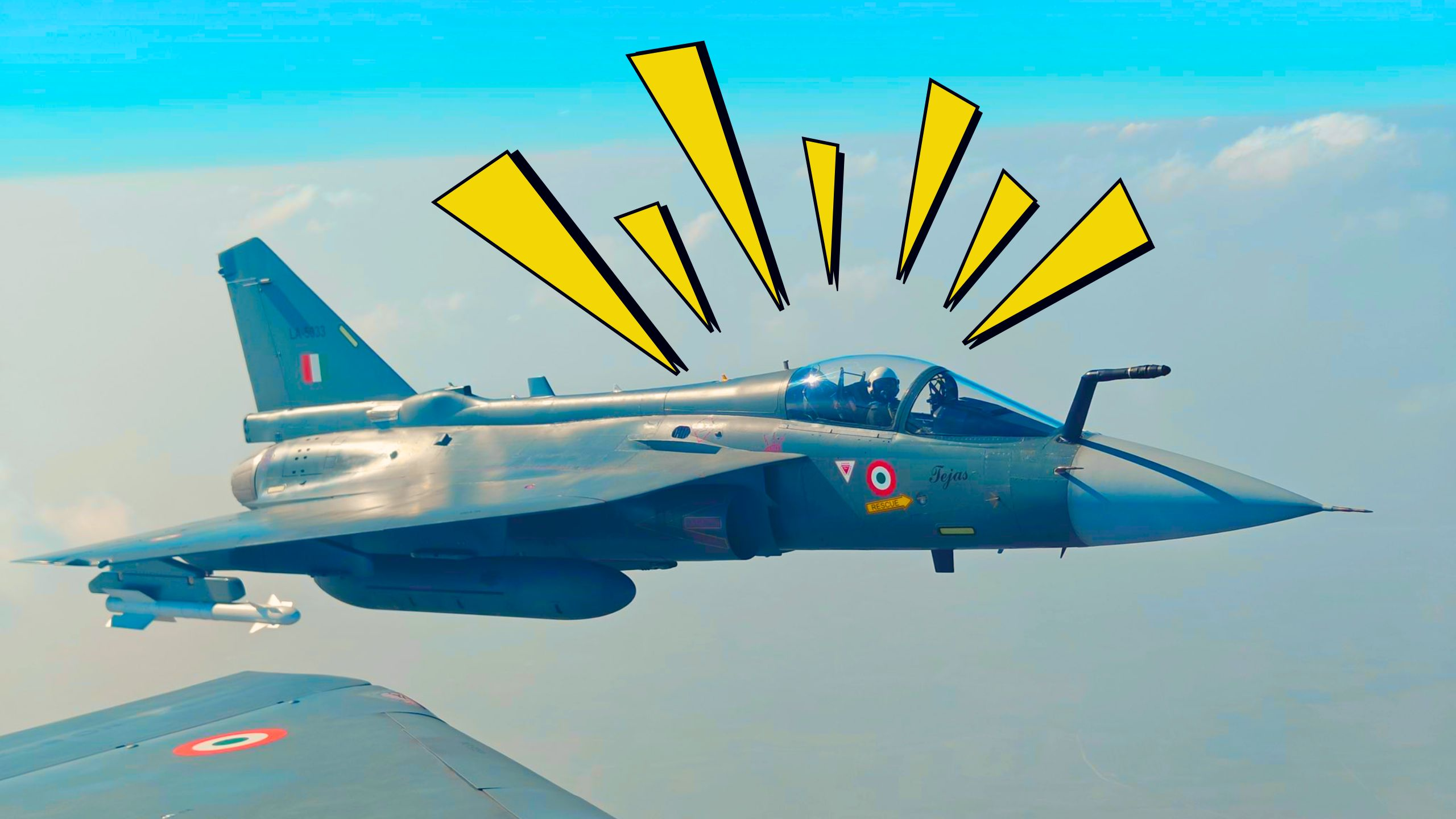
The Tejas Mk1A was never meant to be controversial. It was designed as a bridge -an improved interim fighter that would stabilise the IAF’s declining squadron strength while more advanced platforms matured.
The original delivery timeline envisaged the first aircraft entering service in 2024. That deadline slipped to October 2025 and has now moved again to March 2026. Each revision has been accompanied by assurances that the bottlenecks were temporary.
A central constraint has been engine dependency. The Mk1A relies on GE’s F404 engines, and HAL has long argued that delayed engine deliveries disrupted production schedules. Yet by early 2026, engines have begun arriving, and multiple airframes are structurally complete.
HAL has set up two Tejas Mk1A production lines – one in Bengaluru and another in Nashik – with plans to scale further. On paper, the order book is robust, extending well into the next decade and offering revenue visibility few defence PSUs enjoy.
And yet, the mismatch persists: a swelling order book on one side, and a thin delivery record on the other and this is where the Tejas story begins to shift.
The IAF’s Growing Frustration
For the Indian Air Force, delays in the Tejas Mk1A programme are an operational crisis.
The IAF’s sanctioned fighter strength stands at 42 squadrons. The actual number has fallen to around 31, well below what military planners consider necessary to prepare for a credible two-front contingency. The phased retirement of ageing MiG-21 fighters has only deepened the shortfall, leaving capability gaps the Tejas Mk1A was explicitly meant to fill.
What makes the current moment unusually sharp is the public articulation of frustration by the Air Force’s top leadership. Rarely does the IAF air its concerns so openly, let alone at a national defence exhibition. When the Air Chief stated that the service was “waiting with hungry mouths for food,” it was not rhetorical flourish—it was a candid admission of how critical the delays have become.
From the Air Force’s perspective, the issue is no longer just delivery slippage but predictability. Repeatedly revised timelines have made it difficult to plan squadron induction, training cycles, and operational readiness.
Engines Are Here; So Why Aren’t Jets?
For years, the engine narrative provided HAL with a convenient explanation.
The Tejas Mk1A uses the GE F404-IN20 engine, and delays in deliveries from the United States were cited as the principal reason aircraft could not be handed over. That argument carried weight—until engines actually began arriving.
As of early February 2026, five GE F404 engines have already been delivered. HAL itself has acknowledged that multiple aircraft are built, flown, and structurally ready, awaiting final integration. Yet not a single Mk1A has been inducted into the IAF.
This is where things shift uncomfortably.
IAF sources have questioned why the arrival of engines has not translated into even symbolic deliveries. Integration, they argue, should have been sequenced in parallel, not treated as a post-engine afterthought. The concern is that engine delays masked deeper integration and certification problems, rather than being the sole bottleneck.
In defence manufacturing, shifting explanations are more damaging than delays themselves. They signal uncertainty not just in execution, but in planning.
Integration Nightmares & Design Complexities
The Tejas Mk1A is not a cosmetic upgrade. It is a substantially more complex aircraft than the earlier Mk1 variant and that complexity is now at the heart of the programme’s troubles.
The Mk1A integrates an AESA radar, advanced electronic warfare suites, upgraded mission computers, and expanded weapons capability. Each of these systems must function seamlessly as a single combat platform.
HAL has stated that weapons integration trials for key missiles have been completed. However, industry sources point out that completion of trials does not automatically translate into certification clearance. Additional firing trials, software validation, and operational clearances remain ongoing.
Aircraft exist. Engines exist. Certification does not.
A History of Missed Deadlines
The Light Combat Aircraft programme was conceived in the early 1980s. The first Tejas prototype flew only in 2001. Induction began in 2016.
The Mk1A was meant to break this cycle. Instead, it has inherited it.
Delivery dates have slipped repeatedly, and even the expansion of assembly lines has not translated into output. What was once patience has turned into doubt—and doubt is exceptionally difficult to reverse.
When Adani Builds Aircraft; It Raises an Awkward Question for HAL
HAL’s troubles are unfolding as India’s aerospace ecosystem quietly changes.
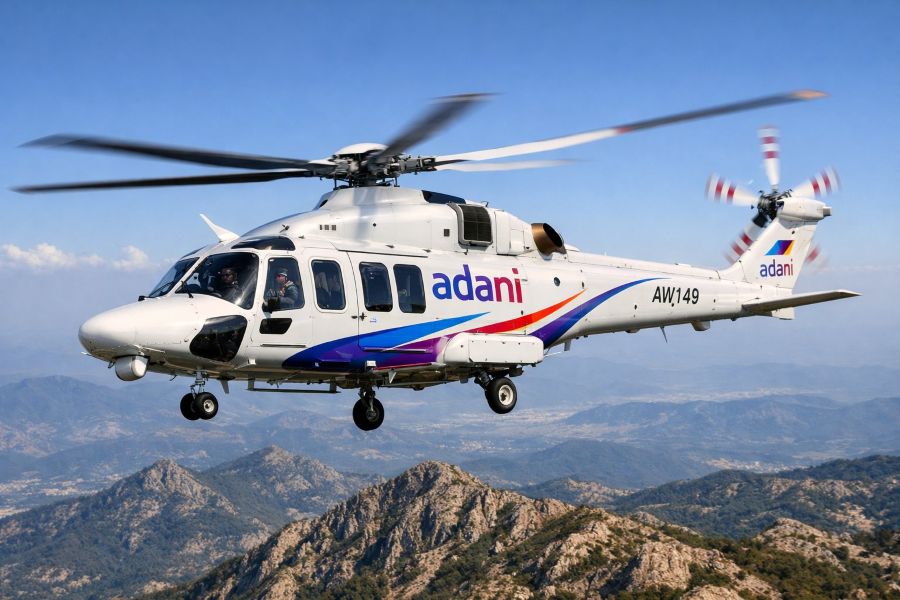
The Adani Group has entered aircraft manufacturing through a partnership with Embraer, a global commercial aviation success story.
The contrast is not technological. It is institutional. Embraer grew under export pressure and market discipline. HAL grew under protection. One delivered globally. The other struggled domestically.
Hence, Adani’s move is not disruptive—it is corrective.
Atmanirbhar Bharat vs Ground Reality
India’s self-reliance push has never lacked intent. What it has lacked is execution discipline under pressure.
The Tejas depends on imported engines. Indigenous alternatives remain elusive. Competition, long absent, is only now emerging.
Self-reliance without reliability is not sovereignty—it is risk.
The Last Bit, Aero India – When Loss of Confidence Went Public
At Aero India, the Air Force Chief, Air Chief Marshal A P Singh, publicly stated he had “no confidence” in HAL’s delivery assurances. Such remarks are rare. They mark a breakdown of trust.
HAL’s problem is not capability. It is incentives. Missed deadlines carry few consequences for the manufacturer but enormous costs for the customer.
The question is whether HAL can reform fast enough for modern warfare’s timelines.
And What Happens If HAL Fails Again?
Another missed deadline would accelerate private participation, parallel sourcing, and imports—ironically weakening the very self-reliance HAL was meant to deliver.
HAL would retain orders, but lose centrality.