Amid the vast, oil-rich sands of the Middle East, the United Arab Emirates, UAE is quietly and quickly staking its claim as a global AI powerhouse.
Half a world away, the United States, under the leadership of President Donald Trump, is doubling down on its mission to keep American firms at the forefront of the artificial intelligence race.
And while separated by geography, the ambitions of both nations are increasingly in sync.
On one side, the U.S. is home to the world’s most advanced semiconductor design and compute technology. On the other, the UAE and its Gulf neighbors offer what AI infrastructure craves most: abundant capital and some of the cheapest energy on the planet, perfect conditions to power hyperscale data centers.
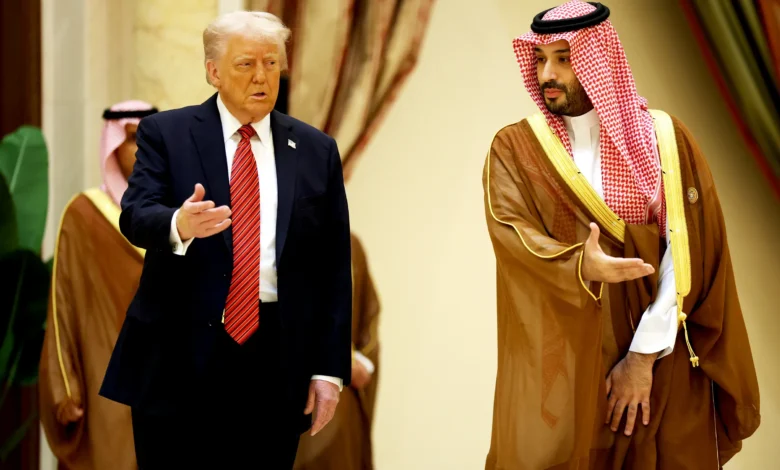
Resulting in the unfolding of a strategic alignment born of mutual necessity and shared ambition. The U.S. and UAE have enjoyed close ties for decades, but Trump’s high-profile visit to the Gulf this May – complete with red-carpet welcomes, lavish investment pledges, and a heavy emphasis on tech cooperation – took things to another level.
From Silicon Valley to Abu Dhabi, financial and geopolitical players are eyeing this alliance as a golden opportunity. With hundreds of billions already earmarked for joint tech ventures, the AI relationship between Washington and the Emirates is being seen by many as a match made in geopolitical heaven.

For the UAE, this push into AI is about far more than just innovation but serves as a cornerstone of a long-term national strategy. The leadership in Abu Dhabi sees AI as a path to economic diversification, geopolitical clout, and digital-era relevance beyond oil.
For Washington, the calculus is clear: ensure American technology, not China’s, sets the global standard in AI, and use strategic allies like the UAE to help scale and spread U.S. tech influence.
Trump’s May tour through Riyadh, Doha, and Abu Dhabi came with a staggering $200 billion in commercial announcements between U.S. and UAE companies. Including deals from Saudi Arabia and Qatar, the broader Gulf AI and tech investment tally has now soared past $2 trillion.
And this is likely just the beginning.
As part of the Abu Dhabi deals, OpenAI, Oracle, Nvidia and Cisco Systems announced that they will help build Stargate UAE AI campus launching in 2026. The Stargate Project is a $500 billion private sector AI-focused investment vehicle, announced by OpenAI in January in partnership with Abu Dhabi investment firm MGX and Japan’s SoftBank.
The companies said an initial 200-megawatt AI cluster should launch in Abu Dhabi next year. And the AI campus deal means the UAE gets access to many of Nvidia’s latest chips, American technology and software.
It’s the kind of agreement that would have faced restrictions under the previous U.S. administration, but Trump has looked to change the way is approaching tech export restrictions.
His administration plans to rescind a Biden era “AI diffusion rule,” which imposed strict export controls on advanced AI chips even to U.S.-friendly nations. that doing away with these limits could open the door for the sensitive American technology to end up in the hands of rivals like China – a topic of ongoing debate among U.S. lawmakers and security professionals.

‘Compute, not crude’
Once known primarily as a partnership centered around oil exports and weapons purchases, the pillars of the U.S.-Gulf relationship are changing, says Mohammed Soliman, senior fellow at the Middle East Institute in Washington DC.
“Compute, not crude, is going to be the central pillar of the U.S.-Gulf relationship,” Soliman said. “Moving forward, it’s no longer going to be only about energy policy; it is going to be about compute and how we and the Gulf are building an AI ecosystem that’s able to service third markets, emerging markets.”
Compute, in the context of AI, refers to the computational resources, like hardware and processing power, needed to train and run AI models.
“And this is a huge inflection point for the relationship [compared to] where we were a few years ago,” Soliman said, speaking on a Middle East Institute podcast recorded on May 19. “Moving forward, the relationship is going to be much more impactful on technical questions around AI, data centers, and chips than ever before.”
Notably, the UAE has bet fully on a U.S.-led AI future, a particularly salient point within the context of U.S.-China competition.
The Stargate Project is no small ambition. Backed by a $500 billion AI-focused private investment vehicle, it was announced by OpenAI in January in collaboration with Abu Dhabi’s investment firm MGX and Japan’s SoftBank. Think of it as a moonshot – but for compute.
The initial phase is already underway: a 200-megawatt AI cluster is slated to launch in Abu Dhabi next year. And with this AI campus agreement, the UAE gains access to the latest in U.S. computing firepower, including Nvidia’s cutting-edge chips and enterprise AI tools from America’s tech elite.
It’s the kind of deal that would have hit a regulatory wall not too long ago.
Under previous U.S. policy, such advanced tech exports, even to long-standing allies faced strict controls. But the Trump administration appears to be recalibrating that stance. Washington is now signaling its intent to roll back the Biden-era “AI diffusion rule,” a policy that restricted the export of advanced AI chips to even friendly nations like the UAE and Japan.
Critics argue loosening those controls risks sensitive technology falling into the hands of adversaries like China. But proponents say it’s a calculated move to bolster trusted alliances and scale American AI influence globally.

AI And China
Crucially, the UAE is not hedging its bets. It’s going all-in on a U.S.-led AI future – a strategic signal that carries weight in the broader context of the intensifying tech rivalry between Washington and Beijing.
In a move that signals how high the geopolitical stakes around AI have become, Emirati AI giant G42 has officially cut financial ties with Chinese firms, including divesting its estimated $100 million stake in ByteDance, the parent company of TikTok.
The decision, aimed at sidestepping potential U.S. Commerce Department sanctions, ensures that G42 maintains access to Nvidia chips and other critical American technologies essential to powering large-scale AI systems.
That strategic clarity is exactly why the UAE has pivoted sharply away from China and doubled down on its partnership with the U.S..
“They’ve understood that Nvidia makes by far the best chips for AI,” Gherras said. “And the rest of the semiconductor supply chain is still overwhelmingly based in Taiwan.” At the same time, he cautions that China is catching up fast — very fast.
From Falcon to the Frontlines of Global Influence
The UAE’s own Falcon AI – a large language model developed domestically – is more than just a technical showcase. It’s a geopolitical play, a foundation for building regional dominance in AI and establishing Abu Dhabi as a data and compute hub for the Global South.
Imagine large language models tailored for Swahili, Hindi, or Bahasa – all trained and hosted in the Gulf. “They have the infrastructure,” Soliman says. “They can offer housing data, training data, inference – essentially, everything needed to help emerging markets deploy AI. That would make them the de facto AI backend for half the world.”
And that, he stresses, would be a “tremendous shift in global power.” From being fossil fuel suppliers to becoming AI infrastructure providers, the UAE and the wider Gulf are reinventing their global role and fast.
However, Chinese companies are not sitting idle. Beijing is aggressively courting new markets to roll out its own AI technologies. But so far, the U.S. has moved quicker – securing deals, embedding standards, and exporting its AI values through companies like OpenAI.
Just this month, OpenAI inked a major deal with the UAE to build AI infrastructure and expand ChatGPT nationwide – a clear indicator of how the U.S. tech stack is being exported as a geopolitical lever.
As OpenAI’s Chief Global Affairs Officer Chris Lehane put it: “We’re heading toward a world with two major AI camps — China’s centralized model, and a U.S.-led democratic AI.”
For nations aiming to build sovereign AI capabilities, he said, the choice is as much political as it is technical. “If you’re building your future on AI, you want it grounded in democratic systems that support your own nation-building goals,” Lehane stated.
The Last Bit,
Growing U.S.-UAE AI alliance is far more than a marriage of convenience, it serves as a bold recalibration of global power dynamics in the digital age. With America offering cutting-edge technology and the UAE supplying the energy, capital, and political will, the partnership is emerging as a formidable counterweight to China’s expanding tech ambitions.
“Compute, not crude” now defines the new currency of influence, as nations race to secure dominance in artificial intelligence. By betting fully on a U.S.-led AI future and distancing itself from China, the UAE has positioned itself as both a regional AI hub and a global infrastructure backbone for the developing world.
As geopolitical strategies converge with technological ambition, this collaboration could reshape not just the Middle East, but the very architecture of AI’s future.