Inflation Has Eased. Growth Is Rising. So Why Didn’t The RBI Cut Rates? The Big Picture Behind India’s Latest Monetary Policy
Economists for months have debated a simple question: if inflation is easing and India's economy continues to grow, why hasn't the RBI begun cutting interest rates? The latest Monetary Policy Committee meeting doesn't just answer that question - it reveals how the central bank is preparing for an economy where global uncertainty, rather than domestic weakness, is becoming the defining policy challenge.

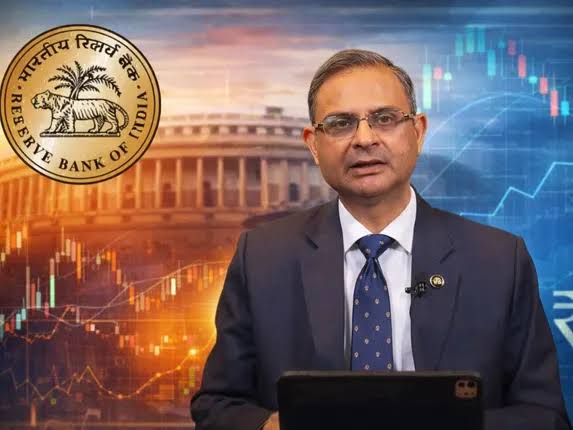
On the surface, the Reserve Bank of India’s latest Monetary Policy Committee (MPC) meeting appeared to deliver exactly what financial markets had anticipated.
The central bank unanimously kept the repo rate unchanged at 5.25%, retained its neutral policy stance, and reaffirmed its commitment to balancing inflation control with economic growth. For borrowers hoping for lower EMIs or businesses expecting cheaper credit, the announcement may have looked like yet another policy status quo.
But the absence of action does not necessarily mean the absence of a message.
In monetary policy, central banks often communicate as much through what they choose not to do as through the decisions they make. By keeping interest rates unchanged despite improving domestic economic indicators, the RBI has signalled that it believes the risks facing the economy have not disappeared; they have merely changed. Today’s policy, therefore, is less about an unchanged repo rate and more about the central bank’s evolving assessment of inflation, global uncertainty and financial stability.
That makes one aspect of the announcement particularly intriguing. Alongside its decision to hold rates steady, the RBI raised its FY27 GDP growth forecast to 6.7%, reflecting confidence in domestic demand, public infrastructure spending, investment activity and the resilience of the broader economy. Ordinarily, stronger growth projections might encourage expectations of easier monetary policy, particularly if inflation appears to be moving closer to the central bank’s comfort zone.
Instead, the RBI chose caution over stimulus.
The reason lies in an increasingly uncertain global backdrop. While India’s domestic economy continues to demonstrate resilience, the central bank acknowledged that geopolitical tensions, volatile crude oil prices, shifting global trade dynamics and financial market uncertainty continue to pose significant risks. Any one of these factors could quickly reverse recent gains on inflation or disrupt capital flows, making premature policy easing a potentially costly gamble.
The MPC’s announcement also extended beyond interest rates. The RBI proposed a review of the External Benchmark Lending Rate (EBLR) and Marginal Cost of Funds-Based Lending Rate (MCLR) frameworks to improve the transparency of loan pricing and the transmission of monetary policy. It further announced plans to resume licensing of Urban Cooperative Banks while advancing broader regulatory reforms for cooperative and rural banks – an indication that strengthening the financial system remains as much a priority as managing inflation.
Taken together, these decisions suggest that the RBI’s latest policy is not defined by what changed, but by what it is preparing for. The central bank is neither signalling an immediate rate cut nor hinting at tighter monetary conditions. Instead, it appears determined to preserve policy flexibility while closely monitoring an economic environment that remains far more uncertain globally than it does domestically.
That raises a larger question – if India’s economy is growing, inflation has eased and confidence remains intact, what exactly is the RBI waiting for? The answer goes beyond today’s repo rate decision and offers a deeper insight into how the central bank views the challenges that could shape India’s economic trajectory over the coming months.

Why Is the RBI Still Playing Safe?
The answer lies in the RBI’s assessment that today’s economic stability does not necessarily guarantee tomorrow’s. Monetary policy is inherently forward-looking. Rather than responding solely to current data, central banks attempt to anticipate risks that could emerge over the coming months. From that perspective, the RBI’s latest decision reflects a preference for preserving policy flexibility over delivering immediate monetary stimulus.
Yet not everyone agrees that caution should continue to dominate policy.
Several economists have argued that with inflation comfortably below the RBI’s upper tolerance band and growth remaining resilient, there is now greater room to support investment and consumption through lower borrowing costs.
A reduction in interest rates could stimulate housing demand, encourage fresh corporate borrowing, reduce financing costs for businesses and leave households with greater disposable income through lower EMIs. Sectors such as automobiles, real estate and MSMEs, all of which remain sensitive to financing costs, would almost certainly welcome such a move.
The RBI, however, appears to believe that the risks of acting too early outweigh the benefits.
One of the biggest concerns remains crude oil. India imports nearly 85% of its crude oil requirements, making the economy particularly vulnerable to fluctuations in global energy prices. A sharp rise in oil prices increases transportation costs, raises manufacturing expenses and eventually feeds into consumer inflation. Even if domestic demand remains healthy, imported inflation can quickly reverse the progress made in stabilising prices.
That risk has become more pronounced because of continuing geopolitical tensions. Conflicts across West Asia, disruptions to global shipping routes and broader geopolitical uncertainty have repeatedly unsettled commodity markets over the past few years.
For an economy as deeply integrated into global trade as India, external shocks can rapidly translate into higher import bills, supply-chain disruptions and renewed inflationary pressures.
The RBI is also watching developments in the United States with equal attention. Decisions taken by the US Federal Reserve continue to influence global liquidity, capital flows and investor sentiment. If the Fed maintains higher interest rates for an extended period while India cuts aggressively, the interest-rate differential between the two economies could narrow, reducing the attractiveness of Indian financial assets for foreign investors. That, in turn, could place pressure on the rupee, increase imported inflation and complicate the RBI’s broader macroeconomic objectives.
Domestic inflation, meanwhile, has eased but has not entirely disappeared as a concern. Food prices remain vulnerable to erratic weather conditions, core inflation requires continued monitoring and global commodity markets remain susceptible to sudden shocks. The RBI’s message is clear: inflation has improved, but it has not become predictable enough to justify lowering its guard.
This explains why the central bank appears willing to accept criticism for being overly cautious rather than risk having to reverse course a few months later. Monetary policy often rewards patience more than speed. Cutting rates too early could undermine the RBI’s hard-earned credibility on inflation, forcing even sharper corrective action if price pressures return unexpectedly.
Viewed through that lens, today’s decision is not simply about keeping the repo rate at 5.25%. It reflects a broader strategic choice. The RBI is effectively signalling that it would rather miss the first phase of a potential recovery than jeopardise long-term macroeconomic stability by easing policy before global and domestic risks have become clearer.

Who Actually Feels the RBI’s Decision First?
While monetary policy is often discussed in terms of inflation targets, GDP forecasts and bond yields, its real impact is felt much closer to home. Every decision taken by the RBI eventually works its way into household budgets, business balance sheets and investment portfolios. Whether someone is paying a home loan EMI, planning to buy a car, saving for retirement or running a small enterprise, the cost of money influences financial decisions in ways that often go unnoticed.
The RBI’s latest decision offers continuity rather than change. For millions of borrowers, that means the financial commitments they have today are likely to remain largely unchanged for the foreseeable future.
Home Loan Borrowers: Waiting Continues
Among those most closely watching every RBI policy announcement are home loan borrowers. A reduction in the repo rate would have raised hopes of lower interest rates and smaller monthly EMIs, particularly for borrowers whose loans are linked to the External Benchmark Lending Rate (EBLR). Since the repo rate has remained unchanged, however, most floating-rate borrowers should not expect immediate relief.
Those whose loans are linked to the older Marginal Cost of Funds-Based Lending Rate (MCLR) framework are in a similar position. Because MCLR depends largely on banks’ funding costs rather than directly tracking the repo rate, lending rates under this system often adjust more gradually. In practical terms, today’s policy means most existing borrowers will continue paying broadly the same EMIs unless individual lenders revise their benchmark rates independently.
Personal, Auto and Education Loans: Stability Over Savings
The same pattern extends beyond home loans. Interest rates on personal loans, vehicle finance and education loans are expected to remain broadly stable. While banks and NBFCs continue to compete aggressively for quality borrowers, today’s policy does not create an immediate incentive for lenders to significantly reduce borrowing costs.
For consumers planning major purchases, that offers one advantage: predictability. Financing a vehicle, pursuing higher education or taking a personal loan becomes easier to budget when interest rates remain stable, even if borrowing has not become cheaper.
Savers May Be the Quiet Winners
If borrowers were hoping for lower EMIs, depositors may find greater comfort in the RBI’s decision.
Fixed deposit rates have remained relatively attractive following the monetary tightening cycle of recent years. Since the RBI has chosen not to reduce policy rates, banks face little immediate pressure to lower deposit rates across the board. Retirees and conservative investors who depend on interest income are therefore likely to continue benefiting from relatively stable returns, although competition among banks and liquidity conditions could still lead to differences in individual offerings.
Savings account holders, meanwhile, are unlikely to notice any meaningful change. Interest rates on savings deposits are largely determined by individual banks and have become less directly linked to short-term policy movements.
Businesses Face a Different Reality
For businesses, the RBI’s decision is less about EMIs and more about planning.
Companies considering expansion, manufacturers evaluating fresh investments and MSMEs managing working capital all rely on predictable financing costs. While a rate cut would have lowered borrowing expenses, a stable policy environment allows businesses to make long-term investment decisions without the uncertainty of sudden changes in interest rates.
In that sense, stability itself becomes an economic advantage. It enables businesses to plan cash flows, lenders to price credit more confidently and households to make financial decisions without constantly recalculating the cost of borrowing.
The Bigger Message for Consumers
Perhaps the most important takeaway from today’s policy is not that interest rates have remained unchanged – it is that the RBI has deliberately chosen certainty over short-term stimulus.
For borrowers, this means waiting a little longer for lower EMIs. For depositors, it means current returns are likely to remain intact for now. And for businesses, it provides a predictable financing environment at a time when the global economy continues to face significant uncertainty.
Ultimately, the RBI has attempted to strike a careful balance: avoiding additional pressure on borrowers while resisting the temptation to provide monetary stimulus before it is convinced that inflation risks have truly receded.
Who Benefits From the RBI’s Patience And Who Is Left Waiting?
Every monetary policy decision creates a ripple effect across the economy. Even when the RBI leaves interest rates unchanged, different sectors experience that stability in very different ways. For some, policy continuity provides certainty and protects profitability. For others, it delays opportunities that could have emerged from cheaper borrowing costs.
The central bank’s latest decision therefore does not produce clear winners or losers. Instead, it creates three distinct groups – those who benefit from stability, those who must wait longer for relief, and those that continue to face structural challenges regardless of where interest rates stand.
Banks: Stability Protects Profitability
Commercial banks are perhaps the biggest beneficiaries of the RBI’s decision.
An unchanged repo rate allows lenders to maintain their existing loan and deposit pricing without the disruption of frequent repricing. That stability helps preserve Net Interest Margins (NIMs) – the spread between what banks earn on loans and what they pay depositors which remains one of the most closely watched indicators of banking profitability.
Private sector banks, in particular, are likely to welcome policy continuity because it allows them to focus on expanding credit rather than adjusting pricing strategies. Public sector banks, many of which have benefited from healthier balance sheets over the past few years, also gain from an environment where lending conditions remain predictable.
However, banks are also watching another announcement far more closely than the repo rate itself – the RBI’s decision to review the EBLR and MCLR frameworks. If implemented, those reforms could require lenders to pass future interest-rate changes to borrowers more transparently and possibly more quickly, reshaping the way banks price retail loans over the longer term.
NBFCs: Predictability Encourages Credit Growth
For Non-Banking Financial Companies (NBFCs), stability is equally valuable.
Unlike traditional banks, many NBFCs rely significantly on market borrowings and institutional funding to finance their lending operations. A stable interest-rate environment enables companies such as Bajaj Finance, Shriram Finance and Muthoot Finance to estimate funding costs more accurately and maintain lending momentum without facing sudden increases in borrowing expenses.
As consumer demand for credit remains resilient, stable funding conditions could continue supporting growth across segments ranging from personal loans and vehicle finance to gold loans and small-business lending.

Real Estate: Confidence Without the Boost
The real estate sector presents a more nuanced picture.
Developers had hoped that another reduction in interest rates would improve affordability and encourage fence-sitting homebuyers to enter the market. Lower EMIs often translate into stronger housing demand, particularly in the affordable and mid-income segments where financing costs heavily influence purchasing decisions.
With rates unchanged, however, the market receives reassurance rather than stimulus.
Premium and luxury housing, where purchasing decisions are less dependent on financing costs, are unlikely to experience significant disruption. Affordable housing, on the other hand, may continue to wait for lower borrowing costs before witnessing a stronger acceleration in demand. In other words, the RBI has preserved confidence in the market but has not provided the additional push many developers had anticipated.
MSMEs: Stability Helps, But Credit Access Remains the Bigger Challenge
For India’s Micro, Small and Medium Enterprises (MSMEs), borrowing costs represent only one part of a much larger equation.
Predictable interest rates certainly make it easier to plan working capital requirements, inventory purchases and business expansion. Yet many MSMEs continue to struggle with issues that monetary policy alone cannot solve – limited access to formal credit, collateral requirements, delayed payments and rising operational costs.
In that sense, today’s decision offers stability but not necessarily transformation. The availability of affordable credit remains just as important as its cost.
Startups and Corporate India: Waiting for Cheaper Capital
India’s startup ecosystem and corporate borrowers are perhaps among those most likely to view the RBI’s decision as a missed opportunity.
Lower interest rates typically reduce borrowing costs, improve access to venture debt, encourage corporate investment and support capital expenditure. They can also strengthen sentiment in the IPO market by making growth-oriented businesses more attractive to investors.
By maintaining the status quo, the RBI has not made capital more expensive—but neither has it made it cheaper. For startups already operating in an environment where investors increasingly prioritise profitability over rapid expansion, today’s decision reinforces the need for financial discipline rather than aggressive growth fuelled by inexpensive capital.
The Economy Gains Stability – Not Momentum
Taken together, the RBI’s latest policy does not dramatically alter the outlook for any single sector. Instead, it reinforces a broader message: this is a period of consolidation rather than acceleration.
In effect, the central bank has chosen to protect the economy’s existing momentum rather than attempt to create new momentum through lower interest rates.
That decision also explains why financial markets responded with relative calm. Investors had already anticipated the RBI’s cautious approach. The bigger question now is not how businesses will respond, but how equities, bonds, the rupee and foreign investors interpret what today’s policy says about India’s economic future.
Did the Markets Already Price In the RBI’s Decision?
For financial markets, today’s monetary policy announcement was never just about whether the RBI would change the repo rate. Long before the Monetary Policy Committee met, economists, bond traders and equity investors had largely concluded that the central bank would maintain the status quo. By the time the decision was announced, the unchanged repo rate had already been reflected in market expectations.
That explains why the immediate market reaction remained relatively muted.
Equity Markets: Stability Without Euphoria
For equity investors, the absence of a policy surprise removes one major source of uncertainty but does not automatically create a reason to buy aggressively.
Interest rates influence corporate profitability in several ways. Lower borrowing costs encourage businesses to invest, expand operations and increase hiring, while also making consumer credit cheaper for purchasing homes, automobiles and discretionary goods. Because the RBI chose not to lower rates, companies that were hoping for cheaper financing may have to postpone expectations of a monetary boost.
At the same time, the decision reassures investors that the RBI remains confident in India’s underlying economic strength. Banking, financial services, infrastructure and capital goods companies may continue benefiting from stable credit growth and a predictable interest-rate environment, even if they do not receive an additional stimulus.
For the broader market, attention is therefore likely to shift quickly back to quarterly earnings, inflation data and global developments rather than today’s policy announcement.
Bond Markets: Watching Every Word
If equity markets focus on growth, bond markets focus on inflation.
Government bond yields are closely tied to expectations about future interest rates. Since the RBI neither surprised investors nor altered its policy stance, yields are expected to remain broadly stable unless inflation or fiscal conditions change materially.
For the government, this is an encouraging outcome. Stable bond yields help keep borrowing costs under control, allowing New Delhi to finance infrastructure spending and other public investments without facing sharply higher interest expenses.
Corporate borrowers also benefit from predictable bond markets, although the cost of raising money through debt will continue to depend on liquidity conditions and investors’ perception of risk.
The Rupee: Stability Matters
The RBI’s decision also carries important implications for India’s currency.
One reason the central bank has remained cautious is the need to maintain confidence among global investors. Had the RBI aggressively reduced interest rates while other major central banks remained relatively restrictive, the resulting narrowing of interest-rate differentials could have reduced the attractiveness of Indian assets.
By maintaining the current policy stance, the RBI has helped preserve that balance. While the rupee will continue to respond to crude oil prices, trade flows and movements in the US dollar, policy stability reduces the risk of additional volatility stemming from domestic monetary decisions.
Foreign Investors Are Watching the Bigger Picture
Foreign Institutional Investors (FIIs) rarely base investment decisions on a single MPC meeting.
Instead, they evaluate India’s overall macroeconomic stability, growth prospects, inflation outlook and policy credibility. From that perspective, today’s decision reinforces the image of an economy that remains resilient while avoiding unnecessary policy risks.
However, the RBI’s actions are only one part of a much larger equation. Global interest rates, geopolitical developments, commodity prices and investor risk appetite will continue to influence foreign capital flows far more than a single unchanged repo rate.
Gold: A Safe Haven That Follows Global Risks
Gold occupies a unique position among financial assets because it is influenced more by global uncertainty than by domestic monetary policy.
International gold prices respond primarily to inflation expectations, geopolitical tensions, movements in the US dollar and decisions taken by major central banks such as the US Federal Reserve. While the RBI’s unchanged repo rate is unlikely to significantly alter domestic demand for gold, its cautious tone reflects the same uncertainties that typically strengthen the appeal of safe-haven assets.
If geopolitical tensions intensify or inflationary pressures re-emerge globally, investors may continue allocating part of their portfolios to gold regardless of India’s monetary policy stance.
Markets Have Already Moved On
Perhaps the most revealing aspect of today’s policy is how quickly financial markets are likely to shift their attention elsewhere.
Rather than debating whether the RBI should have reduced interest rates, investors are now likely to focus on the data that will influence the central bank’s next move – inflation, crude oil prices, corporate earnings, capital flows and the decisions of major global central banks.
The Hidden Reform That Could Matter More Than the Repo Rate
While the unchanged repo rate dominated headlines, one of the most significant announcements from the RBI’s latest monetary policy review attracted comparatively little attention.
The central bank has proposed a comprehensive review of the External Benchmark Lending Rate (EBLR) and the Marginal Cost of Funds-Based Lending Rate (MCLR) frameworks – the systems that determine how banks price millions of retail and business loans across India.
At first glance, the proposal appears highly technical. But for anyone repaying a home loan, financing a business or planning future borrowing, it could eventually prove far more consequential than whether the repo rate remained at 5.25%.
The reason is simple: the repo rate only sets the direction of monetary policy. EBLR and MCLR determine how quickly that policy reaches borrowers.
Over the past decade, the RBI has repeatedly tried to improve what economists refer to as monetary policy transmission – the process through which changes in the central bank’s policy rate are reflected in the interest rates charged by commercial banks. In theory, when the RBI cuts the repo rate, borrowing should become cheaper. Likewise, when it raises rates, loans should become more expensive.
Reality, however, has often been far more complicated.
For years, borrowers have complained that banks tend to increase lending rates almost immediately when the RBI tightens monetary policy but are far slower in passing on the benefits when rates begin to fall. Customers with loans linked to the older MCLR framework have frequently experienced delayed adjustments because benchmark rates depend on banks’ own funding costs and are revised periodically rather than automatically. Even under the newer EBLR regime – which links lending rates directly to external benchmarks such as the repo rate – borrowers often have to wait until scheduled reset dates before lower policy rates translate into reduced EMIs.
That has fuelled a long-running perception that monetary policy transmission in India has remained asymmetrical – quick on the way up, slower on the way down.
Whether that perception is entirely accurate is open to debate. Banks argue that lending rates cannot move solely in response to the repo rate because they must also account for deposit costs, liquidity conditions, operating expenses and credit risk. Automatically lowering loan rates every time the RBI eases policy could squeeze profitability, particularly if banks continue paying relatively high interest to attract deposits.
The RBI therefore finds itself trying to balance two competing objectives. On one hand, it wants monetary policy decisions to reach households and businesses more efficiently so that changes in the repo rate have a meaningful economic impact. On the other, it must ensure that banks retain sufficient flexibility to manage their balance sheets and remain financially healthy.
That is what makes this review particularly significant.
Rather than simply focusing on whether interest rates should rise or fall, the RBI is now examining how effectively its decisions are transmitted through the banking system itself. If the review ultimately results in more transparent benchmark calculations, shorter reset periods or clearer disclosure requirements, future borrowers could experience interest-rate changes more quickly and predictably than they do today.
The implications extend beyond individual EMIs.
The Last Bit, What Happens Next? The RBI Is Waiting But It Isn’t Standing Still
If one message emerges from the RBI’s latest monetary policy review, it is this: the central bank is in no rush to commit itself.
For borrowers hoping for lower EMIs, businesses seeking cheaper credit and investors looking for a clearer signal on the direction of interest rates, the latest policy may feel like another exercise in patience. But viewed through the RBI’s lens, patience is not hesitation but a deliberate strategy aimed at protecting the economy from risks that remain difficult to predict.
The central bank’s next decision will depend on far more than domestic economic growth.
Inflation will remain the most closely watched indicator. While headline inflation has eased considerably, the RBI will want greater confidence that food prices, services inflation and broader price pressures remain sustainably under control rather than temporarily subdued.
Crude oil prices will continue to influence policy calculations. As one of the world’s largest energy importers, India remains vulnerable to any sustained increase in oil prices, which can quickly feed into transportation costs, manufacturing expenses and consumer inflation.
Global monetary policy will be equally important. Decisions taken by the US Federal Reserve and other major central banks continue to shape capital flows, currency movements and financial conditions across emerging markets. Maintaining macroeconomic stability increasingly requires the RBI to consider not only India’s domestic economy but also the evolving international financial landscape.
The central bank will also closely monitor domestic indicators such as consumer spending, industrial production, private investment and credit growth. Stronger economic activity may provide additional confidence in India’s growth story, but only if it is accompanied by stable inflation. That balancing act remains at the heart of every monetary policy decision.
Yet perhaps the biggest takeaway from this policy lies beyond any single economic indicator.
Over the course of this review, the RBI has demonstrated that its priorities are gradually evolving. It is no longer focused solely on deciding whether interest rates should move up or down.
The simultaneous review of the EBLR and MCLR frameworks, continued efforts to strengthen banking regulation and emphasis on improving monetary policy transmission suggest that the central bank is paying increasing attention to how monetary policy reaches the broader economy – not merely what the policy rate should be.
That reflects a broader shift in thinking.
In a world where geopolitical conflicts can disrupt energy markets overnight, global central banks can rapidly alter capital flows and inflation can return unexpectedly, monetary policy is becoming less about reacting quickly and more about retaining room to respond when circumstances demand it.