India’s Nuclear Energy Future Now Has Billionaire Fuel, Ambani, Adani, Tata Enter The Atomic Arena. Inside India’s Atomic Energy Shake-Up!

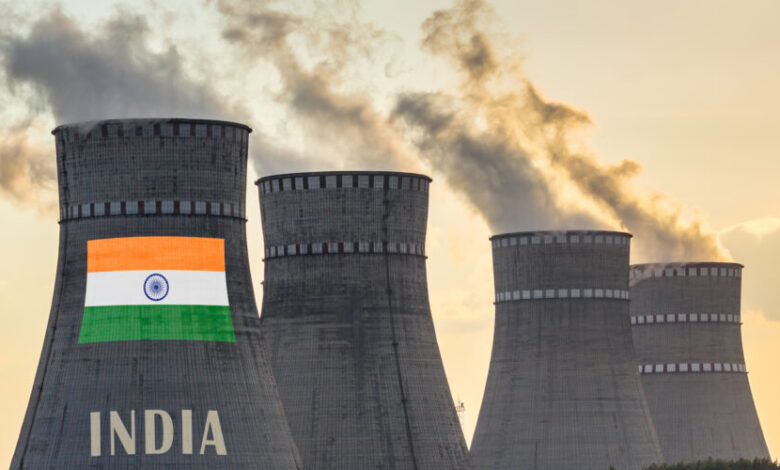
In a significant shift from its historically state-controlled approach, India is gearing up to open its nuclear energy sector to private players – albeit with a tightly secured regulatory leash.
As the country eyes a tenfold jump in nuclear power capacity by 2047 to meet its green energy targets, the government is working on sweeping changes.
The goal is to attract private investment for next-gen small modular reactors (SMRs), while setting up a dedicated regulatory authority to monitor every step of the nuclear fuel supply chain, from import to waste disposal, a move aimed at preventing potential misuse and diversion of nuclear materials, top government officials have confirmed.
A stringent new framework is under active discussion as part of the proposed amendments to the Atomic Energy Act, with the intent of opening the doors to private sector participation in India’s closely guarded nuclear ecosystem. This reform marks a paradigm shift in India’s nuclear posture, one that now sees collaboration between state agencies and the country’s biggest industrial houses as central to meeting its energy and climate goals.
The government’s ambitious blueprint involves scaling up nuclear energy capacity from the current 8 GW to 40 GW by 2035, with a longer-term target of 100 GW by 2047, the centenary of India’s independence. This is part of its strategy to decarbonize power generation and achieve net-zero emissions by 2070.
“The idea is to have stringent oversight,” a senior government official said, noting that the regulatory authority will have sweeping powers to monitor every stage, from import and enrichment restrictions to utilization and waste disposal. No enrichment facilities will be permitted at these upcoming private nuclear sites, maintaining the state’s tight grip on critical aspects of fuel processing.
The proposed authority will align safeguards with global best practices, in light of increasing concerns about nuclear material diversion and proliferation risks. In addition, the Atomic Energy Regulatory Board (AERB) will continue to vet all plant designs and enforce safety compliance.
A final decision on amending the legislation is expected soon, with the government reportedly working on a fast-track basis. The groundwork for this shift began earlier this year when Finance Minister Nirmala Sitharaman proposed updates to both the Atomic Energy Act and the Civil Liability for Nuclear Damage Act in her Union Budget speech. This was followed by the formation of inter-ministerial committees to hammer out the specifics.

Enter Corporate Sector Kings
But the real twist came during a high-level meeting at the Nuclear Power Corporation of India (NPCIL) headquarters in Mumbai. Present were some of India’s most powerful business leaders – Mukesh Ambani, Gautam Adani, Ratan Tata, along with heads from Jindal, Vedanta, and other industrial giants – joined by top nuclear scientists. The agenda was to explore India’s next big leap – making the country a global nuclear energy superpower.
Thus, this is no longer just a government project; it’s now a national-industrial ambition with billion-dollar implications.
The Start
India’s nuclear energy ambitions are finally shaking off decades of inertia.
Though the country’s nuclear journey began as early as 1969 with the commissioning of its first plant in Tarapur, Maharashtra, nuclear energy has remained a marginal player in the national power mix, contributing just 3% to overall electricity capacity. That’s despite a robust safety track record and enormous potential as a clean, base-load energy source.
But this is rapidly evolving.
Union Minister Jitendra Singh recently told Parliament that India’s nuclear power generation capacity has risen from 22,480 MW to over 35,000 MW in the past decade. Twenty-five reactors are now operational across the country, from Tamil Nadu’s Kudankulam to Rajasthan’s Rawatbhata. The government has cleared the simultaneous construction of 10 new reactors and established a Nuclear Energy Mission with a significant budget of ₹20,000 crore.
What sets this phase apart, however, is the historic entry of private capital.
For the first time, India is allowing private firms to invest in nuclear infrastructure—beginning with Bharat Small Reactors (BSRs), compact 220 MW Pressurised Heavy Water Reactors (PHWRs) developed indigenously. While the state-owned Nuclear Power Corporation of India Ltd (NPCIL) will retain ownership and operational control, private players will provide funding and receive electricity either for captive use or to sell under pre-agreed tariffs.
With tariffs around ₹5 per megawatt hour, nuclear power is beginning to stack up competitively against solar and wind – especially when the cost of storage for intermittent renewables is factored in. Some legacy plants are producing even cheaper power: NPCIL states that Tarapur Units 1 & 2 generate electricity at just 92 paise per unit, while Kudankulam’s output sells for slightly over ₹3 per unit.
The move to open atomic energy to private investment comes nearly two decades after the landmark but controversial India-US civil nuclear agreement, which had promised, but failed to deliver, a nuclear renaissance.
New Game!
This time, the corporate interest is palpable.
“The response has been overwhelming,” says NPCIL Chairman and Managing Director Bhuwan Chandra Pathak. “We expect nearly half of our 100 GW target to be realised through private partnerships.”
Jindal Power has announced a new subsidiary, Jindal Nuclear Power Pvt Ltd, backed by a ₹1.80 lakh crore investment over the next 20 years, aiming for an 18 GW capacity. Anil Agarwal’s Vedanta Group has issued global tenders to build a 5 GW plant.
On the other hand, Gautam Adani recently toured the Tarapur facility as part of a larger strategy to build 30 GW of nuclear capacity under the Adani Group’s green energy umbrella. Reliance Industries, too, has signalled its intent to enter the nuclear power space.
Fuelled by Confidence, Driven by Technology
Major industrial players like Tata Power, Vedanta, Adani, Reliance, and Jindal have moved quickly. Dedicated internal teams have been set up, and potential project locations scouted. Even the Indian Railways, one of the country’s largest energy consumers, is exploring nuclear energy as a future power source for its vast and electrifying network.
The public sector is also on the move – NTPC, the country’s largest power producer, has committed to a nuclear push with a target of adding 30 GW by 2034. In a significant move, it recently floated tenders inviting global partnerships to co-develop large nuclear reactors totalling 15 GW, one of the most ambitious efforts by a state-run utility to date.
On the global stage too, interest is swelling.
The United States has cleared Holtec’s cutting-edge Small Modular Reactor (SMR) technology for deployment in India. Holtec will work with Tata Consulting Engineers and engineering giant L&T to bring the technology to life—marking a crucial step in India’s plan to blend foreign collaboration with domestic execution.
But India’s nuclear energy future will be built on indigenous muscle.
The successful commissioning of the first 700 MW PHWR at Kakrapar, Gujarat, in 2023 marked a technological leap. These home-grown reactors will form the core of India’s near-term capacity expansion. Unlike earlier models, the new PHWRs are more efficient, easier to maintain, and aligned with Make-in-India goals.
But the real breakthrough lies south, in Kalpakkam, Tamil Nadu.
There, the long-awaited Prototype Fast Breeder Reactor (PFBR) is finally taking shape. Unique in design and revolutionary in ambition, the PFBR can breed more fuel than it consumes and potentially unlock India’s massive thorium reserves. This is central to the late Homi Bhabha’s three-stage nuclear vision: uranium-fuelled reactors, fast breeders, and eventually thorium-based systems.
The coming decade will also see India focus on scalable flexibility, enter the SMRs and BSMRs (Bharat Small Modular Reactors). These compact reactors, ideal for industrial clusters and smaller grids, can be factory-built, transported, and installed with minimal infrastructure. Five such indigenous SMRs are planned by 2033, aiming to deliver reliability without the wait.

Safety First, Doubts Later
While India’s nuclear ambition grows, so do questions, mostly about safety.
The Nuclear Power Corporation of India Ltd (NPCIL) insists that nuclear power is unfairly judged based on two major global incidents – Chernobyl in 1986 and Fukushima in 2011. Both were tragic, but context matters. Chernobyl lacked modern containment systems, and Fukushima was pushed beyond limits by a once-in-a-millennium tsunami.
Since then, nuclear design has evolved dramatically.
Modern reactors feature fewer components, making them simpler to operate and harder to fail. Integrated safety systems monitor for human error and mechanical issues in real time, enabling immediate corrective action. New Indian reactors follow these global best practices, blending automation with robust safety engineering.
The safety record at home speaks volumes.
Radiation levels at India’s nuclear sites, especially Kudankulam, have dropped significantly over the past decade. Union Minister Jitendra Singh confirmed in Parliament that none of India’s operating nuclear plants have experienced radiation leaks or breached safety limits in over 55 years of operation.
Safety is also not passive, it is continuously monitored. Each plant has internal radiation monitors and environmental radiation survey stations in a 30-km radius. Independent Environmental Survey Laboratories (ESLs) track air, water, soil, crops, and marine life for radioactive elements.
Worker safety is equally stringent.
Personnel in radiation-prone zones wear dosimeters, follow tightly regulated routines, and are subject to continuous health checks. A large-scale health study led by Tata Memorial Hospital found no adverse effects among workers, their families, or communities living near plant sites.
“Safety is non-negotiable,” affirms NPCIL’s Pathak. “Our rule is simple: safety first, production next.”
Fueling the Future
Fuel security remains a lingering concern. India imports most of its uranium, and domestic ore is of low quality. While the government says supply won’t be a problem, the shadow of dependency looms large.
Enter thorium – India’s ace up the sleeve, with some of the world’s largest thorium reserves, the country is uniquely positioned to transition into a uranium-thorium mix. Experts like Dr. Anil Kakodkar, former chairman of the Atomic Energy Commission, believe this shift, along with fuel recycling, could revolutionise the sector by significantly boosting sustainability.
“There are adequate fuel provisions, both through indigenous as well as imported means, to support the existing and planned nuclear power programme,” reassures Pathak of NPCIL.
The Final Stretch
India has set itself an ambitious target – 100 GW of nuclear capacity by 2047. To get there, the country will need to commission over 50 new reactors, weave in public-private synergy, revamp laws, ensure a steady supply of uranium and thorium, and above all, maintain rock-solid public trust in nuclear safety.
But if recent developments are anything to go by, the journey has already begun.
From 4.78 GW in 2014 to 8.8 GW today, India has made meaningful strides. The pipeline is even more promising: 21 reactors totaling 15 GW are under construction – a mix of large-scale and small modular units, including the Prototype Fast Breeder Reactor (PFBR).
Eight reactors (6,600 MW) are currently in advanced construction or commissioning stages, while 10 more (7,000 MW) are at the pre-project planning phase. If timelines hold, India’s nuclear capacity will more than double by 2032, reaching approximately 22,480 MW.
As Singh from Holtec International puts it, we’re in the midst of a “nuclear energy renaissance” and this time, India isn’t playing catch-up, it’s leading the charge.