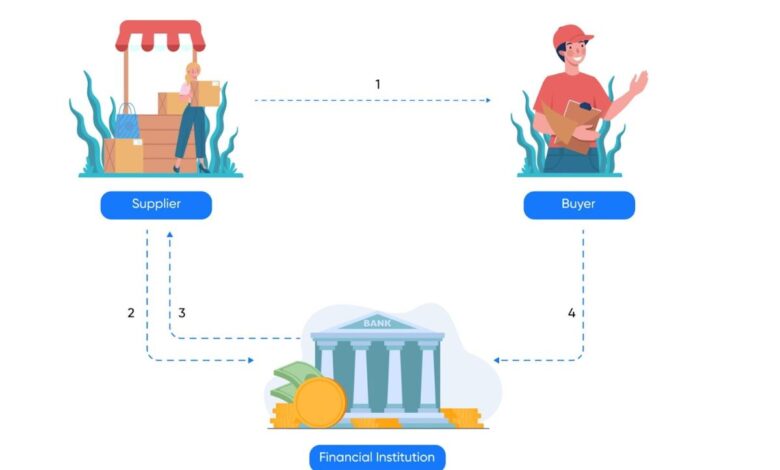
Before diving into the list, it is worth pausing on a distinction that matters. Invoice financing platforms and invoice financing SaaS platforms are related but meaningfully different things, and understanding the difference will help any business, bank, or fintech professional evaluate the options on this list with much greater clarity.
An invoice financing platform is primarily a marketplace or a lending vehicle — it connects businesses holding unpaid invoices with financiers willing to fund them. A SaaS invoice financing platform, by contrast, is primarily a software infrastructure play. It provides the technology layer that enables invoice financing programs to be built, run, scaled, and automated — whether for a bank deploying a vendor financing program, a corporate running a dynamic discounting scheme for its suppliers, or a fintech building receivables-backed lending products. The best platforms in this category blur the line between the two, but their defining characteristic is the software-first, infrastructure-first architecture that underpins everything they do.
In India’s 2026 landscape, this software layer has become one of the most strategically important pieces of the MSME financing ecosystem — it is what makes fast, paperless, GST-verified invoice financing possible at the scale India needs. This article profiles the top 10 invoice financing SaaS platforms actively operating in India in 2026.
1. CredAble
CredAble is the most enterprise-grade and architecturally sophisticated invoice financing SaaS platform operating in India today. Founded in 2017 by Nirav Choksi and Ram Kewalramani, the platform was designed from the ground up to serve large corporate anchors — helping them build, deploy, and manage structured supply chain finance programs for their entire vendor and dealer ecosystems.
What makes CredAble distinctly SaaS in character is that it is not a marketplace where transactions happen publicly; it is a configurable program infrastructure that a corporate or financial institution licenses and deploys. An enterprise client can use CredAble to run a vendor financing program for two hundred suppliers, a dealer financing program for five hundred distributors, and a dynamic discounting program simultaneously — all on the same platform, with deep ERP integrations (SAP, Oracle, Microsoft Dynamics) that allow invoice data to flow in automatically without manual upload.
The platform handles counterparty onboarding, credit workflows, disbursement triggers, repayment tracking, and portfolio analytics in a single stack. CredAble’s institutional investor backing, its growing roster of Tier 1 corporate anchor clients, and its focus on program-level infrastructure rather than individual transaction facilitation make it the most compelling pure SaaS proposition in this category.
2. Vayana Network
Vayana Network is the infrastructure backbone of a significant portion of India’s supply chain finance activity, and its institutional credibility is signalled unmistakably by the fact that the International Finance Corporation — the private lending arm of the World Bank Group — is among its investors. Founded in 2017, Vayana operates as a network and technology platform that connects corporates, banks, NBFCs, and MSME sellers into interoperable financing workflows rather than building walled-garden marketplaces.
The SaaS value proposition of Vayana lies in its integration architecture. The platform connects to corporate ERP systems, GST data sources, and multiple bank APIs simultaneously, meaning that when an invoice is raised and accepted by a buyer, the financing trigger can happen automatically based on pre-agreed rules — without any manual intervention from the MSME seller. Vayana’s GST-linked invoice verification system is particularly powerful in the Indian context, as it uses government-authenticated invoice data to eliminate fraud risk at the source. For banks and NBFCs looking to digitise and scale their supply chain finance books without building proprietary technology from scratch, Vayana’s white-label network infrastructure is one of the most credible and battle-tested platforms available.

3. KredX
KredX has evolved significantly from its origins as an invoice discounting marketplace into what is now more accurately described as an enterprise supply chain finance SaaS platform. Founded in 2015 in Bengaluru by Manish Kumar and Anurag Jain, the company’s enterprise product — KredX Enterprise — allows large corporates to run vendor financing, dealer financing, and early payment programs on a configurable SaaS infrastructure, while the marketplace component continues to operate for mid-market clients.
This dual-track evolution is strategically intelligent and commercially important. On the enterprise SaaS side, KredX competes directly with CredAble for large anchor programs, offering its own set of ERP integrations, multi-financier capabilities, and real-time dashboards. On the marketplace side, it continues to serve the long tail of SMEs that need quick liquidity against specific invoices. The platform’s AI-driven risk scoring engine, which assesses the creditworthiness of invoice counterparties rather than the SME itself, is a genuine technological differentiator. KredX’s decade-long track record in Indian receivables financing, combined with its increasingly enterprise-oriented product roadmap, makes it one of the most complete platforms in this category.
4. Progcap
Progcap occupies a genuinely distinctive niche in India’s invoice and supply chain finance SaaS landscape — it focuses specifically on financing the last-mile distributor and retailer networks of large FMCG, consumer goods, and agriculture companies. Founded in 2017 by Pallavi Shrivastava and Himanshu Chandra, Progcap recognised that the distributor financing problem in India — where lakhs of small distributors carrying large inventory purchase orders lack access to formal credit — is structurally different from the urban vendor financing problem that most platforms address.
Progcap’s SaaS model integrates directly with the sales force automation (SFA) systems, distribution management systems (DMS), and ERP tools that large consumer goods companies use to manage their distribution networks. This integration means that purchase orders, inventory data, and secondary sales data — all of which are proxies for a distributor’s repayment capacity — flow directly into Progcap’s credit underwriting engine. The result is a deeply embedded, data-rich financing infrastructure that can extend credit to distributors who have zero formal credit history but a verifiable track record within a specific corporate’s supply chain. For FMCG and agri companies looking to strengthen their distribution networks through embedded financing, Progcap is one of the most thoughtfully designed platforms in the market.
5. Drip Capital
Drip Capital brings a specifically export-oriented lens to invoice financing SaaS, making it the platform of choice for Indian SMEs engaged in international trade who need software-driven access to working capital against export invoices. Founded in 2015 by Pushkar Mukewar and Neil Kothari, and backed by Accel, Wing VC, and Y Combinator, Drip Capital has built a fully digital trade finance platform that handles the documentation, verification, credit assessment, and disbursement complexity of cross-border invoice financing through a streamlined SaaS interface.
The platform’s AI-driven underwriting engine is its most technically impressive component — it simultaneously assesses the creditworthiness of the Indian exporter and the overseas buyer, pulling from trade data, shipping records, and financial statements to arrive at a financing decision that can be communicated within 24 hours. For a traditional bank, the same process might take weeks. Drip Capital’s SaaS architecture also handles FEMA-compliant fund flows, which is a genuine pain point for SME exporters navigating India’s foreign exchange regulations. For any Indian exporter with annual revenues above approximately ₹5 crore, Drip Capital’s platform makes the financing of export receivables dramatically more accessible than the traditional trade finance banking channel.
6. M1xchange
M1xchange, operated by Mynd Solutions, is one of India’s three RBI-licensed TReDS (Trade Receivables Discounting System) platforms — and while it is primarily known as a regulated marketplace, its underlying technology is deeply SaaS in character. The platform is cloud-hosted, API-accessible, ERP-connectable, and designed to digitise the entire invoice discounting lifecycle from upload to settlement without any paper or manual intervention.

For the purposes of this article, M1xchange merits inclusion because its technology infrastructure increasingly serves as a SaaS layer for banks and NBFCs who use the TReDS platform as a channel to deploy capital. Financial institutions onboard M1xchange’s APIs to receive invoice financing opportunities, run their credit models against the platform’s data, and deploy capital programmatically — which is fundamentally a SaaS consumption model. Its position as an RBI-regulated institution adds a compliance and trust dimension that purely private fintech platforms cannot replicate. For businesses — particularly MSMEs in manufacturing, logistics, and healthcare — M1xchange’s cloud infrastructure provides access to multi-financier competitive rate discovery with regulatory assurance built in at the structural level.
7. C2FO
C2FO is a global working capital SaaS platform headquartered in Kansas City with a growing and significant India presence, having partnered with some of India’s largest corporates to deploy dynamic discounting and supply chain finance programs at scale. Rather than facilitating debt-based invoice discounting, C2FO’s core SaaS product enables corporate buyers to deploy their own surplus cash to pay suppliers early in exchange for a discount agreed in real time on the platform.
The SaaS model here is elegantly simple in concept but technically sophisticated in execution — C2FO’s platform allows a corporate treasury team to set parameters (maximum discount rate they are willing to offer, priority suppliers, eligible invoice categories) and then lets individual suppliers request early payment at rates they choose within those parameters.
The result is a market-clearing mechanism that optimises outcomes for both buyer and seller in real time. C2FO’s global scale — it processes hundreds of billions of dollars in working capital annually — means its technology has been stress-tested at a level that most India-only platforms have yet to reach. For large Indian conglomerates and MNC India subsidiaries with significant treasury surplus, C2FO’s platform turns idle cash into a supply chain strengthening tool while generating measurable returns.
8. Yodaplus
Yodaplus is one of the more specialised and technically focused players in India’s trade finance SaaS landscape, building software infrastructure specifically for the complex documentation, compliance, and workflow requirements of structured trade finance — including invoice financing, supply chain finance, and letter of credit management. The platform serves banks, NBFCs, and corporates that need a configurable, compliance-ready technology layer to manage trade finance assets at scale.
What distinguishes Yodaplus is its deep focus on the financial institution as the primary user. While many SaaS platforms in this space are built for the corporate anchor or the SME borrower, Yodaplus specifically addresses the operational pain points of the financing institution — asset monitoring, covenant tracking, document management, regulatory reporting, and portfolio analytics. Its modular architecture allows banks to deploy specific components — an invoice verification module here, a collateral management module there — without requiring a full system replacement. For Indian banks and NBFCs looking to modernise their trade finance operations without the cost and risk of replacing core banking systems, Yodaplus provides one of the most focused and technically credible software solutions available.
9. Cashinvoice
Cashinvoice is a Mumbai-headquartered invoice financing SaaS platform founded in 2016 that has carved out a focused and operationally mature niche among SMEs in manufacturing, steel, textiles, and food processing — sectors characterised by long payment cycles and chronic working capital stress. The platform’s SaaS architecture connects MSME sellers, their corporate buyers, and a network of NBFC and bank financing partners into a unified digital workflow that handles invoice upload, buyer acceptance, financier matching, and disbursement.
Cashinvoice’s most technically valuable feature is its GST-integrated invoice verification layer, which cross-references invoice data against the GST filing history of both buyer and seller to validate authenticity before the financing workflow is triggered. This reduces fraud risk significantly and allows financing partners to make faster credit decisions with greater confidence. The platform’s multi-financier model means that SME borrowers benefit from competitive rate options without managing separate relationships with each lender. For mid-sized Indian manufacturers with creditworthy buyer relationships but limited direct bank access, Cashinvoice provides a well-tested, operationally reliable path to invoice-backed liquidity.
10. Decentro
Decentro is a fintech infrastructure and API platform founded in 2020 that has built a comprehensive suite of financial services APIs — including invoice financing and collections modules — that allow banks, NBFCs, and fintech companies to embed invoice financing capabilities into their own products. It is perhaps the most SaaS-native entry on this list in the truest sense of the term — a developer-first, API-first infrastructure platform rather than a client-facing application.
Decentro’s invoice financing API suite allows a company building a B2B payments product, an ERP system, or an accounting software to embed invoice financing as a feature within their existing user experience — without building the regulatory, banking, and underwriting infrastructure from scratch. In 2026, as embedded finance becomes an increasingly important product strategy for Indian SaaS companies across sectors, Decentro’s infrastructure position becomes progressively more strategic. For fintech builders, ERP vendors, and digital lenders who want to offer invoice financing to their SME clients without becoming a lending company themselves, Decentro provides one of the most technically accessible and compliance-ready platforms available in India.
What to Look For When Evaluating These Platforms
Whether you are an SME seeking working capital, a corporate building a supply chain finance program, or a financial institution modernising your trade finance operations, the right evaluation framework asks three questions. First, who is the primary user the platform was designed for — the SME, the corporate anchor, or the financing institution?
Each platform on this list has a different primary user orientation, and the best outcomes come from matching that orientation to your role. Second, what integrations does the platform support — particularly GST data connectivity, ERP systems, and banking APIs — since the value of these platforms scales with their ability to automate data flows rather than requiring manual input. Third, what is the platform’s regulatory standing and track record — especially for platforms handling the movement of funds, where RBI registration, NBFC partnerships, and compliance infrastructure matter enormously.

Conclusion
India’s invoice financing SaaS landscape in 2026 is sophisticated, diverse, and increasingly embedded into the financial infrastructure of the country’s corporate and MSME ecosystem. From enterprise SCF platforms serving Fortune 500 supply chains to developer-first API layers enabling embedded finance, the ten platforms profiled here represent the full architectural spectrum of what software-driven invoice financing looks like in one of the world’s fastest-growing economies. The technology is ready — the opportunity lies in understanding it clearly enough to deploy it well.