iPaisa: ED Searches 20 Premises In All Panel Exchange And MGM91 Case
The Enforcement Directorate Mumbai Zone II conducted searches at 20 premises across Mumbai Pune Mehsana Surat and Hyderabad on 13 October 2026 under the Prevention of Money Laundering Act 2002 in a probe linked to All Panel Exchange and MGM91. The action targeted an alleged financial network said to have channelled funds from online betting and cyber fraud operations through a Pune based payment intermediary known as iPaisa operated by Edsom Fintech Pvt Ltd established by Ram U Ramdhani. More than 200 shell or front entities were said to have been onboarded on the platform alongside mule bank accounts and infrastructure at certain cooperative banks with proceeds allegedly moved through trade remittances cash withdrawals and cryptocurrency transfers involving persons based in Dubai. Multiple bank accounts stood frozen documents and digital devices were seized and Ram U Ramdhani remained in judicial custody as further investigation continued according to the release issued on 17 October 2026.

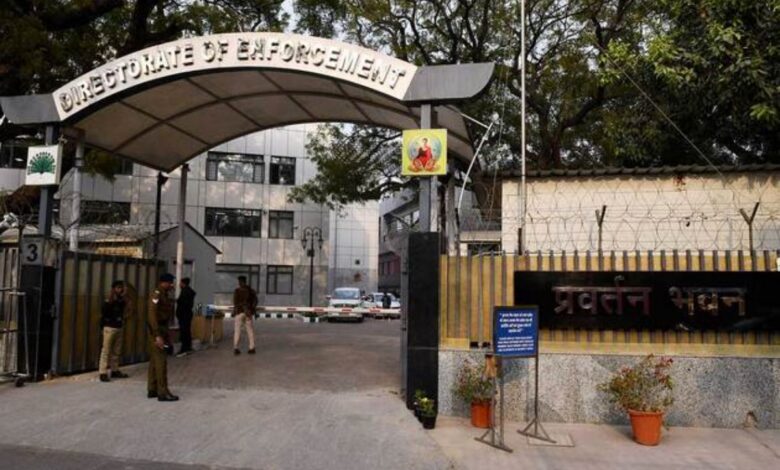
The Enforcement Directorate on 17 October 2026 released details of a major probe under the Prevention of Money Laundering Act 2002 that had seen its Mumbai Zone II office conduct searches at 20 premises across Mumbai Pune Mehsana Surat and Hyderabad on 13 October 2026. The action targeted an alleged financial network said to link the online platforms All Panel Exchange and MGM91 with a Pune based fintech entity Edsom Fintech Pvt Ltd that developed and operated the payment intermediary iPaisa.
More than 200 shell or front entities were said to have been onboarded onto iPaisa while mule bank accounts and infrastructure at certain cooperative banks facilitated the movement of funds.
Proceeds generated through the platforms were said to have been siphoned through three principal routes trade remittances involving over invoicing cash withdrawals from accounts opened under the guise of APMC units and conversion into cryptocurrency for transfer outside India with operational direction allegedly coming from persons based in Dubai. Documents digital devices and other material were seized multiple bank accounts were ordered frozen and Ram U Ramdhani, founder of Edsom Fintech who had been arrested earlier remained in judicial custody as the investigation continued.
The stated origin of the investigation lies in two predicate offences linked to All Panel Exchange and MGM91. Complainants were said to have been induced to deposit money after which they were cheated. Those deposits were then said to have reached bank accounts associated with Edsom Fintech and its iPaisa intermediary. From the intermediary the funds were said to have been distributed across the network of more than 200 shell or front entities and a wider set of mule accounts before exiting through the three identified mechanisms.
The architecture itself raises the central concern of whether the merchant entities displayed to the banking system corresponded in any meaningful way to genuine commercial activity or whether they served primarily as vehicles for disguising the origin ownership and destination of the proceeds. A conventional payment trail preserves a clear relationship between payer recipient and declared purpose. The alleged arrangement appears structured to sever that relationship at multiple points.
Edsom Fintech Pvt Ltd stands as the critical intermediary layer. Established by Ram U Ramdhani the company developed and operated iPaisa as an in house payment system. Funds collected from the two platforms were said to have ultimately reached accounts linked to the entity. The onboarding of more than 200 entities described as shell or front entities for use by online gaming betting and cyber fraud operators and their agents forms the core of the corporate structure under examination. How merchant agreements KYC files approval logs and risk assessments were handled when the entities were allegedly deployed in this manner remains outside the public description.
Who controlled the approval of those merchants who authorised settlements and who could override ordinary compliance checks are questions that the available information does not answer with names records or numbers. The economic benefit derived by the intermediary through fees commissions or other advantages is likewise unquantified leaving the incentive structure of the arrangement opaque.
The more than 200 shell or front entities constitute the expansive corporate layer through which payments were said to have been routed. Each such entity would ordinarily require mapping of its legal name registration details incorporation date registered office directors shareholders filing history and declared business activity. Common patterns of shared directors addresses contact numbers authorised signatories or accountants would indicate coordinated control rather than independent commercial existence.
Banking relationships including account opening documents authorised users turnover counterparties and cash withdrawal patterns would further test whether the entities functioned as genuine merchants or as temporary conduits. Transaction links through merchant identifiers payment references and onward transfers would reveal whether funds moved rapidly through the network in circular or layered patterns. Yet the public record offers only the aggregate figure of more than 200.
It supplies no subdivision into entities that maintained demonstrable business activity entities linked to confirmed victim deposits entities whose accounts were frozen or entities connected to the outward remittance or cryptocurrency channels. The number therefore remains an investigative marker rather than a verified inventory of participants or a measure of the financial scale involved.
Three principal exit routes were identified as the means by which proceeds were said to have been moved outside India or otherwise obscured. The first involved trade remittances allegedly structured through over invoicing. In such an arrangement an invoice may declare a value substantially higher than the actual commercial value of goods or services allowing excess funds to leave the country under the appearance of legitimate trade payment. The release does not identify the goods or services involved the companies that submitted the invoices the banks that processed the remittances the destination countries the overseas recipients or any of the amounts transferred.
Without those particulars the scale of this route and the degree of deliberate inflation remain unmeasured. The second route concerned cash withdrawals from mule accounts opened under the guise of APMC units. APMC ordinarily refers to Agricultural Produce Market Committee structures associated with regulated agricultural markets. The allegation raises the question of whether account identities or purposes were misrepresented and whether those accounts were then used to extract funds linked to the platforms. The public description provides no total value of cash withdrawn no count of the accounts involved no identification of the branches that handled the transactions and no indication of how much of the cash if any was recovered.
The third route involved conversion of proceeds into cryptocurrency for transfer outside India. Cryptocurrency movements can leave traces on public blockchains yet linking a wallet to an identifiable person ordinarily requires additional evidence from exchange records device data or bank trails. The release names no cryptocurrency no blockchain no exchange no wallet address no transaction value and no overseas recipient. Each of the three routes therefore presents a distinct concealment question that the available information leaves unresolved in both identity and quantum.
Certain cooperative banks were said to have provided infrastructure used to collect and further layer the alleged proceeds. The description concerns the use of banking channels rather than an established finding that every employee director or institution knowingly participated. Account opening files transaction records monitoring alerts and any escalation of suspicious activity would form the basis for assessing whether controls detected the patterns or failed to interrupt them. The absence of bank names account counts transaction values or details of any formal warnings prevents any evaluation of whether the network relied on a limited set of institutions or a broader spread of branches.
The regulatory framework governing know your customer customer due diligence and suspicious transaction reporting applies according to the status of the institution and the nature of the accounts yet the public record supplies none of the data that would allow the effectiveness of those controls to be examined in this specific context.
A significant number of persons involved in operating the betting and gaming platforms were said to have been directed by individuals based in Dubai. Operational direction and beneficial ownership of the resulting funds are not necessarily identical. Establishing who issued instructions who received them and who ultimately controlled the proceeds would require communications records device data platform administrator logs account permissions and financial instructions.
The public description does not identify the Dubai based persons the nature of the relationship the specific amounts that crossed the border or the precise channels through which those amounts moved. Geography alone cannot establish control or ownership and the absence of these particulars leaves the international dimension of the network as an outlined connection rather than a mapped trail of funds and responsibility.
The predicate offences linked to All Panel Exchange and MGM91 form the foundation of the money laundering investigation. The connection between the alleged cheating of complainants and the subsequent movement of funds through iPaisa and the wider network is essential. The release does not provide the number of complainants the individual or aggregate loss figures the original police station records the dates of the alleged offences or the precise manner in which deposits were collected and withdrawal requests handled.
Victim deposits platform turnover and the quantum of funds said to have entered the laundering channels therefore remain three separate and currently unknown quantities. Without those figures the scale of the underlying activity that generated the proceeds cannot be assessed from the public record.
Ram U Ramdhani is identified as the founder of Edsom Fintech Pvt Ltd. He had been arrested earlier in the investigation and was reported to be in judicial custody at the time of the 17 October 2026 release. The procedural stages of search seizure arrest and judicial custody represent investigative and custodial measures. They do not themselves establish the extent of any individual’s personal role in the creation or operation of iPaisa the approval of merchant entities the authorisation of settlements or knowledge of the sources of the funds.
Corporate records administrator logs compliance alerts settlement instructions and communications would be required to determine the specific actions taken by any person associated with the company. The public description supplies none of those details.
The Prevention of Money Laundering Act 2002 supplies the statutory basis for the investigation including the definitions of the money laundering offence the powers of search and seizure provisional attachment and arrest. Multiple bank accounts were ordered frozen under the Act. The release does not identify the accounts or state the total value of the balances that were immobilised. Freezing therefore stands as a protective investigative step rather than a final determination of the quantum of recoverable proceeds or a completed confiscation.
The timeline that can be reconstructed begins with earlier searches at locations in Pune Mumbai and Bengaluru and the arrest of Ram U Ramdhani though the precise dates of those earlier actions are not disclosed. The searches at the 20 premises across the five cities occurred on 13 October 2026. The public release describing the network the entities the cooperative bank infrastructure and the three exit routes was issued on 17 October 2026.
At the time of the release the investigation was stated to be ongoing with seized material and frozen accounts in hand. The dates of the predicate offences the original complaints and the full sequence of the financial movements remain outside the public record limiting any reconstruction of how long funds remained in intermediate accounts or when they exited through the identified routes.
The concrete numbers available are confined to operational counts. Twenty premises were searched across five cities. More than 200 shell or front entities were identified. Two platforms were linked to the predicate offences. Three principal exit routes were described. No figure is supplied for the number of victims the total of deposits the value processed through iPaisa the quantum of cash withdrawn the value of cryptocurrency transferred the amount of trade remittances or the balances frozen. These omissions leave the financial scale of the entire network unmeasured.
Gross transaction turnover unique victim deposits suspected proceeds of crime net loss and funds immobilised are distinct quantities that cannot be derived from counts of premises or entities. A gross sum of all bank transfers would itself be unreliable because the same money can appear multiple times as it moves through layered accounts. Without transaction level reconciliation the true volume that entered the system from the platforms and the true volume that exited through the three routes remain unknown.
The structure described separates the people collecting deposits the entities processing payments the bank accounts receiving funds and the channels through which money ultimately left or was obscured. That separation is itself a matter of concern because it multiplies the points at which origin and ownership can be disguised. Yet the absence of every aggregate financial figure means that the public record contains a detailed outline of architecture without any measure of the volume that the architecture was said to have handled.
How extensive was the layering when more than 200 entities stood between the platforms and the exit routes. What volume of funds required the simultaneous availability of trade over invoicing APMC linked cash extraction and cryptocurrency conversion. Why does a probe that identifies the payment intermediary the merchant entities the cooperative bank infrastructure and the foreign direction still withhold every numerical measure that would allow the scale of the alleged activity to be understood. The questions persist because the information released on 17 October 2026 supplies the structural description while leaving the financial magnitude entirely outside public view.