Iran War, A 360-Degree View Of Its Impact On India – Markets, Energy, The Economy And The Lessons It Holds
The US-Israel war on Iran is no longer a distant geopolitical conflict for India. From surging oil prices and a falling rupee to volatile markets and risks to remittances, the crisis is exposing multiple economic fault lines — raising an urgent question: how vulnerable is India to shocks from global conflicts, and more importantly, what lessons it must draw for the future.

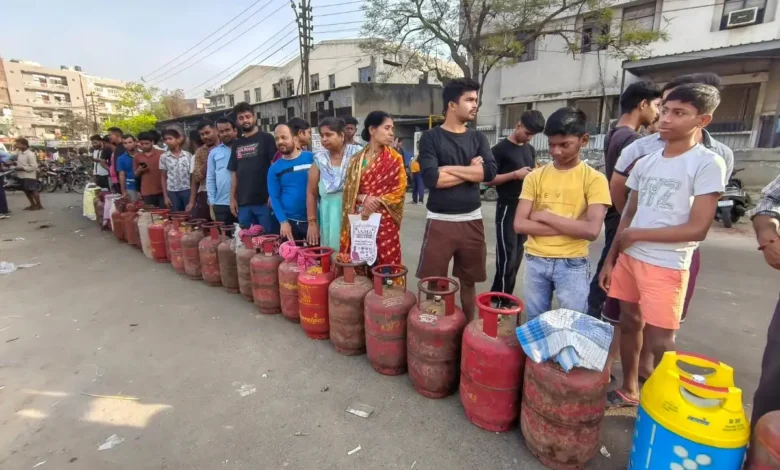
The first tremors of the US-Israel war on Iran were felt thousands of kilometres away in India’s financial markets. As tensions escalated in the Middle East and the Strait of Hormuz – one of the world’s most critical energy transit routes – effectively shut down, investors quickly began pricing in the risks of a prolonged energy shock.
Nearly a fifth of global crude oil and liquefied natural gas shipments pass through the narrow waterway connecting the Persian Gulf to the Arabian Sea. With Iran threatening to block shipping in retaliation for the attacks, crude prices surged sharply, briefly touching the psychologically important $100 per barrel mark after trading near $70 before the conflict erupted.
For India, the world’s third-largest oil importer, the implications were immediate. Higher crude prices not only threaten to widen the country’s trade deficit but also raise the spectre of imported inflation – a combination that can quickly unsettle financial markets.
That anxiety was reflected on Dalal Street.
India’s benchmark indices tumbled sharply as investors moved away from risk assets amid fears that a sustained oil shock could derail the country’s growth-inflation balance. The Nifty 50 and the BSE Sensex each fell about 1.1 per cent during Friday’s session, with the indices on course for their steepest weekly decline in roughly fifteen months.
The selling was broad-based. Fifteen of the sixteen major sectoral indices declined, while the broader mid-cap and small-cap indices also registered steep losses as investors rushed to reduce exposure.
Financial stocks – which carry heavy weightage in India’s benchmark indices – were among the worst hit. Banking and private sector financial shares fell around 1.5 per cent, while state-owned lenders declined nearly 2 per cent.
Auto stocks extended their losses for a third consecutive session amid concerns that rising fuel costs could weaken consumer demand. The metal sector also came under pressure, with aluminium producers such as Hindalco and Nalco dropping sharply in line with declines in global aluminium prices.
For investors, the worry is simple but profound: if the conflict persists and energy prices remain elevated, the resulting inflationary pressures could force central banks around the world to maintain tighter monetary policy for longer.
That scenario would not only weigh on equity markets globally but also place additional strain on energy-importing economies like India.

The Rupee’s Warning Signal
While equity markets captured the immediate attention, the currency market offered an equally stark signal of the economic risks emerging from the conflict.
The Indian rupee fell to a record low of 92.39 against the US dollar as concerns mounted that persistently high oil prices would worsen India’s external balance and place additional pressure on the country’s economy.
The currency has weakened by more than one per cent since the war began, although it has performed relatively better than several other emerging-market currencies thanks to active intervention by the Reserve Bank of India.
Central banks typically step in during such periods to smooth excessive volatility, and the RBI has reportedly sold billions of dollars from its foreign-exchange reserves to stabilise the rupee and reassure financial markets.
Yet the direction of pressure remains clear.
Oil prices hovering near the $100 per barrel level represent a sharp increase from the roughly $70 levels seen before the conflict began. For a country that imports the overwhelming majority of its crude oil, such a surge quickly translates into higher import bills and a widening current account deficit.
Currency markets tend to react swiftly to these pressures, often acting as an early warning signal for broader macroeconomic stress.
In that sense, the rupee’s slide is not merely a financial statistic – it is an indicator of the deeper vulnerabilities that global energy shocks can expose in India’s economy.
India’s Energy Vulnerability
At the heart of India’s exposure to the conflict lies a structural reality: the country remains heavily dependent on imported energy.
India imports nearly 90 per cent of its crude oil requirements and roughly half of its natural gas consumption, making it one of the world’s most vulnerable major economies to disruptions in global energy supplies. Much of this energy flows through the Strait of Hormuz – the narrow maritime corridor connecting the Persian Gulf to the Gulf of Oman – which has now become a focal point of the conflict.
More than 80 per cent of India’s gas imports and a substantial portion of its crude oil shipments pass through this critical chokepoint. With Iran threatening to block shipping routes in retaliation for the US-Israeli attacks, the strait has effectively become a geopolitical pressure point capable of shaking global energy markets.
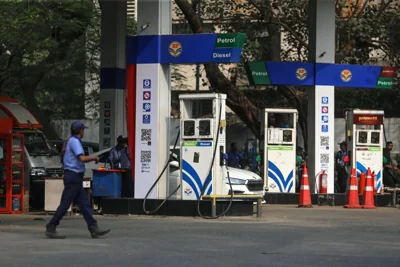
The consequences of such disruptions extend far beyond the price of petrol or diesel at the pump. A sustained rise in crude prices can ripple across the economy, raising transportation costs, pushing up manufacturing expenses and ultimately feeding into broader inflation.
Economists warn that a prolonged period of elevated oil prices could threaten what the Reserve Bank of India had recently described as a rare “Goldilocks” phase for the Indian economy – a period marked by strong growth alongside relatively low inflation.
Before the conflict erupted, the International Monetary Fund had projected India’s economy to grow at around 6.4 per cent this year while inflation remained within the central bank’s comfort range.
A prolonged energy shock, however, could quickly upset that delicate balance.
From Oil Shock To Economic Strain
The economic transmission of an oil shock follows a familiar pattern and India has experienced it before.
Higher crude prices increase the country’s import bill, widening the current account deficit and placing pressure on the rupee. A weaker currency then makes imports even more expensive, creating a feedback loop that can further push up domestic inflation.
Economists estimate that if crude prices were to remain near the $100 per barrel level for an extended period, India’s current account deficit could widen to between 1.9 and 2.2 per cent of GDP in the coming financial year, compared with projections of below one per cent before the conflict.
At the same time, higher energy costs could also strain the government’s fiscal position. Rising oil prices often translate into higher subsidy burdens – particularly in sectors such as fertilisers – while the government may also face pressure to cushion consumers from sharp increases in fuel prices.
Some estimates suggest that if oil prices were to remain elevated, government expenditure could increase significantly, potentially forcing difficult choices between maintaining fiscal discipline and continuing large-scale infrastructure spending that has been central to India’s growth strategy.
The impact would also extend to growth and inflation. Analysts at the State Bank of India have warned that if crude prices were to average around $130 per barrel, India’s economic growth could slow to nearly 6 per cent while inflation could rise well above current levels.
For a country that has enjoyed several years of relatively stable macroeconomic conditions, the Iran conflict is therefore a stark reminder of how quickly global shocks can disrupt the economic equilibrium.
Businesses Begin To Feel The Strain
The ripple effects of the conflict are already beginning to reach India’s industrial sectors.
Disruptions to liquefied natural gas shipments and tighter global energy supplies have forced companies across several industries to reassess production plans. State-run energy companies have begun restricting gas supplies to industrial users after supply disruptions from the Gulf, where shipments have been affected by the escalating conflict.
Industries that depend heavily on natural gas are among the first to feel the pressure. Fertiliser manufacturers, for instance, have already begun announcing production cuts as gas supplies tighten. This is particularly significant given that fertilisers are a critical input for India’s agricultural sector, especially as farmers prepare for major planting seasons.
Other sectors are facing similar challenges. The ceramic and tiles industry, which relies heavily on gas for its manufacturing processes, has reported plans to scale back production due to rising fuel costs and supply uncertainties.
Export-oriented industries are also beginning to encounter logistical disruptions. Companies shipping goods to the Middle East are warning of delays as airspace closures, flight cancellations and shipping risks complicate transportation routes.
India’s gems and jewellery trade, which relies heavily on the United Arab Emirates for both exports and imports of rough dimonds, has already begun reporting disruptions. Large industrial exporters have also warned that shipments may face delays if the conflict continues to disrupt regional logistics networks.
For many businesses, the concern is not merely higher energy prices but the unpredictability of supply chains in a conflict zone that remains central to global trade.
The Household Economy: Cooking Gas And Consumer Anxiety
The effects of the crisis are not confined to factories and export corridors. They are also beginning to surface in India’s domestic economy, particularly in the supply of cooking gas.
India consumes more than 33 million metric tonnes of liquefied petroleum gas each year, with imports accounting for roughly 60 per cent of the country’s demand. A significant portion of these imports traditionally comes from the Gulf region, making the sector particularly sensitive to disruptions in shipping through the Strait of Hormuz.
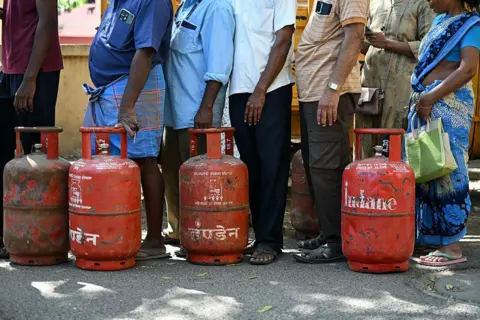
As news of the conflict and supply disruptions spread, anxiety among consumers triggered a rush to stock up on LPG cylinders in several parts of the country. Hotels, restaurants and small businesses that rely on commercial gas cylinders have also reported concerns over tightening supplies.
The government has sought to calm those fears. Authorities have invoked emergency provisions to prevent hoarding and ensure that domestic households continue to receive uninterrupted supplies of cooking gas.
Oil marketing companies have been directed to prioritise household consumption while limiting sales to certain industrial users. At the same time, the government has moved to diversify LPG imports, securing additional cargoes from countries such as the United States, Norway, Canada and Russia.
Officials maintain that India currently has sufficient reserves to manage the situation even if the conflict persists, and that alternative supply routes and sources are being activated.
Yet the episode illustrates a broader point: in an economy as large and energy-dependent as India’s, geopolitical disruptions thousands of kilometres away can quickly find their way into everyday life.
The Gulf Factor: Remittances, Trade And Economic Interdependence
Beyond energy, India’s economic relationship with the Gulf runs far deeper than is often recognised.
The six countries of the Gulf Cooperation Council – the United Arab Emirates, Saudi Arabia, Qatar, Oman, Kuwait and Bahrain – collectively represent one of India’s most important economic partners. The region is not only a major supplier of oil and gas but also a crucial destination for Indian exports, investment flows and aviation connectivity.
Perhaps the most significant link, however, lies in the millions of Indians who live and work across the Gulf.
An estimated 9 to 10 million Indian citizens are employed in these countries, forming the largest expatriate community in the region. Together they send home more than $50 billion every year in remittances – a vital source of income for millions of Indian families and an important stabilising factor for the country’s external finances.
A prolonged conflict in the Gulf could therefore affect India in ways that extend well beyond energy markets. If economic activity slows across the region due to instability or disruptions to the oil industry, employment opportunities for migrant workers could shrink, directly affecting remittance flows back to India.
Such a scenario would have broader implications for the Indian economy, particularly in states where remittances from the Gulf play a significant role in supporting household consumption and local economic activity.
In that sense, the conflict is not merely a distant geopolitical crisis, it touches a deeply interconnected economic relationship that has evolved over decades.

The Evacuation Question India Hopes It Never Has To Answer
The scale of India’s presence in the Gulf also raises another difficult question: what happens if the conflict spreads further across the region?
With more than nine million Indian nationals living in Gulf countries, India faces one of the largest overseas populations in the world concentrated within a single region. In the event of a major regional war, ensuring the safety of such a vast diaspora would present an enormous logistical challenge.
History offers some precedent. During the 1990–91 Gulf War, India carried out one of the largest civilian evacuations in history, airlifting nearly 200,000 nationals from Kuwait after Iraq’s invasion of the country.
But the scale of the present situation would be vastly larger.
Diplomats and former officials acknowledge that evacuating millions of citizens during an active regional conflict would be extraordinarily difficult, if not impossible. Instead, contingency planning often focuses on ensuring that embassies, local authorities and community networks are prepared to assist Indian nationals where they are.
For now, the government has set up special monitoring cells and round-the-clock helplines to track developments and assist citizens in the region.
Yet the sheer scale of India’s diaspora presence means that any escalation of the conflict would immediately become not only a foreign policy challenge but also a humanitarian and logistical one.
The IT Sector Turmoil: When Global Risk Meets Technological Disruption
Even before the Iran conflict began rattling global markets, one of India’s most important sectors was already facing turbulence.
The country’s information technology giants have endured an extraordinary losing streak on the stock market, with the Nifty IT index heading toward its eighth consecutive week of declines. The prolonged sell-off has erased nearly ₹7.7 lakh crore in market value, triggering a fierce debate among investors about whether the sector is facing a structural turning point.
At the heart of the debate lies the rapid rise of artificial intelligence.
Some analysts argue that advances in generative AI could fundamentally reshape the traditional IT services model that has powered India’s software industry for decades. According to analysts at Jefferies, AI could gradually shift the industry’s business mix toward consulting and implementation while shrinking large managed-services contracts – potentially increasing cyclicality and forcing companies to rethink their operating models.
Under pessimistic scenarios, the brokerage warned that valuations for certain IT firms could face further downside if growth expectations weaken and the sector’s long-term prospects are reassessed.
Foreign investors have already begun repositioning. In February alone, foreign portfolio investors sold IT shares worth more than ₹16,000 crore, marking one of the sharpest waves of selling in the sector since the global financial crisis.

Yet not everyone shares the pessimism.
Domestic institutional investors have taken a far more contrarian view. PPFAS Flexicap Fund – one of India’s largest actively managed equity funds – used the recent correction to aggressively accumulate shares of major software companies, including Infosys, HCL Tech and TCS.
Other analysts argue that fears surrounding the “end” of the IT services model may be overstated. They point out that large enterprises adopting new technologies still require system integrators capable of implementing, customising and maintaining complex digital systems – a role that India’s IT services firms have long specialised in.
For investors, the sector has therefore become a battleground between two competing narratives: one that sees artificial intelligence as an existential disruption, and another that views the current sell-off as a temporary overreaction.
Growth, Inflation And Fiscal Pressures
While market volatility often captures headlines, the deeper concern lies in how a prolonged energy shock could ripple through India’s broader economic framework.
India’s economy has enjoyed a period of relative stability in recent years, characterised by strong growth and manageable inflation. The Reserve Bank of India had previously described the situation as a rare “Goldilocks” phase – a balance where growth remained robust while inflation stayed within the central bank’s comfort band.
The Last Bit, A Crisis That Holds Important Lessons For India
The Iran conflict is a reminder that in an increasingly interconnected world, distant geopolitical crises can quickly translate into domestic economic shocks. For India, the episode has exposed the extent to which its growth story remains intertwined with global energy flows, financial markets and the stability of the Gulf region.
While policymakers have moved quickly to secure alternative energy supplies and stabilise markets, the crisis highlights deeper structural questions about long-term resilience. Reducing dependence on critical energy chokepoints, diversifying supply chains and strengthening strategic reserves are no longer merely policy ambitions but economic necessities.
At the same time, India’s deep economic and human links with the Gulf underline the importance of careful diplomatic balancing in an increasingly polarised geopolitical environment.
The war in Iran may eventually subside, but the vulnerabilities it has revealed are unlikely to disappear. For India, the real challenge lies not only in navigating the immediate shock but in preparing for a future where global conflicts can ripple across its economy with increasing speed and intensity.