Is DGCA And IndiGo Hand In Glove? Why IndiGo Walked Away With Just A 22 Cr Slap On The Wrist And How DGCA Created Aviation Chaos
When IndiGo’s December meltdown paralysed airports and stranded lakhs, India was promised strict action. What followed was a modest fine and muted accountability. As India’s largest airline walked away largely unscathed, a troubling question emerged: did DGCA’s regulatory laxity enable the chaos it was meant to prevent?

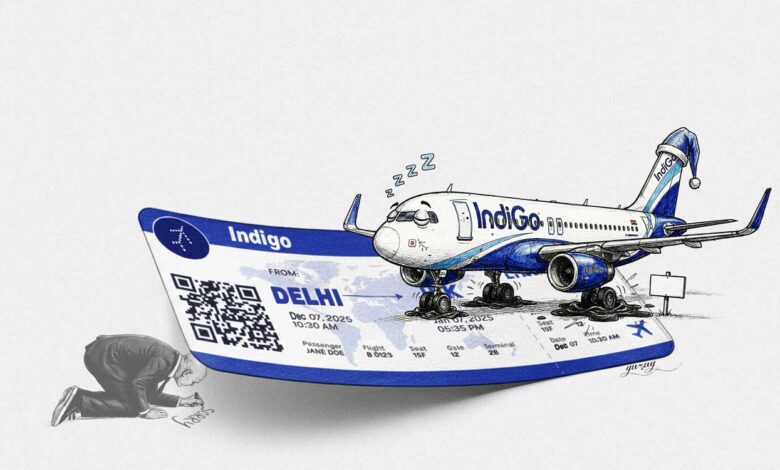
When Civil Aviation Minister Ram Mohan Naidu addressed Parliament in the aftermath of IndiGo’s December meltdown, the message was unmistakable: strict action would follow. The scale of the disruption – thousands of cancelled flights, lakhs of stranded passengers, and chaos across India’s airports – demanded nothing less.
What eventually emerged, however, told a very different story. India’s aviation regulator, the Directorate General of Civil Aviation, imposed penalties totalling ₹22.20 crore on IndiGo and directed the airline to furnish a ₹50 crore bank guarantee, to be released in phases subject to compliance improvements.
The immediate question is unavoidable: why was the fine diluted?
What changed between the political assurance of stringent punishment and the final regulatory order?
A Crisis of National Proportions, Not a Routine Disruption
The December chaos was neither localised nor fleeting. Between December 3 and December 5, 2025 alone, IndiGo cancelled 2,507 flights and delayed 1,852 others, impacting more than three lakh passengers nationwide. What began as sporadic cancellations quickly snowballed into a full-blown operational collapse, with disruptions stretching well beyond a week. This was not bad weather or an air-traffic control failure; it was a systemic breakdown.
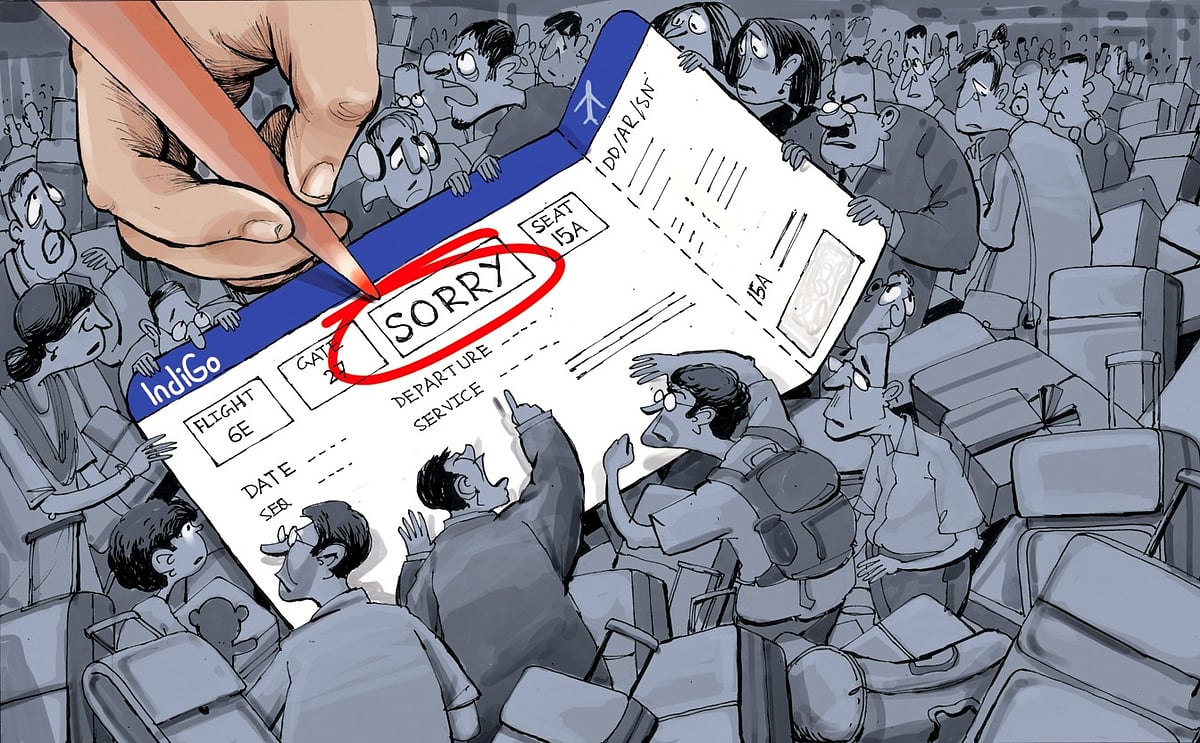
Airports descended into disorder. Social media was flooded with images of stranded passengers scrambling to retrieve baggage, checked-in luggage lying unattended across terminals, and travellers left without clear communication or viable alternatives. The scale of the breakdown pushed the issue into Parliament, where Congress Rajya Sabha MP Pramod Tiwari described the crisis as symptomatic of monopolistic concentration in Indian aviation.
What the DGCA Probe Found And Could Not Ignore
A four-member committee appointed by the DGCA examined IndiGo’s operational planning, crew scheduling, management supervision, and software systems. Its conclusions were damning.
The regulator found that the disruption stemmed from excessive operational optimisation, inadequate regulatory preparedness, gaps in software support, and weak management control. Most critically, the airline failed to maintain sufficient operational buffers and did not properly implement revised Flight Duty Time Limitation (FDTL) norms – rules explicitly designed to prevent pilot fatigue and protect flight safety.
The Penalty – Explained, and Then Put in Perspective
The ₹22.20 crore penalty comprised a one-time fine of ₹1.80 crore for multiple violations and an additional ₹20.40 crore for continued non-compliance over 68 days, calculated at ₹30 lakh per day from December 5, 2025 to February 10, 2026.
On paper, the figure sounds substantial. In reality, it barely dents the balance sheet of India’s largest airline. IndiGo’s quarterly revenues routinely exceed ₹15,000 crore. Unsurprisingly, markets treated the penalty as immaterial – shares of InterGlobe Aviation rose after the announcement, signalling investor confidence that the episode would have no lasting financial impact.
That reaction alone illustrates the central concern: the fine lacked deterrence.
Accountability Theatre, Who Paid the Price and Who Didn’t
The DGCA issued warnings to IndiGo’s senior leadership, including CEO Pieter Elbers and the Chief Operating Officer, and ordered the removal of the Senior Vice President overseeing the Operations Control Centre. Beyond that, accountability stopped.
- There were no executive penalties.
- No passenger compensation framework.
- No structural sanctions that altered the airline’s growth or utilisation strategy.
For a crisis of this magnitude, the punishment appeared carefully contained, visible enough to signal action, restrained enough to avoid real disruption. This selective accountability drew sharp criticism from within the aviation community.
“A Joke”: Pilots Call Out Regulatory Leniency
The Federation of Indian Pilots was scathing in its assessment. Its president, G S Randhawa, publicly questioned whether the DGCA’s action amounted to anything more than optics.
He cited international precedent, pointing to how the US Department of Transportation fined Southwest Airlines $140 million after holiday disruptions in 2022 – money that was distributed to affected passengers. By contrast, India’s response, he argued, failed to punish decision-makers or acknowledge the scale of public harm.
Randhawa also raised troubling questions about the probe itself. According to him, cancellations began as early as December 2 and continued until December 15, yet the DGCA examined only the December 3–5 window. Why was the scope narrowed? Why were aircraft, pilots, and cabin crew reportedly available, yet flights were not dispatched?
Most critically, he challenged the logic of trading safety compliance for monetary penalties. FDTL norms exist for passenger safety, not as bargaining chips. If IndiGo’s winter schedule was cut by 10%, why were relaxations extended till February 10 instead of being withdrawn?
These questions remain unanswered.
Safety Rules Relaxed After Being Violated
In early December, IndiGo cancelled hundreds of flights because it was unprepared to implement the revised duty and rest norms for pilots. The DGCA responded by curtailing the airline’s winter schedule by 10% but simultaneously granted it additional time to comply with the very safety rules it had failed to implement.
This contradiction lies at the heart of the controversy.
Regulations designed to reduce fatigue were softened after non-compliance had already caused nationwide disruption and more importantly when safety rules bend under pressure, regulatory credibility fractures.

From Aviation Regulator to Competition Watchdog
The DGCA’s action did not close the chapter. IndiGo, which controls roughly 65% of India’s domestic aviation market, soon found itself under scrutiny from the Competition Commission of India.
Acting on a complaint filed by a Bengaluru-based traveller whose flight was cancelled and who was offered only significantly costlier alternatives, the CCI ordered an investigation into whether IndiGo abused its dominant position. The airline argued that the matter fell solely under the DGCA’s jurisdiction. The competition regulator disagreed, holding that market dominance and consumer harm fall squarely within competition law.
This development is telling. Regulatory leniency in aviation safety does not exist in isolation; it spills into consumer harm and market distortion.
Dominance Without Discipline
When a single airline controls capacity at this scale, operational failures cease to be internal problems. They become market events. Passengers are locked in, alternatives evaporate, and pricing power shifts sharply in favour of the dominant player. Dominance, without commensurate discipline, becomes a shield, not just against competitors, but against consequences.
Safety Red Flags: A Pattern, Not an Anomaly
IndiGo’s December crisis did not occur in a vacuum. It sits atop a growing list of safety and operational red flags that aviation experts argue point to deeper structural stress.
Over the past few years, the airline has recorded multiple tail-strike incidents, including:
- A tail strike during a go-around at Mumbai in August 2025
- Separate tail-strike incidents at Chennai and Ranchi in December 2025, which led to aircraft being grounded
- Several tail-strike events documented in 2023
- A 2024 Delhi–Bengaluru incident that resulted in the DGCA grounding the operating crew
Tail strikes are not cosmetic events. They typically indicate unstable approaches, misjudged aircraft handling, or compromised operational discipline, especially during take-off and landing, the most critical phases of flight.
Beyond this, aviation incident databases show a long list of technical disruptions involving IndiGo aircraft in recent years – from engine shut-downs, bird strikes, flap lock issues, hydraulic failures, and aborted take-offs. Independent analyses suggest over 50 safety-related incidents in a short span.
Independent Warnings, Internal Audits – All Ignored
Independent aviation safety evaluators have taken note. Following recurring incidents and compliance concerns, IndiGo’s safety rating was revised downward to 5 out of 7 in recent assessments. For an airline operating at such scale and frequency, even marginal downgrades carry serious implications.
Even the DGCA’s own internal audits weaken the case for treating December as an aberration. In its national aviation audit conducted in mid-2025, the regulator identified 263 safety lapses across Indian airlines, of which 23 were attributed to IndiGo. Importantly, these findings predated the December collapse. The warning signs were already there.
Pilot Fatigue: The Risk That Will Not Go Away
Pilot fatigue has long plagued India’s aviation sector. Surveys and investigative reports reveal pilots admitting to flying while physically exhausted – a risk factor global aviation regulators treat with utmost seriousness.
The FDTL reforms were introduced precisely because of these concerns. Yet enforcement has been uneven. The IndiGo episode shows how fatigue rules, designed to protect passengers and crew, can be diluted when airlines struggle operationally.
Cosmetic Action, Structural Silence
Independent post-crisis analyses describe the December meltdown as the result of deep operational cracks – inadequate staffing, flawed rostering models, weak software systems, and poor regulatory preparedness.
While the DGCA suspended certain inspectors and took limited corrective steps, senior airline leadership largely escaped meaningful accountability. The gap between the scale of disruption and the modest consequences imposed exposes the difference between regulatory optics and regulatory impact.
The Last Bit, The Precedent That Endangers Indian Aviation
The ₹22 crore fine is not the real issue. The precedent is.
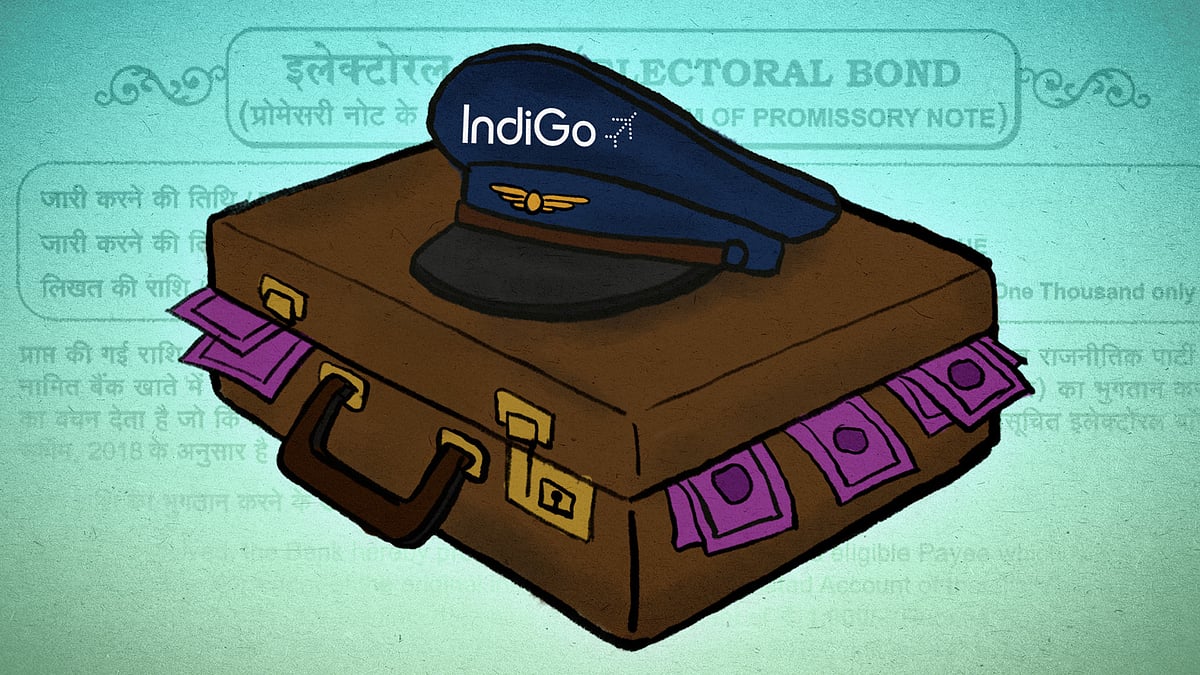
When a crisis of this magnitude leads to diluted penalties, narrowly scoped probes, relaxed safety norms, and selective accountability, it signals a regulator struggling to assert authority over its most powerful player.
India wants to be a global aviation powerhouse. That ambition cannot rest on a framework where size insulates airlines from consequences. In aviation, deterrence is not optional; it is the thin line between safety and catastrophe.
Would any airline without IndiGo’s market power have walked away this lightly?
If the answer is no, then the problem is no longer just IndiGo’s.
It is the regulator’s.