Is This Another Urvashi Rautela Gimmick? ₹7,000 Crore AI Claim Is Her Latest Extraordinary Chapter. Should Anyone Be Surprised?
₹7,000 crore is quite a number to attach to an AI dispute, particularly when it arrives with the name Urvashi Rautela attached to it. From extraordinary celebrity claims to increasingly extraordinary headlines, Rautela has never been shy of keeping the publicity machine busy. Now there is an AI company, a ₹7,000-crore damages claim and one rather familiar question: here we go again?

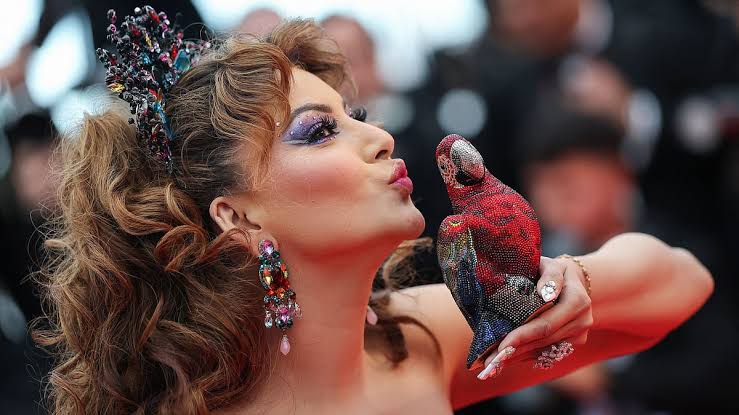
Urvashi Rautela has found yet another way to make ₹7,000 crore part of the conversation. Her team says it is pursuing legal remedies against a Los Angeles-based AI company for allegedly using her name, photographs and videos without permission, with damages currently being assessed at ₹7,000 crore. It is, if nothing else, an entrance that does not believe in arriving quietly.
The underlying allegation, to be fair, is not frivolous on its face. Team Rautela says the unnamed Los Angeles-based company used her name, images and videos without authorisation and commercially benefited from that use. The statement also alleges that the company generated billions of dollars in value through the use of her identity and content.
And there is a genuine issue buried underneath all the noise. Artificial intelligence has made it remarkably easy to reproduce, manipulate or commercially deploy a celebrity’s face, voice and identity, often without the celebrity’s consent.
Personality rights, publicity rights and unauthorised commercial use are no longer theoretical legal questions waiting patiently in a law textbook. They are becoming real disputes, with celebrities increasingly trying to establish where the line between imitation, technology and exploitation actually lies.
But then comes the rather large elephant in the room.
₹7,000 crore.
That is not merely a large damages claim. It is the sort of number that makes you instinctively check whether a few zeroes have accidentally wandered into the sentence.
More importantly, the public statement does not explain how the ₹7,000 crore figure has been calculated. There is no publicly established valuation in the statement, no disclosed revenue calculation, no independent assessment and, at least in the reporting currently available, no court judgment awarding anything remotely resembling this amount.
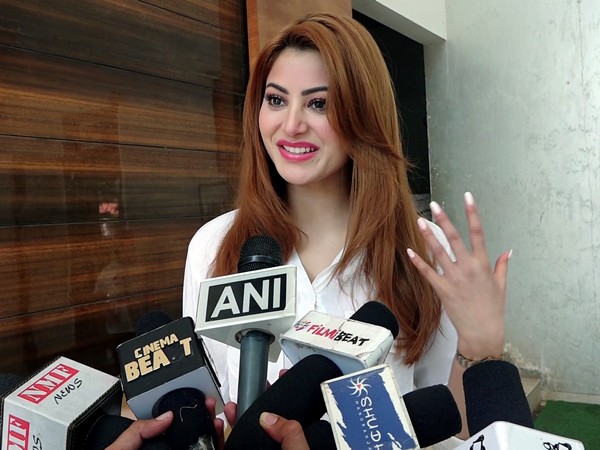
Copied Me!
The original statement referred to a Los Angeles-based AI company without naming it. The dispute, however, quickly became associated with Sheeraz Hasan, founder and CEO of Bollywood.AI and Hollywood.AI, after the controversy followed an interview involving Hasan and Rautela. Hasan subsequently responded publicly to the ₹7,000-crore claim, arguing that Rautela had misunderstood the conversation and telling her to educate herself about artificial intelligence and the future of entertainment.
That makes the chronology rather entertaining, if nothing else.
Rautela appeared in an interview connected to Bollywood.AI. She was asked about Bollywood and artificial intelligence. Her answer was interpreted by Hasan as criticism of AI’s role in Bollywood. Hasan responded. Then came the legal threat and the ₹7,000-crore figure.
And suddenly an interview about the future of artificial intelligence had acquired the financial dimensions of a very large corporate acquisition.
The important question, therefore, is not whether celebrities should have the right to object when their identities are allegedly used without permission. That question deserves serious examination. The question here is much narrower and considerably more awkward: what exactly is being claimed, how has ₹7,000 crore been arrived at, and what evidence exists to support it?
Because when a number is this enormous, the number itself becomes part of the story. And with Urvashi Rautela, there is another reason not to examine the latest headline in isolation.
Before AI, There Was Already a Pattern
The ₹7,000-crore figure would be extraordinary whoever announced it. With Rautela, however, it arrives after years in which her public appearances, interviews and social-media statements have repeatedly produced claims that were, shall we say, larger than life.
That does not automatically make the present AI allegation false. Nor does a history of unusual statements prove anything about the merits of a legal dispute. But it does provide context, particularly when the latest episode once again involves a claim of enormous scale.
The Urvashi Temple Was Quite Something
Before artificial intelligence entered the picture, there was another rather unusual Urvashi Rautela story involving something considerably older than technology: a temple.
In 2025, Rautela spoke about an Urvashi temple in Uttarakhand and described it in a way that suggested her own photographs were being worshipped there. The claim immediately attracted attention because, well, there are many things one expects to hear about a temple in Uttarakhand, and celebrity worship is not usually the first one on the list.
The controversy became larger when local religious figures disputed the interpretation. Reports pointed out that the temple was associated with Urvashi, the Hindu deity, rather than the Bollywood actress. The distinction was not exactly microscopic. Rautela’s team subsequently sought to clarify what she had meant.
There was, therefore, no need to decide whether the actress had deliberately exaggerated anything. The episode had already demonstrated the peculiar mechanics of the Rautela publicity cycle: a grand statement is made, it attracts attention, people begin checking the details, and suddenly the clarification becomes almost as newsworthy as the original claim.
And perhaps that is the important bit.
The temple episode was not about whether Urvashi Rautela has admirers. It was about how quickly a statement can travel from celebrity conversation to something that sounds considerably more extraordinary once it reaches a headline.
Which brings us rather neatly to Cannes.
Leonardo DiCaprio, the Queen of Cannes
If the temple story involved divine associations, the next one brought Hollywood royalty into the picture.
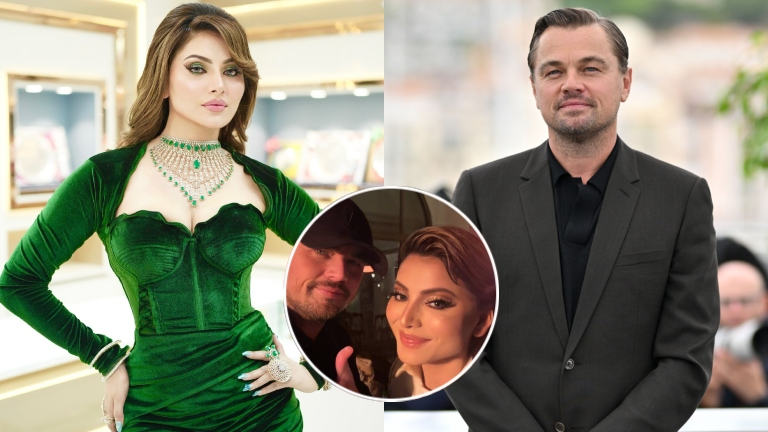
In May 2025, Rautela posted photographs of herself with Leonardo DiCaprio and claimed that the Hollywood star had called her the “Queen of Cannes.” Her caption thanked DiCaprio for what she described as a “Titanic compliment”. The photograph was subsequently reported to be a throwback from their earlier meeting, rather than evidence of some freshly minted Cannes coronation.
Now, to be fair, meeting Leonardo DiCaprio is a perfectly respectable thing to put on Instagram. There is no rule saying a celebrity has to pretend not to be delighted when standing next to one of the world’s most recognisable actors.
The slightly more ambitious part was the title.
“Queen of Cannes” is not exactly the sort of phrase one casually attributes to another person without expecting somebody to ask whether it was actually said. And that is precisely what happened. Several reports noted that the claim was met with scepticism online, particularly because Rautela had previously spoken about DiCaprio praising her during an earlier Cannes appearance.
The problem here is not that a celebrity posted a flattering anecdote. Celebrities do that every day. The problem is that, once again, the claim became considerably bigger than the photograph.
And this is where the pattern begins to become difficult to ignore.
The temple story involved an extraordinary interpretation of her connection to a religious site. The DiCaprio episode involved an extraordinary description of what one of Hollywood’s biggest stars had supposedly called her. Neither, by itself, tells us anything about the merits of the present AI dispute.
But both demonstrate something useful for understanding the latest controversy: Urvashi Rautela’s public persona has repeatedly been built around claims that invite people to look twice at the details.
By the time the ₹7,000-crore AI claim arrived, therefore, there was already a sizeable archive of Rautela-related headlines in which the first question was not simply what happened?
It was: Really?
The Parveen Babi Biopic That Came With Questions
If the Cannes episode was about an impressive Hollywood endorsement, the Parveen Babi biopic took things a step further because this time there was supposedly an entire film behind the headline.
In 2023, Urvashi Rautela said she was set to play the late actress Parveen Babi and spoke about the project as though the film was already moving forward. At Cannes, she said she was there for the photocall launch of the biopic. She later posted material about the project, including a script-related image, and declared: “Bollywood failed Parveen Babi but I will make you proud.”
There was just one small problem.
People started looking for the film.
And what they found was considerably less convincing than the announcement.
NDTV reported that the existence of the proposed biopic itself was in doubt, while Hindustan Times quoted industry sources who questioned how a film could be launched at Cannes with the supposed lead actress present but without a producer, director or other members of the filmmaking team. One source went as far as calling the claim “bogus news” and said there was no such project being discussed in the trade.
That did not necessarily prove that no film could ever be made. Projects can take strange routes through development, producers can change and announcements can precede actual production. But the episode demonstrated once again why extraordinary claims tend to have a second life after the first headline.
The question stops being what did the celebrity announce? It becomes what can actually be verified?

When One Minute Became ₹1 Crore
Urvashi Rautela has also been associated with some fairly spectacular numbers when it comes to what she is worth on screen.
In 2023, a video of Urvashi Rautela responding to a reporter’s question about allegedly charging ₹1 crore for one minute of performance went viral.
The reporter essentially presented the figure to her as a fact and asked what she had to say about being the highest-paid actress in the country. Rautela responded positively, saying that every self-made actor or actress aspires to reach such a position.
The internet, predictably, had opinions.
But there is an important wrinkle here. The ₹1-crore-per-minute figure has subsequently appeared in reporting about her remuneration, including reports that she was paid or sought around ₹3 crore for a three-minute appearance or song. In other words, the figure has not simply existed as one isolated social-media boast; it has been repeatedly attached to reports about her fees.
That makes it worth separating two things. There is a reported remuneration figure. And there is the much grander proposition that this makes someone India’s highest-paid actress on a per-minute basis.
The legal principles involved are obviously different. But the public-relations mechanics are remarkably familiar: attach a spectacular number to the story and the number itself becomes the story.
That is precisely why the latest claim deserves to be examined without either automatically accepting it or automatically laughing it away.
The question is no longer whether Urvashi Rautela can generate a headline. Clearly, she can. The question is what survives once the headline is stripped away.
The Last Bit, So, Is This Really About AI?
There is one reason the latest Urvashi Rautela controversy cannot simply be dismissed as another celebrity headline: AI really has changed the rules around celebrity identity.
Actors no longer have to worry only about someone printing their photograph on a poster or using their name to sell a product. Their faces can be altered, voices replicated, videos manipulated and digital versions created at a speed that would have seemed absurd a few years ago.
Indian celebrities including Salman Khan, Preity Zinta and Mohanlal have already raised concerns about unauthorised AI use of their names, images, voices or likenesses, while Indian courts have granted protection in cases involving celebrity personality rights.
So, legally and commercially, Rautela is not inventing a problem that does not exist.
The awkward bit is that the present dispute appears to have grown out of a much smaller disagreement about AI itself.
Rautela appeared in an interview with Sheeraz Hasan, who founded Bollywood.AI and Hollywood.AI. When asked about Bollywood and artificial intelligence, she said AI was something Bollywood was “suffering with”, while adding that Bollywood was something she loved. Hasan subsequently responded that his company had not put those words in her mouth and suggested she educate herself about AI and the future of entertainment.
That response was followed by the much bigger announcement from Team Rautela alleging unauthorised use of her identity and content and putting the damages currently being assessed at ₹7,000 crore. Hasan then publicly called the claim “ridiculous”.

And this is where the story becomes rather more complicated than Urvashi Rautela versus AI.
If her name, photographs or videos were actually being used commercially without permission, there is a legitimate dispute to resolve. If an AI company was using her likeness to create commercial value or imply an association that did not exist, she would have a substantive issue to take up.
But the size of the claim demands a different level of scrutiny.
Her team’s statement says the company’s business had allegedly generated billions of dollars in value using her name, images and videos without authorisation. Yet the public statement does not set out the calculation connecting that alleged commercial value to ₹7,000 crore. It says the damages are “currently being assessed”.
That wording is important.
It means we are not looking at a court awarding ₹7,000 crore. We are not even looking at a publicly disclosed damages calculation that allows anyone to independently reproduce the number. At this stage, it is the figure being put forward by Rautela’s side as the damages being assessed.
And that leaves the obvious question hanging in the air. Assessed on what basis?
And that is where this story moves from celebrity controversy into something much more interesting because the legal principle may be entirely serious even if the number attached to it still demands some very serious explaining.