4.82% Inflation, 9.92% Wholesale Prices And A Rupee Under Pressure What Is Really Happening To India’s Prices?
4.82% may accurately describe the average movement of consumer prices. But averages can conceal very different experiences. When pulses are jumping, cooking oil is getting dearer, wholesale prices are rising sharply and imported oil is becoming more expensive in rupee terms, the more useful question is not whether inflation is high or low. It is where the pressure is building next.

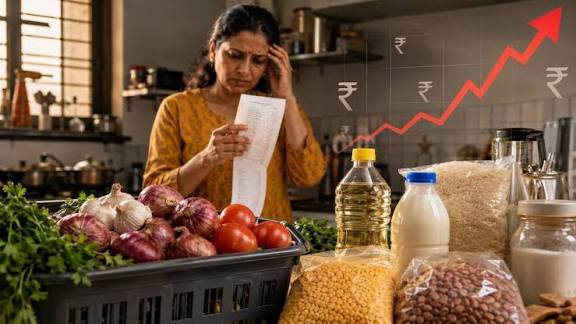
There is a number that should, at first glance, make India’s inflation story look fairly manageable. Consumer price inflation rose to 4.82% in August, up from 4.45% in July. It is hardly the sort of number that suggests prices are suddenly running out of control. But inflation has an irritating habit of looking very different depending on where you happen to be standing.
The headline CPI number is an average across a large basket of goods and services, and averages have their uses. They also have a way of smoothing out the things that hurt most when you are actually paying for them.
Food inflation in August was already higher, at 5.95%, and the rural economy faced inflation of 5.23%, compared with 4.31% in urban India. So while the headline number gives one version of the story, the household spending basket is beginning to tell another.
That difference becomes more obvious when the individual commodities are taken out of the statistical basket and looked at on their own. Pulses, onions, ginger and cooking oil are not moving in lockstep with the 4.82% headline figure. Some are rising considerably faster, driven by a mixture of supply concerns, weather conditions, global commodity markets and the approaching festive season.
And that is where the inflation story becomes more interesting. The question is no longer simply whether consumer inflation is below or above a particular threshold. It is which prices are rising, how quickly they are rising, and whether those increases are isolated food shocks or signs of broader cost pressure building elsewhere in the economy.
Start With The Grocery Basket
Take pulses first. Wholesale prices of several major pulses moved sharply in just one month, with chana rising around 11%, moong 10.6%, tur 6.5% and matar 6%. On a year-on-year basis, the increases are even more striking in some cases, with chana up about 23%, urad 24% and matar as much as 47%.
There is a fairly straightforward reason why this matters. Pulses are not an occasional purchase that can simply be postponed because the price has gone up. They sit firmly inside the everyday food basket, particularly for households already allocating a significant share of their income to food. When the price of a staple moves sharply, the effect is felt well before it becomes an interesting line in an inflation report.
The same unevenness is visible elsewhere in the food basket. Onion prices have risen sharply, while ginger has seen an even steeper increase, and cooking oil remains exposed to movements in global commodity markets. None of these prices, taken individually, tells us where Indian inflation is headed. Together, however, they show why the 4.82% headline number needs some unpacking.
There is also a timing issue. India is moving into the festive period, when demand for several food products typically increases, at precisely the point when concerns about crop conditions and supplies are beginning to influence market prices. That does not automatically mean every increase will persist.
A better harvest, additional supplies or a change in global prices can reverse some of the pressure. But for now, the direction of several essential food commodities is doing something the headline CPI number does not immediately reveal: it is putting pressure on the household before the broader inflation picture necessarily catches up.
Why Pulses Are Suddenly Under Pressure
Pulses deserve a closer look because their price movement is not simply a matter of consumers buying more ahead of the festive season. There is a supply story underneath it, and that story starts with uncertainty over the crop itself. When traders are not confident about how much produce will eventually reach the market, prices can start moving well before an actual shortage appears.
That is part of what is happening now. Chana, moong, tur and matar have all seen significant increases, but the reasons are not identical across commodities.
Domestic crop concerns are meeting changes in overseas availability, with tighter supplies from countries that matter to the international pulse trade adding another layer of pressure. In other words, the Indian market is dealing with both a domestic production question and a global supply question at the same time.
The timing makes it more complicated. The festive season brings a predictable increase in demand, and traders begin positioning themselves for that demand in advance. When expected demand rises while there is uncertainty over future supplies, prices do not necessarily wait for the shelves to empty before responding. Expectations themselves can move the wholesale market.
There is also a broader lesson here. Food prices can react much faster than the headline inflation number because agricultural commodities are particularly sensitive to relatively small changes in supply. A disruption in production, a delayed harvest, lower arrivals or tighter imports can have an immediate effect on wholesale prices, while the impact on the final consumer may take longer to show up in the official inflation data.
That is why the pulse market matters beyond the price of dal. It provides an early indication of where food-price pressure may be developing, particularly when several commodities begin moving in the same direction.
The Weather Problem
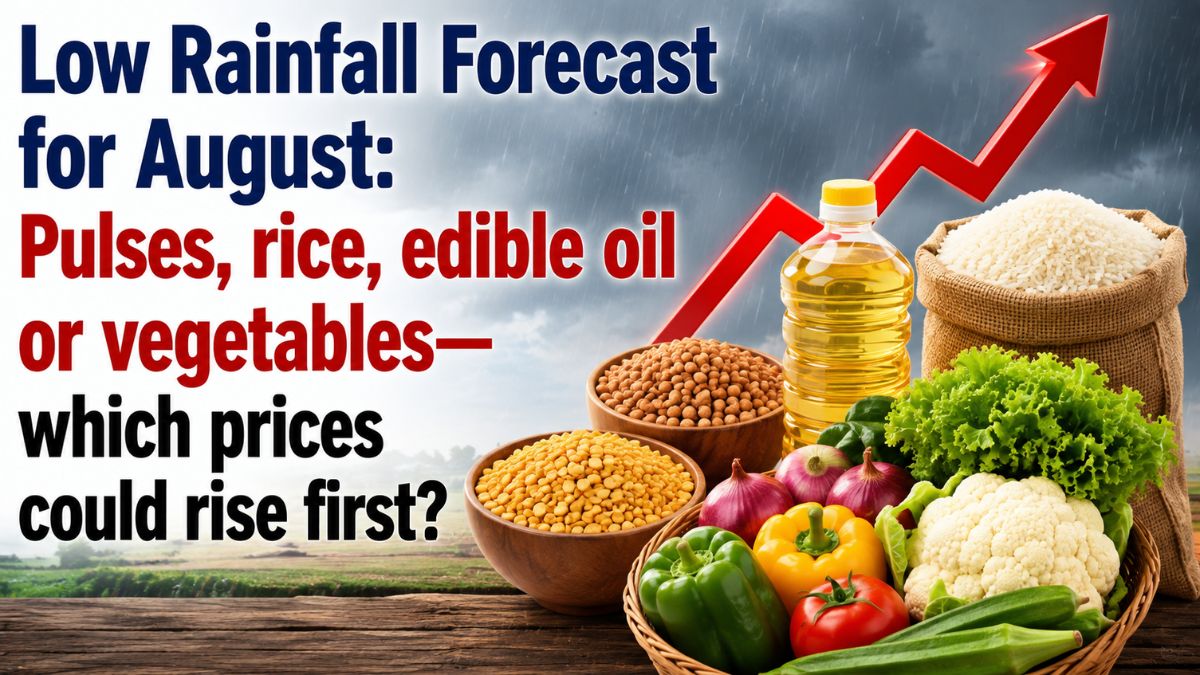
Agriculture has always been one of the less predictable parts of India’s inflation equation. A good crop can bring prices down surprisingly quickly; a weaker crop can do the opposite. What makes the current situation worth watching is that concerns over crop conditions are appearing alongside already elevated prices in several food categories.
Moisture conditions, rainfall distribution and the timing of crop development all matter because the question for the market is not merely how much farmers are expected to produce, but how much will actually make its way into the market, and when. Even where aggregate production remains adequate, uneven weather can affect individual crops and regions differently, creating price pressure in specific commodities.
)
The Number That Complicates The CPI Story
If the 4.82% CPI figure is the number consumers are looking at, the 9.92% wholesale inflation figure is the one businesses have to worry about. Wholesale Price Index inflation rose to 9.92% in August from 9.78% in July, and the increase was not confined to one corner of the economy. Food prices were rising, but so were fuel and power and manufactured products.
Fuel and power inflation was particularly striking at 22.93%, while manufactured products were up 8.37%. Food inflation at the wholesale level stood at 7.05%. Put together, those numbers describe an economy in which costs further up the supply chain are moving considerably faster than the headline consumer inflation figure would suggest.
Then Comes Oil
The next pressure point is one India has considerably less control over: crude oil.
Global oil prices have moved sharply higher amid concerns over supply disruptions in the Middle East, with Brent crude moving above $100 a barrel. At the same time, the rupee has weakened beyond ₹96 to the US dollar. For an economy that imports a substantial portion of its crude requirements, that combination matters.
Oil is not just about the price displayed at a petrol pump. It feeds into transportation, logistics, manufacturing and a range of industrial inputs. When crude becomes more expensive internationally, the impact on India is then magnified if the rupee is losing value against the dollar, because the same barrel of oil costs more in rupee terms.
And Then There Is The Rupee
The rupee crossing ₹96 to the dollar adds another complication to an already uncomfortable combination of food and energy prices.
Currency movements do not automatically translate into higher consumer prices overnight, but they matter because India pays for a large share of its imported commodities in dollars. When the dollar becomes more expensive in rupee terms, the cost of those imports rises even if the underlying commodity price has not changed.
Oil is the obvious example. If crude is already expensive in international markets and the rupee is simultaneously weaker, Indian importers are effectively dealing with pressure from both sides. That can increase the cost of fuel and transport and, further down the chain, raise the cost of moving agricultural produce, manufactured goods and other products around the country.
The currency pressure is also arriving at a time when global markets are already unsettled. Foreign investors have pulled money out of Indian markets during September, while concerns around oil supply have added to uncertainty. Neither factor, on its own, tells us where the rupee will go next. But together they explain why the currency has become another variable that policymakers and businesses have to watch.
So Is 4.82% Telling The Whole Story?
Not exactly, although it is important not to misunderstand what the number represents.
The 4.82% CPI figure is not wrong or misleading simply because individual commodities are rising faster. Consumer inflation is calculated from a weighted basket, which means some prices can increase sharply while others remain stable or fall, leaving the overall index considerably lower than the most visible price increases.
That is precisely why the composition of inflation matters as much as the headline.
If pulses rise 10% in a month but other components of the basket remain subdued, the effect on overall CPI will naturally be much smaller than 10%. Similarly, a sharp increase in wholesale fuel prices does not mean household fuel costs will immediately rise by the same proportion. There are margins, taxes, contracts, subsidies and other factors between the initial increase and the final price.
But the reverse is also true. A relatively comfortable CPI reading does not mean that every source of price pressure has disappeared.
The August numbers show a more complicated picture: consumer inflation at 4.82%, food inflation at 5.95%, wholesale inflation at 9.92%, wholesale fuel and power inflation at 22.93%, and a rupee that has moved beyond ₹96 against the dollar.
None of these numbers should be treated as proof that a broad inflation shock is inevitable. They do, however, show that there are several different sources of price pressure operating at the same time.
The Last Bit, The Inflation Number Is Only The Beginning
There is nothing inherently contradictory about India having consumer inflation of 4.82% while some food commodities are rising at double-digit rates and wholesale inflation is close to 10%. They measure different things, at different stages of the economy, and a weighted average will never perfectly describe what every household is experiencing.
But that is also precisely why the headline number should not be the end of the conversation.
For a household, inflation is not an abstract index. Right now, several of those pressures are moving at once. Food prices are climbing in important categories, wholesale inflation is considerably higher than CPI inflation, crude oil has become more expensive and the rupee has slipped beyond ₹96 to the dollar.
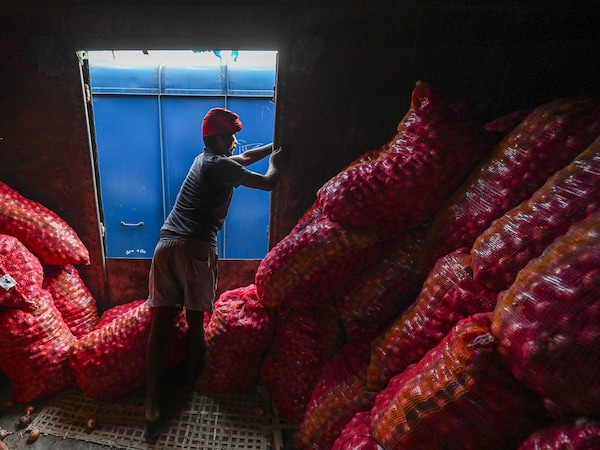
That does not mean India is necessarily heading towards a new inflation crisis. Some of these pressures may ease as supplies improve, crops arrive and global commodity markets settle. Others may persist.
And that is ultimately the more useful way to read the 4.82% number. It tells us where consumer inflation stood in August. It does not tell us where every price is going or where the next pressure on the household budget will come from.