Ankiti Bose What Happened After Zilingo? And Why The Questions Keep Multiplying
Ankiti Bose’s Zilingo story may have ended with the company’s collapse, her termination and a trail of unresolved disputes. Her own story did not. What followed was a criminal complaint, GST proceedings, court battles, Terra Invest and a growing network of corporate connections - leaving one question increasingly difficult to avoid: what happened after Zilingo, and why do the questions keep increasing?

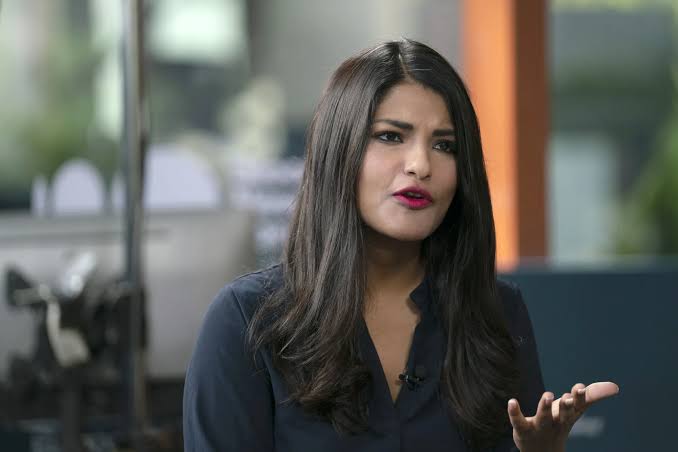
For a while, the Ankiti Bose story appeared to have a fairly obvious ending. Zilingo, the company that had taken Bose from a young entrepreneur in Singapore to one of the most recognisable faces of Southeast Asia’s startup boom, had collapsed, she had been suspended, subsequently terminated, and the company itself eventually moved into liquidation. But if Zilingo was supposed to be the end of the story, the years that followed have made it anything but.
The questions surrounding Bose did not disappear when she left Zilingo. They moved with her into a very different set of circumstances – a criminal complaint filed against her former co-founders, GST-related proceedings, a succession of defamation cases, a new investment platform and, more recently, questions about the people and businesses with whom she has been associated.
These are not all the same story, nor do they carry the same allegations or legal implications. But put them in sequence, and a larger picture begins to emerge – one that raises a fairly obvious question: what exactly happened after Zilingo, and what parts of that story are still waiting for an answer?
To understand those questions, however, it is necessary to go back to the point where the story first broke apart.
Zilingo’s rise had been spectacular. Founded by Ankiti Bose and Dhruv Kapoor, the Singapore-based fashion technology company expanded rapidly across Southeast Asia and raised substantial amounts of institutional capital, eventually reaching a valuation close to $1 billion. Bose became the public face of that success. But by early 2022, as the company sought fresh capital, scrutiny of its financial reporting and internal controls intensified. The board suspended Bose on March 31, 2022, while an independent forensic investigation by Kroll examined what the company described as serious financial irregularities.
The issues reported around the investigation were not minor accounting disagreements. Contemporary and subsequent reporting described questions around differences between management information and later reconciled figures, revenue recognition, delayed audited financial statements and more than US$7 million in payments to technology and consulting vendors over roughly two years.
Bose has consistently denied financial wrongdoing, has argued that the payments were supported by documentation and has said that her suspension deprived her of proper access to records, employees and the material necessary to defend herself.
The complete Kroll report has never been made public.
— The public record establishes that the board considered the concerns sufficiently serious to suspend its CEO and commission an independent investigation.
— It also establishes that Zilingo subsequently terminated Bose’s employment “with cause” on May 20, 2022. Reporting on the termination cited grounds including insubordination, neglect of duties, failure to produce documents, failure to present herself for questioning, breach of the employment agreement and a breakdown of trust.
But those reported grounds are not the same thing as a judicial finding that Bose committed fraud, stole company money or personally benefited from the questioned payments. No such public judicial finding has been established.
Bose, for her part, has maintained that the process against her was unfair and that she was not given adequate access to the underlying reports.
That remains part of the dispute. The problem for anyone attempting to reconstruct the episode today is that some of the most important primary documents – particularly the full Kroll and Deloitte reports – remain private. What exists publicly is therefore a combination of company statements, reporting based on people familiar with the investigations, Bose’s own responses and the subsequent litigation.
And then Zilingo itself unravelled. Bose resigned from the board in June 2022, the company failed to secure the capital it needed, assets were subsequently sold and by early 2023 Zilingo had entered liquidation-related proceedings.
That is the point at which a conventional account of the Zilingo story would probably end. But the Ankiti Bose story did not.
The next major development would come almost two years after her termination, when Bose travelled to Mumbai and filed a criminal complaint against two people with whom she had built Zilingo in the first place.
And that is where the next set of questions begins.
The 23-month question
On April 23, 2024, almost 23 months after Zilingo terminated Ankiti Bose, Mumbai Police registered an FIR against her former co-founder Dhruv Kapoor and former COO Aadi Vaidya following a complaint filed by Bose at Kasturba Marg Police Station in Borivali East.
The FIR included allegations under provisions relating to sexual harassment and stalking, alongside allegations of cheating, criminal conspiracy, criminal intimidation, mental harassment, coercion concerning her shares and concealment of company information. Kapoor and Vaidya denied the allegations, describing them as baseless, untrue and retaliatory.
The allegations themselves concerned events said to have taken place considerably earlier. The complaint reportedly referred to threatening and sexually explicit communications and alleged that a demand for sexual favours had been made in March 2021 in connection with Bose’s position as CEO.
Bose’s account also referred to other alleged intimidation and harassment stretching back to 2020 and 2021. These are allegations, not findings of a court, and the FIR itself does not establish their truth. As of the latest publicly available reporting, there has been no reported charge sheet, trial verdict or other final criminal determination on the merits of those allegations.
But the question here is not whether the allegations were serious. They plainly were. Nor is it whether a person alleging harassment has the right to approach the police after a delay. She does.
The question is about the chronology.
According to Zilingo’s account, Bose first formally brought harassment-related issues concerning earlier periods to the board on April 11, 2022 — eleven days after her suspension had already begun.
The company commissioned Deloitte to examine those complaints and subsequently said that due process had been followed. Bose and people close to her have disputed that chronology, maintaining that she had raised concerns earlier, including concerns about threatening material from fake or disappearing accounts and problems involving leadership and colleagues. That disagreement over when her concerns were first formally raised has never been resolved through a publicly available judicial finding.
Then there is the second clock.
Bose was suspended on March 31, 2022. She was terminated on May 20, 2022. She remained in Singapore after leaving Zilingo and subsequently took up new employment there. Nearly two years later, on April 23, 2024, she travelled to Mumbai and filed the criminal complaint.
Bose’s explanation, conveyed through her lawyers at the time, was that her new employment in Singapore had made it difficult for her to travel to Mumbai earlier. That explanation is part of the public record. It is also precisely where the questions begin.
—Why was the complaint filed nearly two years after her termination?
—Why was Mumbai chosen as the forum for allegations involving people and events connected to a Singapore-based company and a period in which Bose herself was living and working in Singapore?
—If the alleged conduct began in 2020 or 2021, when was each incident first reported to another person?
—What contemporaneous evidence exists – messages, emails, complaints, witnesses or other records – to establish the chronology?
—And what explains the gap between the alleged conduct and the first criminal complaint?
None of those questions, by themselves, establish that Bose’s allegations were false. Delay does not prove fabrication. Nor does the fact that the complaint followed her removal from Zilingo prove that it was retaliatory. Those conclusions would require evidence.
But the reverse is equally important: the registration of an FIR does not establish that the allegations are true either.
An FIR begins a criminal investigation; it does not decide its outcome. The public record currently contains Bose’s allegations, the categorical denials of Kapoor and Vaidya, the earlier corporate dispute and the chronology connecting the two. It does not contain a final judicial determination resolving the competing accounts.
Which leaves a question that has become central to the larger Ankiti Bose story:
What happened during those 23 months, and why did the criminal case emerge when it did?
That is a question Ankiti Bose can answer far more definitively than anyone reconstructing the story from the outside.
And it is only the first of several questions that emerge once the events following Zilingo are placed in sequence.
The Questions Did Not Stop With The FIR
The 2024 FIR might have appeared to open a new chapter in the Zilingo story, but it was not the only legal development that would eventually surround Ankiti Bose. By late 2025, another proceeding had emerged, this time involving allegations concerning GST and the financial dealings of Zilingo Global Pvt. Ltd. and others.
In November 2025, the Directorate General of GST Intelligence reportedly filed a criminal complaint before the Esplanade Court in Mumbai against Bose, Zilingo Global Pvt. Ltd. and others. The complaint invoked provisions of the Central Goods and Services Tax Act dealing with alleged issuance of invoices without the corresponding supply of goods or services, wrongful availment or utilisation of input tax credit, falsification or destruction of accounts and related corporate liability. The court took cognisance and summons were issued.
That distinction needs to be made at the outset because the language surrounding criminal tax complaints can very quickly become more definitive than the proceedings themselves. A complaint alleging GST offences is not a conviction. Cognisance is not a finding that the accused committed the alleged offences. And the invocation of Sections 132 and 137 of the CGST Act does not, by itself, establish individual criminal liability on the part of every person named in a complaint.
The publicly available reporting indicates that the matter remained at a pre-trial stage, with summons and service issues continuing into 2026. No arrest, conviction or completed trial has been publicly reported in connection with the complaint.
But the timing makes the development impossible to ignore.
The Zilingo investigation had already raised questions about financial controls and transactions during Bose’s tenure. Bose had subsequently filed a criminal complaint against former colleagues. And then, years after her departure from Zilingo, a separate government investigation resulted in a criminal complaint involving the company and Bose.
That does not mean the two matters are the same. They are not.
The first concerns allegations made by Bose against former colleagues. The second concerns allegations made by a government tax-intelligence agency involving the company with which Bose had been associated. The legal standards, allegations and evidentiary questions are entirely different.
But from the standpoint of reconstructing what happened after Zilingo, the second proceeding adds another important piece to the chronology. It also creates questions that cannot simply be folded into the old Zilingo dispute.
- What exactly does the DGGI allege happened?
- Which transactions or invoices form the basis of the complaint?
- What was Bose’s role in the transactions identified by the authorities?
- Was she personally responsible for the conduct alleged, or is her name included because of her position and corporate association?
- And, perhaps most importantly, what is Bose’s response to the underlying allegations rather than merely to the reporting about them?
Those questions matter because there is a difference between saying that an investigation or criminal complaint exists and establishing that the conduct alleged actually occurred.
There is another reason this part of the story deserves scrutiny.
By this point, the legal record around Bose had begun to move in several directions simultaneously. There was the 2024 FIR in which she was the complainant. There was the GST complaint in which she was among those named. And alongside those proceedings, Bose was increasingly using the civil courts to challenge reporting about her.
The result was that the story was no longer simply about what happened inside Zilingo. It had become a story about what happened after Zilingo – and about how Bose herself responded to the growing body of allegations, investigations and reporting surrounding her.
When The Fight Moved Into The Courts
Bose’s legal response to reporting about her did not begin in 2026. She had previously pursued defamation proceedings, including litigation before the Bombay High Court. But in 2026, the dispute took a particularly important turn when she approached the Dwarka District Court in Delhi over an Inventiva article published on May 30.
On June 8, 2026, the Dwarka court granted Bose an ex-parte ad-interim injunction.
The order directed removal of the impugned article and restrained further publication of the article or substantially similar defamatory material. The court’s reasoning, as subsequently recorded in the litigation, included the fact that Bose was the complainant rather than an accused in the 2024 criminal case and that treating unresolved allegations as established criminal liability could cause reputational harm.
That was an important judicial development, but it is equally important to understand what the order did not establish.
It did not determine the truth or falsity of every allegation that had ever been made about Bose. It did not adjudicate the underlying Zilingo financial dispute. It did not determine the merits of the 2024 FIR. And it did not amount to a finding that every piece of reporting about Bose was defamatory.
It was interim relief. That distinction becomes particularly relevant because the litigation did not end there.
The Dwarka proceedings subsequently involved disputes concerning the plaint and supporting documents, including questions about the production of the original plaint and an affidavit concerning Bose’s citizenship and nationality. A later August order dealt with objections raised by the defendants under Order VII Rule 11 and issued directions concerning the original documents and the affidavit.
What it does show is that these issues were raised before the court, that the court directed production or clarification of documents, and that separate proceedings concerning alleged false statements or documents were also initiated. Inventiva’s own later reporting records two Section 379 BNSS proceedings involving allegations of false statements in relation to the litigation. Those proceedings, however, remain allegations unless and until a court makes the relevant finding.
Then came another development.
On August 24, 2026, Bose instituted a separate suit before the Delhi High Court concerning subsequent publications. The High Court’s proceedings dealt with articles published after the original May 30 article and granted further interim restrictions concerning dissemination of specified publications on social media, along with restrictions concerning subsequent publications of a specified kind.
At first glance, that may appear to be a straightforward continuation of the earlier litigation.
But the chronology raises a question.
The original Dwarka proceedings were still alive. The court was still dealing with compliance issues arising from its earlier directions. The later Delhi High Court proceeding concerned subsequent publications and therefore may have involved a different cause of action or different relief. In other words, the existence of two proceedings does not by itself establish that one was improperly substituted for the other.
But it does leave something worth asking.
- Why was a fresh proceeding in the Delhi High Court considered necessary while the earlier Dwarka proceedings were still pending?
- Was the new suit intended to address genuinely subsequent publications?
- Was the relief sought materially different?
- What was the status of the original Dwarka case when the High Court proceeding was filed?
- And did Bose explain the relationship between the two proceedings to both courts?
Those are procedural questions, not accusations.
They matter because the legal story around Bose is now becoming almost as important as the original corporate story. The first court granted interim protection. The same litigation subsequently generated disputes about documents and compliance. A second proceeding was then instituted in the High Court concerning later publications.
The courts will ultimately decide the legal issues before them.
But for anyone attempting to understand the larger chronology, one question is difficult to avoid: Why has the story of Ankiti Bose increasingly moved from the boardroom to the courtroom – and what exactly is she asking the courts to protect her from?
That question becomes even more relevant when the substance of the reporting is considered.
Because Bose is not merely fighting over one article. The material being disputed touches the Zilingo investigation, the 2024 FIR, the GST proceedings, her subsequent business activities and the relationships that have come under scrutiny since she left the company she once built.
And that brings us to the next question in the sequence: what happened to Ankiti Bose professionally after Zilingo, and how did Terra Invest enter the picture?
The Reinvention After Zilingo
The most obvious question after the collapse of Zilingo is also the simplest one: what did Ankiti Bose do next?
The answer, at least on the face of it, was reinvention.
After leaving Zilingo, Bose did not disappear from the business world. She moved into a new phase of her professional life, eventually emerging through Terra Invest, an investment platform that positioned her once again within the world of finance, technology and private capital. The transition is significant not because there is anything inherently unusual about a former founder starting another business, but because the circumstances surrounding it were very different from those in which Bose had built Zilingo.
At Zilingo, Bose had been the founder of a highly valued technology company that had raised significant institutional capital and expanded across multiple markets. Terra represented something fundamentally different. It was not another marketplace attempting to build the next regional unicorn. It was an investment vehicle through which Bose could operate on the other side of the capital table.
That raises an obvious question about the source and structure of the transition.
How does a founder whose previous company had collapsed and whose departure had been accompanied by an internal investigation move relatively quickly into a new investment business?
The question is not whether she was legally entitled to do so. She was. Nor does the existence of Terra Invest establish anything improper about the business or its capital. The question is simply one of transparency.
- What was the original capitalisation of Terra Invest?
- Who provided the capital?
- What was Bose’s own financial contribution?
- Who were the investors, partners or counterparties?
- What were the first transactions undertaken by the platform?
- And how did Bose’s professional and financial position evolve between her departure from Zilingo and the creation of Terra?
- Those questions become more relevant because the public record surrounding Bose’s post-Zilingo activities has not been limited to Terra itself.
Her name subsequently appeared alongside a number of companies and individuals whose own business histories had attracted attention. Some of those associations are documented corporate relationships. Others are matters raised in reporting. And some have subsequently been linked, through separate reporting, to much larger investigations.
The distinction between those categories matters.
A person doing business with another person does not automatically become responsible for everything that person has ever done. A company receiving money from another company does not automatically establish criminal complicity. And being mentioned in a corporate investigation is not equivalent to being accused, much less convicted, of the conduct under investigation.
But when a person’s post-Zilingo career begins to intersect with a growing number of entities and individuals already appearing in other corporate or regulatory stories, the obvious journalistic question is not whether those connections prove wrongdoing.
It is: What exactly were those relationships? And that is where the next chapter begins.
Because one of the more consequential threads to emerge in the reporting around Bose concerns the wider corporate network around Terra Invest and, in particular, the names of Krishan Rattan and people associated with the EbixCash ecosystem.
The Corporate Connections
The names that began appearing around Ankiti Bose after Zilingo were not all connected to one another in the same way. Some relationships were direct. Some were corporate. Some involved transactions or business associations. And some emerged because the same individuals or companies appeared in entirely separate investigations.
That makes this part of the story particularly vulnerable to being oversimplified.
The relevant question is therefore not whether Bose knew a particular person, whether a company had done business with another company, or whether two names appeared in the same set of documents. Those facts, by themselves, can establish a connection but not the nature or significance of that connection.
The more useful question is what the connection actually was. One name that becomes relevant here is Krishan Rattan.
Rattan’s professional association with Bose has been reported in the context of their subsequent business activities, and his name appears in the wider corporate trail that has become part of the recent reporting. The precise nature of the relationship, however, matters considerably. Was it an investment relationship? A business partnership? A professional association? Did the relationship involve specific companies or transactions? And what role did each person actually play?
Those questions become particularly important when the corporate trail reaches EbixCash and individuals associated with it.
Previous reporting has examined a transaction involving Zilingo and an EbixCash-related entity and subsequently looked at the people connected with that ecosystem. The existence of a transaction or corporate association is a matter that can be documented. What cannot simply be inferred from it is criminal intent or participation in an unrelated criminal operation.
That distinction becomes critical because the reporting subsequently moved towards the Mahadev betting-app investigation.
The Enforcement Directorate’s investigation into the Mahadev betting network has involved a large number of individuals and entities, and reporting has examined business connections involving people whose names have also appeared in the corporate history around Bose and Rattan. But that is precisely where the language has to become more – not less – careful.
A corporate link is not evidence of participation in the Mahadev operation. A professional association is not evidence of criminal involvement. And a transaction between companies does not, without further evidence, establish knowledge of what other parties may have been doing elsewhere.
The question, therefore, is not whether the available material allows us to make a dramatic leap from one connection to another. It does not. The question is whether the connections themselves deserve clarification.
- If Bose or Rattan had business dealings with individuals later investigated in another matter, what exactly were those dealings?
- What services were provided?
- What money changed hands?
- What companies were involved?
- What was the commercial purpose?
- And what due diligence, if any, was conducted before entering those relationships?
- These are ordinary questions in any serious examination of a business network. They become more important when the people involved subsequently find themselves appearing in regulatory, civil or criminal proceedings for entirely different reasons.
There is another question that follows from this.
How much of the post-Zilingo business story has been publicly explained by Bose herself?
The distinction is important. Bose has responded forcefully to reporting that she considers defamatory, and she has taken legal action against some publications. But challenging a publication is not necessarily the same thing as answering every factual question contained within it.
For example, if a transaction is documented, the useful question is not whether the article describing it should have been published. It is what the transaction was for.
If a corporate relationship is documented, the question is not whether the existence of that relationship looks suspicious. It is what the relationship actually involved.
And if an individual later becomes the subject of a major investigation, the question is not whether everyone who ever crossed paths with that individual is implicated. It is whether there was any relevant business relationship, what its purpose was and whether Bose disputes the underlying facts.
That brings us to perhaps the most sensitive part of the story.
The Mahadev Connection.
The name of Ankiti Bose has entered reporting around the Mahadev betting-app investigation not because the available public record establishes that she participated in the betting operation, but because of a series of corporate and professional connections involving people and companies that have appeared in the wider investigation.
That distinction is not a technicality. It is the difference between a question worth investigating and an allegation presented as fact.
The Mahadev investigation itself concerns an extensive alleged online betting network and has involved investigations by the Enforcement Directorate and other agencies into a number of individuals, companies and financial transactions. Over time, reporting around the investigation has also examined the corporate histories and business relationships of people connected to companies that intersected with other businesses.
It is within that broader corporate trail that the names of Bose and Krishan Rattan have attracted attention.
One element that has been examined is the relationship between Zilingo and the EbixCash ecosystem, including a payment or transaction involving an EbixCash-related entity. Other reporting has subsequently examined individuals associated with that ecosystem and their links to people involved in the Mahadev investigation.
But this is precisely where a responsible account has to stop short of making a leap.
So the question for Bose is narrower, but also more useful.
What exactly was her relationship with the individuals and companies whose names have subsequently appeared in connection with the Mahadev investigation?
If the answer is no, that is a question she can answer directly.
Looking back at the period from the collapse of Zilingo to the present, what does Ankiti Bose believe the public record has got wrong about her – and what is the one part of her story that she believes has never been properly heard?
And given how far the story has travelled since Zilingo, there is perhaps no better time to ask.