Is Vantara Involved in Cross-Border Animal Smuggling?
Why the Bangladesh Lemur Trail, the Brazil Investigation and the CITES Record Demand a Fresh, Independent and Supreme Court-Monitored Examination

There is a point at which “rescue” stops being an adequate answer to a provenance question.
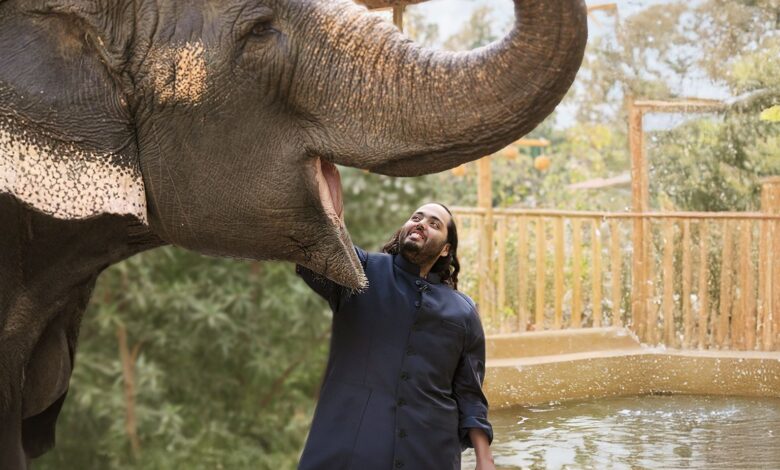
Vantara presents itself as a wildlife rescue, rehabilitation and conservation institution. Its own website says it houses more than 150,000 animals representing more than 2,000 species across a facility spanning more than 3,500 acres. It now says it is strengthening governance, transparency and due diligence and moving toward in-situ conservation.
That is an extraordinary scale.
And extraordinary scale demands extraordinary traceability.
The question therefore is not whether Vantara possesses impressive veterinary infrastructure. The Supreme Court’s 2025 Special Investigation Team found its facilities and animal-care standards satisfactory, while CITES separately described its facilities as operating to exceptionally high standards.
The harder question is one that no amount of sophisticated veterinary equipment can answer:
Where did every animal come from, who transferred it, what did the upstream chain look like, what documentation existed before it reached India, and can that chain withstand independent verification?
That question has acquired new urgency because the Vantara controversy is no longer confined to old media allegations. It now sits at the intersection of a transnational wildlife-trafficking case in Bangladesh, a live Brazilian wildlife-trafficking investigation involving an individual Vantara acknowledges was connected indirectly through a contractor, earlier CITES concerns about source codes and due diligence, and a judicial record that itself says India needed to strengthen its future import-control architecture.
The responsible conclusion is not that Vantara has been proved to be a smuggling enterprise. It has not.
The responsible conclusion is more uncomfortable:
There are now enough unresolved cross-border provenance questions that the public should not be asked to settle them through press statements, photographs, denials or social-media battles. They should be settled through evidence.
And that is why a narrowly defined, independent, court-monitored examination of new, unexamined or post-SIT events deserves serious consideration.
The Bangladesh lemurs: the allegation is serious, but the evidence must be finished
The most immediate trigger is the case of three ring-tailed lemurs stolen from Bangladesh’s Gazipur Safari Park on 23 March 2025.
Bangladesh’s Criminal Investigation Department says two of the stolen lemurs were trafficked into India. Eight people were arrested in the Bangladeshi investigation, and seven reportedly gave confessional statements before a court. One of the three animals was later recovered in Dhaka and returned to the safari park, but subsequently died.
The reported trafficking chain contains a disturbing commercial element.
Bangladesh reporting says a trader allegedly bought the three lemurs for Tk 7 lakh and resold them for Tk 9 lakh, while two men identified as “Babul” and “Shiplu” were allegedly involved in taking two lemurs into India. The same reporting says investigators had learned that the animals crossed into India but had not established their identities or final location.
Then came the Vantara connection.
Reports in Bangladesh and India claimed the two animals ultimately reached an institution associated with Vantara in Gujarat and cited an alleged transaction of around ₹48 lakh.
But here the journalism has to become much more disciplined than the headline.
Bangladesh CID itself subsequently said it had not confirmed that the lemurs at Vantara were the same animals stolen from Gazipur Safari Park. The agency said it would require scientific verification, including DNA analysis, and acknowledged that it had not yet traced the animals after their arrival in India. A preserved sample from the recovered lemur has reportedly been sent for DNA testing, while Bangladesh CID has also sought customs information about importers.
That changes the legal and evidentiary position dramatically.
There are three different propositions here:
First: two stolen lemurs were trafficked from Bangladesh into India.
That is a reported finding of Bangladesh CID.
Second: those two lemurs are the same two ring-tailed lemurs currently associated with Vantara.
That remains unproven on the evidence publicly available.
Third: Vantara knowingly participated in the theft or cross-border smuggling of those animals.
That is even further from being established.
Anyone collapsing those three propositions into one fact is doing something an investigative journalist should never do: converting a lead into a verdict.
But there is an equally serious danger on the other side.
The absence of proof today is not a reason to stop investigating tomorrow.
It is the reason to investigate properly.
The question Vantara cannot answer with a press statement
Vantara has denied involvement in the theft and said that none of the individuals named in the Bangladeshi case is associated with the organisation. It says its two ring-tailed lemurs were legally acquired, that relevant records have been submitted, and that it welcomes independent DNA testing by competent authorities in India and Bangladesh.
That response deserves to be recorded.
But it does not end the matter.
Nor should it.
A corporate denial is not forensic evidence. An investigative report is not forensic evidence. A photograph is not forensic evidence. A suspect’s statement is not automatically proof of everything the suspect says.
The decisive evidence should be brutally simple:
When were Vantara’s two ring-tailed lemurs acquired?
From whom?
From which institution or individual?
Under whose ownership?
With which permit?
With which veterinary records?
With which transport documents?
With which customs declaration?
With which CITES documentation, where applicable?
Who transported them?
Who paid whom?
And can all of those records be independently verified against the source-side records in Bangladesh and the Indian-side records in customs, wildlife, quarantine and CITES systems?
That is not harassment.
That is provenance.
And in international wildlife trade, provenance is the whole game.
A missing chain of custody is not a minor clerical defect
The Bangladesh case has exposed the weakest point in the entire public argument: the chain between theft and final possession is incomplete.
Investigators need to reconstruct it step by step.
From Gazipur Safari Park to the first intermediary.
From the intermediary to the alleged purchaser.
From the purchaser to the alleged Indian carriers.
From the Bangladesh border to the Indian border.
From the Indian border to the first location.
From that location to any intermediary.
And finally, from that intermediary to the facility where the animals are now housed.
Every stage should produce evidence.
Phone calls.
WhatsApp messages.
Call-detail records.
Location data where lawfully obtained.
Travel records.
Vehicle records.
Border logs.
Customs records.
Airline or road transport records.
Bank transactions.
Cash withdrawals.
Invoices.
Veterinary records.
Animal photographs.
Individual identification records.
Microchip records.
DNA.
CCTV.
And the original chain-of-custody documentation.
There is nothing sophisticated about this methodology.
It is basic transnational investigation.
What would be unacceptable is for the chain to remain broken because everybody assumes somebody else checked it.
The extraordinary scale of Vantara makes provenance more, not less, important
The magnitude of Vantara’s animal collection is itself relevant—not as proof of illegality, but as a reason for uncompromising documentation.
A joint investigation by Süddeutsche Zeitung and Armando Info reported that at least 39,000 wild animals from 32 countries and 53 exporters had been delivered to Vantara by the end of December 2024 based on international trade databases. Later reporting by the same investigation team put the figure above 45,000, including more than 1,000 big cats.
The Supreme Court’s September 2025 SIT summary recorded 29,274 animals imported by GZRRC and 6,034 imported by RKTEWT from inception, a combined figure of 35,308 imported animals.
CITES later recorded that, as of 11 September 2025, GZRRC had 41,839 animals and RKTEWT had another 5,794, for a combined 47,633 animals across those two entities.
These figures are not directly interchangeable: they refer to different dates, facilities, datasets and methodologies.
But they make one thing obvious.
At this scale, a vague “rescued animal” label is nowhere near enough.
There should be a provenance file for every CITES-listed or otherwise regulated animal.
Not eventually.
Not when a controversy erupts.
At acquisition.
The CITES record is the elephant in the room
This is where the controversy becomes much more substantive.
In September 2025, a CITES Secretariat verification mission examined India’s system for handling wildlife imports, including the operations of GZRRC and RKTEWT.
The resulting CITES material did not establish that Vantara was importing animals without permits. In fact, the Supreme Court later emphasised that the CITES Secretariat itself recorded that there was no evidence of animals being imported into India without the requisite CITES export permits, re-export certificates and, when required, import permits; it also recorded no evidence of commercial activities linked to sale of animals or their offspring by GZRRC or RKTEWT.
That point must be stated clearly.
But so must the other half of the CITES assessment.
The Secretariat identified significant due-diligence weaknesses.
Its review dealt with 2,132 Appendix I specimens imported by GZRRC, of which 2,049 were recorded under source code “C”, meaning “bred in captivity”. The Secretariat questioned whether some animals actually satisfied the stringent CITES captive-bred requirements and urged stronger verification of source and purpose codes.
CITES also highlighted transfers involving non-range or high-risk source countries, including animals whose declared origins created obvious questions requiring greater scrutiny.
That matters because there is an enormous difference between:
“The permit exists.”
and
“The underlying history of the animal has been independently verified.”
A permit can establish what an authority authorised.
It does not, by itself, magically reconstruct the entire biological history of an animal.
That is why CITES urged India to strengthen risk-based due diligence.
The Cameroon chimpanzee episode is particularly uncomfortable
One of the most serious examples involved eight chimpanzees allegedly linked to Cameroon.
According to reporting on the CITES review, the export permits were later found to be forgeries. Indian authorities had initially issued import permissions but cancelled them after a GZRRC internal inquiry raised red flags.
The significance is not that the animals entered India.
They did not.
The significance is that the episode demonstrated something much more important:
A destination country’s import-control system can be presented with documents that look legitimate until someone checks harder.
That is precisely why the CITES Secretariat called for stronger upstream verification.
The problem therefore is not simply “Did India have paperwork?”
It is:
Did India verify the truth behind the paperwork to a standard proportionate to the risk?
That is a completely different question.
Snow leopards, Mexico cheetahs, Togo turtles: a pattern of administrative questions
The CITES review did not rest on one isolated example.
In the case of two snow leopards re-exported from Germany, the German Management Authority reportedly used a commercial-purpose code because it was not satisfied that the zoological-purpose criteria had been met. The Indian Management Authority nevertheless issued the import permit under a zoological-purpose code, relying on a donation letter without first resolving the discrepancy with Germany. CITES cited this as an example of insufficient cross-party verification.
There was also a highly visible database discrepancy concerning cheetahs from Mexico.
The CITES Trade Database recorded 14 cheetahs exported from Mexico to India, while another record showed 24 imported by India, whereas the Indian authority had reportedly cleared 12. India subsequently told CITES that the transfer never actually took place. CITES said such discrepancies do not necessarily prove non-compliance, but recommended that the countries reconcile the records and that actual trade—not merely permits issued—be properly captured in annual reporting.
Then there was the Togo route involving 100 radiated tortoises, a CITES Appendix I species, along with 40 iguanas. Germany told the CITES Secretariat that the animals had earlier been exported from a German commercial breeder to a zoo in Lomé under a trade-purpose code before the re-export to India under a zoological-purpose code.
Again, this does not prove criminal conduct by Vantara.
But it does expose why international source verification cannot be treated as a paperwork formality.
The DRC chimpanzees raise an even deeper provenance question
Nine chimpanzees from the Democratic Republic of Congo were sent to India in February 2025.
The DRC CITES export permit listed source code C, meaning captive-bred, and purpose code Z, meaning zoo. Investigators and wildlife experts questioned how chimpanzees at Kinshasa Zoo could satisfy the stringent captive-bred definition, with conservation investigators arguing that no great-ape breeding programme capable of producing such animals existed there.
The allegations became even more serious because CITES’s later review found deficiencies in the supporting documentation for the “captive-bred” designation and highlighted the need for greater due diligence.
This is exactly where journalism must resist both extremes.
To say “the chimpanzees were definitely wild-caught and illegally trafficked to Vantara” goes beyond the evidence publicly established.
To say “they had CITES papers, therefore nothing further needs to be asked” is equally simplistic.
The real question is whether the source designation could withstand independent documentary and biological scrutiny.
That question is not anti-Vantara.
It is pro-evidence.
And now comes Brazil
The Brazil development makes the story substantially harder to dismiss as merely recycled reporting from 2025.
In May 2026, Brazilian Federal Police seized mobile phones and a computer from bird expert Tony Silva at São Paulo’s Guarulhos Airport as part of an investigation into international trafficking of golden lion tamarins and other endangered Brazilian fauna. Mongabay reported that an anonymous source familiar with the case alleged that Silva was suspected of coordinating purchases for Vantara.
That allegation must be handled carefully.
The Brazilian Federal Police statement itself did not publicly identify Vantara as a target in the material reviewed.
And Vantara strongly denied any connection to the acquisition of illegally traded animals.
But Vantara did confirm a relationship of sorts.
Its response, reproduced in reporting, said Silva was not an employee, but had been engaged by an independent contractor for limited consultancy concerning enclosure curation, husbandry and nutrition. Vantara said he did not speak for, act for or represent it.
That does not establish smuggling.
It does, however, establish a fact relevant to due diligence:
the individual at the centre of an active Brazilian trafficking investigation was, according to Vantara’s own account, connected to the institution indirectly through an independent contractor.
That is precisely the sort of relationship an independent investigation can clarify.
What was his actual mandate?
Who engaged him?
Who paid him?
What communications did he have with Vantara personnel?
Did the contractor report to anyone at Vantara?
Did anyone at Vantara know about his Brazil travel?
Did he discuss Brazilian animals with anybody connected to the institution?
Did he ever procure, negotiate, recommend or identify specimens?
Did any animals discussed in Brazil ever reach India?
Did no such animals reach India?
These questions have straightforward documentary answers.
Let investigators obtain them.
Tony Silva’s history makes verification more—not less—important
Mongabay reported that Silva was convicted in the United States in 1996 of international wildlife trafficking and sentenced to nearly seven years in prison, with a $100,000 fine. That is a historical conviction involving Silva—not Vantara.
It would be wrong to use that conviction as proof that every subsequent activity of Silva was illegal.
But it would be equally wrong to pretend such a history is irrelevant when authorities are investigating allegations involving highly protected species.
In any serious compliance system, risk profile affects the depth of due diligence.
The point is not guilt by association.
The point is that sophisticated organisations are expected to know who their intermediaries, contractors, consultants, brokers and suppliers are—and what those intermediaries are actually doing.
The Supreme Court has already investigated Vantara. That is precisely why a new probe must be narrowly designed
There is a major legal reality that cannot be ignored.
On 15 September 2025, the Supreme Court accepted the report of a court-constituted SIT which had examined allegations covering animal acquisition, smuggling, money laundering, welfare, conservation, trade and related issues. The Court recorded the SIT’s conclusion that it found no violation of the Wildlife (Protection) Act, zoo rules, customs law, foreign-trade law, FEMA, PMLA, the Bharatiya Nyaya Sanhita or CITES. The Court closed the complaints considered by the SIT.
The Court went further.
On 9 March 2026, it refused a fresh petition seeking another investigation based on the CITES material.
And on 27 May 2026, the Supreme Court made the position even clearer: transfers examined by the SIT up to September 2025 could not simply be reopened and re-litigated. The Court referred to a “bar of finality” in respect of those matters.
Therefore, anyone demanding that the Court simply reopen the same historic transfers yet again is ignoring the judicial record.
But there is a crucial second half to that same 27 May order.
The Court itself said the CITES Secretariat had made forward-looking recommendations concerning stronger due diligence, scrutiny of source and purpose codes, captive-breeding verification and the organisational adequacy of India’s CITES Management Authority and the Wildlife Crime Control Bureau.
The Court then directed the Indian CITES Management Authority to establish a direct channel with the CITES Secretariat, formulate an SOP for CITES Appendix I live specimens, and—until that SOP was finalised—seek, receive and act upon CITES guidance concerning proposed private imports of Appendix I species.
That is not a trivial judicial footnote.
It is an admission that the regulatory architecture required strengthening.
So the case for a fresh inquiry must be framed intelligently:
not as a demand to endlessly reopen matters the Supreme Court has conclusively closed, but as a demand for an independent examination of new evidence, new incidents, and any cross-border cases that were not actually examined by the earlier SIT.
That distinction is legally and journalistically essential.
The Bangladesh lemur case is precisely the kind of question that should be tested against that standard
The Bangladesh lemur theft occurred in March 2025.
The public Supreme Court orders now available do not expressly identify the Bangladesh lemur episode among the case-specific transfers discussed in the May 2026 order. The full SIT record is not a publicly searchable document in the same way as the Supreme Court’s orders.
That creates a simple question:
Was this specific Bangladesh-to-India chain actually examined by the SIT?
If yes, produce the relevant part of the record and explain what was found.
If no, then it should not be rhetorically buried beneath the phrase “the matter has already been investigated.”
That phrase is too broad.
A court-constituted investigation is not a magic spell that turns every future allegation into an old allegation.
The five orangutans in Odisha make the timing even more uncomfortable
In September 2026, five baby orangutans—animals native to Borneo and Sumatra and not naturally occurring in India’s wild—were found in a forest in Balasore, Odisha.
Indian authorities began investigating suspected international wildlife trafficking. The Odisha Special Task Force and Wildlife Crime Control Bureau were reported to be examining how the animals reached India, while Indonesian authorities engaged with India over their return.
This case should not be falsely presented as a Vantara case.
There is no evidence in the sources reviewed establishing that these five orangutans were destined for Vantara.
That is precisely the point.
They should be investigated separately.
But their emergence at this moment highlights the broader problem India is facing: how exactly do highly protected foreign wildlife specimens move into the country, through which corridors, through which intermediaries, and into whose hands?
That is a national enforcement question.
And a country that possesses a huge private concentration of exotic wildlife should logically be one of the institutions around which provenance systems are tested most rigorously—not least rigorously.
The most uncomfortable contradiction is not that Vantara has permits
The strongest available evidence does not show a simple story of “no permits.”
Quite the opposite.
The Supreme Court record says imports were backed by permits and multiple approvals.
CITES likewise did not conclude that Vantara was importing animals without CITES documents.
The uncomfortable issue is subtler.
The international system can contain valid-looking permits and still require better scrutiny of source, purpose and underlying provenance.
That is exactly what the CITES review said.
It warned of the danger of animals sourced from the wild being subsequently represented as captive-bred and said India’s due diligence needed strengthening so that the high volume of acquisitions did not inadvertently become a driver of illegal harvesting.
That is an institutional warning.
Ignoring it because an organisation has valid documents would miss the point of the warning.
The Czech invoices create another unresolved governance question
CITES was told by the Czech Management Authority that it had no doubt that animals sent to GZRRC had been sold, rather than exported as rescues.
Vantara’s position, as reported by Süddeutsche Zeitung, was that documents described as invoices were pro forma or customs documents and did not represent commercial animal sales.
Again, the correct response is not “therefore Vantara lied.”
Nor is it “therefore the invoices mean nothing.”
The obvious investigative response is:
Obtain the original invoice. Obtain the underlying contract. Obtain payment records. Obtain the exporter ledger. Obtain the customs declaration. Obtain the zoo’s acquisition register. Compare every number.
Then publish the reconciliation.
How difficult should that be?
In an age of forensic accounting, digital records and international regulatory cooperation, a provenance dispute should not be settled by competing adjectives.
Show the documents.
Vantara’s 2026 reset is welcome—but a reset is not a substitute for verification
In August 2026, Vantara announced a major shift.
It said it would withdraw pending live-animal import applications, make no new import applications under the announced policy, consult the CITES Management Authority before any future application, and would not import great apes, big cats or endangered wildlife species. It also committed to six-monthly progress reports, inspections and deeper engagement with conservation stakeholders.
In September 2026, it announced a new independent Governing Council chaired by former CITES Secretary-General John E. Scanlon, with authority over future animal acquisition decisions and oversight of its commitments.
These are significant governance measures.
They should be welcomed as governance measures.
But they answer a future question.
They do not automatically answer a provenance question about an animal acquired yesterday.
And they certainly cannot retroactively convert an unresolved chain of custody into a documented one.
Indeed, the need for such governance reform makes the underlying question more—not less—important:
What exactly prompted the institution to strengthen its due diligence architecture so substantially?
The public should be able to see the answer in documents, not marketing language.
What an independent probe should actually investigate
A serious committee should not become another theatre of headlines.
It should be forensic.
First, it should independently reconcile the complete animal inventory and acquisition history of GZRRC and RKTEWT, particularly for CITES-listed species.
Second, it should conduct a specimen-by-specimen review of CITES Appendix I animals, tracing source codes, purpose codes, origin countries, re-export countries and supporting breeding records.
Third, it should independently verify high-risk transfers with the original exporting countries, not merely the intermediary country.
Fourth, it should examine the Bangladesh lemur case through DNA, customs, border, financial and communications evidence.
Fifth, it should seek the underlying evidence in the Brazilian Federal Police investigation, subject to Brazilian law and the requirements of that investigation.
Sixth, it should identify every intermediary, independent contractor, consultant, broker or supplier through whom Vantara has sourced animals internationally.
Seventh, it should reconcile disputed invoices, donations, pro forma invoices, customs declarations and ownership-transfer records.
Eighth, it should examine whether the CITES source code “C” was correctly used in all high-risk Appendix I cases.
Ninth, it should create a mandatory individual animal identification protocol using microchips, photographs, veterinary records and, where proportionate, DNA.
Tenth, it should examine whether India’s customs, quarantine, wildlife and CITES databases can cross-check one another in real time.
And finally, it should publish a public, redacted findings matrix stating:
Animal — Species — Source Country — Exporter — Re-exporter — Permit — Source Code — Purpose Code — Date — Importer — Ultimate Custodian — Provenance Verified/Not Verified — Investigation Status.
That single database would probably do more for public confidence than a hundred press conferences.
Who should sit on the committee?
A genuinely independent mechanism should not be dominated by the same authorities whose decisions it is examining.
A possible model would be a committee under the supervision of the Supreme Court, chaired by a retired Supreme Court judge, with members drawn from:
a senior wildlife-crime investigator with no current operational connection to the parties;
an independent CITES specialist;
a wildlife geneticist;
a forensic accountant;
a customs/import-compliance expert;
a digital-forensics investigator;
and an internationally recognised zoological or conservation expert.
The committee should be empowered to obtain records from CBI, DRI, Customs, WCCB, CITES Management Authority, Central Zoo Authority, state forest departments, foreign Management Authorities and relevant foreign enforcement agencies, subject to statutory powers and international legal processes.
This would not mean declaring Vantara guilty.
Quite the opposite.
It would create a mechanism capable of establishing that the allegations are wrong where the evidence shows they are wrong.
That is what due process looks like.
And yes, the investigation should be time-bound
Wildlife trafficking is uniquely vulnerable to evidence decay.
Messages disappear.
Phones are replaced.
Animals die.
People relocate.
Vehicles are scrapped.
Memory deteriorates.
Financial records become harder to reconstruct.
And biological evidence cannot be treated casually.
In the Bangladesh case alone, the death of the recovered lemur makes the preservation and testing of biological material particularly important.
Therefore, the appropriate demand is not another inquiry that sits in a cupboard for five years.
It should be:
90 days for evidence collection.
180 days for the principal forensic report.
Immediate Letters Rogatory wherever foreign evidence is required.
Immediate Interpol coordination where legally justified.
Immediate preservation orders for electronic, veterinary, customs and financial records.
And wherever a criminal offence is established:
prompt filing of the charge-sheet, followed by a fast, properly managed trial.
Justice delayed in wildlife crime is not merely administrative delay.
By the time the system reaches the end, the animal, the paper trail and sometimes the witness may already be gone.
Enforcement agencies need to stop treating wildlife trafficking as a decorative crime
India spends enormous resources policing narcotics, financial offences, organised crime and customs fraud.
The international wildlife trade also operates through organised networks, forged documents, intermediaries, shell entities, cross-border movement and financial transactions.
CITES has explicitly warned about the possibility that inadequate due diligence can allow illegally harvested wildlife to enter international trade under apparently legitimate documentation.
So the enforcement response cannot remain trapped in the old model:
seize animal → arrest small carrier → photograph seizure → press release → case forgotten.
The investigators need to work upward.
Who commissioned the animal?
Who paid?
Who transported?
Who issued the document?
Who approved the import?
Who acted as intermediary?
Who received the animal?
Who benefited?
And what else did the network move?
That is how organised crime is investigated.
Wildlife criminals should not receive a special discount simply because their contraband happens to breathe.
The real issue is not Vantara’s size. It is Vantara’s standard of proof
There is an enormous irony in this controversy.
Vantara says it wants to build a new model for wildlife conservation.
Fine.
Then it should also become a new model for wildlife provenance.
Imagine a system in which every regulated animal has a digital provenance passport:
birth or lawful capture record → parentage where available → source institution → ownership history → permits → transport → border crossing → veterinary examination → receiving facility → present location.
No gaps.
No unexplained intermediary.
No “trust us.”
No mystery importer.
No invoice ambiguity.
No database mismatch.
No unsupported captive-bred designation.
No animal without an identity.
That is the standard a genuinely world-class conservation institution should welcome.
And if the documentary record clears Vantara, it clears Vantara.
If the record establishes that an intermediary deceived Vantara, that should also be disclosed.
If an Indian authority failed to perform required diligence, that should be exposed.
If a foreign authority issued defective or false documentation, that should be documented.
If a criminal network exists, it should be prosecuted.
There is no downside to the truth except for people who fear it.
So, is Vantara involved in cross-border animal smuggling?
On the evidence currently available, the answer cannot responsibly be stated as an established fact.
The Bangladesh case establishes a serious international trafficking investigation, but Bangladesh CID itself says it has not yet scientifically established that the stolen lemurs are the same animals currently associated with Vantara.
The Brazil case is an ongoing foreign investigation involving Tony Silva, whom Vantara acknowledges had an indirect consultancy connection through a contractor, while Vantara denies any connection to illegal acquisition. No source reviewed here establishes that Vantara itself is a target of the Brazilian criminal investigation.
The DRC chimpanzee, Cameroon permit, snow-leopard, Mexico cheetah and Togo transfer controversies produced substantial questions about provenance, source codes, purpose codes and due diligence, but the Supreme Court has held that the historic transfers examined by the SIT are closed and should not simply be reopened.
At the same time, the CITES process and the Supreme Court’s 27 May 2026 order both demonstrate that India’s future regulatory and due-diligence framework required strengthening.
That leads to the only responsible investigative conclusion:
There is not enough publicly verified evidence to declare Vantara guilty of cross-border animal smuggling.
There is, however, enough unresolved material to justify an independent examination of any new incidents, any genuinely unexamined transfers, and the effectiveness of the provenance and due-diligence controls surrounding international wildlife entering India.
The question should not be suppressed.
It should be answered.
And it should be answered with DNA, customs records, CITES files, bank records, phones, permits, contracts, border records and sworn evidence—not with outrage, advertising, intimidation, political theatre or social-media warfare.
The public deserves a simple answer—and the animals deserve a better system
For too long, the argument around Vantara has been trapped between two caricatures.
On one side:
“It is a great rescue centre, therefore every allegation is malicious.”
On the other:
“It has many exotic animals, therefore it must be trafficking.”
Both are intellectually lazy.
A conservation institution can do remarkable animal-care work and still be subjected to legitimate scrutiny about provenance.
An allegation can be serious and still be unproved.
A regulator can issue a valid permit and still need stronger upstream verification.
A court can close one set of allegations and the state can still be required to improve the system for the future.
Those propositions are not contradictory.
They are the foundations of serious journalism.
OUR DEMAND: INVESTIGATE—INDEPENDENTLY, QUICKLY AND PUBLICLY
The appropriate demand now is not a reckless declaration of guilt.
It is something far more powerful:
Let the evidence speak.
A narrowly framed, genuinely independent and Supreme Court-monitored mechanism should determine whether the Bangladesh lemur episode, the Brazil investigation and any other new cross-border wildlife-trafficking leads have been independently verified.
The investigation should be time-bound, forensic, internationally coordinated and transparent in its methodology.
Where evidence shows no wrongdoing, the finding should say so plainly.
Where evidence establishes regulatory failure, the responsible authority should answer for it.
Where evidence establishes criminal conduct, the case should be registered and prosecuted without delay.
Where agencies have failed to act, they should be required to explain why.
And where wildlife was moved across borders on doubtful provenance, the entire chain should be exposed—not merely the last person holding the cage.
Because the real scandal would not be discovering that an allegation was false.
The real scandal would be allowing an allegation this serious to remain permanently unanswered simply because answering it requires opening every file, every permit, every phone, every payment trail and every cross-border record.
Vantara says it stands for rescue, conservation, transparency and a new era of wildlife care.
Then there is only one intellectually honest response:
Open the records. Verify the animals. Reconstruct the chain. Follow the money. Test the DNA. Check the permits. Call the foreign authorities. And let the evidence deliver the verdict.
Nothing less should be acceptable from an institution operating at this scale.
And nothing less should be acceptable from the enforcement machinery of a country that claims to take wildlife crime seriously.
Strong Legal & Editorial Disclaimer
Disclaimer: This is an investigative opinion and analysis piece based on publicly available court orders, CITES materials, official statements and media investigations available up to 25 September 2026. Allegations and investigative leads concerning Vantara, its associates, contractors, suppliers or any other person remain allegations unless established by competent evidence and, where applicable, by a court of law. The material reviewed for this article does not establish that Vantara, Anant Ambani, Mukesh Ambani, or any Vantara official has been convicted by a court of law for animal smuggling or wildlife trafficking. The Supreme Court of India accepted the 2025 SIT’s conclusions that the matters it examined did not disclose violations of the cited laws, and in 2026 held that those previously examined transfers could not simply be reopened.
Vantara’s denials and its stated willingness to cooperate with DNA testing and lawful investigations have been incorporated wherever relevant. Any allegation concerning the Bangladesh lemurs should be treated as unresolved until the identity of the animals and the complete chain of custody are established by independent documentary, forensic and scientific evidence.
Editorial demand: Investigations into suspected transnational wildlife trafficking should be conducted with greater speed and coordination, including timely use of Interpol mechanisms, Letters Rogatory, customs and financial intelligence, digital forensics, DNA analysis and cooperation with foreign wildlife authorities. Where criminal evidence is established, prosecutions and trials should proceed on a time-bound basis, while preserving the rights of every accused and the integrity of the evidence.