Is Vantara Involved in International Animal Smuggling?
Why India Needs a Fresh Supreme Court–Monitored Probe — Not Another 18-Day Victory Lap

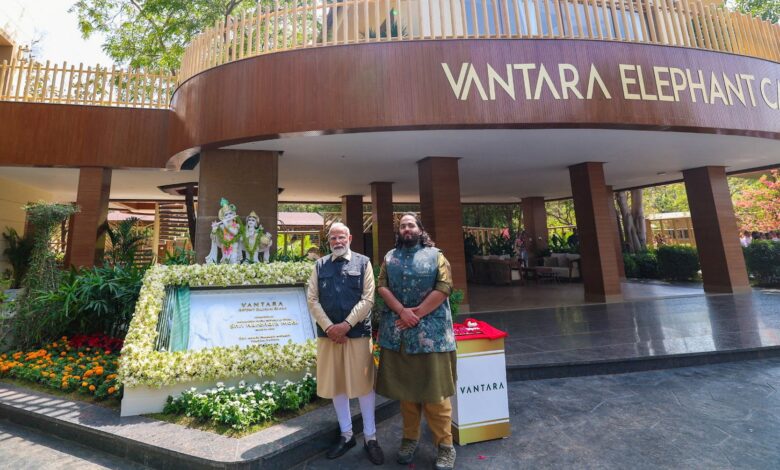
A private compound beside an oil refinery does not become a conservation cathedral because a press release says so. It does not become clean because a sealed-cover team worked for less than three weeks. And it does not become above question because the owner’s surname can fill a banquet hall.
Vantara — the Jamnagar complex of Greens Zoological Rescue and Rehabilitation Centre (GZRRC) and the Radhe Krishna Temple Elephant Welfare Trust (RKTEWT), promoted by Reliance Foundation and publicly identified with Anant Ambani — has spent two years answering every awkward origin question with the same three cards: rescue, permits, clean chit. Those cards are now worn thin. What remains on the table is not a courtroom conviction. It is something more embarrassing for a facility that markets itself as the world’s largest rehab centre: a pile of open foreign investigations, mismatched headcounts, a CITES due-diligence slap that had to be politically walked back, and a public-relations reflex that treats scrutiny as lese-majeste.
No Indian court has convicted Vantara, Anant Ambani, Mukesh Ambani, or Reliance of wildlife smuggling. Say that first, before the applause machine pretends the sentence was the other way around. The absence of a conviction is not the same thing as the presence of a closed file.
The numbers will not sit still. That alone should worry a serious country.
A serious rescue centre can tell you, on a dated spreadsheet, how many animals it holds. Vantara has offered the public a moving target.
- GZRRC’s own 2023–24 annual report, the last one easily visible on the Central Zoo Authority trail, put the rescue centre at 10,360 animals of 345 species as of March 2024.
- Süddeutsche Zeitung and Armando.info, working from trade databases in March 2025, estimated at least 39,000 wild animals delivered from 30-plus countries, a large share of them in 2024.
- The Supreme Court–appointed SIT, in September 2025, treated 40,633 animals as the acquisition universe it examined: 29,274 at GZRRC and 6,034 at RKTEWT by import, plus domestic stock, including 275 elephants (5 + 270).
- A CITES compliance document cited in later reporting put GZRRC at 41,839 and RKTEWT at 5,794 as of 11 September 2025 — about 47,633 on paper.
- Vantara’s own publicity and later media repeats have claimed more than 150,000 animals across 2,000-plus species.
- CZA inventory figures cited in 2026 reporting put GZRRC at 34,370 for 2024–25, then go dark: the 2025–26 inventory, according to that same reporting, lists no data at all for the centre.
When a closed-to-the-public private zoo can be 10,000 in an official annual report, 39,000 in a German-Venezuelan investigation, 40,633 in a court-supervised summary, 47,000 in a CITES paper, and 150,000 on its own billboard, the public is not looking at “communication lag.” It is looking at a facility that has not been forced to publish a living, animal-by-animal inventory with source codes, dates, exporters and microchip IDs. A pawn shop that cannot count its watches does not get to call itself a museum.
CITES Appendix I source codes reported for animals at the facility have included captive-bred (C), seized/confiscated (I), commercially captive-bred Appendix I (D), born in captivity (F) and wild-caught (W). Those letters are not décor. They are the difference between a second-generation captive animal and an orphan pulled from a village after its mother was shot. If India cannot show the public which letter attaches to which body, “rescue” is a slogan.
The 18-day clean chit was a verdict on a file, not on the planet.
On 25 August 2025 the Supreme Court constituted an SIT under former Justice Jasti Chelameswar, with former High Court Chief Justice Raghavendra Chauhan, former Mumbai Police Commissioner Hemant Nagrale and IRS officer Anish Gupta. The report went in by 12 September. On 15 September, Justices Pankaj Mithal and Prasanna B. Varale accepted it and closed the listed complaints.
The SIT said the then-pending allegations of smuggling, mistreatment, carbon-credit abuse and money laundering were unfounded. It said imports were backed by permits. It said volume is not crime if the Central Zoo Authority certified carrying capacity — including an approval figure reported at 75,000 for GZRRC. It said welfare met or exceeded benchmarks.
That is the official Indian position on that bundle of complaints. Treat it with the respect a court order is owed. Then ask the question the order cannot forbid: what, exactly, did an 18-day exercise pierce?
It reviewed volumes of paper Vantara handed over. It inspected the site. It recorded that Indian and foreign authorities expressed satisfaction. It did not, on the public summary, sit through a Bangladesh CID trial. It did not wait for Brazilian forensic extraction from phones seized in May 2026 — because that seizure had not happened yet. It did not take sworn evidence from Lwiro sanctuary staff in South Kivu. It did not publish a searchable annex of every CITES source code C permit for great apes. And when later petitioners tried to reopen the matter on the CITES Secretariat document, the Court, in March 2026 reporting, pointed to the Secretariat’s finding of no evidence of undocumented imports or primarily commercial use — while the same document still asked hard questions about origin, Article VII captive-bred rules, and India’s due diligence.
A clean chit that expires at the edge of the next foreign police file is not a halo. It is a timestamp.
CITES did not “bless the mystique.” It flagged sloppy origin checks — then the room changed its mind.
After a September 2025 mission to India, the CITES Secretariat told the Standing Committee that it had not found animals arriving without export/re-export papers or, for Appendix I, import permits. It also had not found proof of primarily commercial use. Those sentences are now tattooed on every Vantara statement.
The next sentences are less useful at a ribbon-cutting. The Secretariat said several imports still raised questions about origin and about captive-bred exceptions. It said India’s Management Authority had not done adequate due diligence on some permits. Reporting on that document included the ugly specific: India issuing import permits on the basis of forged Cameroon export papers for eight chimpanzees. The Secretariat recommended that India stop issuing further import permits until it tightened checks and reported back.
In Samarkand in November 2025, that recommendation was reversed. India, the United States, Japan and Brazil were among those calling it premature. No trade ban followed.
Read that sequence without incense. An international technical body visits, finds paperwork, still does not like the origin story, asks India to pause. Diplomatic majorities then decide a pause is too rude. That is not the same event as “the United Nations certified every animal’s grandmother.” It is the sound of geopolitics sitting on a compliance file.
Brazil, May 2026: the “independent contractor” who somehow keeps walking into the frame.
On 1 May 2026, Brazil’s Federal Police seized three phones and a computer from a US citizen at Guarulhos Airport in a probe into trafficking of golden lion tamarins and other endangered Brazilian fauna. The official note did not print a name.
Mongabay, republished by The Wire, reported that sources — including a person from the Avicon organising team — identified the passenger as Tony Silva, the Cuban-born aviculturist convicted in the United States in 1996 after Operation Renegade. He was sentenced to nearly seven years and fined $100,000 for conspiring to smuggle endangered birds; he confessed to trafficking more than 185 hyacinth macaws and other rare South American birds between 1985 and 1994. That conviction is a matter of US record. It is not a rumour.
Silva is not, on the published police statement, a convicted party in the 2026 Brazilian case. He had not answered Mongabay by publication. The investigation was ongoing; forensic results were not public.
What Vantara said is the part that deserves a long, cold look. A spokesperson told Mongabay the centre has “no connection with the buying of illegal animals.” Silva “is not, and has never been, an employee.” Vantara “understands” he was engaged by an independent contractor for limited consultancy on enclosures, husbandry and nutrition. He does not speak for Vantara. The organisation had “no knowledge” of his Brazil travel and assigned no contractor to any Brazil matter. Linking his “personal affairs” to Vantara would be “factually incorrect and legally untenable.”
Note the architecture. Not employee. Contractor’s consultant. No knowledge of the trip. The same man had been described at a 2025 Thailand aviculture conference as “leading conservation” at the zoo; a fellow specialist associated him with Vantara on Instagram; in March 2026 he shared a conference planned at Vantara. An unnamed NGO investigator told Mongabay the link was real.
Nobody needs to pretend those social crumbs are a charge sheet. They are enough to make the contractor veil look like what it is: a legal shock absorber. If a facility of this wealth can park a twice-famous bird man one subcontract away from its letterhead, then “he does not represent us” is not due diligence. It is choreography.
The Suriname 2023 and Togo 2024 seizures of tamarins and Lear’s macaws sit in the same Mongabay story with an honest qualifier: it was not clear Silva was in those cases. Keep the qualifier. Keep the question too. Brazil is extracting phones in a golden-lion-tamarin case while a consultant-shaped figure with a 1990s macaw conviction was in-country filming Lear’s macaw habitat. If that does not meet the threshold for an Indian investigating agency to pick up a phone, the threshold is a piece of theatre.
Bangladesh, 2025–26: “traced to Vantara” sold faster than DNA.
Three ring-tailed lemurs — Madagascar animals, IUCN critically endangered, CITES Appendix I — were stolen from Gazipur Safari Park on 23 March 2025. They were not wild-caught that year. They had entered Bangladesh in 2018 through Dhaka airport under a false customs declaration and been parked at the safari park. One offspring had already died in 2022. Of the three stolen, one was found in April 2025 in an abandoned cage in Dhaka and later died. Two, CID says, were trafficked into India.
On 9 September 2026, Siasat ran the headline the market wanted: stolen lemurs “traced to Vantara,” accused sale around Rs 4.8 million. The method, even in that article, was social-media photographs and “similarities.” The same text admitted Gazipur never microchipped or DNA-profiled the animals in more than five years. Investigating officer Sunil Das spoke of a security guard, a border crossing at Darshana, confessions. He did not, in the quoted words, close the identity.
Two days later, The Business Standard put CID Special Superintendent Chufi Ullah on the record: interrogations showed trafficking to India; “we have not yet been able to determine where the animals were taken afterwards.” Dhaka sought Interpol help. There were no unique IDs to send.
The Independent, on 15 September 2026, used may, quoted CID’s limit, and printed Vantara’s denial: the lemurs in the reports were not illegally acquired from Bangladesh; trafficked Bangladeshi animals are not in its care; provenance records exist; DNA comparison is welcome.
Inventiva’s later essay was blunt in the only direction journalism is allowed to be blunt: a theft in Gazipur is not a conviction in Jamnagar. Photo resemblance is not a match. A suspect’s story about “an institution associated with Vantara” is not a wire transfer.
All true. Also true: a facility that boasts world-class veterinary science should not need a newspaper to explain what a DNA test is. If the two ring-tailed lemurs in Gujarat were acquired before 23 March 2025, publish the date, the seller and the photographs. If after, publish the intermediary. The longer that file stays in “we have records” without the records, the more the contractor speech from the Silva affair starts to sound like a house style.
Congo, 2025: source code C is not a character reference.
Daniel Stiles’s July 2025 reconstruction, building on Ofir Drori and EAGLE, is the hardest paper in this entire mess because it is not a viral photo. It is letters, a permit and a sanctuary that said no.
In January 2025, Kinshasa Zoo’s director arrived at Lwiro Primate Rehabilitation Centre with an ICCN letter to collect 12 chimpanzees. Lwiro — about 130 chimpanzee survivors of poaching — refused. South Kivu civil society called it a threat to the animals and to partners who fund real rehab. ICCN then announced a five-year zoo renovation and said specimens would come from sanctuaries and parks.
On 13 February 2025, nine chimpanzees were exported toward India on a permit listing purpose Z (zoo) and source C (captive-bred). Drori’s line, on the record in that reporting, is not subtle: there are no great-ape breeding facilities in Africa; the Kinshasa animals were not a second-generation captive population. Stiles published ICCN papers from 27 December 2024 authorising collection of eight chimps found in villages around Buta. Trade data named commercial exporter Maison NBK Services. Vantara’s lawyers told Drori there was a welfare MoU with ICCN and “no trade association.” ICCN and the zoo denied selling animals.
India’s SIT later treated Vantara imports as permit-legal. CITES later still worried about captive-bred designations. Both can be printed in the same paragraph. The public is entitled to be disgusted by the idea that a letterhead can turn a village orphan into “C” and a private jet into “rescue.” If that disgust is inconvenient for a 3,500-acre brand, the brand picked the wrong century.
Odisha’s five baby orangutans are not a Vantara exhibit. They are the weather system.
In September 2026, five infant orangutans — animals that do not occur in India — were found near a highway in Balasore. Indonesia asked for them back. Experts described a multimillion-dollar exotic-pet market (one 2026 estimate: about $42.6 million in 2024) and routes through Myanmar. That case has not been shown, in the reporting reviewed here, to end at Jamnagar.
It is still relevant, and not as a smear. It is the demand curve. When a country develops a luxury appetite for rare primates, every large, rich, secretive holding facility becomes part of the gravitational field — whether or not a particular infant went through its gate. A state that will not map that field is not protecting animals. It is protecting comfort.
The domestic pipeline nobody wants to call a pipeline.
Himal Southasian’s 2024 investigation, later recycled in Caravan’s archive note, described Vantara drawing not only from foreign dealers but from state zoos in Gujarat and Assam, including exotics those zoos had received after seizures; from forest departments, especially in Maharashtra, moving conflict and mining-displaced wildlife; and from conservation NGOs whose vets and keepers were hired away. The site sits next to one of the world’s largest oil refineries. Caravan’s April 2025 Project Cheetah reporting placed a Vantara veterinary team at Kuno after early deaths in 2023 and recorded talk — denied or unanswered by officialdom — of private management creeping toward Banni.
None of that is a customs seizure. It is a picture of the Indian state behaving like a feeder. Seized animals are supposed to be evidence and, where possible, candidates for range-state return. They are not supposed to become interior décor for a private ark. If the transfers were lawful, the files can be posted. If they were “lawful” only because the law was bent until it smiled, that is why the next probe cannot be staffed by the same comfort.
What “independent” would have to mean this time
The last SIT was independent in the sense that retired judges signed it. It was not independent in the sense that the country can now see every permit, every source code, every payment trail and every DNA result. A second exercise that only re-reads Vantara’s binders will be a sequel, not an investigation.
A Supreme Court–monitored committee worth the name would need, at minimum:
- A public, animal-level inventory of GZRRC and RKTEWT — species, sex, ID/microchip, date of arrival, exporter, CITES source and purpose codes, previous holder — with a sworn explanation of the 10,360 / 39,000 / 40,633 / 47,633 / 150,000 discrepancy.
- Letters rogatory or mutual legal assistance to Brazil for the Guarulhos forensic image, and a sworn map of every contract, subcontract, invoice and email touching Tony Silva or the “independent contractor” who supposedly hired him.
- Formal cooperation with Bangladesh CID and Interpol on the Gazipur lemurs: dates of Vantara’s two ring-tailed lemurs’ arrival, seller identity, and a supervised DNA comparison with the Dhaka reference sample.
- A reconstruction of the February 2025 DRC chimpanzee export: ICCN letters, NBK’s role, the C-code justification, and whether any great-ape breeding facility that could legally support that code exists.
- A full list of animals received from Indian state zoos and forest departments after seizure or conflict capture, with the legal basis for not attempting repatriation.
- A forensic audit of payments to foreign suppliers — including South African predator facilities and Gulf re-exporters named in specialist reporting — to test the “non-commercial rescue” story against actual money.
- A deadline measured in weeks for first status reports, and in months for charges or closure — not another open-ended immersion in sealed cover.
Enforcement agencies that cannot move at the speed of a private jet should stop pretending they are in the same business as the people they decline to inconvenience.
The taunt, since one was requested
If this is the most transparent rescue centre on earth, transparency should not require a German newspaper, a Venezuelan outlet, a Kenyan investigator, a Bangladeshi CID officer and a Brazilian airport cop to do India’s counting. If every animal is a waif plucked from misery, the waifs should have names, chips and mothers of record — not “similarities” on Instagram. If the last court-supervised team settled the matter, the matter should not keep arriving in new languages.
A compound that cannot publish a stable headcount wants the prestige of Noah and the privacy of a bonded warehouse. India does not have to grant both.
The question in the headline is not a verdict. It is the question that remains when the permits have been waved and the animals still do not have a public biography. Is Vantara involved in cross-border animal smuggling? No court has said yes. A stack of open files, a contractor-shaped consultant, a C-code on village chimps, a lemur case that “traced” itself in a headline and untraced itself in a police quote, and a CITES staff warning that origin checks were not good enough — that stack says the last inquiry was too fast, too paper-bound and too final for a living trade.
Appoint a new committee. Give it teeth, foreign process and a clock. Then publish what it finds. Anything less is not conservation. It is hospitality for a suspicion.
Disclaimer
This is an investigative opinion based on published journalism, official statements and public court reporting available as of 25 September 2026. Allegations remain allegations until proved in a competent court. No court of law has convicted Vantara, Greens Zoological Rescue and Rehabilitation Centre, the Radhe Krishna Temple Elephant Welfare Trust, Reliance Foundation, Reliance Industries, Anant Ambani or Mukesh Ambani of wildlife smuggling, trafficking or money laundering. The September 2025 Supreme Court–appointed SIT found no contravention of the laws it examined in the complaints then before it; the Supreme Court accepted that report and closed those listed complaints. Tony Silva’s 1996 United States conviction is a matter of US record and is not a conviction in the 2026 Brazilian investigation, which had not produced a public judgment in the material reviewed here. Bangladesh CID has stated that two stolen lemurs were trafficked into India but has not, in its published clarification, confirmed that animals at Vantara are those lemurs. Vantara has denied illegal purchases, denied employment of Silva, denied acquiring trafficked Bangladeshi lemurs, and offered DNA cooperation. Readers should treat untested source claims, anonymous sourcing and headline identifications as unverified unless and until a court or a fully published forensic process says otherwise.
Editorial demand: India should constitute a fresh Supreme Court–monitored investigation with a public inventory mandate, compulsory international legal assistance, time-bound forensic reports and time-bound decisions to charge or close — and enforcement agencies should stop treating delay as a form of discretion.