Israel’s Two-Front War: The Iran Conflict, Gaza, And What It Means For The Region, Oil, And Global Markets
Israel is now fighting on two fronts - still entrenched in Gaza while opening a direct and unprecedented confrontation with Iran. What began as a war against Hamas has escalated into a regional flashpoint, pulling in Washington, rattling Gulf capitals, and sending oil markets into nervous overdrive.

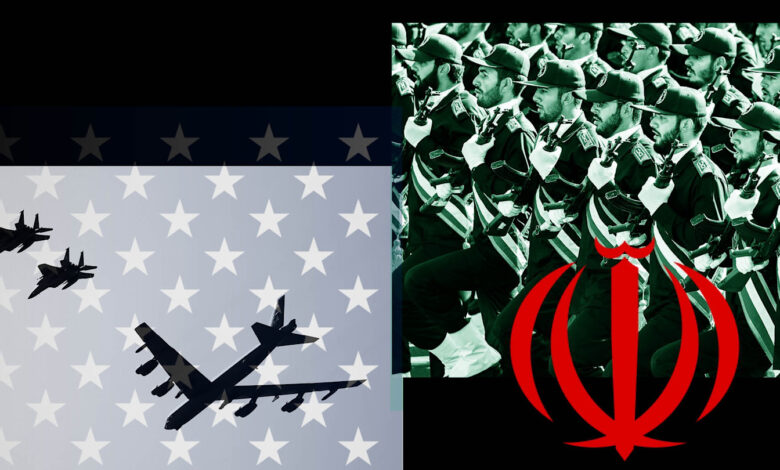
Israel is no longer fighting a contained campaign in Gaza. It is now simultaneously engaged in a direct and unprecedented military confrontation with Iran, the very state that has long armed, funded and shaped the anti-Israel axis across the region.
The United States and Israel launched joint strikes on Iran over the weekend, killing the Islamic Republic’s Supreme Leader, Ayatollah Ali Khamenei. Tehran responded with waves of missile fire across Israel and toward U.S. assets in the Gulf.
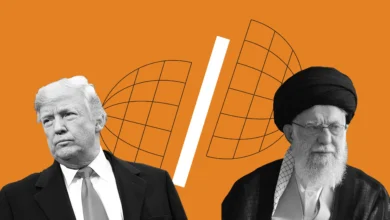
President Donald Trump framed the strikes as a mission to eliminate “imminent threats from the Iranian regime.” But this is no longer just about deterrence. It is about power, escalation, and perhaps even regime survival.
The Middle East is not only simmering but structurally shifting.
The Military Shock, How Israel Hit Iran
The scale of Israel’s assault on Iran was unlike anything seen in decades.
Over 12 days, nearly 360 strikes were carried out across 27 Iranian provinces. More than 150 distinct locations were targeted. Tehran itself bore the brunt – 17 of its 22 districts were hit. One-third of all violent events occurred in the capital province.
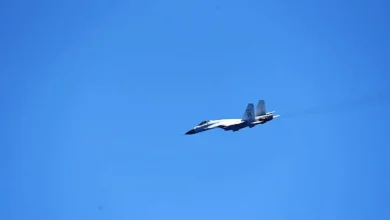
Within hours, Israel secured air dominance from Iran’s western border to Tehran. Advanced stealth aircraft were deployed early, accompanied by precise intelligence and small drones reportedly smuggled into Iran long before the war began. Radar systems and surface-to-air missile batteries were crippled. Iranian defenses struggled to respond. Not a single Israeli fighter jet was shot down.
Military targets were prioritized – over 160 strikes on military installations, police bases, missile infrastructure and command centers. Key ministries were hit, including Defense and Intelligence. More than 30 senior commanders were killed, alongside at least 11 nuclear scientists. Nuclear infrastructure, including enriched uranium processing facilities, suffered heavy damage.
Iran retaliated with ballistic missiles and drones. At least 36 direct hits were recorded inside Israel, killing 28 people and injuring thousands. Though interception rates hovered around 80–90%, some missiles penetrated. Cluster munitions were reportedly used in populated areas. For Israel, this was the most lethal sustained missile threat it has faced since the Gaza war began.

Was This Really About An Imminent Nuclear Threat?
Israel justified its campaign as a preemptive strike against an imminent Iranian nuclear threat. Iran had enriched uranium to 60%, dangerously close to weapons-grade levels. That fact alone was enough to alarm policymakers in Jerusalem.
Yet the nuclear justification is more complicated.
U.S. intelligence assessments and the International Atomic Energy Agency had reportedly concluded shortly before the outbreak of war that Iran had not made the political decision to restart its nuclear weapons program – a program it halted in 2003. Enrichment capability does not automatically equal weaponization. The key variable has always been intent.
So what was the real fear?
It may not have been an immediate bomb. It may have been the future constraint a nuclear-capable Iran would impose. A nuclear umbrella, even undeclared, would fundamentally alter Israel’s ability to operate freely in Lebanon, Syria, Iraq or beyond. It would embolden Tehran’s regional partners and complicate any future Israeli preemption.
In that sense, this war appears less about stopping a ticking clock and more about preventing strategic suffocation. Clearly, Israel did not want to wait for Iran to decide.
Why Now? The Post–October 7 Shift
To understand the timing, one must go back to October 7.
The Hamas assault on southern Israel was not merely a tactical failure; it was a psychological rupture. It exposed vulnerabilities and shattered assumptions about deterrence. In its aftermath, Israel shifted from containment to prevention – not just managing threats, but eliminating them before they matured.
The regional chessboard has changed dramatically since then.
Hamas is fighting for survival. Hezbollah, once the crown jewel of Iran’s deterrent network, has been significantly weakened. Syria, long a logistical corridor for weapons transfers, has been destabilized following the fall of Bashar al-Assad. Israeli airstrikes had already degraded Iranian air defenses months before this latest campaign.
The so-called Axis of Resistance – once a coordinated pressure architecture around Israel’s borders – is fractured and diminished. Israel appears to have assessed that Iran was exposed.
For years, plans to strike Iran existed on paper but were restrained by U.S. hesitation and fears of regional conflagration. This time, the calculation changed. Washington joined the operation. The political cost was deemed manageable. The strategic window, perhaps fleeting. Israel seized it.

Tactical Victory, Strategic Gamble?
On paper, Israel has achieved significant operational success.
Iran’s nuclear infrastructure has been heavily damaged. Missile stockpiles have been reduced. Intelligence and command structures were penetrated with alarming precision. More than 500 ballistic missiles were launched by Iran during the conflict, and roughly 1,000 were reportedly destroyed in Israeli strikes along with hundreds of launchers. The scale of degradation is not trivial.
Politically, Prime Minister Benjamin Netanyahu secured something he has sought for years: direct American participation in strikes on Iranian nuclear facilities. President Trump, initially inclined toward diplomacy, ultimately signed off on military action. For Netanyahu, that alone marks a strategic milestone.
But military success does not automatically translate into strategic closure.
Iran’s regime still stands, albeit shaken. Its nuclear program may be delayed, not dismantled. Its missile capacity is reduced, not erased. And most importantly, its asymmetric network across the region remains intact enough to retaliate.
There is also the regime psychology factor. When states feel existentially threatened, they do not always capitulate. Sometimes they escalate.
Israel may have inflicted maximum damage within a short window. Whether that damage compels deterrence – or fuels revenge – remains the unanswered question.
The Power Vacuum In Tehran
The killing of Ayatollah Ali Khamenei is not just symbolic. It is seismic.
For nearly four decades, he was the ideological and strategic anchor of the Islamic Republic. Iran has replaced a supreme leader only once – when Ayatollah Ruhollah Khomeini died in 1989. That transition was swift and controlled. This one is unfolding under fire.
A three-member leadership council has assumed temporary authority, including President Masoud Pezeshkian, judiciary chief Gholamhossein Mohseni Ejei, and senior cleric Alireza Arafi. Parliament Speaker Mohammad Bagher Ghalibaf has projected confidence, insisting the system was prepared for such a scenario.
But preparation on paper differs from stability under bombardment. Several senior military leaders were killed in the strikes, including high-ranking officials within the armed forces and the Revolutionary Guard. The regime has lost strategic continuity at the very moment it faces external assault.
The risk now is fragmentation or, paradoxically, consolidation.
If hardliners dominate the succession process, Iran may double down on confrontation. If internal divisions widen, instability could spill outward. In either case, the transition is unlikely to be smooth.
And the world is watching closely: a weakened Iran could become unpredictable, or more dependent on external backers like China.
Washington’s Calculation
While Israel led the assault operationally, American involvement changed the equation.
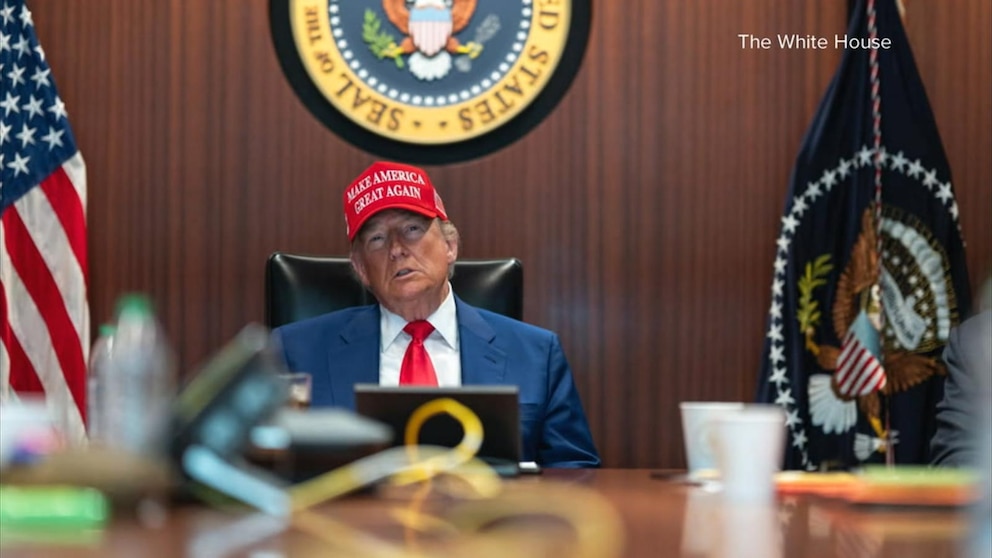
The decision to join strikes – including attacks on Iranian nuclear facilities – signals that Washington was willing to cross a line previous administrations had avoided. President Trump oversaw the opening phase of the campaign from Mar-a-Lago, turning his Florida estate into a makeshift command center.
Images released by the White House showed a casual setting, marking extraordinary decisions. No primetime address. No lengthy public articulation of endgame objectives. That absence matters.
If the goal is merely to degrade Iran’s capabilities, the campaign may end in controlled containment. But if the objective is regime change – whether through internal unrest or elite fracture – the risks multiply exponentially.
Military historian David Silbey warned that this phase of strikes appears broader than prior engagements, targeting command structures and leadership rather than solely nuclear assets. That suggests ambition beyond deterrence.
Regime change, even if unofficially stated, is not a limited objective. It reshapes the region and history shows it rarely unfolds as planned.
The Region Reacts, From Bilateral War To Gulf Instability
The conflict has already spilled beyond Israel and Iran.
Missile activity has been reported near or toward Gulf states hosting American assets — including the UAE, Qatar, Bahrain, Saudi Arabia, Kuwait and Jordan. Explosions in Gulf cities sent shockwaves through financial and diplomatic corridors alike.
Hezbollah has resumed exchanges along Israel’s northern frontier. Tehran has publicly declared it will not negotiate with Washington under attack. Years of fragile détente between Iran and parts of the Gulf may now be unraveling.
This is no longer a contained Israel–Iran confrontation. It is a stress test for the entire Gulf security architecture – one built on oil flows, U.S. guarantees and uneasy diplomatic balancing.
The more fronts open, the harder de-escalation becomes and that is where markets begin to worry.

Russia And China – Watching, Calculating, Not Intervening
For now, Moscow and Beijing are spectators but deeply interested ones.
Both Russia and China have condemned the U.S. strikes. Neither, however, appears positioned to materially intervene. Russia’s military bandwidth remains heavily consumed by Ukraine. Years of attrition and sanctions have reduced its ability to project sustained power into the Middle East.
China’s position is more complicated.
Beijing is Iran’s economic lifeline. More than 80% of Iran’s oil exports reportedly flow to China, accounting for a significant portion of Beijing’s seaborne crude imports. Iran is not just a partner — it is a discounted and sanction-circumventing energy supplier.
Yet China has avoided overt alignment. Its statements emphasize sovereignty and dialogue, not retaliation.
Why the caution?
Because China’s primary concern is stability – particularly around oil flows. A full-scale regional war that disrupts the Strait of Hormuz would hurt Beijing as much as anyone. At the same time, a weakened Iran may become more economically and technologically dependent on China over the long term.
Paradoxically, strategic chaos could deepen Chinese leverage.
Russia, too, benefits from higher oil prices. But it has little appetite for another theater of entanglement.
In short: both powers are positioning for influence in the aftermath, not escalation in the present.
Collapsed Diplomacy And The End Of The Nuclear Track
The military campaign appears to have shattered any remaining space for diplomacy.
Before the strikes, the U.S. and Iran had engaged in indirect talks over nuclear restrictions and sanctions relief. Those negotiations were fragile but alive. With the killing of Iran’s supreme leader and direct U.S. participation in attacks, that channel is effectively frozen.
When a regime feels it is fighting for survival, negotiation becomes politically toxic.
If Iran now views the conflict as existential, it may reassess its nuclear calculus altogether. Ironically, a war meant to prevent weaponization could push Tehran closer to making that very political decision in the future.
History offers caution here: when deterrence collapses into confrontation, strategic patience disappears. Diplomacy has not just stalled, it has been overtaken by events.
Oil, Markets, And The Strait That Could Shake The World
If geopolitics sets the fire, oil determines how far the smoke spreads.
Markets reacted immediately. Brent crude and West Texas Intermediate surged sharply following the strikes and retaliatory missile exchanges. Traders are not pricing in rhetoric – they are pricing in risk.
Roughly 15 million barrels of oil per day (about one-fifth of global supply) pass through the Strait of Hormuz. It is the world’s most critical energy chokepoint. Tankers managing that narrow passage carry crude from Saudi Arabia, Iraq, Kuwait, the UAE, Qatar and Iran itself.
Even temporary disruption can send shockwaves.
Iran exports approximately 1.6 million barrels per day, much of it to China. If those flows are curtailed, replacement barrels must be found quickly – often at higher prices. OPEC+ has announced incremental production increases, but spare capacity on paper does not automatically translate into smooth physical flows if maritime routes are threatened.
Markets care less about headline production numbers and more about whether ships can safely move. Insurance premiums rise. Shipping rates climb. Speculation intensifies.
And then inflation follows.
Higher crude feeds into gasoline, transportation costs, food prices and broader consumer inflation.
The most dangerous scenario is not necessarily $100 oil – it is prolonged uncertainty around supply routes. Energy markets do not like ambiguity. And right now, ambiguity dominates.

The Last Bit, A Costly Affair?
Israel may have achieved short-term military objectives. It may have significantly delayed Iran’s nuclear trajectory and degraded its missile arsenal. It has demonstrated reach, precision and resolve.
But it has also opened a second active front while Gaza remains unresolved.
Iran’s leadership transition introduces volatility at the heart of a state that has historically relied on ideological cohesion and strategic patience. U.S. involvement raises the stakes further, blurring the line between limited strike and regime-level confrontation.
Russia and China are calculating. Gulf states are hedging. Oil markets are bracing.
This is no longer a shadow conflict. It is overt, direct, and system-shaking. The central question now is not whether Israel could strike Iran. It is whether the region (and the global economy) can absorb what comes next.