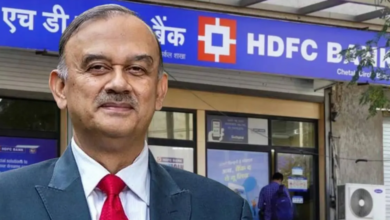
Jaggi Brothers: Army Officer’s Sons, Serial Entrepreneurs, And Now, Faces Of One Of India’s Biggest Startup Scandals – BluSmart And Gensol- Greed, Glamour, And The Great EV Scam

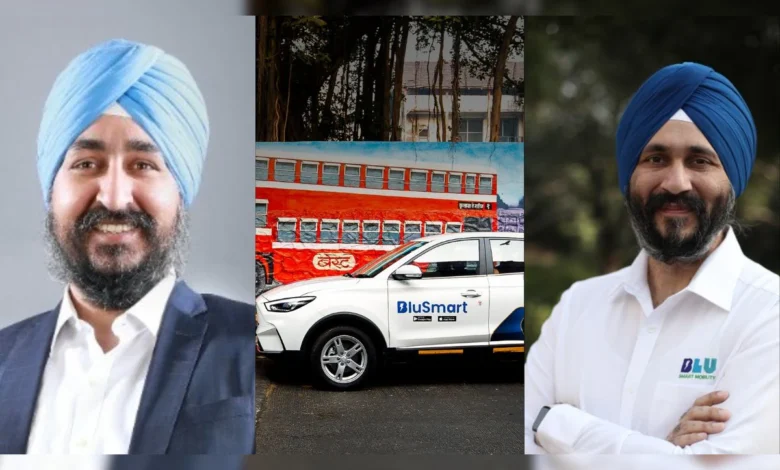
Once hailed as torchbearers of India’s clean-tech revolution, the Jaggi brothers – Anmol and Puneet Singh Jaggi – embodied the ambition and promise of the country’s booming renewable energy sector. Armed with IIT and petroleum engineering degrees, and backed by a compelling green vision, they were seen as visionaries leading the transition from fossil fuels to sustainable energy. But today, sadly, they stand at the heart of a serious regulatory storm, accused of deception, financial misconduct, and betrayal of shareholder trust.
India’s market regulator, the Securities and Exchange Board of India, has barred the Jaggi brothers from accessing the securities market. The charge sheet is damning – diversion of funds from their listed firm, Gensol Engineering, stock price manipulation, fraudulent documentation, and the alleged misuse of investor capital to fund luxury indulgences rather than green mobility projects. For a duo once celebrated on magazine covers and sustainability panels, the fall has been as swift as it is scandalous.
Following SEBI’s interim order, Gensol’s stock tumbled by 5%, continuing its harrowing downward spiral – a decline that has seen the company’s market cap nosedive from over ₹4,300 crore to a mere ₹506 crore in under a year. For thousands of retail investors, the damage has been financial, but also deeply disillusioning.
The timing couldn’t be more telling; just a week ago, Union Minister Piyush Goyal, speaking at Startup Mahakumbh 2025, cautioned Indian entrepreneurs against “unethical shortcuts” in pursuit of growth and within days, one India’s most high-profile startups is touching headlines not for innovation, but for fraud, fund diversion, and serious governance lapses.
This week has served as a brutal exposé of the rot festering beneath India’s startup glitter, a reminder that glossy pitch decks and loud PR cannot substitute sound governance and ethical leadership. The Jaggi brothers did not merely misappropriate capital; they compromised trust, played with public money, and jeopardised India’s clean-tech credibility.
Yet, it would be unfair to paint the entire startup ecosystem with the same brush, they are a few that have set examples in integrity, transparency, and accountability, proving that ethical innovation is not only possible but essential. They are the benchmarks that India’s aspiring founders should emulate, and not the example set by the Jaggi brothers.

A House of Cards Built on Public Money
The fall from grace for the Jaggi brothers, the result of deceit, misuse of public funds, and blatant disregard for corporate governance, had a starting point – A staggering ₹978 crore loan secured from two state-backed institutions (Indian Renewable Energy Development Agency, IREDA and Power Finance Corporation ,PFC) intended to finance the procurement of 6,400 electric vehicles for BluSmart’s leasing operations.
But SEBI’s investigation laid bare a gaping discrepancy – Gensol Engineering had only acquired 4,704 vehicles, leaving a ₹262 crore shortfall unaccounted for and this wasn’t a simple clerical error. The missing funds, it appears, were methodically siphoned off for personal indulgences – from luxury apartments to golf sets – turning what should have been a clean-tech mission into a lavish spending spree.
Luxury Over Purpose
One of the most damning findings was how the Jaggi brothers rerouted funds using companies they controlled. Of a ₹71.41 crore loan, ₹50 crore was funneled through Capbridge Ventures (a promoter-linked entity) out of which ₹42.94 crore was used to buy an upscale apartment in The Camellias, a high-end residential complex in Gurugram. Another ₹40 crore from a different loan was redirected to Wellray Solar Industries, also linked to the promoters.
The funds did not stop there – they were shuffled between a maze of entities including Gensol EV Lease, GoSolar Ventures, and BluSmart Mobility, making it nearly impossible to trace the money’s true destination. These were calculated moves to blur the audit trail and deceive lenders, regulators, and investors alike.
Smoke and Mirrors, The Fake Conduct Letters
In an even more brazen act, Gensol submitted fabricated “Conduct Letters” to both IREDA and PFC, claiming their loan accounts were in good standing. SEBI, upon verification, found that no such letters were issued by the agencies. This not only violated regulatory norms but constituted outright fraud, prompting rating agencies ICRA and CARE to downgrade Gensol’s credit rating to “D”—signifying high default risk and shattered credibility.
A Phantom Factory and Inflated Promises
Perhaps the most symbolic evidence of the deception came from Gensol’s much-publicized EV plant in Chakan, Pune. Touted as a cornerstone of their clean energy ambitions, the facility turned out to be more façade than factory. During an April site visit by the National Stock Exchange (NSE), only two to three laborers were found on site; with electricity bills amounting to less than ₹1.6 lakh per month, SEBI rightly inferred that little to no manufacturing activity had taken place.
This was in sharp contrast to Gensol’s January 2025 claim of receiving pre-orders for 30,000 EVs at the Bharat Mobility Global Expo. Upon deeper scrutiny, SEBI found the so-called “orders” were merely non-binding MoUs lacking any pricing or delivery terms – essentially hollow publicity stunts meant to mislead investors and inflate share value.
Strategic Tie-Ups That Vanished Into Thin Air
The pattern of exaggeration didn’t stop there. In January 2025, Gensol announced a strategic tie-up with Refex Green Mobility Ltd for transferring nearly 3,000 EVs – along with an associated ₹315 crore loan. By March, the deal had been quietly shelved.
Similarly, a February announcement of selling their US subsidiary, Scorpius Trackers Inc., for ₹350 crore raised eyebrows, especially when it turned out the firm had only been incorporated six months prior, and Gensol couldn’t justify the valuation.

SEBI’s Crackdown
In its interim order, SEBI concluded that the Jaggi brothers had indulged in “mis-utilization and diversion of funds in a fraudulent manner,” being the direct beneficiaries of the misconduct. From the ₹978 crore sanctioned between FY22 and FY24, ₹663.89 crore was meant specifically for vehicle procurement. However, after accounting for only 4,704 EVs worth ₹567.73 crore and the required equity contribution, over ₹262 crore remained glaringly unaccounted for, now suspected to have been rerouted for personal and private gain.
SEBI’s response has been swift and sharp: Anmol and Puneet Singh Jaggi are now barred from accessing the securities market or holding any leadership position in Gensol. The company has been ordered to freeze its proposed 1:10 stock split. The brothers have since resigned from their directorial roles – but not before leaving a trail of wreckage for regulators, lenders, and thousands of retail investors to pick through.
BluSmart, What’s Next for the Ride-Hailing Firm?
Once touted as a cleaner, more premium alternative to the Uber-Ola duopoly, BluSmart, the electric ride-hailing service, promoted by the Jaggi brothers, has suspended its operations, and the road ahead looks deeply uncertain.
The crisis has unfolded in tandem with SEBI’s scathing interim order against the promoters for allegedly siphoning off ₹262 crore from Gensol Engineering, BluSmart’s sister company.
BluSmart’s fleet boasted over 8,500 EVs spread across major Indian metros like Delhi-NCR, Bengaluru, and Mumbai. The company had carved a niche for itself by offering zero-surge pricing, all-electric rides, and a smoother user experience. But that reputation has taken a serious hit.
Earlier this month, BluSmart sent out an email to its users stating, “We’ve decided to temporarily close bookings on the BluSmart app.”
The message also promised that refunds for unused wallet balances would be processed within 90 days – if operations don’t resume by then. But with no clear timeline or assurances, users are left questioning whether their money, and BluSmart’s promises, will vanish into thin air.
At the centre of the chaos lies a bigger question – How did things spiral so fast for a startup that had raised substantial capital, enjoyed solid customer feedback, and appeared to be scaling efficiently?
SEBI’s interim order provides the answer – misgovernance and financial misconduct at the top.
In light of the crisis, private equity firm Eversource Capital is reportedly eyeing a rescue deal.
According to reports, Eversource has offered to acquire BluSmart at a valuation of ₹800-1,000 crore – an eye-watering 60% drop from its last known valuation of $300 million (~₹2,561 crore). The plan is to merge BluSmart with its existing EV mobility player, Lithium Urban Technologies, and infuse around $100 million into the consolidated entity.
But there’s a catch – Eversource has reportedly demanded the ouster of the Jaggi brothers from BluSmart’s board as a non-negotiable clause in the acquisition. Given their central role in the alleged financial irregularities, their continued involvement is untenable.
The downfall of BluSmart has wider ramifications. Thousands of EV drivers who relied on the platform for their livelihood are now in limbo. Several senior executives have jumped ship, and investor confidence, already dented by the Gensol scandal, is at a historic low.
This entire episode also reignites a familiar debate in India’s startup ecosystem – Where were the auditors? And what were independent directors doing while promoters allegedly siphoned off crores and misled stakeholders?
With BluSmart’s future hanging by a thread, the focus now shifts to how swiftly the rescue deal can be closed and whether new leadership can salvage what’s left of a promising green mobility vision that’s now stained by scandal.
India’s Startup Ecosystem, All Sound?
The BluSmart debacle could not have come at a worse time. As India aggressively pushes its clean energy goals and aspires to build world-class startups, scandals like these cast a long shadow. BluSmart was more than just a ride-hailing firm, it was a symbol of what the future could look like – sustainable, tech-driven, and homegrown. Its fall threatens to erode not just investor confidence in a single company, but faith in the entire clean-tech startup ecosystem.
Startups in India already face a tough road – capital is scarce, competition is brutal, and regulatory clarity often arrives too late. But what makes this crisis especially damaging is how it exposes deep systemic flaws in governance and oversight.
SEBI’s action was swift, but reactive. Where were the red flags when money was being allegedly siphoned for luxury apartments? What role did auditors, rating agencies, and independent directors really play?
For global and domestic investors looking at India’s booming startup economy, the latest Jaggi brothers’ scandal raises serious concerns about founder accountability and the efficacy of corporate governance norms in early-stage ventures. If startups want to be treated like serious businesses, they must be held to serious standards.
For policymakers, this is a moment of reckoning. Governance frameworks must evolve to match the speed and scale of India’s entrepreneurial ambitions, because if clean-tech and climate-first startups, critical to India’s net-zero goals – lose their credibility, the price will be paid not just in capital lost, but in years of trust eroded.
BluSmart may find a second life under new ownership. But for India’s startup ecosystem, this should serve as a wake-up call. Vision alone is not enough. The foundation must be transparent, ethical, and accountable, otherwise, it is just a house built on sand.