Kanye West Blocked From UK Entry, Wireless Festival Scrapped. A Headline Act Turns Into A National Flashpoint
London’s Wireless Festival has been cancelled after the United Kingdom barred Kanye West from entering the country. The decision came amid rising backlash over his past statements, prompting sponsor withdrawals and government intervention, turning a major music event into a wider public and political issue.

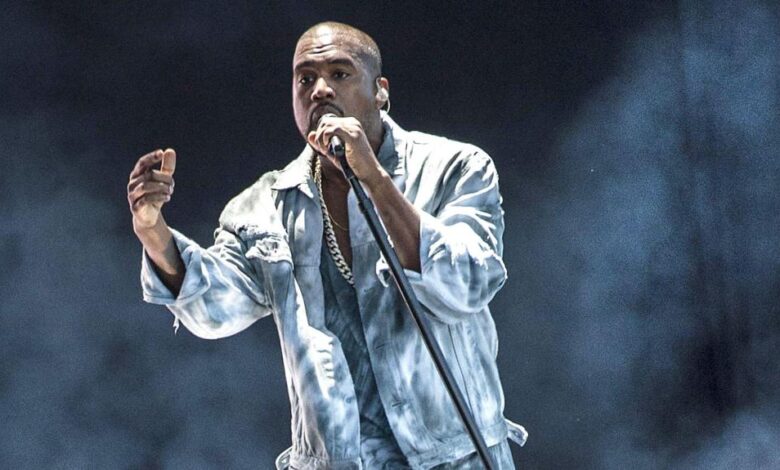
The United Kingdom has barred American rapper Kanye West, also known as Ye, from entering the country, prompting the cancellation of the Wireless Festival in London where he was scheduled to headline across three nights.
The decision, taken after a review by the UK Home Office, cited that his presence would not be “conducive to the public good,” effectively halting one of the summer’s most high-profile music events.
The fallout was swift. Major sponsors, including Pepsi, had already withdrawn support in the days leading up to the decision, and organisers subsequently confirmed that the festival would no longer go ahead. What was initially planned as a marquee cultural event quickly turned into a flashpoint involving government intervention, corporate pullback, and public scrutiny.
The move has placed the UK government at the centre of a broader conversation involving artistic expression, public safety, and the responsibilities attached to global platforms – even as officials maintain that the decision was rooted in established legal and public interest considerations.
Government Response and Decision-Making
The decision to bar Kanye West followed public remarks by UK Prime Minister Keir Starmer, who expressed “deep concern” over the rapper’s scheduled appearance at the Wireless Festival. His comments were followed by a formal review conducted by the Home Office, the department responsible for immigration and public safety.
In its final determination, the Home Office stated that West’s presence in the country would not be “conducive to the public good,” a standard often applied in cases involving individuals whose entry is considered potentially harmful to social cohesion or public order. While officials did not elaborate in detail on specific risks, the language signaled a clear position on the matter.
Government representatives also described the decision to invite West as “deeply irresponsible,” pointing to his history of controversial statements. However, it remains unclear how directly the prime minister was involved in the final administrative call, with official statements stopping short of confirming his role in the decision-making process.
The sequence of events – public concern, administrative review, and eventual denial of entry – unfolded over a matter of days, ultimately leading to the cancellation of the festival. The episode shows just how quickly cultural events can escalate into matters requiring government intervention when broader sensitivities and public reactions are involved.

Free Speech vs Regulation Context
The decision to deny entry to Kanye West has also drawn attention to an ongoing debate in the United Kingdom over the balance between free expression and regulatory oversight.
Criticism emerged from political figures both within the UK and abroad. U.S. Vice President JD Vance had previously accused Western governments, including Britain, of acting as “thought police” in their handling of views deemed controversial or offensive. In the UK, Reform Party leader Nigel Farage described West’s past remarks as “vile,” but cautioned against setting a precedent where individuals could be barred from entry based on their views alone.
The UK government, for its part, has consistently maintained that freedom of speech remains a fundamental value. Prime Minister Keir Starmer has previously stated that such freedoms would be protected “fiercely,” even while supporting enforcement actions under existing laws governing hate speech and public order.
In recent years, authorities have taken action against individuals for online content and speech-related offenses, particularly in the context of unrest and concerns over public safety. At the same time, the government has backed measures aimed at regulating digital platforms to address harmful content, especially where children and vulnerable groups are concerned.
Within this framework, the decision involving West sits at the intersection of two established positions – the protection of free expression and the enforcement of laws intended to prevent harm – without an official statement explicitly prioritising one over the other.
Why Kanye West Became a Controversial Choice
The controversy surrounding Kanye West’s planned appearance at the Wireless Festival is rooted in a series of statements and actions over the past decade that have drawn widespread criticism.
Among the most significant were antisemitic remarks made across interviews and social media, including statements that led to suspensions from major platforms and condemnation from public figures and organisations. In 2025, West also released a track titled “Heil Hitler,” which was subsequently removed from major streaming platforms and restricted in several countries due to laws governing extremist content.
Earlier incidents had already placed the artist under scrutiny. These included public comments about slavery that sparked backlash, as well as repeated instances of inflammatory rhetoric that extended beyond music into political and cultural commentary. His actions have, at various points, triggered responses ranging from public criticism to formal restrictions.
While West has issued apologies on multiple occasions – including a public statement in 2023 and another in early 2026 – these have often been followed by renewed controversy, contributing to an ongoing pattern that has kept him at the centre of public debate.
This history formed the backdrop to his selection as a headline act, shaping the response from sponsors, officials, and community groups in the lead-up to the festival.

Industry and Institutional Reactions Over Time
Over the years, responses to Kanye West’s public statements have extended beyond criticism, with several major institutions and corporations taking formal action.
A number of global brands and partners have distanced themselves from the artist following his controversial remarks. Companies including Adidas, Balenciaga, and Gap ended their associations with West, citing policies against hate speech and the need to uphold corporate values. The termination of these partnerships also carried financial implications, most notably for Adidas, which reported losses linked to the decision.
Digital platforms have similarly enforced their content policies. West has faced repeated suspensions from social media services, including X (Twitter) over posts deemed to violate rules related to incitement and hate speech. His online presence has, at various points, been restricted or removed entirely.
In addition to corporate and digital responses, authorities in other countries have also acted. His work has faced restrictions in jurisdictions with strict laws governing extremist symbolism, and he has previously been barred or limited from entering certain countries following controversies linked to his public statements.
Taken together, these actions reflect a broader pattern of institutional response that has developed over time, extending well beyond any single incident or geographic location.
Recent Developments and Attempted Repositioning
In the period leading up to his scheduled appearance in London, Kanye West had made a series of public efforts that appeared aimed at re-entering the mainstream cultural space.
In early 2026, West issued a public apology in a full-page statement, distancing himself from earlier remarks and stating that he was “not a Nazi or an antisemite.” He also attributed some of his past behaviour to challenges related to bipolar disorder, while acknowledging that it did not excuse his actions.
This followed an earlier apology in 2023, in which he expressed regret for causing harm to the Jewish community and indicated a willingness to learn from the experience. These statements were positioned as attempts to address criticism and rebuild public trust.
Alongside these efforts, West continued to remain active professionally. He released new music, including his album Bully, and returned to live performances, with concerts in Los Angeles drawing large audiences. These appearances were seen as part of a broader attempt to re-establish his presence within the industry.
However, despite these developments, his past controversies continued to shape public and institutional responses, forming an important backdrop to reactions surrounding his planned performance at the Wireless Festival.

The Wireless Festival Controversy
The announcement of Kanye West as the headline act for London’s Wireless Festival in July 2026 triggered an immediate and sustained backlash. The artist was scheduled to perform across three consecutive nights, marking one of the most high-profile bookings for the event in recent years.
Concerns were raised by members of the Jewish community and representative organisations, who questioned the decision to feature West given his history of antisemitic remarks. Some groups indicated a willingness to engage in dialogue, but maintained that his participation in the festival would be inappropriate without clear evidence of sustained change.
As criticism intensified, pressure began to build on both organisers and sponsors. Several partners, including the festival’s principal sponsor, withdrew their support in the days following the announcement. The growing backlash placed the event under increasing scrutiny, extending beyond the music industry into political and public discourse.
West, for his part, issued a statement saying he had been following the conversation and expressed a willingness to meet with members of the Jewish community “to listen.” He acknowledged that words alone would not be sufficient and that any change would need to be demonstrated through actions.
Despite these developments, the situation continued to escalate, ultimately leading to government involvement, the denial of entry into the UK, and the cancellation of the festival altogether.
Where Things Stand Now
As of now, Kanye West remains barred from entering the United Kingdom, following the Home Office’s determination that his presence would not be in the public interest. Officials have indicated that such decisions are subject to review, though no timeline or conditions for reconsideration have been publicly outlined.
The Wireless Festival, originally scheduled to take place in London in July 2026, has been cancelled in its entirety, bringing an abrupt end to what was expected to be one of the season’s major cultural events. Organisers have not announced any immediate plans for rescheduling or replacement programming.
The episode has drawn responses across political, cultural, and corporate spheres, reflecting the wide-ranging implications of decisions involving public figures and large-scale events. While the UK government has maintained that its actions were guided by existing legal frameworks and considerations of public interest, the situation continues to be referenced in broader discussions around regulation, artistic platforms, and institutional accountability.
For now, the matter stands as a concluded decision with immediate consequences – Kanye West unable to enter the country, a festival called off, and a sequence of events that unfolded rapidly from announcement to cancellation.