Before diving into the platforms themselves, it is worth pausing on a question that many technology decision-makers in India are genuinely wrestling with: why does Kubernetes management even need a dedicated platform? The short answer is that Kubernetes, for all its power, was never designed to be easy — it was designed to be correct. It solves the extraordinarily complex problem of orchestrating containerised workloads at scale, but in doing so, it exposes the engineer operating it to a level of configuration depth, networking complexity, and observability challenge that can overwhelm teams without the right tooling and expertise.
A Kubernetes management platform sits on top of raw Kubernetes — whether self-managed or cloud-native — and adds the operational guardrails, visibility, multi-cluster governance, and developer experience improvements that turn a theoretically powerful system into a practically usable one.
In India’s 2026 technology landscape, Kubernetes adoption has moved decisively past the early-adopter phase. Large Indian IT services firms, domestic product companies, unicorn startups, and a growing cohort of enterprise organisations across banking, e-commerce, telecom, and manufacturing are all running containerised workloads at meaningful scale. This scale has made the choice of Kubernetes management platform a genuinely strategic decision — one that affects developer productivity, infrastructure costs, security posture, and the organisation’s ability to operate across hybrid and multi-cloud environments. This article profiles the top 10 Kubernetes management platforms actively used and deployed in India in 2026.
1. Red Hat OpenShift
Red Hat OpenShift is the most widely deployed enterprise Kubernetes platform in India’s large corporate and IT services sector, and its dominance in this segment is not accidental. OpenShift is not simply Kubernetes with a UI added on top — it is a fully opinionated, enterprise-hardened application platform built on Kubernetes that makes deliberate choices about security, developer workflow, networking, and operations so that organisations do not have to make all of those choices themselves.
What makes OpenShift particularly important in the Indian enterprise context is its alignment with the compliance and security frameworks that regulated industries — banking, insurance, government — demand. OpenShift’s built-in role-based access control, network policies, image scanning, and integration with Red Hat’s broader ecosystem (including Red Hat Enterprise Linux and Ansible) give CISOs and compliance teams a defensible, auditable platform rather than a custom-assembled collection of open-source tools. IBM’s acquisition of Red Hat has further strengthened OpenShift’s enterprise credentials, and its presence in India is backed by a mature partner and support ecosystem that includes most of India’s largest system integrators. For any Indian organisation running serious workloads that cannot afford operational ambiguity, OpenShift is the most proven choice available.
2. Rancher (by SUSE)
Rancher, now developed and maintained by SUSE after its acquisition in 2020, has earned a devoted following in India’s startup and mid-market technology sector for a straightforward reason: it is genuinely one of the best-designed Kubernetes management tools available, and it has historically been available as open-source software with enterprise support as an optional upgrade. This pricing model made it accessible to companies at growth stages where OpenShift’s licensing costs would have been prohibitive.
Rancher’s superpower is multi-cluster management. Where many tools give you a good view of a single Kubernetes cluster, Rancher gives you a unified control plane across multiple clusters — whether they are running on AWS, Azure, GCP, bare metal, or at the edge — with consistent policy enforcement, RBAC, and monitoring across all of them. For Indian companies that have grown into multi-cloud or hybrid architectures, often because different business units or projects made different cloud vendor choices, Rancher’s cluster federation capability is practically invaluable. SUSE’s continued investment in the platform and the maturity of its commercial support offerings in India have made it a platform that is equally at home in a 20-person startup and a 2,000-person product company.
3. Amazon Elastic Kubernetes Service (EKS)
Amazon EKS is the Kubernetes management platform of choice for Indian organisations that have standardised on AWS — which, given AWS’s dominant market share in India’s public cloud segment, describes a very large proportion of the country’s technology companies. EKS is a fully managed Kubernetes control plane service, which means AWS handles the operational burden of running, scaling, and updating the Kubernetes control plane while the organisation manages the worker nodes and applications.
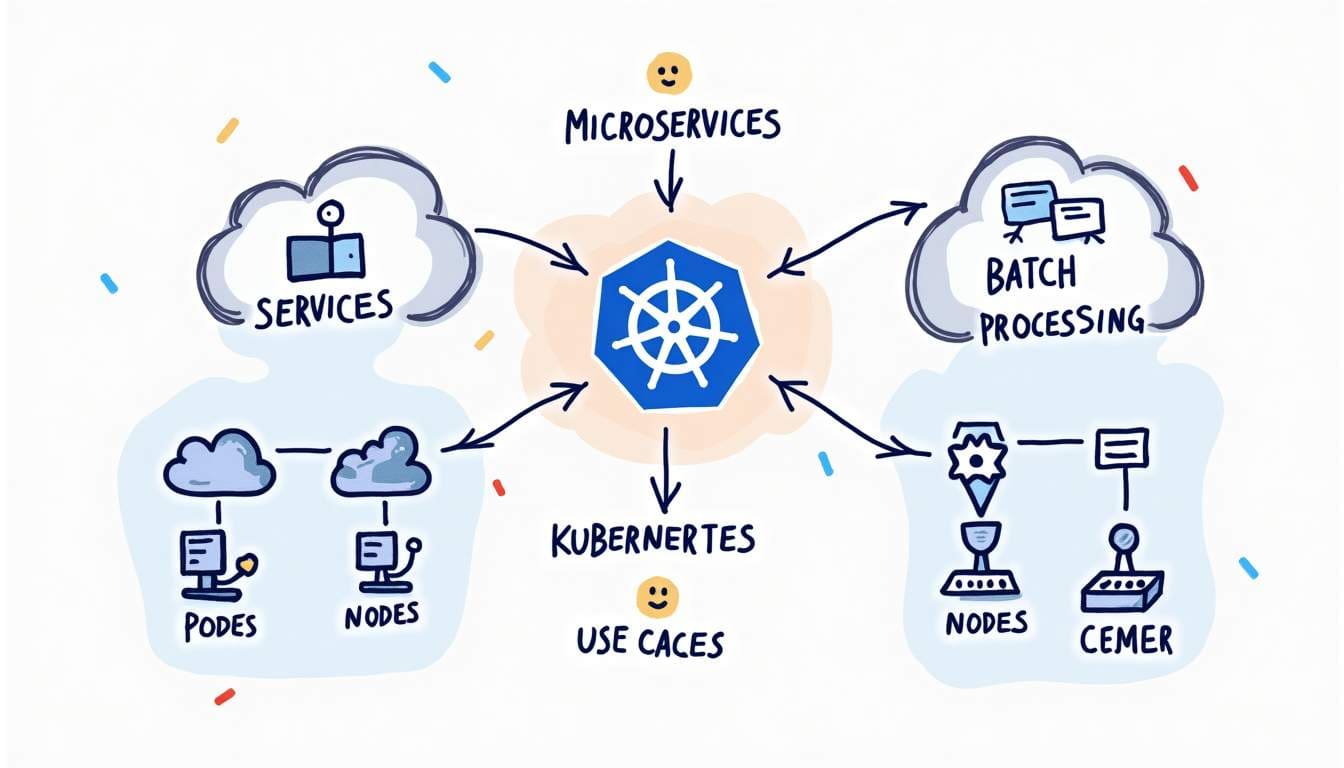
The most important thing to understand about EKS’s value proposition is how deeply it integrates with the rest of the AWS ecosystem. IAM for authentication, VPC for networking, ALB for load balancing, CloudWatch for observability, ECR for container registry, and KMS for secrets management — all of these integrations work in ways that would require significant additional configuration on a platform-agnostic Kubernetes deployment. For Indian engineering teams that have built their operational muscle memory around AWS tooling, EKS reduces the cognitive overhead of Kubernetes operations significantly. AWS’s Fargate integration — which allows running containers without managing underlying EC2 instances — also allows organisations to adopt a serverless Kubernetes model for certain workloads, reducing operational overhead further.
4. Google Kubernetes Engine (GKE)
Google Kubernetes Engine deserves a special category acknowledgement before being evaluated as a platform: GKE is not just a managed Kubernetes service, it is the product built by the same team that originally created Kubernetes at Google, and that heritage shows clearly in its technical sophistication. GKE Autopilot, which takes full management of both the control plane and the worker nodes away from the operator, represents the most fully managed Kubernetes experience currently available from any hyperscaler.
GKE’s particular strengths that resonate in the Indian market are its networking architecture (GKE’s use of Google’s private backbone for inter-cluster and inter-region traffic is a genuine performance advantage), its AI and ML workload optimisation (Google’s TPU and GPU node pool integrations are especially valuable for Indian organisations running AI workloads, a rapidly growing segment), and its Release Channels feature — which allows organisations to subscribe to a specific pace of Kubernetes version upgrades rather than managing upgrades manually. For Indian data science teams, AI companies, and organisations running Google Workspace alongside their cloud infrastructure, GKE’s integration depth makes it a natural and powerful choice.
5. Azure Kubernetes Service (AKS)
Azure Kubernetes Service has seen strong and growing adoption in India’s enterprise segment, driven significantly by two factors: Microsoft’s deep existing relationships with Indian enterprises through Office 365, Azure Active Directory, and Teams, and India’s large Microsoft-centric IT services industry — Infosys, Wipro, HCL, and TCS all have substantial Azure practices with thousands of certified engineers. AKS benefits enormously from these relationship dynamics; when an enterprise is already running its identity, collaboration, and productivity infrastructure on Microsoft, extending to AKS for Kubernetes workloads involves far less integration friction than adopting a competing cloud’s Kubernetes service.
AKS’s technical strengths include its integration with Azure Monitor and Azure Log Analytics for observability, Azure Policy for governance-as-code, and Microsoft Entra ID (formerly Azure AD) for authentication — all tools that most large Indian enterprises using the Microsoft ecosystem are already paying for. Its GitOps integration via Azure Arc, which extends AKS’s management capabilities to on-premises Kubernetes clusters and even other cloud providers’ clusters, is particularly relevant for Indian banks and financial institutions that operate in hybrid environments due to regulatory requirements around data localisation.
6. Platform9 Managed Kubernetes (PMK)
Platform9 is a Sunnyvale-based company with significant engineering operations in Pune, India, and it has built one of the most compelling propositions in the enterprise Kubernetes market: a fully managed Kubernetes service that can run on any infrastructure — public cloud, private cloud, bare metal, or edge — without requiring the organisation to move its workloads to a specific vendor’s cloud. Platform9 manages the Kubernetes control plane as a SaaS service while the compute infrastructure stays wherever the organisation needs it to be.
This architecture is exceptionally well-suited to Indian enterprises navigating the tension between modernising to cloud-native architectures and maintaining the data sovereignty and infrastructure control that regulatory and business requirements demand. A bank that must keep certain data on-premises can use Platform9 to get a fully managed, enterprise-grade Kubernetes experience on their own hardware, with the same operational simplicity that a public cloud managed service offers. Platform9’s India engineering team contributes meaningfully to the product roadmap, and its support model — 24/7 with Indian timezone coverage — is well-regarded by enterprise clients.
7. Portainer
Portainer occupies an important and underappreciated position in India’s Kubernetes ecosystem — it is the platform that makes Kubernetes genuinely accessible to teams that do not have dedicated platform engineers or DevOps specialists. Founded as an open-source project and now backed by a commercial entity offering an enterprise edition, Portainer provides a clean, intuitive web-based management interface for both Docker and Kubernetes environments that drastically reduces the operational complexity for smaller teams.
Many of India’s mid-sized software companies, digital agencies, and startups have engineering teams where every developer needs to be able to deploy and manage containerised workloads without becoming a Kubernetes expert. Portainer’s interface allows these teams to manage deployments, inspect logs, configure networking, and administer storage through a visual UI rather than exclusively through kubectl command-line operations. Its growing enterprise edition adds role-based access control, audit logging, and GitOps integration that allow it to scale into more complex organisational requirements. For the very large number of Indian technology companies that are not in the business of building Kubernetes expertise but simply need it to work reliably, Portainer is one of the most practically useful platforms available.
8. D2iQ (DKP — D2iQ Kubernetes Platform)
D2iQ, formerly known as Mesosphere, has repositioned around its DKP (D2iQ Kubernetes Platform) product as a comprehensive enterprise Kubernetes platform focused on day-2 operations — the ongoing operational lifecycle management of Kubernetes clusters and applications after initial deployment. This focus on day-2 operations is commercially insightful because it addresses the part of Kubernetes management that most organisations find hardest: not getting started, but sustaining, upgrading, debugging, and scaling a production Kubernetes environment over years and across changing organisational needs.
DKP’s strengths include its air-gapped deployment capability — allowing Kubernetes clusters to run in environments with no internet connectivity, which is essential for Indian defence, government, and highly regulated financial institutions — and its strong support for edge Kubernetes deployments. As Indian enterprises increasingly run Kubernetes-managed workloads at factory floors, retail locations, and telecommunications edge nodes, DKP’s edge-focused architecture becomes progressively more relevant. D2iQ has enterprise support arrangements with several Indian system integrators, giving it a delivery and support pathway into the large enterprise segment.
9. Rafay Systems
Rafay Systems is a less widely known but technically highly capable Kubernetes management platform that has been gaining traction among India’s mid-to-large technology companies, particularly those with sophisticated multi-cluster requirements. Rafay describes itself as a “Kubernetes Operations Platform” focused specifically on developer self-service, centralised governance, and multi-cluster lifecycle management at scale.
What distinguishes Rafay is the quality of its developer portal — it allows platform engineering teams to create an internal developer platform (IDP) on top of Kubernetes where application developers can provision environments, deploy applications, and access resources through a curated, controlled interface without needing to understand the underlying Kubernetes complexity.
This platform engineering model, in which a central team builds a product-quality experience for their organisation’s developers, has become the recommended best practice for Kubernetes adoption at scale, and Rafay’s tooling is specifically built to support it. For Indian product companies and IT services firms building internal platforms to support large developer populations, Rafay offers a purpose-built solution in a space where most competitors have arrived at the same capability through broader product evolution.
10. Lens (by Mirantis)
Lens — now developed under Mirantis’s stewardship after its acquisition — is the most widely used Kubernetes IDE (Integrated Development Environment) in the world by active installation count, and its relevance to this list reflects a different dimension of Kubernetes management: the individual engineer’s daily working experience. Where most platforms on this list focus on cluster provisioning, multi-tenancy, and operational governance, Lens focuses on the moment-to-moment experience of an engineer who is working with Kubernetes every day.
Lens runs as a desktop application that connects to any Kubernetes cluster and provides a rich, real-time visual interface for exploring cluster state, viewing pod logs, executing commands in containers, inspecting networking, and managing resources. For Indian engineering teams — where a developer might be managing multiple clusters across local development, staging, and production simultaneously — the cognitive clarity that Lens provides over raw kubectl operations represents a genuine daily productivity improvement. Its widespread free-tier adoption among Indian developers has made it a de facto standard in many engineering teams, and Mirantis’s commercial Lens Pro edition adds team collaboration features and enhanced security controls for organisational deployment.
Choosing the Right Platform for the Indian Context
Understanding which platform is right for your organisation requires being honest about three things: your infrastructure reality, your team’s engineering depth, and your operational ambitions.
If your infrastructure is firmly on a single hyperscaler, the managed service from that provider — EKS, GKE, or AKS — will almost always be the lowest-friction choice, simply because the integration depth reduces the operational surface area you are responsible for. If you are running hybrid or multi-cloud workloads, or if data localisation requirements mean some of your infrastructure must remain on-premises, then a platform-agnostic option like Rancher, Platform9, or OpenShift will serve you better than a cloud-native managed service.

If your team is small and Kubernetes is infrastructure rather than a core competency, Portainer’s simplicity may save more engineering time than a more sophisticated platform’s additional features could justify. And if you are building a platform engineering practice to serve large developer populations, Rafay’s developer self-service model is worth serious evaluation.
The Indian technology ecosystem’s diversity of organisations — from ten-person startups to hundred-thousand-person IT services giants, from cloud-native e-commerce companies to regulation-bound financial institutions — means there is no universally correct answer here. The right platform is the one that matches your specific intersection of infrastructure, team capability, regulatory environment, and growth trajectory.
Conclusion
Kubernetes has become the default orchestration layer for containerised workloads in India’s technology sector, and the management platform chosen to operate it has moved from a tactical tool decision to a strategic infrastructure investment. The ten platforms profiled here represent the full range of architectural approaches to Kubernetes management — from cloud-native managed services to enterprise on-premises platforms to developer-experience-first tooling. As India’s cloud and DevOps maturity continues to accelerate in 2026, the organisations that have invested in the right management platform will find themselves with a meaningful operational advantage over those still wrestling with raw Kubernetes complexity.