Markets In Freefall: ₹11 Lakh Crore Gone – As Iran Faces Trump’s Final Warning, Economists Sound The Alarm On Global Shock
₹11 lakh crore vanished from Dalal Street in a single session, as panic gripped Indian markets and benchmarks cracked under pressure. But this isn’t just another sell-off - with Iran facing Trump’s final warning, a far bigger global economic tremor may already be underway

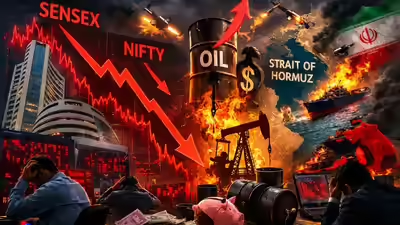
Indian equity markets opened the week with a brutal reminder of how quickly sentiment can turn. The Sensex plunged 1,757 points to close at 72,784, while the Nifty 50 slipped 556 points to 22,557, breaching key psychological levels. In the process, nearly ₹11 lakh crore was wiped off investor wealth in a single trading session.
The damage was widespread and unrelenting. All 30 Sensex constituents ended in the red, with heavyweights like banking, metals and financials leading the slide. On the broader market, the picture was even more grim – over 2,300 stocks declined on the NSE, underlining the depth of the sell-off.
Sectorally, the pain was most visible in metal and PSU banking stocks, both of which saw sharp cuts amid rising global uncertainty and risk aversion. The sell-off wasn’t selective – it was systemic.
There was also an eerie sense of déjà vu. The date marked six years since the March 23, 2020 crash, when markets collapsed in the wake of a nationwide lockdown announcement. While the triggers today are very different, the intensity of the fall and the speed at which fear gripped the markets – felt strikingly familiar.
What Triggered the Fall – From War Drums to Global Risk-Off
At the heart of Monday’s sell-off lies a rapidly escalating geopolitical crisis that markets are struggling to fully price in. The conflict involving the United States, Iran and Israel has entered a far more volatile phase, with direct threats to critical energy infrastructure now on the table.
Over the weekend, tensions surged after US President Donald Trump issued a stark ultimatum to Iran, demanding the reopening of the Strait of Hormuz within 48 hours, failing which Washington could target Iranian power facilities. Tehran’s response was equally aggressive, warning of strikes on energy and water infrastructure across the Gulf if provoked further. With the conflict now stretching into its fourth week, hopes of a quick diplomatic resolution have begun to fade.
The implications for global energy markets have been immediate and severe. Brent crude prices have surged past $110 per barrel, as fears grow over a prolonged disruption in the Strait of Hormuz – a narrow but critical artery through which roughly a fifth of the world’s oil supply flows. Any sustained blockade or escalation here has far-reaching consequences, not just for oil prices but for inflation, trade and global growth.
Back home, the ripple effects are already visible. The Indian rupee slipped to a fresh record low against the US dollar, reflecting both rising oil import concerns and persistent capital outflows. Foreign institutional investors have remained consistent sellers, offloading equities amid a broader global shift toward safer assets.
At the same time, rising US bond yields have added another layer of pressure. With yields on benchmark Treasuries climbing to multi-month highs, global capital is increasingly gravitating toward fixed income, further draining liquidity from emerging markets like India.
Put together, this isn’t just a reaction to one event but is the convergence of multiple stress points. And markets, as Monday showed, are beginning to buckle under the weight of it.
The Real Story – This Is Bigger Than a Market Crash
What unfolded on Dalal Street is not an isolated market event. It is, in many ways, an early reaction to a much larger and far more complex disruption building beneath the surface of the global economy.
Financial markets are often the first to register stress – and what they are signalling right now goes beyond earnings, valuations or domestic triggers. The current sell-off is being driven by a deepening geopolitical conflict that is beginning to threaten the very arteries of global trade and energy supply.
As mentioned before, at the centre of this storm lies a narrow stretch of water that rarely makes headlines in normal times – the Strait of Hormuz. But in moments like these, it becomes the single most critical chokepoint in the global economy.
The Strait of Hormuz – The Epicentre of a Brewing Global Shock
Roughly 20% of the world’s oil supply passes through the Strait of Hormuz, making it one of the most strategically vital trade routes on the planet. Any disruption here does not remain a regional issue – it instantly transforms into a global economic concern.
With Iran now threatening to shut the strait indefinitely in response to potential US strikes, and with energy infrastructure across the Gulf already coming under attack, the risks are no longer theoretical. The situation has moved from tension to tangible disruption.
Oil markets have responded swiftly. Prices have surged past $110 per barrel, and the trajectory remains uncertain. Analysts are increasingly warning that in a prolonged conflict scenario, crude could test significantly higher levels, especially if supply disruptions deepen or shipping routes remain constrained.
History offers uncomfortable parallels. Energy shocks triggered by geopolitical conflicts – from the 1970s oil crisis to the tanker wars of the 1980s – have often spilled over into broader economic slowdowns, fuelling inflation and destabilising markets across continents.
This time, the concern is not just about higher oil prices. It is about the possibility of a sustained disruption to a system that the modern global economy still heavily depends on – energy flows, shipping routes and interconnected supply chains.
And that is precisely why markets are reacting the way they are.
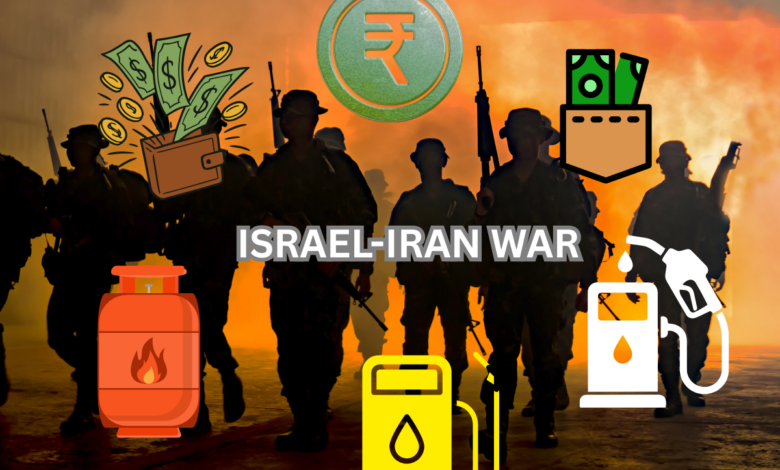
Oil Shock to Economic Shock, Why This Crisis Cuts Deeper
The surge in oil prices is not just a commodity story; it is the starting point of a much wider economic chain reaction.
With Brent crude already hovering above $110 and the risk of further escalation looming, the immediate concern is inflation. Higher energy prices feed directly into transportation, manufacturing and logistics costs, eventually finding their way into everyday goods and services.
But this time, the risk runs deeper.
Unlike previous cycles where demand was strong enough to absorb price shocks, the global economy is entering this phase from a position of relative fragility. Growth across major economies has already been uneven, and central banks are still grappling with inflationary pressures from recent years. A fresh energy shock at this stage complicates policy choices – forcing a difficult balance between controlling inflation and supporting growth.
Several global institutions have already flagged the possibility of a stagflationary environment – where growth slows even as prices remain elevated. It is a combination that markets typically struggle to manage.
More importantly, the longer the disruption persists, the greater the risk of oil prices moving beyond manageable levels. In extreme scenarios being discussed across market circles, crude prices could test significantly higher thresholds, raising the probability of a broader economic slowdown.
The Domino Effects – From Energy to Everyday Life
The impact of this crisis is no longer confined to oil markets. It is beginning to spill over into multiple layers of the global economy.
At an industrial level, rising energy costs are already putting pressure on sectors like chemicals, fertilisers and manufacturing. Many of these industries rely heavily on petroleum-based inputs, making them particularly vulnerable to sustained price increases.
This, in turn, feeds into agriculture. Fertiliser prices are closely linked to energy costs, and any sharp rise here risks pushing up food prices globally. For economies already dealing with inflationary stress, this creates an additional layer of pressure on households.
Supply chains, too, are showing early signs of strain. Disruptions to LNG infrastructure, constraints in shipping routes, and interruptions in the production of critical inputs like helium – essential for sectors ranging from healthcare to semiconductors – show how quickly localized conflict can cascade into global bottlenecks.
For Europe, the situation is particularly delicate. Still recovering from the energy shock triggered by the Russia-Ukraine conflict, the region remains vulnerable to fresh disruptions. While the United States is relatively insulated due to its energy independence, and countries like China have built strategic reserves, much of the global economy does not have the same buffer.
What emerges, therefore, is a familiar but dangerous pattern – rising costs, tightening supply and growing uncertainty. It is a combination that has historically preceded periods of economic stress.

India in the Line of Fire – Currency, Costs and Sectoral Stress
For India, the global turmoil is already translating into tangible economic pressure.
The most immediate impact is visible in the currency. The rupee has slipped to a record low against the US dollar, reflecting the dual strain of rising oil prices and persistent capital outflows. As one of the world’s largest oil importers, India remains particularly vulnerable to any sustained spike in crude.
A higher oil bill directly widens the current account deficit, putting further pressure on the currency and complicating macroeconomic stability. The recent hike in industrial diesel prices only adds to the strain, raising input costs for sectors ranging from transportation and infrastructure to manufacturing and telecom.
The ripple effects across industries are likely to be uneven. Energy-intensive sectors such as aviation, logistics, construction and heavy manufacturing face immediate cost pressures. At the same time, export-oriented segments like IT services, pharmaceuticals and auto ancillaries could see some relative support from a weaker rupee.
But even here, the relief may be limited. In a broader risk-off global environment, demand uncertainty tends to outweigh currency advantages.
Markets Are Struggling With One Thing – Uncertainty
If there is one factor that best explains the sharp reaction in markets, it is uncertainty.
For weeks, there was a lingering assumption that the conflict would remain contained – another geopolitical flare-up that markets would eventually look past. That assumption is now being challenged.
The escalation in rhetoric, the direct threats to critical infrastructure, and the lack of a clear diplomatic pathway have made it increasingly difficult for investors to assess the duration and intensity of the crisis.
Adding to the confusion are mixed signals from global leadership. While there are suggestions that the conflict could de-escalate, parallel developments on the ground continue to point in the opposite direction. This disconnect is making it harder for markets to find a stable footing.
In such an environment, volatility is not just expected; it becomes inevitable.
All Eyes on Oil and the Strait
The road ahead for markets is now closely tied to how the geopolitical situation evolves.
Any indication of reopening or de-escalation could bring immediate relief to oil prices and, by extension, to financial markets. Conversely, a prolonged disruption or further escalation could push crude prices higher, intensifying inflationary pressures and deepening the risk-off sentiment globally.
For investors, the challenge lies in facing a situation where traditional indicators offer limited guidance. Market direction, at least in the near term, will be dictated less by fundamentals and more by geopolitical developments.
The Last Bit, Not Just a Market Correction, A Moment of Reckoning
Monday’s crash may have played out on trading screens, but its roots lie far beyond them.
What we are witnessing is not just a routine bout of volatility, but the early signs of a broader economic stress building up – one that links geopolitics, energy markets and financial systems in a way that is difficult to disentangle.
If the current trajectory continues, the implications could extend well beyond equity markets – into inflation, growth and global economic stability itself. And that is what makes this moment far more significant than a single day’s market fall.