Neither Safe Food Nor Honest Pricing: Why Blinkit, Zepto And Quick Commerce Giants Are Failing Customers On Every Front?
Blinkit’s warehouse is found with cockroaches. Similar hygiene lapses were found one year ago in zepto’s dark stores. Also, both the quick commerce titans were found exploiting dark patterns in their pricing strategies. Why is the government not tightening the noose in the neck of these quick commerce giants; till when they will keep harassing the customers?


How Quick Commerce Titans Are Found Flouting Rules, Both in Their Products and in Their Dark Practices?
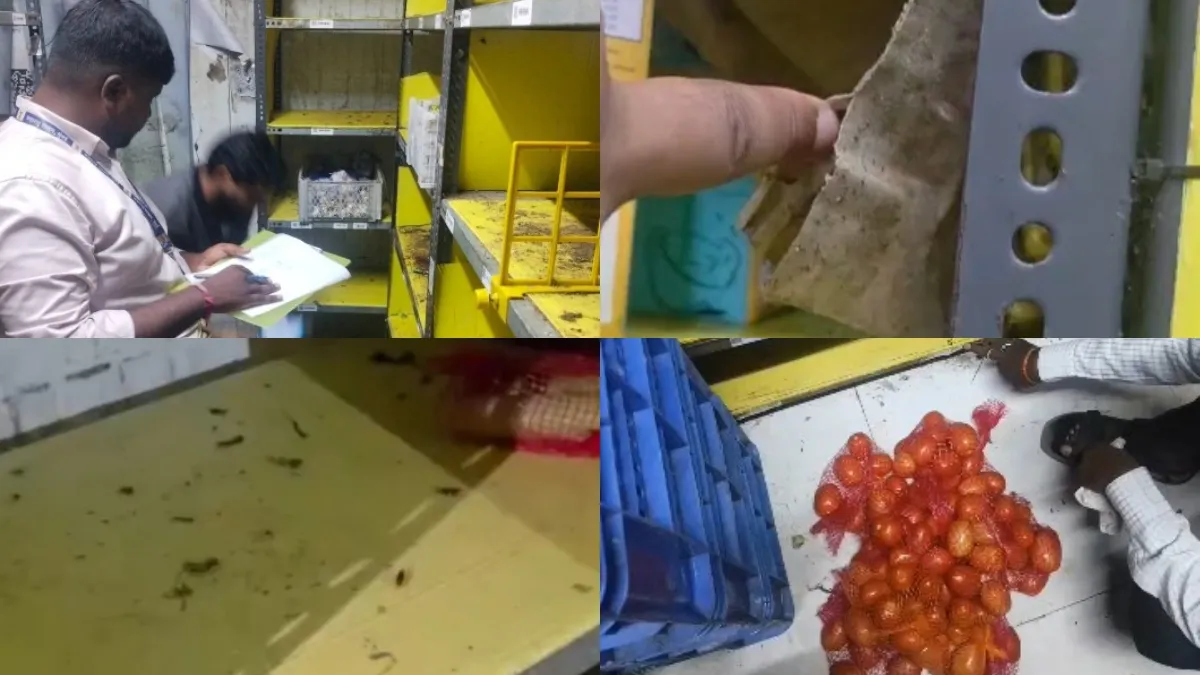
In August 2026, Maharashtra’s Food and Drug Administration (FDA) delivered a brutal reality check to India’s booming quick commerce industry. At a Blinkit (Blink Commerce Pvt Ltd) facility in Malad West, Mumbai, inspectors found extensive cockroach infestation, food stored on rusted racks and even the floor, expired and tampered packaged products, inadequate cold storage hygiene, and complete disregard for basic FIFO/FEFO stock rotation practices. The food licence of the establishment was suspended with immediate effect under Section 32(3) of the Food Safety and Standards Act, 2006. The facility was barred from selling or distributing any food until further orders.
Around the same time, a Reliance Retail outlet in Buldhana faced action after a consumer complaint about live larvae (worms) found in packaged ‘Laxmi Narayan’ brand kaju katli. FDA officials seized 54 boxes weighing 11.340 kg (valued at around ₹10,238) from available stock after the complained batch had already moved. Samples were sent for laboratory analysis, and further legal proceedings under the Food Safety and Standards Act were initiated.
These are not isolated warehouse lapses. They are the latest public evidence that the same companies racing to deliver groceries in under 10 minutes cannot even keep insects and expired goods out of the facilities that feed those ultra-fast orders.
One year earlier, almost to the month, the identical story played out with Zepto. In June 2025, the Maharashtra FDA suspended the food business licence of Zepto’s Dharavi warehouse after finding fungal growth on food packets, products stored near clogged and stagnant water, cold storage temperatures not maintained, wet and filthy floors, food items kept directly on the floor in a disorganised manner, and expired products mixed with fresh stock. Zepto issued the standard “we take food safety seriously and have initiated an internal review” statement. The licence suspension was real. The images and findings were damning.

The pattern is unmistakable. First Zepto’s Dharavi facility, then Blinkit’s Malad dark store, and parallel action against a Reliance Retail outlet. Different brands, same fundamental failure: the inability, or unwillingness, to maintain basic hygiene and inventory discipline in the very facilities that power “instant” delivery.
The Scale of the Industry That Cannot Keep Its Warehouses Clean
India’s quick commerce market has exploded. Industry estimates put Gross Merchandise Value (GMV) at approximately $11.3 billion in 2025, with projections of 5–7x growth to $60–83 billion by 2030. Dark store networks of the top three players (Blinkit, Zepto, Instamart) expanded nearly 48% in one year to over 5,000 locations. Blinkit alone has operated more than 1900 dark stores and processed hundreds of millions of orders annually, with revenue figures in the tens of thousands of crores. Zepto reported revenue of over ₹22,000 crore recently, while still posting heavy losses. Order volumes run into the tens of lakhs per day across platforms.
Yet these multi-thousand-crore operations cannot prevent cockroaches from crawling over fruits and vegetables or stop live larvae from appearing in packaged sweets on retail shelves. The speed that is sold as the ultimate consumer benefit appears to come at the direct expense of the most basic food safety protocols.
From Dirty Warehouses to Dark Patterns, The Story Is Same Either In The Market Leader Blinkit, Or In The Quick Commerce Poster Boy Zepto, Or In The Country Titan Group Reliance Retail
But, the story doesn’t end here. Hygiene failures are only half the story. The same platforms have repeatedly been caught deploying design practices that regulators classify as “dark patterns”, which are interface tricks that manipulate consumers into paying more or accepting unwanted charges.
In December 2025, the Central Consumer Protection Authority (CCPA) imposed a ₹7 lakh penalty on Zepto Marketplace. Investigators found that Zepto displayed a lower product price at the selection stage, only to add mandatory handling charges and a pre-ticked Zepto Pass membership fee at checkout. In one documented test, an item shown at ₹170 became ₹177.40 after the extra charges appeared. The CCPA held that this practice not only violated the Guidelines for Prevention and Regulation of Dark Patterns, 2023, but also breached the Legal Metrology (Packaged Commodities) Rules, 2011, because the final payable amount exceeded the Maximum Retail Price (MRP).
Zepto had earlier submitted a self-audit declaration claiming its platform was free of the 13 prohibited dark patterns. The regulator’s findings contradicted that claim. The company has since said it discontinued the practices and deposited the penalty while challenging aspects of the order.
Blinkit faces strikingly similar allegations of dark patterns. Consumer reports and analyses from 2025–2026 document the same sequence: a product listed at its MRP (for example, a pack of cigarettes at ₹480), followed by the sudden appearance of handling fees, late-night surcharges, small-cart charges, or convenience fees only at the final payment stage. When mandatory platform charges push the total above the declared MRP of a packaged commodity, the same legal logic that sank Zepto applies. The Dark Patterns Guidelines do not grant exemptions based on market share or parent company size.
These are not accidental UX glitches. They are commercial design choices. Displaying a clean MRP maximises conversion. Revealing the true all-in cost only after the consumer has invested time and cognitive effort raises the psychological barrier to abandoning the cart. The difference between the advertised price and the final debit becomes platform margin, extracted through opacity.
Competence Failure on Two Fronts Is Seen With These Quick Commerce Titans- They fail both in products and patterns!
The harsh conclusion is unavoidable. Quick commerce titans such as Blinkit and Zepto have demonstrated that they are competent neither at safeguarding the physical products sitting in their dark stores nor at safeguarding customers from manipulative pricing design.
On the product side, the repeated discovery of cockroaches, fungal growth, live larvae, expired stock mixed with fresh goods, food stored on floors and rusted racks, and non-existent or inadequate pest control points to systemic operational failure. These are not the occasional mistakes of a small kirana store. These are the warehouses of companies that market themselves as technology-first, data-driven, hyper-efficient logistics machines. If the inventory system cannot flag expired products and the hygiene protocols cannot keep insects out of fruit and vegetable areas, the “10-minute delivery” promise is built on a foundation of risk that consumers never consented to bear.
On the commercial side, the documented use of drip pricing and basket sneaking shows a willingness to extract incremental revenue by withholding information until the moment of payment. The CCPA’s Zepto order made the legal position clear: once mandatory charges push the payable amount above MRP, the platform is no longer merely offering a service fee — it is effectively selling a packaged commodity above the statutory ceiling. Continuing similar fee-layering practices after a peer has been penalised is not innovation; it is calculated risk-taking against the consumer.
Why the Pattern of Ignorance Persists?
The commercial incentives are powerful. Rapid expansion of dark stores, aggressive user acquisition, and the race for market share have prioritised volume and speed over process discipline. Losses remain large even as revenues climb into the tens of thousands of crores. In that environment, cutting corners on hygiene staffing, pest control contracts, cold-chain maintenance, and inventory hygiene becomes tempting. Simultaneously, every additional rupee extracted through opaque fees improves unit economics in a sector still struggling for consistent profitability.
Regulators have begun responding — licence suspensions by state FDAs, dark-pattern penalties by the CCPA, scrutiny of 10-minute advertising claims by the Labour Ministry. Yet the recurrence of the same problems across platforms and years suggests that the current level of enforcement is still treated as a cost of doing business rather than an existential constraint.
Every time a cockroach is found on produce that was minutes away from a customer’s doorstep, or live larvae appear in a packaged sweet, trust in the entire category erodes. Every time a handling fee or pre-ticked membership appears only at the final screen, the consumer pays a hidden tax on convenience. The platforms sell the dream of effortless, safe, transparent 10-minute commerce. The documented reality is repeated hygiene failures and deliberate pricing opacity.
Customers are not asking for perfection. They are entitled to warehouses free of insect infestation, products that have not expired, and prices that do not magically increase between the product page and the payment confirmation. When companies valued in the billions and processing millions of daily orders cannot deliver those basics, the competence claim collapses.
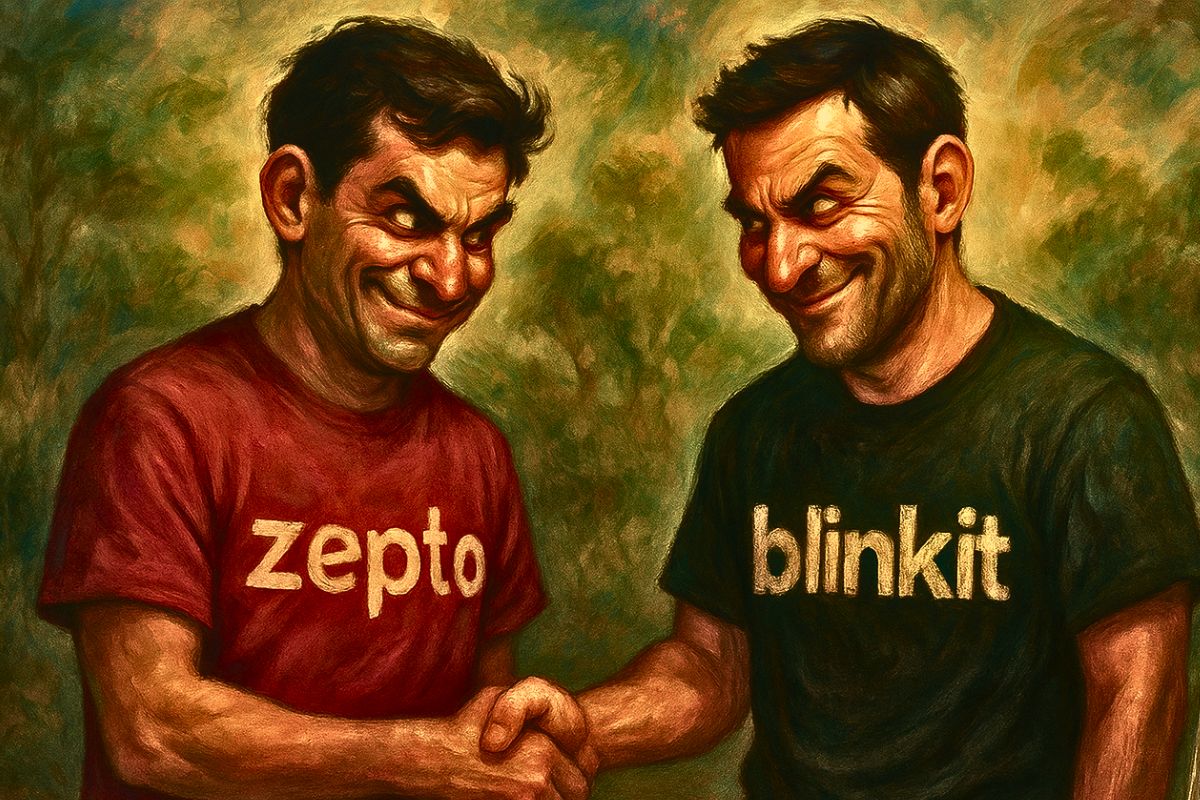
The Maharashtra FDA’s actions against Blinkit and Reliance Retail in August 2026, coming after Zepto’s Dharavi suspension the previous year and the CCPA’s dark-pattern penalty against Zepto, form a clear evidentiary chain. Quick commerce titans have been found flouting rules on the physical integrity of the products they store and on the commercial integrity of the prices they charge. Until both failures are treated with equal seriousness — by the companies themselves and by regulators — the 10-minute promise will continue to arrive with unacceptable hidden costs.