Pahalgam Attack Casts Dark Shadow Over Kashmir’s Hopes, Will Kashmir’s Soaring Tourism Dream Crash-Land?

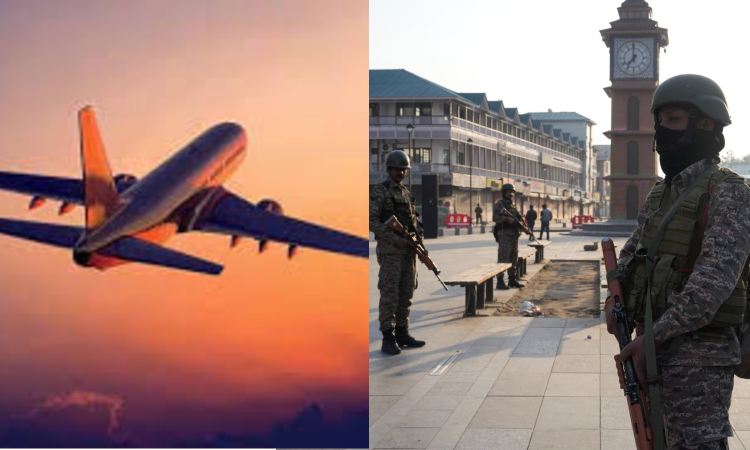
The terror attack in Baisaran, Pahalgam, Kashmir that claimed the lives of 28 tourists on Tuesday afternoon, threatens to upend the fragile sense of stability Kashmir had built over the past decade.
Once celebrated as a rising hub for Indian aviation and tourism, Kashmir’s newfound momentum now faces a sharp and uncertain reversal. According to multiple industry insiders, the attack could not only destabilise the region but also severely dent the peak summer travel season.
A Decade of Growth
An analysis of Airports Authority of India (AAI) data reveals a remarkable trajectory. In April 2015, about 180,000 passengers passed through Srinagar Airport. By April 2024, that figure had soared to 445,000 – a surge of nearly 150%. Over the same period, India’s domestic air traffic grew by roughly 100%, indicating Kashmir’s outsized expansion.
Aircraft movements at Srinagar Airport also tripled to around 28,000 in 2024. This rapid growth prompted the AAI to pursue a long-delayed INR 1,800 crore expansion plan to raise the airport’s capacity from 2.5 million to 10 million passengers annually by 2027. Despite operating from an 80-acre site under the control of the Indian Air Force, the airport had been preparing for an even brighter future.
“Since the abrogation of Article 370 in 2019, the tourism season starts earlier — from February instead of May and stretches well into October,” another airline executive based in Srinagar noted. “But after this attack, even sacred events like the Amarnath Yatra could face new scrutiny.”
The growth story is also evident in airline operations. IndiGo, India’s largest airline, has expanded from just eight daily flights to 22, connecting Srinagar directly to previously unlinked cities such as Ahmedabad, Dehradun, Bengaluru, and Chandigarh. SpiceJet recently launched flights from Ahmedabad, and IndiGo added Lucknow as its 10th direct route into the Valley.
Turbulence Ahead
Industry insiders now fear that the terror attack, coming just as the vacation season gathers pace, could severely disrupt travel plans.
“This was a deeply unsettling incident and will have repercussions, especially because it happened at the very start of the holiday rush,” said the first airline official. “Destinations like Darjeeling, Dehradun, and Srinagar were witnessing robust demand.”
As of now, however, there hasn’t been a surge in cancellations, according to a senior executive at a leading travel portal. Most airlines, with the exception of SpiceJet initially, have offered one free date change or full cancellation without charging fare differences for travel until May 15. The Air India group led the way in announcing the waiver.
“The cancellation penalty is the same whether a passenger cancels now or a few hours before departure,” the executive explained. “So most travelers are adopting a wait-and-watch approach.”
Cancellation fees typically range between INR 3,200 and INR 3,700, while current average fares to Srinagar hover around INR 7,000.
Authorities Move Quickly, But Uncertainty Looms
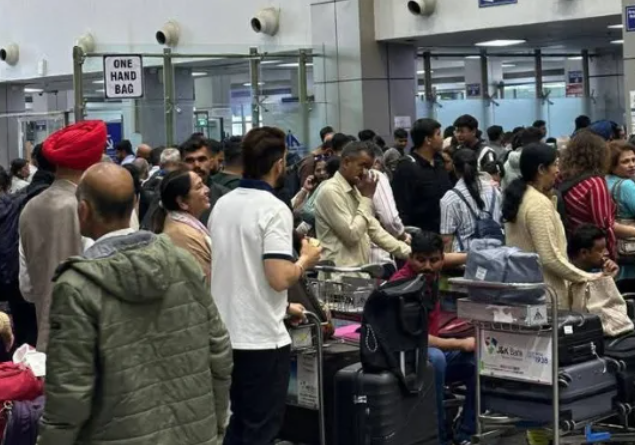
In response to the escalating situation, India’s aviation regulator, the Directorate General of Civil Aviation (DGCA), issued an advisory on Wednesday. Airlines were urged to waive change and cancellation fees, refrain from surge pricing – a problem notably seen during the Maha Kumbh – and, where possible, add additional flights to facilitate the safe return of tourists. Meanwhile, the Airports Authority of India (AAI) arranged free refreshments for stranded passengers at Srinagar Airport, seeking to alleviate the immediate discomfort.
Later in the day, Aviation Minister Ram Mohan Naidu intervened directly, prompting SpiceJet – initially reluctant – to align with other carriers in waiving cancellation and rescheduling fees, according to a senior government official.
Travel industry executives, however, warned that the situation could deteriorate further, necessitating an extension of the waiver period.
“This is the first time that tourists themselves have been the primary targets,” said one travel portal executive. “Previously, attacks typically focused on security forces or military installations. If this sentiment persists, we could see load factors in hill stations drop by up to 50%, wiping out the season.”
The senior airline executive based in Srinagar drew a parallel to the unrest that followed the killing of Hizbul Mujahideen commander Burhan Wani in 2016. At that time, widespread protests forced airlines to slash flights by nearly two-thirds, with recovery taking almost eight months.
“This time, the immediate disruption could last 10–15 days,” the executive said. “But if political unrest follows, the consequences could be far longer-lasting.”
By Wednesday, a Kashmir bandh had been called. Security at the Srinagar airport was significantly heightened, and a growing number of tourists sought to leave the Valley.
IndiGo, India’s largest airline, responded swiftly by deploying larger aircraft – replacing its 186-seater Airbus A320neos with the 222-seater A321neo on Srinagar routes – and adding two additional flights to accommodate the surge in outbound demand.
“Our belly cargo today is not just carrying passengers,” said another airline official based in Srinagar somberly. “It’s also carrying the human remains of those who lost their lives.”
The Last Bit, A Fragile Calm, Shattered
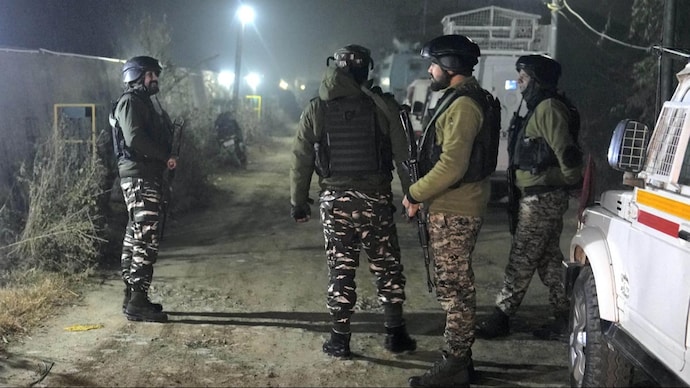
The attack in Baisaran has shattered the fragile sense of security that Kashmir had painstakingly rebuilt over the past decade. It is a grim reminder that, despite periods of relative peace and booming tourism, the possibility of violence can resurface without warning, altering lives, livelihoods, and perceptions in an instant.
For now, airlines, authorities, and travelers are scrambling to manage the immediate fallout. But the long-term scars on Kashmir’s tourism-dependent economy, on the psyche of visitors, and on the region’s aspirations for normalcy may take far longer to heal.
In the Valley, hope has always coexisted uneasily with fear. After Tuesday’s tragedy, that uneasy balance has once again tilted dangerously.