Physics Wallah- Looting Students, Investors, Whistleblowers And Whom Not?
Physics Wallah IPO Risk: Is It Another ‘Unique’ Way Of Fooling Investors?

Introduction
Physics Wallah (PW) has ridden a sensational rise; from a scrappy YouTube coaching channel to a $3+ billion edtech unicorn preparing for one of India’s biggest IPOs. As the IPO frenzy builds, however, alarm bells have started ringing. In its official offer documents, PW openly discloses bizarre safety incidents, such as a student hurling a slipper at a teacher, a ceiling fan collapsing on a student; that most companies would never admit publicly.
Financial analysts and social media users have mocked these “unique risks,” even quipping that the biggest risk is not low enrolment, but low-quality teaching. At the same time, reports and social media posts accuse PW of misleading practices, like exorbitant tuition fees for dubious credentials, rampant course-switching, and internal chaos. This isn’t just edtech gossip. It’s a stark warning to both investors and students. The very flaws being exposed threaten the company’s reputation and its valuation. In short, behind PW’s marketing hype there may be a hard lesson about hype itself.
Background: From YouTube Star to Unicorn IPO
Physics Wallah was founded by Alakh Pandey in 2016 as a free YouTube channel to teach JEE and NEET entrance exam subjects. Its no-frills style; affordable coaching at scale – struck a chord, and PW’s subscriber base exploded to tens of millions. By 2022, it had become a true unicorn with multiple funding rounds and a viral brand lifted its valuation above ₹20,000–30,000 crore (roughly $2.8–3.7 billion). The founders (Pandey and COO Prateek Boob) each own about 40% of the company, which at the IPO price would make them paper-billionaires worth over ₹11,000 crore apiece.
PW’s core model expanded beyond YouTube. It launched a dedicated PW app, partner programs, and even opened over 60 offline centers nationwide (branded “PW Vidyapeeth”). Classes now cover not just physics and chemistry, but biology (NEET), maths, and even general courses. The pitch is clear: save students money on expensive coaching by learning from charismatic teachers online or in hybrid PW centers. This “democratizing education” narrative earned PW huge goodwill – “the people’s hero,” to use one analysis. For example, one report notes that Alakh Pandey “became popular very quickly as an affordable alternative to expensive coaching centers,” and that PW’s strategy helped it become “worth $3.7 billion”.
Now PW is selling that story to investors. Its Draft Red Herring Prospectus (DRHP) – updated through late 2025, targets a gigantic ₹3,820 crore IPO (about $450 million). If priced at the top band, PW would list at roughly ₹30,000+ crore valuation, the biggest-ever for an edtech. All the major funds (WestBridge, Hornbill, GSV, etc.) have poured tens of millions of dollars into PW. That means investors are betting it can turn cheap coaching into a sustainable juggernaut. But curiously, as PW scratches below the surface, its own disclosures and external investigations are raising serious doubts, about safety at its centers, the value of its high-priced programs, and even the ethics of its marketing.
Safety Disclosures and “Unique” Risks at Physics Wallah
A red flag appeared straight out of left field when PW’s own DRHP began detailing weird safety incidents at its learning centers. Rather than the usual boilerplate about market competition or regulatory risks, PW’s filing candidly warns of physical altercations, dropped equipment, and disruptive students. Financial platform Zerodha took note and tweeted that PW has “a unique risk” in its IPO documents. What kind of risk?

For example, in 2023 one student threatened a teacher with a slipper during an online class, and caught on video a staff member was seen pushing a student at an offline center. In another incident (June 2024), a ceiling fan actually fell on a student at a Delhi center, prompting a police FIR for negligence.
These are not PR stunts or innocuous misfires – PW’s prospectus admits that each of these episodes was real. The company, Physics Wallah explicitly warns that such safety breaches (some involving harassment or endangerment of life) have happened “in the past” and could REPEAT. In its words, it “cannot guarantee” that future incidents won’t occur, and bluntly concedes that failure to protect student safety “may negatively impact our reputation and business”. In other words, PW is literally telling investors, “we know things have gone wrong, and we cannot promise they won’t again.”
Unsurprisingly, this alarmed market observers. One Twitter user quipped, “‘Hahaha — the company could collapse if enough students threaten with chappal [slipper]’”, skewering PW’s own risk disclosure. Another noted dryly that “the biggest risk is not mentioned — low quality teaching”. In short, many dismissed the disclosures as surreal: how many edtech companies list flying slippers and falling fans in their IPO risks? Yet it’s all there in print. (PW’s draft even acknowledges that these mishaps “could adversely affect its reputation and financial condition”.)
From the student perspective, these incidents tell their own story. If a classroom fan can crash down, or if teacher-student tensions escalate to physical threats, it begs questions about the environment PW is running. Parents and students have every right to wonder if these are isolated glitches or symptomatic of lax safety and discipline. Moreover, such episodes became public knowledge precisely because videos went viral on social media.
For a company charging for “quality education,” having viral clips of fights and freak accidents is the opposite of reassurance. In short, PW’s own data signals that serious operational risks exist – a truth publicly aired by Zerodha. Any investor should be wary: if startups collapse over flying slippers, this one spells it out.
Academics and Fees: Are Students Being Duped?
Beyond safety, critics have also scrutinized what PW is actually selling for its hefty fees. Originally famous for ultra-affordable JEE/NEET courses, PW has branched into “premium” programs under its new PW Institute of Innovation. That’s where the controversy lies. Reports reveal one flagship program priced at ₹15 lakh (about $18,000) – astonishing for Indian education. Even worse, early batches of that program got no degree at the end. Students were told to enroll separately in generic B.Sc. courses to get any credential. Only later did PW quietly affiliate with a little-known “Medhavi Skills University” in Sikkim to offer a B.Tech (Engineering) degree – raising fresh eyebrows.
In fact, PW’s IPO documents (and the attached notes) confirm this oddity. The 15-lakh course was described as a “professional technical course,” yet students who completed it initially received nothing more than a course completion certificate, not even a basic engineering diploma. They were nudged to join a random state-run online B.Sc. as a separate formal qualification. PW only belatedly struck a deal with Medhavi Skills University (a Sikkim-based private university) to confer a B.Tech to the same students – ironically in a state that has been repeatedly flagged for education scams.
Media reports highlight that Medhavi (and other Sikkim universities) have faced allegations of dubious practices. (Sikkim’s higher-ed sector has seen outright fake-degree scandals in the past.) So while PW was charging premium prices, the actual degree-awarding partner was far from prestigious. Medhavi “lacks the reputation and credibility that would otherwise justify such sky-high fees”. In other words, PW was peddling expensive courses hooked to a fringe university.
Worse still, early students report massive disruption. According to the same sources, batches saw at least a dozen students drop out partway through after paying lakhs, and others complained that the curriculum kept shifting mid-stream. One investigative piece notes that in one batch of 132 students, only about 12 remained by the end (the rest had “found it difficult to deal with a curriculum that kept changing,” according to interviews).
These students weren’t just dropping out because they mastered the material – they were exasperated by poor execution: promises of top faculty turned into three hours of lecture by understaffed “doubt clearing” tutors, classroom space overflowing to 12 students per bench, constantly revised course plans, and “honeymoon”-style marketing that gave way to confusion.
The takeaway is clear; if PW is marketing itself as an educational innovator, its own emerging practices look disturbingly like classic edu-scam tactics. Bill a family ₹15 lakh for an opaque “engineering” course run through a fly-by-night college, provide unstable teaching, and then blame students for not succeeding? Students who pay that much deserve full transparency. “If PhysicsWallah is selling degrees from obscure colleges at full price, students are entitled to know exactly what they are paying for”. Yet PW’s materials appeared silent on the fine print – until outside reporters blew the whistle.
This matters hugely for both groups of stakeholders. A student paying ₹15 lakh (usually via loans or sacrifice) is investing not just money, but years of effort. If the credential earned is a questionable degree and the learning experience is disjointed, that money is largely wasted. “Education is not merely obtaining a certificate – it is also about the learning, skills, and experience… If these fundamental components are not strong, even a reputable degree would not be valuable”.
From an investor’s perspective, too, this raises red flags. It suggests that PW’s premium arm may never generate the academic “product” (solid, accredited qualifications and high student satisfaction) that justifies its price tag. In effect, PW’s own growth strategy seems to be edging towards the same criticizable models once leveled at India’s unregulated private colleges: cashing in on aspirants without guaranteeing outcomes. If that pattern continues, student dropouts and complaints will mount, tarnishing PW’s brand just as IPO money flows in.
PR Fiascos and Internal Turmoil
If miseducating students weren’t enough, PW has also found itself in one PR pickle after another – from tone-deaf ads to bitter infighting – all of which should worry image-conscious investors. The most recent outrage came from an innocuously titled PW promotional video: “Toofan for Class 9-12”. The ad showed six black Mahindra Scorpios tearing through the lush meadows of Kashmir’s Gulmarg forest. This stunt backfired disastrously.
Local forest authorities quickly filed an FIR, noting that the cars (with no license plates) had been driven off-road “over the green meadows in the forest area resulting in damage to various herbs and other flora”. Environmentalists and netizens rightly lampooned the hypocrisy: how can a company teaching students “conservation” simultaneously vandalize a sensitive ecosystem to sell a course? To be fair, PW removed the video quickly, but the damage to its image – especially in liberal circles – was done.
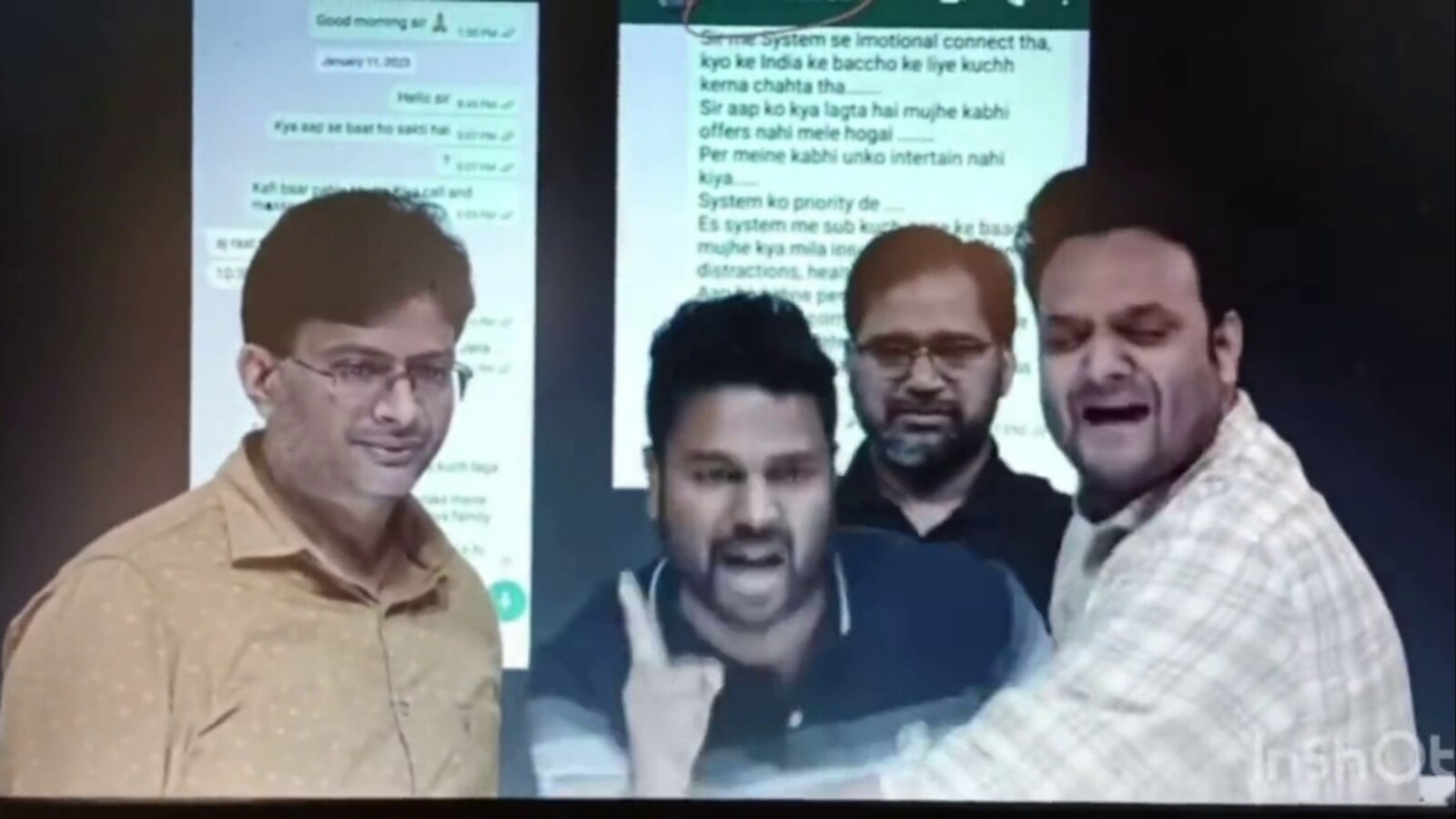
Public perception is also bruised from within. In March 2023 a schoolyard drama exploded when several veteran PW teachers quit and publicly aired grievances. A prominent chemistry instructor accused three colleagues of taking ₹5 crore bribes to jump ship to a competitor, while those colleagues fired back that PW’s culture had become so toxic that they couldn’t teach any more. In tearful YouTube confessions, ex-PW instructors lamented that the startup had betrayed Alakh Pandey’s original mission of affordable quality education. The spectacle went viral (the videos amassed millions of views overnight), and the scandal left investors uneasy: if top teaching talent is defecting in public schisms, will PW’s educational product really deliver as promised?
Meanwhile, the storm of criticism isn’t only from the staff. Social media is littered with students and parents warning each other. LinkedIn posts and Reddit threads speak frankly of “scams.” For example, one anonymous Reddit user described joining a new PW Kota center and feeling “totally looted” – complaining of a meager curriculum, rude staff, and blatant emotional manipulation by management. He wrote that PW students were “blindfolded by Alakh Pandey’s emotional trust” and that voicing complaints earned threats of suspension. The same post called the entire PW program “bas dikhawa” (all show) and even likened it to a cult. Such raw student outcry – including expletive-laced rants – went so viral that even outsiders noted it as a major PR crisis.
None of this internal/external drama gets mentioned in PW’s glossy marketing pitch, of course. But investors should be cautious: companies reliant on star founders and guru-like teachers have collapsed before when ego clashes, “cult” cults and governance issues take over (see: Byju’s founder brawls, etc.). At the very least, these controversies signal that PW’s much-touted culture of “democratized education” is fraying. Between felled fans, forest-destroying ads, and in-house mutinies, the PW brand is being tested by far more than financial numbers.
Then there comes how crony capitalism works- how sharks swallow the little fishes. Consider this post from linkedin user Nikhil Kumar Singh, who described how Physics Wallah slapped 8 copyright notices to him, for raising his voice as a whistle blower. It seems like Physics Wallah is not going to leave anybody- it will extract money from where ever it can- from students, to investors, to whistle blowers, everyone!
Financials and IPO Hype
So far we’ve seen PW’s troubles on the ground. How does the math look on paper? PW’s DRHP does boast high growth – in FY2025 (year ending March 2025) PW recorded ₹2,887 crore revenue, up ~50% from ₹1,941 crore the year before. Net losses narrowed drastically over that period, from ₹1,131 crore to ₹243 crore (helped by big one-time write-downs the prior year). These are headline-grabbing stats: rapid revenue surge and shrinking losses.
But the recent quarterly data add a note of caution. In Q1 FY2026 (April–June 2025), operating revenue was ₹847 crore (up 33% YoY). Not bad – but losses jumped. Net loss in Q1 was ₹127 crore, up from ₹72 crore a year ago. That widening loss is due to still-exploding costs: total expenses were ₹1,057 crore, up 39% from ₹762 crore year-on-year. In other words, PW is spending far faster than it’s earning. It’s funding aggressive marketing, staffing, and new centers to feed growth – but without near-term profits to offset it.
These metrics are double-edged. On one hand, PW has clearly become huge and is earning major top-line money. On the other, the burn rate is enormous. The company insists it needs to spend aggressively to stay ahead in India’s cutthroat edtech space. Investors may be banking on the conventional startup playbook: drive user growth at all costs now, monetize later. But that strategy relies on two big assumptions: (1) PW can eventually convert its vast subscriber and student base into sustained profits, and (2) it can do so without losing brand trust along the way. Right now, the financial runway is long, but the landmines on that runway (safety incidents, student scandals, PR disasters) are visible.
The IPO is priced at the steep end of valuations. According to press reports, the IPO band of ₹103–109 per share values the company near ₹31,170 crore (≈$3.7B). This means any small hiccup – for instance, a wave of negative media coverage – could spook the stock more than a stable business. And considering how candid the DRHP is about its own risks, it’s clear PW is bracing investors: the document openly states these odd liabilities could hurt reputation and financial condition. Financial discipline and transparency will be tested severely once public money is at stake.
Impact on Students and Investors
Ultimately, PW’s IPO saga affects two vulnerable groups: students (and their families) and public investors. The students — often children of middle-class parents — trust PW’s brand as a gateway to top engineering and medical colleges. They pay whatever they can afford (sometimes taking huge loans) for the PW logo on their certificates. But now, those students face an alarming disconnect. High fees (rising into lakhs of rupees) are not matching the “quality” students expect: safe campuses, reliable faculty, accredited degrees, and outcomes (like entrance exam success). Instead, many report chaotic courses, credential confusion, and even outright scams at the local coaching level.
For example, imagine a JEE aspirant whose parents paid ₹15 lakh for a 2‑year PW course. Under such pressure, that student would reasonably expect stellar teaching and a guaranteed recognized degree. The reality – stories of shifting syllabi, incomplete staff, and sign-ups at an obscure university – is like reading a horror story for investors and parents alike. If enough students feel cheated, they will speak out (as social media proves), and PW’s once-loyal customer base could erode. A shaken student community is a poor foundation for future revenue, no matter how many initial enrollments come through.
Investors, on the other hand, got tricked by the unicorn legend. They rushed in hoping to “play” an IPO at the ground floor of India’s booming edtech. But what if that ground is built on shaky sands? PW’s disclosures reveal it is not a polished late-stage company with everything buttoned up – it’s more like a startup still wrestling with exactly the kind of problems it once claimed to solve. The brand name alone won’t keep the business afloat if marquee courses collapse or regulatory troubles (an FIR, consumer-protection cases, etc.) follow.
Hedge funds and mutual funds have big stakes, and even as one IPO banker gloated that the founders’ shares are “acquisition cost was negligible” for them, early investors will be watching the stock closely. A severe reputational hit – which certainly seems possible given these “unique” issues – could leave retail investors nursing big losses.
In a very real sense, both students and investors are on the hook. Students invest time, tuition, and trust; investors put in money and confidence. If either side gets burnt, it will sting double. The question haunting many is: will this end up being PhysicsWallah’s greatest lesson – in physics, perhaps, or in how not to build an educational empire?

At the end…
Physics Wallah’s IPO should have been a feel-good story: a tech-savvy tutor from a small town leads India’s classrooms. Instead, it’s become a cautionary tale. The company’s own IPO filings have aired spine-chilling anecdotes (slipper attacks, fan accidents) and implied that anything could happen next. Independent reports have unearthed pricing traps and credential confusion. Even PW’s marketing plays, meant to inspire students, backfired as outright PR disasters (from environmental vandalism to tearful teacher rebellions).
For investors, the takeaway is clear: be skeptical of the hype. In PW’s case, the shiny exterior is scratched. The “unique” risks flagged by Zerodha are no joke; they signal a company grappling with fundamental issues as it tries to scale. Paying ₹109 a share for a company that just admitted it can’t guarantee student safety or course quality might be premature. For parents and students, the lesson is also stern: high-profile brand names can break trust. Make sure the education you buy lives up to its promise, especially when hefty fees are charged.
In sum, Physics Wallah’s upcoming IPO may yet succeed on paper – heavy subscriptions are likely – but the long-term cost could be very high if the underlying problems aren’t fixed. As PW itself acknowledges, incidents like these “could adversely affect its reputation and financial condition”. Fooling investors (and students) once was easy with internet star power; fooling them twice will be much harder. Those counting their winnings would do well to remember: investors and learners alike deserve more than unique surprises in their risk disclosures.