So, NCERT Was Respectfully Right About ‘Corruption in Judiciary’! Will The Supreme Court Introspect Its ‘Officers Of Court’?
The Burning Evidence: NCERT's Forbidden Chapter and the Fire That Exposed the Judiciary's Greatest Fear

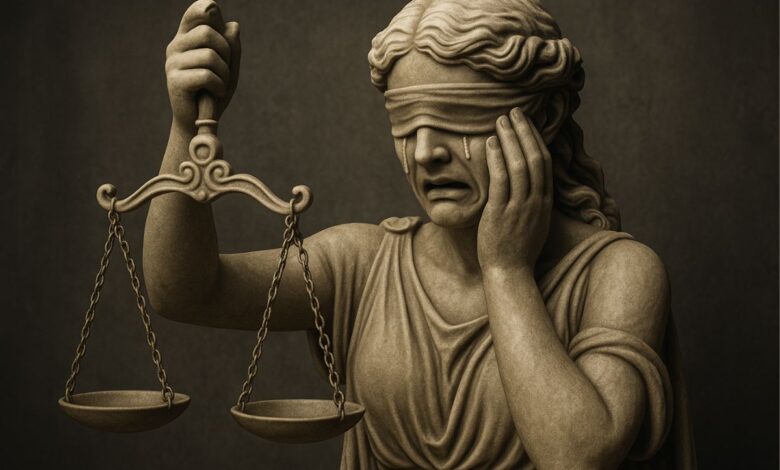
Two Events, One Devastating Irony
There are moments in a democracy when two events, occurring in close proximity, illuminate each other so completely that no commentary is required, only the courage to look at both simultaneously. India in early 2026 produced one such moment, and it deserves to be held up against the clearest possible light.
In late February 2026, India’s Supreme Court, led by a bench comprising Chief Justice Surya Kant and Justices Joymalya Bagchi and Vipul M. Pancholi, took suo motu cognizance of a Class 8 social science textbook published by the National Council of Educational Research and Training (NCERT). In an extraordinary intervention, the apex court imposed an interim ban on the NCERT textbook titled “Exploring Society: India and Beyond (Vol II)” after a section titled “Corruption in the Judiciary” triggered alarm within the country’s highest judicial institution.
The bench delivered unusually blunt remarks during proceedings, calling the inclusion of the section a “deep-rooted, well-orchestrated conspiracy.” The Chief Justice declared from the Bench, in words that have since become both famous and controversial: “I will not allow anyone on earth to defame the judiciary and taint its integrity.”
Then, on April 9, 2026, barely six weeks after the Supreme Court’s dramatic intervention against an educational textbook, Justice Yashwant Varma wrote a letter to President Droupadi Murmu. “While I do not propose to burden your august office with the reasons which have constrained me to submit this missive, it is with deep anguish that I hereby tender my resignation from the office of Judge of the Hon’ble High Court of Judicature at Allahabad, with immediate effect,” he wrote.

With that letter, the process of impeachment against him, for alleged unaccounted cash found at his official residence came to an end. The evidence burned. The judge resigned. The proceedings closed. The pension remains intact, the title preserved, the benefits uninterrupted.
The Supreme Court, which found energy aplenty to ban a children’s textbook, has a hollow mechanism to follow a resigned judge to conviction. One institution was compelled to prostrate itself in public apology before the nation’s children could read a paragraph about corruption. Another institution’s member walked away from the largest cash scandal to rock India’s higher judiciary in decades, with no criminal consequence, no prosecution, no punishment. By the way, very recent was the first anniversary of Justice Yashwant Varma’s Cash Burnt Case – Wow! What An Irony! So, NCERT was not wrong. And that, precisely, is what the Supreme Court could not permit India’s schoolchildren to know.
The Textbook That Told Too Much Truth
The controversy began with the quiet publication of a new Class 8 social science textbook developed under India’s National Education Policy 2020. Chapter IV of the textbook, titled “The Role of Judiciary in our Society,” contained a sub-chapter on “Corruption in the judiciary.” The chapter, according to reports, addressed three central challenges confronting India’s judicial system: a massive backlog of cases, a shortage of judges, and the reality of corruption within the system. The social science textbook stated that corruption, a massive backlog of cases, and the lack of an adequate number of judges are among the challenges faced by the judicial system.
These are not invented concerns or partisan allegations. They are documented realities widely acknowledged by retired judges, bar councils, law commissions, international transparency organisations, and crucially, the Supreme Court itself in numerous judgments on judicial reform. The backlog of cases is so colossal that Prime Ministers, Law Ministers, and Chief Justices have all spoken publicly and repeatedly about it. The shortage of judges is a matter of public record. And judicial corruption, at the subordinate judiciary level at least, has been extensively documented, researched, and reported across decades.
Yet when a textbook prepared by an academic body under the Ministry of Education placed these realities before thirteen-year-olds, the institutional response was seismic.
On February 24, 2026, media reports surfaced about the chapter. The following morning, Senior Advocates Kapil Sibal and Dr. AM Singhvi orally mentioned their concerns over the textbook content before the Chief Justice’s bench, saying it was “scandalising the entire judiciary.” The Chief Justice said he was aware of the issue and that many judges were perturbed. He revealed that he had already passed orders to take suo motu cognizance.
Note the speed. Note the alarm. Note the architecture of the response. Senior lawyers, including a former Law Minister, personally appearing before the court’s bench at the first opportunity to raise the alarm. The court had already moved before the case was formally listed. The institutional reflex was instantaneous.
On February 26, the Supreme Court ordered a “complete blanket ban” on any further publication, reprinting, or digital circulation of the NCERT Class 8 book. The court observed that the textbook contained “offending” references regarding corruption in the judiciary, expressing serious concern and remarking that “a gunshot has been fired and the institution is bleeding.”
The order was sweeping. It directed a complete halt to the distribution of the textbook and instructed that authorities seize all physical copies currently in circulation, while digital versions were ordered removed from all online platforms. The Court also issued show cause notices to the NCERT Director and Secretary of the Department of School Education, asking them to explain why contempt proceedings should not be initiated.
Contempt proceedings. Against the Director of NCERT. For a textbook chapter on judicial corruption.
NCERT issued an “unconditional and unqualified apology” for publishing the Class 8 social science chapter that referred to judicial corruption, a day before the Supreme Court was scheduled to hear the suo motu contempt case on the issue. NCERT also reconstituted its 20-member curriculum committee following the Supreme Court’s March 11 order in the matter. The academic body that prepares curricula for approximately 250 million schoolchildren across India had been forced into full institutional capitulation before the nation’s apex court. The Chief Justice observed that the affidavit submitted by NCERT showed that the curriculum was prepared in a “very casual manner,” and declared “If this is the casual way, Mr SG, what do you expect from us?”
An academic institution, established by Parliament, carrying out its constitutional mandate of education and knowledge dissemination, had been treated as an errant junior functionary. Its autonomy had been overridden. Its curriculum, developed through multi-layered expert processes tied to the National Curriculum Framework and the NEP 2020, had been subjected to judicial censorship of a kind unknown in modern democratic legal systems. The implicit message was clear: certain truths about certain institutions are not appropriate for schoolchildren.
What truth? That corruption exists in the Indian judiciary. A claim that, as the events of March and April 2026 have demonstrated with forensic clarity, is far from being a “deep-rooted, well-orchestrated conspiracy”, it is a documented, proven, and institutionally-acknowledged reality.
The Fire That Spoke What the Textbook Was Banned for Saying
On the night of March 14, 2025, firefighters responded to a call at the official bungalow of Justice Yashwant Varma, then serving as a judge at the Delhi High Court, in the heart of Lutyens’ Delhi. What they found while battling the blaze would redefine public discourse on judicial accountability for months.
The burnt cash was allegedly found in a storeroom near the servants’ quarters. Justice Varma and his wife were in Bhopal at that time. Early reports claimed that around Rs 15 crore in cash was found during the firefighting operation, though this amount has not been officially confirmed. Justice Varma denied all the allegations, saying, “I state unequivocally that no cash was ever placed in that storeroom either by me or any of my family members and strongly denounce the suggestion that the alleged cash belonged to us.”
The Supreme Court’s response, initially, was appropriately institutional. On March 22, 2025, the Supreme Court released a report, including a video and three photographs, showing bundles of notes that were allegedly recovered from the judge’s home, and set up a three-member committee to investigate. This public release of photographs and videos was itself unprecedented as a rare moment of judicial transparency forced by the scale of public outrage.
The three-member in-house inquiry committee, comprising Punjab and Haryana High Court Chief Justice Sheel Nagu, Himachal Pradesh High Court Chief Justice GS Sandhawalia, and Karnataka High Court Justice Anu Sivaraman, completed its work with notable speed. The 64-page report held Justice Varma responsible for “misconduct” and found “strong inferential evidence” of his “covert or active control” over the cash found at his residence. The committee criticised Justice Varma for failing to provide any plausible explanation for the source of the money, noting that he only offered a “flat denial.” The committee concluded that there was “sufficient substance” in the charges against Varma and that the judge’s misconduct was “serious enough to call for initiation of proceedings for removal.”
The then Chief Justice of India, Sanjiv Khanna, forwarded the report to the President and the Prime Minister recommending removal. Justice Varma refused to heed the Chief Justice’s advice to resign. He instead challenged every step of the process legally, the in-house inquiry, the collegium’s recommendation, the Lok Sabha Speaker’s decision to constitute an inquiry committee. He argued that the in-house committee lacked the legal authority to recommend his removal, that only Parliament possessed the constitutional power to initiate impeachment, that the committee had acted in a “pre-determined manner” and denied him a fair opportunity to defend himself, and that it had “drawn adverse inferences without concrete evidence against him after reversing the burden of proof.”
The Supreme Court dismissed his petition challenging the in-house inquiry. It dismissed his petition challenging the Lok Sabha Speaker’s inquiry committee. Out of legal recourse, Justice Varma resigned from office on April 9, 2026, more than a year after the recovery of unaccounted cash at his official residence. In doing so, Varma escaped a potential formal proceeding in Parliament to remove him from office.
Cash found. Inquiry ordered. Report delivered. Misconduct found. Resignation tendered. Inquiry over. Pension intact. The NCERT chapter that dared describe a version of this pattern for India’s schoolchildren was banned. The pattern itself, once lived through in real time by India’s republic, results in no criminal consequence whatsoever.
The Constitutional Architecture of Impunity
To understand how this is possible, how a judge against whom an inquiry found “strong inferential evidence” of misconduct and whose report was forwarded to the President recommending removal can still walk away with pension, title, and freedom; one must understand the constitutional and legal machinery that governs India’s higher judiciary. It is a machinery designed, with genuine good intentions around judicial independence, that has produced, as an unintended but entirely predictable byproduct, what amounts to near-total judicial immunity from criminal accountability.
No judge in India has been impeached since independence. The strict voting thresholds, along with political negotiations and shifting alliances, make the process rare and difficult to complete. India’s judicial history has witnessed only a few major impeachment proceedings against higher judiciary members, highlighting the nation’s accountability mechanisms, and none has led to a judge’s removal from office. This is not a minor footnote. It is the central structural fact about judicial accountability in the world’s largest democracy: in over 75 years of constitutional history, not one judge of the Supreme Court or a High Court has been successfully impeached and removed from office.
The formal mechanism for removal is embedded in Articles 124(4) and 218 of the Constitution, read with the Judges (Inquiry) Act, 1968. A removal motion must be signed by at least 100 MPs in the Lok Sabha or 50 MPs in the Rajya Sabha. Once admitted, a three-member committee investigates the charges, and the judge can only be removed if both Houses of Parliament pass the motion with a two-thirds majority. This two-thirds threshold in both Houses, simultaneously, during the same session, creates a constitutional barrier of exceptional height.
To date, impeachment proceedings have been initiated against sitting High Court or Supreme Court judges in India five times, none of which have been successful. Justice V. Ramaswami faced an unsuccessful impeachment in 1993 after a motion did not pass in the Lok Sabha due to a lack of special majority votes. In 2011, Justice Soumitra Sen of the Calcutta High Court resigned after the Rajya Sabha passed an impeachment motion against him for financial misconduct — the only instance in which impeachment has succeeded in the Upper House. That same year, Chief Justice of the Sikkim High Court Justice P.D. Dinakaran resigned ahead of his impeachment proceedings.
Crucially, in each case where impeachment was advancing, Soumitra Sen and now Justice Varma, the judge resigned before the process was complete. Three out of five major impeachment attempts ended with judges resigning before completion of proceedings, allowing them to retain benefits. Resignation, constitutionally and practically, closes the parliamentary process. It is the ultimate and perfect exit ramp from accountability.
But why can governments not file an FIR after the judge resigns? Here the legal architecture reveals its most extraordinary feature. In the landmark 1991 Supreme Court judgment in K. Veeraswami v. Union of India, the requirement was established that criminal proceedings against High Court and Supreme Court judges require prior approval from the Chief Justice of India, making prosecution exceedingly difficult. The judge facing corruption allegations cannot be prosecuted without the permission of the head of the very institution to which the judge belongs. The gatekeeper and the institution are one. The circle of protection is complete.
The Supreme Court has also ruled that no entity, including investigative agencies like the CBI, could “investigate or enquire into or discuss the conduct of a judge or the performance of his duties”, extending this restriction to both official performance and “off court” behaviours. This effectively shielded judges from external scrutiny. The judiciary, in other words, used its own judicial power to determine the scope of the immunity it would enjoy from investigation. It adjudicated on its own protection. It held that the hand investigating the judiciary cannot move without the judiciary’s own permission.
According to legal experts, the lack of prosecutions for corruption indicates that the current mechanisms are not capable of addressing judicial corruption. One expert made a point that should stop every citizen cold: “It is beneficial for governments to not investigate corruption allegations within the judiciary,” he said. Governments across party lines have historically shared a symbiotic interest in keeping the judiciary’s internal accountability mechanisms non-functional. A judge who owes a subtle debt to the political establishment for a comfortable resolution of a difficult situation is a different asset from a judiciary in full, independent, fearless command of its own moral authority.
The Scale of What Doesn’t Get Addressed
The Justice Varma episode is not an aberration. It is the most visible expression of a systemic condition that operates, with less drama and far less visibility, across India’s higher judiciary every day.
During the five years from January 2017 to December 2021, 1,631 complaints were received in the Centralised Public Grievance Redress and Monitoring System on the functioning of the judiciary, including judicial corruption, and forwarded to the CJI or Chief Justices of High Courts as per the in-house procedure. This information was given by the Union Minister of Law and Justice, Kiren Rijiju, in a written reply in Lok Sabha. Sixteen hundred and thirty-one complaints. In five years. Forwarded. Forwarded to the very institution whose conduct was being complained about.
Since the in-house inquiry mechanism is confidential, it is unclear as to how many judges were investigated or what action was taken. The opacity is not incidental. It is constitutional, upheld by a 2003 Supreme Court ruling that inquiry reports under this mechanism must remain confidential. Citizens who file complaints about judicial misconduct have no means of knowing whether their complaint was ever seriously considered, what findings were reached, or what consequences, if any, followed. The feedback loop is broken by design.
The historical case record makes for deeply uncomfortable reading. Justice SN Shukla of the Allahabad High Court was found guilty of corruption by an in-house inquiry and his judicial work was withdrawn, though he remained a judge and received full salary until retirement. Justice IM Quddusi, a retired High Court judge, was arrested for allegedly brokering Supreme Court cases, secured bail within a week, and the case remains pending.
In November 2011, former Supreme Court Justice Ruma Pal listed what she called the “seven sins” of the higher judiciary: turning a blind eye to the injudicious conduct of a colleague; hypocrisy — the distortion of the norm of judicial independence; secrecy — lack of transparency in the appointment of judges to the High and Supreme Court; plagiarism; arrogance — wherein the higher judiciary has claimed superiority and independence to mask its own indiscipline; professional incompetence; and nepotism — wherein favours are sought and dispensed by some judges.
This was a sitting Supreme Court judge speaking publicly about her own institution. Her words were noted, widely reported, and then carefully filed away into the comfortable drawer of things that are acknowledged but never acted upon.
Only about 13% of High Court judges have disclosed their assets publicly, highlighting a fundamental lack of financial transparency within the institution. Those who have persistently demanded that politicians disclose their assets, including the Supreme Court, which has heard multiple PILs on the subject, have exempted themselves from equivalent scrutiny. The demand for transparency is, apparently, directional.
The Lokpal Shield and the NJAC Precedent, How the Judiciary Defended Its Own Perimeter
The institutional machinery of judicial self-protection is not limited to the in-house procedure and the Veeraswami precedent. The judiciary has, over decades, actively shaped the legal architecture that governs its own accountability, and shaped it, consistently, in the direction of greater insulation.
The Lokpal and Lokayuktas Act, 2013, India’s landmark anti-corruption legislation, was passed with notable exclusions. The Lokpal anti-corruption law of 2013 excluded the judiciary from its purview, anticipating a separate mechanism, which is yet to materialize. Notably, the Judicial Standards and Accountability Bill, 2010, which would have required judges to declare assets and set up a judicial oversight committee, was passed by the Lok Sabha but ultimately lapsed.
The question of whether the Lokpal even has the authority to investigate judges was dramatically tested in early 2025, when the Lokpal determined it had jurisdiction over High Court judges established by Acts of Parliament. The Supreme Court took suo motu cognizance of the Lokpal’s decision, with Justice Oka stressing that “all judges have been appointed under the Constitution,” reinforcing that their status as constitutional authorities exempts them from falling within the jurisdiction of a statutory body like the Lokpal. The Supreme Court effectively stayed a corruption investigation authority’s attempt to investigate corruption in the judiciary.
The pattern extends further. When Parliament attempted to create a National Judicial Appointments Commission (NJAC) in 2015, a body that would have introduced executive and eminent citizen participation in the selection of judges, creating a minimal degree of external accountability in the appointments process, the Supreme Court struck it down in favour of preserving judicial independence.
The court overturned a constitutional amendment that had been passed unanimously by both Houses of Parliament, supported by the requisite number of state legislatures, and cleared by the President. It did so in the name of protecting the judiciary from “executive interference.” The irony of an institution that strikes down Parliament’s attempts to create judicial accountability then using that same power to ban a textbook that discusses the resulting accountability deficit is not subtle.
This pattern, the judiciary striking down or staying mechanisms designed to create oversight of itself, while simultaneously deploying suo motu jurisdiction against institutions that discuss the resulting opacity, forms a coherent, if troubling, narrative. It is a narrative about power, not law. About institutional self-preservation, not constitutional principle.
The NCERT Paradox — Academic Freedom in the Age of Institutional Sensitivities
Return now to the textbook. The NCERT is not a fringe publisher. It is a statutory body established by the Government of India, operating under the Ministry of Education, whose textbooks are used in Central Board of Secondary Education schools across the country and adopted as the basis for state board curricula in many states. Its curriculum development process involves expert committees, peer reviews, alignment with national curriculum frameworks, and approval chains that span multiple institutional levels.
The NCERT textbook’s Chapter IV discussed issues within the Indian judicial system, specifically focusing on the high number of pending cases and allegations of judicial corruption. The chapter’s discussion of corruption became the most controversial part and led to a major constitutional and institutional confrontation. The Supreme Court bench expressed concern that such content could influence young and impressionable students, encouraging a biased perception of judicial institutions and undermining public confidence in them.
This argument, that children should not be taught about corruption in an institution because it might undermine their confidence in that institution, inverts the foundational logic of civic education. Democratic societies educate their young precisely to develop informed, critical, and engaged citizens who understand the strengths and weaknesses of the institutions that govern them. The alternative, an education that presents institutions as unblemished, beyond criticism, and free of documented problems, is not civic education. It is propaganda. And the distinction between the two has never been more consequential.
A central tenet of India’s constitutional structure is the system of checks and balances, designed to prevent any single institution from acquiring absolute power. An education system that teaches children the theory of checks and balances while being judicially prohibited from acknowledging that the judiciary, like the executive and the legislature, is subject to those checks, is teaching incomplete constitutionalism. More precisely, it is teaching a version of constitutionalism in which one institution is exempt from the scrutiny it applies to all others.
The argument also collapses entirely on its own evidentiary terms. If the chapter on “Corruption in the Judiciary” was false; if it was fabricated, defamatory, lacking factual basis, then the appropriate response would have been a legal challenge on grounds of defamation or factual inaccuracy, with the burden on the court to demonstrate what specifically was false. Instead, the court’s language, “a gunshot has been fired,” “the institution is bleeding”, was the language of institutional wounded pride, not legal precision. The court did not, publicly and specifically, identify which sentences in the chapter were factually incorrect. It objected to the chapter’s existence, and its tone, and its potential effect on young minds.
The question that has yet to receive a satisfying answer is simple: which sentence in NCERT’s chapter on judicial corruption was factually wrong? The 1,631 complaints forwarded to chief justices between 2017 and 2021 are a matter of public parliamentary record. Justice Soumitra Sen’s conviction by the Rajya Sabha for financial misconduct is a matter of constitutional record. Justice Ramaswami’s impeachment proceedings, in which an inquiry committee found him guilty on 11 of 14 charges, is a matter of parliamentary record. The Ghaziabad provident fund scam involving court employees and implicating judges is a matter of judicial record. The 2017 medical college bribery case involving CBI probes into attempts to influence judicial orders is a matter of public record.
Approximately 70-75% of inmates in Indian jails are undertrials, meaning they have not yet been convicted; a direct consequence of judicial delay that the same textbook discussed alongside corruption. These are not slanders. They are statistics from the National Crime Records Bureau. They describe a system that incarcerates hundreds of thousands of human beings, largely poor, largely marginalised, often without legal representation, before they are ever convicted of anything. This is not a conspiracy theory. It is a quantified humanitarian reality that the Supreme Court itself has repeatedly acknowledged and directed correction of, without sustained systemic improvement.
The ‘Officers of Court’ Problem — Accountability Within the Temple
The phrase “officers of court” is a legal term of art used to describe lawyers practising before courts, advocates who are considered integral to the administration of justice and who owe duties to the court as well as to their clients. In a broader sense, however, the judiciary as an institution employs and empowers a vast network of human beings, judges, court staff, administrative officials, who together constitute the machinery of justice.
The question this article poses is this: if the Supreme Court is committed enough to the image of the judiciary to ban a textbook, is it equally committed to the substance of judicial integrity to examine what is happening within its own precincts, within the confidential in-house procedures, and within the collegium’s appointment decisions? The answer, based on the evidence, is that the commitment is directional: outward image protection is vigorous; inward accountability is minimal, confidential, and rarely consequential.
The impeachment of a judge in India remains an exceedingly difficult and rare process, governed by Article 124(4) and (5) of the Constitution and the Judges (Inquiry) Act, 1968. This mechanism, intended to ensure judicial independence, has inadvertently led to near-total judicial immunity. No sitting or former judge has ever been impeached or convicted for corruption in India. This is not a coincidence of clean living among those elevated to the bench. It is the structural consequence of an accountability system that was designed, perhaps necessarily, to protect judges from political pressure, but has evolved into one that protects them from all consequences.
The judiciary acts as the guardian of constitutional principles, civil liberties, and the rule of law, but repeated allegations against presiding judges; either proven or unproven, erode public faith in the institution. Justice, after all, is not just about legal pronouncements; it is about public perception. It is about people’s belief that the system will act fairly, impartially, and transparently, even when one of its own comes under scrutiny.
The collegium system in India is meant to minimize executive overreach and reinforce judicial independence by overseeing the appointment and transfer of judges. However, incidents like the cash scandal call into question whether a mere transfer is an adequate response to misconduct allegations by a judge. Justice Varma was, after all, transferred from the Delhi High Court to the Allahabad High Court following the discovery of cash at his residence. He continued to receive judicial salary, the privileges of office, and the title of “Justice” throughout the entire period of the inquiry. He was given explicit instructions that he would not be assigned any judicial work pending the outcome of the inquiry — but transfer, not suspension; inconvenience, not accountability.
A citizen of India who is found with Rs 15 crore in unaccounted cash during a government investigation faces immediate arrest, FIR registration under the Prevention of Money Laundering Act, seizure of assets, and remand. There is no in-house procedure. There is no collegium. There is no courtesy transfer to a different city. There is no resignation that closes the file with pension intact.
The Contempt Power — The Asymmetric Weapon
One of the most consequential tools in the Supreme Court’s institutional arsenal is the power of contempt. Under the Contempt of Courts Act, 1971, any expression that scandalises or tends to scandalise the court, lowers or tends to lower its authority, or interferes with the due course of any judicial proceeding can be punished. The power has been used against journalists, activists, lawyers, politicians, and in the NCERT case, educational institutions.
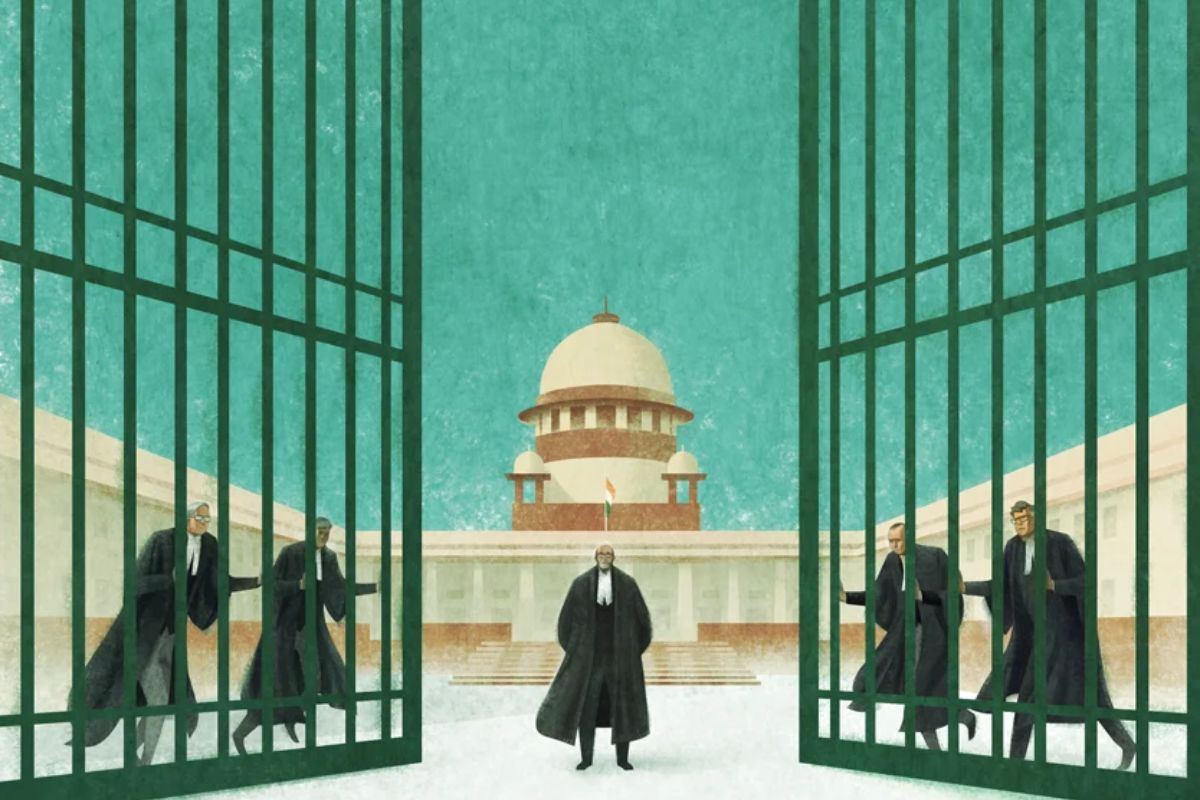
The asymmetry embedded in the contempt power is structural and consequential. A citizen who publicly alleges that a judge is corrupt risks contempt proceedings. A judge who is found by a formal inquiry committee to have “strong inferential evidence” of misconduct faces… an advisory from the Chief Justice to resign. One faces the coercive power of the state. The other faces a polite recommendation.
The Supreme Court has also broadened the constitutional prohibition on discussing judges’ conduct in Parliament, except during impeachment, to encompass all forums, groups, individuals, and associations. It held that no such entity could “investigate or enquire into or discuss the conduct of a judge or the performance of his duties”, extending this restriction to both official performance and off-court behaviours. This self-proclaimed immunity from discussion, from the media, from civil society, from Parliament outside of formal impeachment, combined with the contempt power’s capacity to punish those who do discuss judicial conduct, creates a zone around the judiciary that no other institution in India’s constitutional order enjoys.
The legislature is subject to public criticism, media investigation, electoral accountability, and active court oversight. The executive is subject to parliamentary scrutiny, media accountability, court review, and the RTI Act. The judiciary is subject to… the judiciary. The examiners set the exam, proctor the exam, grade the exam, and decide whether the results should be made public. The students, India’s 1.4 billion citizens, are expected to trust the process without seeing it.
The Reforms That Never Arrive — A Graveyard of Good Intentions
The prescription for what ails India’s judicial accountability system is neither new nor particularly contested. Legal experts, law commission reports, retired judges, and civil society organisations have converged on a broadly similar set of reforms for decades. The consensus has been consistent. The political and institutional will to implement it has been absent.
Independent investigative agencies should be empowered to examine corruption cases against judges without judicial interference. The Lokpal should be granted explicit authority to investigate judicial corruption. Judicial asset disclosure must be made mandatory; currently, only about 13% of High Court judges have disclosed their assets. The opaque collegium system should be replaced or modified to ensure a more accountable selection process.
The fact that no judge has ever been successfully impeached in India’s 75-year constitutional history suggests that the current mechanism requires a significant overhaul. Key reforms should focus on creating more accessible accountability mechanisms, including reducing the two-thirds removal requirement and establishing an independent statutory judicial oversight committee.
The Judicial Standards and Accountability Bill, 2010, which would have required judges to declare assets and set up a judicial oversight committee, was passed by the Lok Sabha but ultimately lapsed. It lapsed not because it was rejected. It lapsed because Parliament did not reintroduce it. The judiciary, in the interval, had made clear its institutional disposition toward external oversight. The political cost of pressing the matter was higher than the political benefit, given that governments — as one expert noted — benefit from an judiciary whose cooperation on politically sensitive cases can be, at least in theory, cultivated through the comfort of its immunity.
This is the closed loop that India’s accountability system has settled into. The judiciary is immune from the outside. Governments benefit from that immunity. Civil society is structurally disabled from legal challenge by the contempt power. Citizens are now, apparently, to be shielded from learning about this arrangement in their schoolbooks.
The Public Interest Case for NCERT’s Chapter
Let this be stated clearly, before the conclusion: NCERT did not publish a chapter designed to defame the judiciary. It published a chapter designed to educate children about the constitutional role of the judiciary, the challenges it faces, and the reality of its imperfections, precisely the kind of critical civic awareness that any functioning democracy must cultivate in its young people.
A significant consequence of judicial delay is the large population of undertrial prisoners. Approximately 70-75% of inmates in Indian jails are undertrials, meaning they have not yet been convicted. Prolonged delays hinder social justice and result in continuous economic loss, impacting the nation’s GDP. These facts belong in a civics textbook. They belong in public discourse. They are the context within which India’s children will grow up, vote, seek justice, and pay taxes that fund the judicial system.
Some scholars argue that protecting institutional credibility should not come at the cost of academic autonomy, and that while institutions must defend their integrity, they must also remain open to scrutiny in a democratic society. The Supreme Court has, in landmark judgments on the RTI Act, held that transparency in public institutions is a fundamental value of constitutional democracy. It has upheld citizens’ right to information about the functioning of government bodies. It has championed public interest litigation as a mechanism for public accountability. In banning the NCERT chapter, it applied a different standard — one in which the right to information ends at the gates of the judiciary.
In February 2026, the Supreme Court of India took suo motu cognisance of the Class 8 social science textbook and ordered a complete ban on the publication, circulation, and digital dissemination of the textbook, directing authorities to seize copies already distributed. Seize copies. Of a children’s textbook. On corruption in the judiciary. At a time when a sitting judge’s home had been found to contain a large quantity of unaccounted burnt cash. The timing, the action, and the target together constitute one of the most striking institutional moments in India’s recent legal history.
Conclusion: The Mirror the Institution Refuses to Face
There is a simple test that any institution in a democracy must be able to pass: can it tolerate the same scrutiny it applies to others? Can the body that reviews executive overreach survive review of its own conduct? Can the institution that demands transparency from legislatures and corporations maintain transparency about itself?
The effectiveness of India’s judicial accountability mechanisms remains in question, as no sitting or former judge has ever been impeached or convicted for corruption. Judicial corruption undermines the credibility of the legal system and erodes public faith in the rule of law. It creates unequal access to justice, where financially or politically powerful individuals can secure favourable outcomes, while ordinary citizens face protracted litigation and bias.
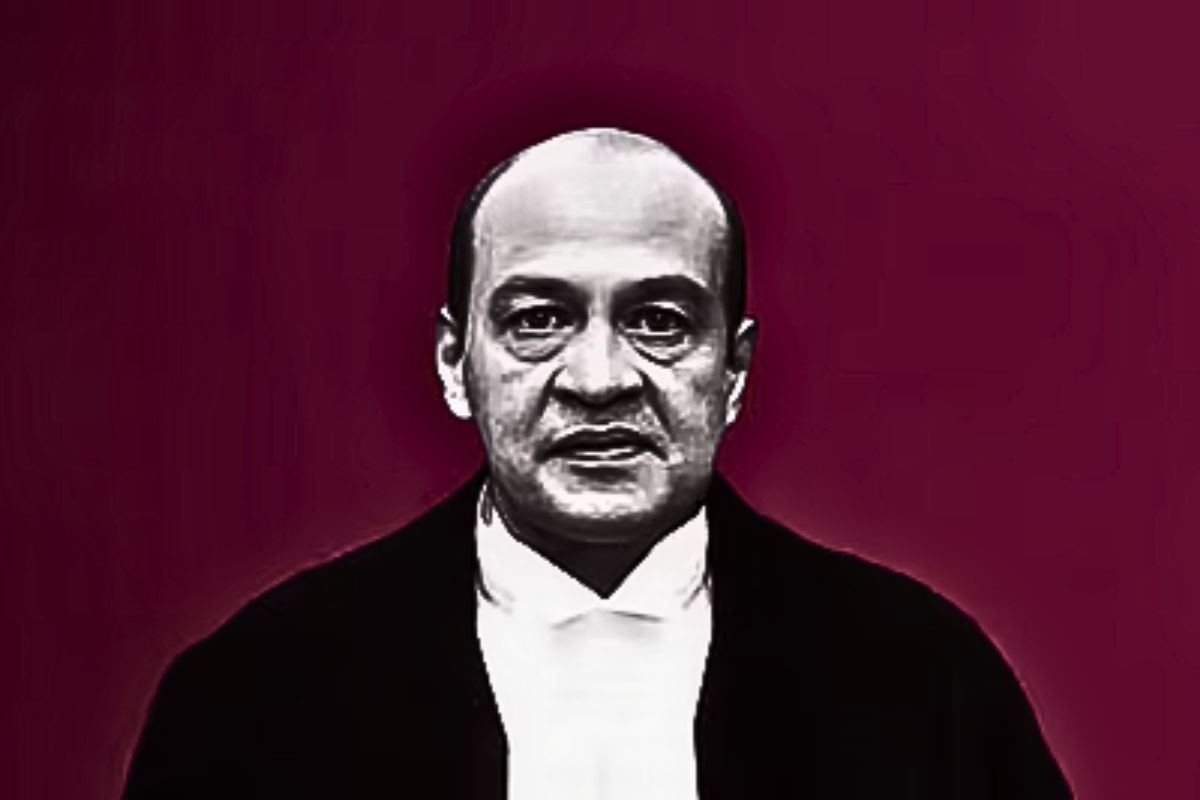
Justice Yashwant Varma’s resignation concludes a chapter in which an inquiry found misconduct, a Chief Justice recommended removal, 146 MPs signed an impeachment motion, and still the outcome was retirement with full benefits. The NCERT’s forced apology concludes a chapter in which a statutory academic body was compelled to erase from children’s textbooks a description of a systemic problem that the very institution compelling the apology was simultaneously demonstrating, in real time, it was unable to resolve.
The India that NCERT was teaching its students about is the India that actually exists. The institution that objected to that teaching is the institution that has the most work to do to make it untrue.
A democracy that cannot bear to see itself in a mirror placed before its schoolchildren is a democracy in institutional crisis. The question is not whether NCERT was right to describe corruption in the judiciary. The events of 2025 and 2026 have answered that question definitively. The question is whether the Supreme Court has the institutional courage to read that answer, and to act on it, rather than against those who dare to speak it.
India’s judiciary owes this republic not a ban, not a forced apology, and not a contempt notice. It owes reform, transparency, and the willingness to be judged by the same standard of accountability it has always demanded of every other institution in this democracy.