Telangana’s Budget Priorities And The Azharuddin Bungalow Question, ₹76 Lakh For Renovations But Potholes For People?
At a time when Telangana’s government is warning of empty coffers, delayed welfare payouts, and mounting debt, the sanctioning of ₹76 lakh for renovating a ministerial bungalow has triggered uncomfortable questions. Not about legality but about priorities, optics, and a growing disconnect between power and the people it governs.


A political controversy has erupted in Telangana after the Congress-led state government approved ₹76 lakh for repair and renovation work at an official ministerial residence allotted to Minority Welfare Minister Mohammed Azharuddin in Hyderabad’s upscale Banjara Hills. The sanction, granted for Minister’s Quarters No. 29, has drawn attention not merely because of the amount involved, but because of the timing.
The approval comes even as Chief Minister Revanth Reddy has repeatedly warned about the state’s fragile financial position, citing rising debt and fiscal constraints. Against that backdrop, the renovation has become a lightning rod for criticism.
What The ₹76 Lakh Is For
According to government officials, the building had remained unused for nearly 15 years, leading to significant structural deterioration. Technical assessments reportedly flagged leaking roofs, damaged flooring, broken doors and windows, outdated electrical fittings, and overall neglect.
The sanctioned works include waterproofing, wall and floor repairs, replacement of doors and windows, electrical upgrades, painting, and the installation of a modular kitchen. Officials argue the renovation was necessary to make the residence habitable.
However, reports also suggest that the state has sanctioned over ₹1 crore in total for renovation and sanitary works across ministers’ official residences – adding to the perception of elite comfort being prioritised.
The Optics Problem
The controversy is less about legality and more about optics and proportionality. Telangana’s government has repeatedly cited lack of funds to explain delays in welfare payments and infrastructure upgrades. In that context, spending tens of lakhs on ministerial residences inevitably raises uncomfortable questions.
The issue has also been compared with Delhi’s ‘Sheesh Mahal’ controversy, where the Arvind Kejriwal-led government faced sustained opposition attacks over the lavish renovation of the Chief Minister’s official residence. While Telangana’s case may differ in scale, the underlying concern, public money and political optics, is similar.
The expenditure on the residence allotted to him has come to represent a larger debate over governance priorities and public spending.
A State Under Economic Pressure
Beyond the bungalow, Telangana’s citizens are dealing with mounting economic stress. Inflation has steadily eroded disposable incomes, making everyday expenses harder to manage. While the state continues to project economic growth through official narratives and investment summits, the benefits remain uneven, with many households reporting a persistent squeeze on purchasing power.
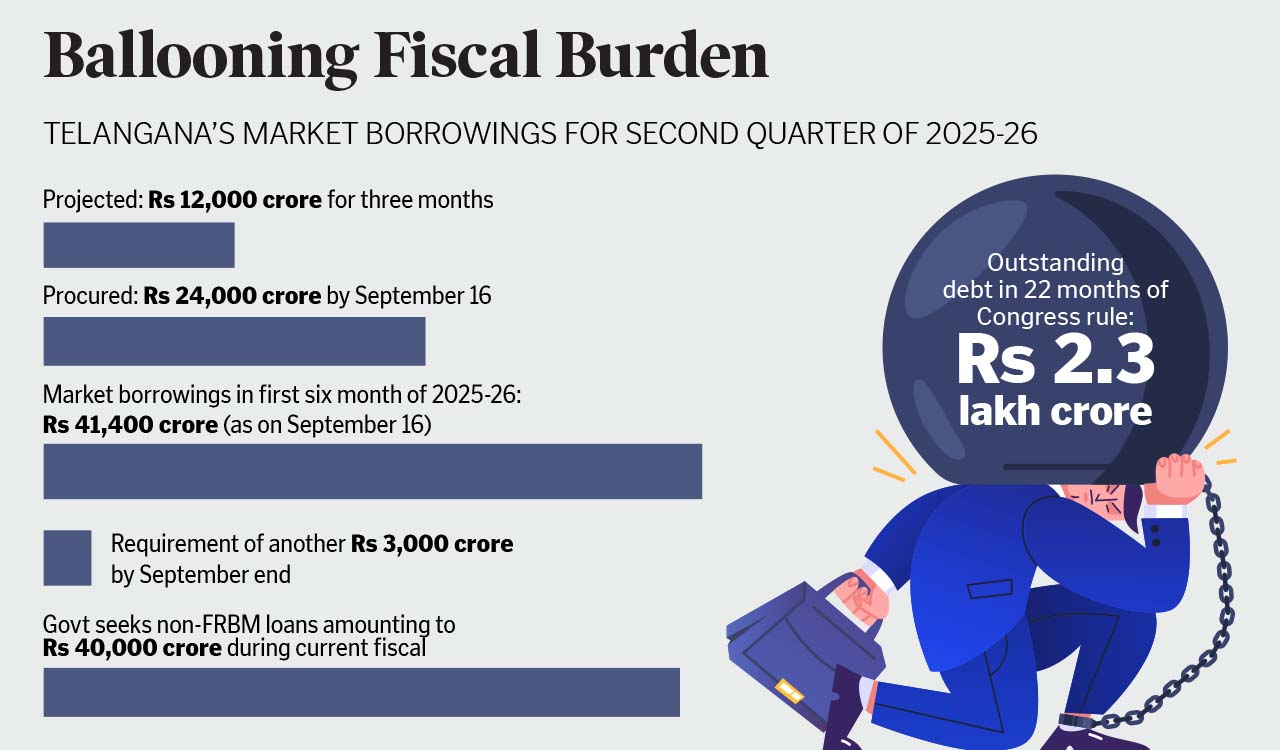
At the heart of this strain lies Telangana’s rapidly expanding debt burden. By 2025, the state’s outstanding debt is estimated to have crossed ₹4.5 lakh crore, with some reports placing the figure even higher when off-budget borrowings are included. Debt servicing costs have risen sharply, consuming a growing share of the budget and leaving the government with limited fiscal space for welfare schemes, infrastructure upgrades, and social spending.
Employment remains another pressure point, particularly for the youth. Despite repeated assurances and headline-grabbing investment announcements, job creation has failed to keep pace with demand. Concerns persist over job scarcity, delayed implementation of employment guarantees, and the widening gap between promises made and opportunities delivered.
Urban Telangana – Growth With Gridlock
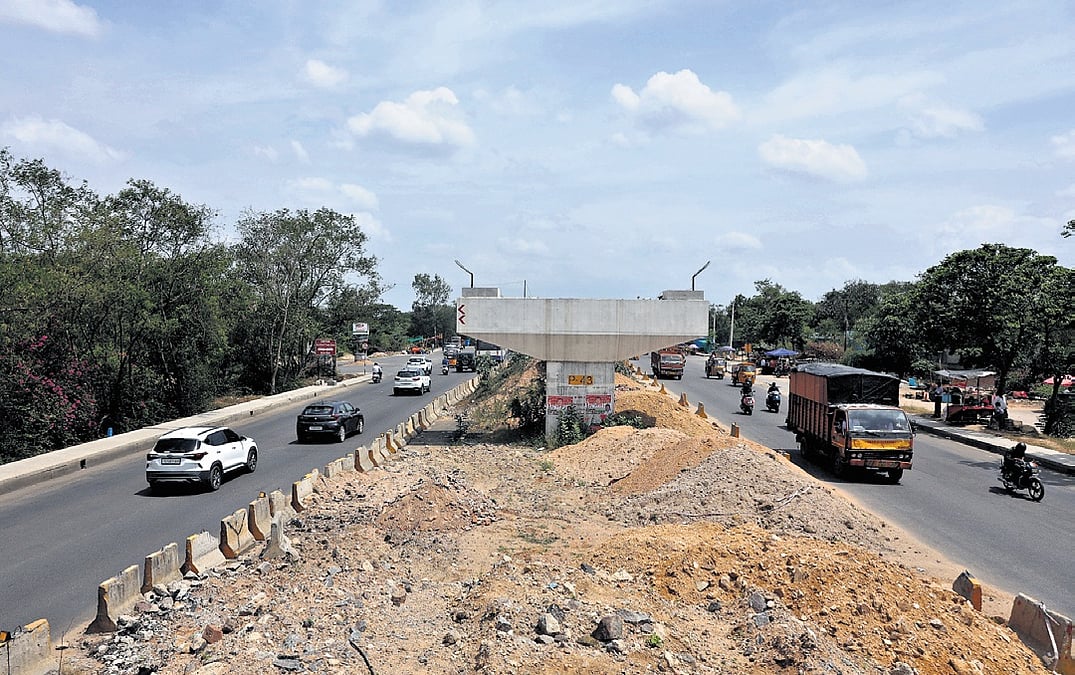
In cities like Hyderabad, infrastructure struggles remain impossible to ignore. Traffic congestion has worsened, pollution levels are rising, and drainage systems continue to fail during the monsoon. Poor road quality and waterlogging are recurring problems, disrupting daily life year after year.
At the same time, Hyderabad is no longer an affordable city for many. Housing costs and everyday expenses have surged, stretching middle-class budgets and deepening urban stress.
Rural Distress Beneath The Surface
Rural Telangana faces its own set of challenges. Increased reliance on groundwater has led to depletion and higher costs for farmers. Tenant farmers continue to be excluded from key financial support schemes like Rythu Bharosa, while delays in crop insurance payouts have left many vulnerable to climate and market shocks.
The sense of economic insecurity in rural areas contrasts sharply with the state’s development narrative.
Strained Public Services
Despite claims of growth, public investment in education and healthcare remains limited. Government schools and hospitals struggle with quality and accessibility, forcing many citizens to rely on private services that are often unaffordable.
Healthcare access in rural areas remains particularly weak, with high morbidity rates and limited facilities compounding everyday hardship.
The Questions That Refuse to Go Away
The controversy surrounding the ₹76 lakh renovation ultimately forces a set of uncomfortable but necessary questions, questions that go beyond any one minister or bungalow.
If the state’s finances are indeed as fragile as repeatedly claimed, how does one justify such generous spending on official residences while citizens are asked to adjust to delays in welfare payouts, inadequate infrastructure, and rising living costs? At what point does maintenance blur into indulgence, and who decides where that line lies?

Why is there fiscal restraint when it comes to fixing roads that flood every monsoon, upgrading drainage systems, or ensuring consistent drinking water supply- but apparent flexibility when it comes to improving the living standards of those in power? Should the comfort of the state’s “babus” take precedence over the daily inconvenience faced by taxpayers who fund the system?
There is also a broader question of governance culture. Does repeated spending on high-end renovations reinforce the perception of a political class insulated from the realities of inflation, job insecurity, and failing public services? And does this insulation erode public trust, especially at a time when governments rely heavily on credibility to push difficult economic decisions?
Most importantly, what message does such expenditure send to a citizen – pothole-ridden roads, overcrowded hospitals, and underfunded schools? That austerity is selective and that sacrifice is expected only from those without power?
These are not rhetorical provocations. They are fundamental questions of accountability, equity, and priority-setting; questions that any government committed to transparent and people-centric governance cannot afford to dismiss
More Than A Bungalow
Social challenges further add to the strain. Road accidents claim nearly 8,000 lives annually in Telangana, industrial pollution in residential areas like Jeedimetla threatens public health, and gig economy workers face precarious conditions with little protection.
Seen in this wider context, the ₹76 lakh renovation is not an isolated expenditure. It has become a symbol of governance priorities at a time when citizens are being asked to adjust, wait, and endure.
Budgets are ultimately statements of intent. In Telangana today, the uncomfortable question is not about pipes or paint, but about whether public resources are being aligned with public need. And that is a question far harder to renovate away.