The Price Of Escape: Is India’s Governance Forcing Its Youth To Die In Foreign Lands!?


A Tragedy That Speaks for Millions
When news broke that a 24-year-old youth from Karnal, Haryana, had died in a truck explosion in Arkansas, United States, it was not just the story of a life cut short. It was the story of India’s systemic betrayal of its own youth.
Amit Kumar had left India in 2023. His family had sold two acres of land, handing over nearly ₹60 lakh to travel agents who promised him a new life in America. He worked first in a store, later secured a truck driver’s licence, and then tragically perished in an accident. The family now awaits a DNA test to confirm his remains. What is left behind is not just grief, but a haunting question:
Why are young Indians forced to spend their life savings, risk their lives, and compromise their dignity in foreign lands, when their own country offers them nothing but hopelessness?
Why The Business of Exodus Is Existing? How Travel Agents Thrive on Government Neglect?
The “dunki route” is no secret. It is a shadowy but thriving business of illegal migration. Agents openly advertise “settlement packages” in towns across Punjab, Haryana, and Uttar Pradesh. Families sell land, gold, and homes to finance these trips. Estimates suggest ₹50 lakh–₹70 lakh per person is the going rate to enter the US illegally. India is among the top five countries of origin for irregular migrants into North America. Local agents, often politically connected, function almost without fear of the law.
Why? Because enforcement is toothless, and in many cases, politicians themselves shield the network. The government plays the role of a mute spectator while entire villages are drained of their youth. But the question arises, Why Youth Leave? Is the reason is the Rot at Home? To understand why families like Amit’s take such a devastating gamble, one must turn the gaze inward.

Unemployment Crisis
-
- India’s unemployment rate among the youth (15–29 years) has hovered between 15–20% for the last decade.
- Educated unemployment is higher as engineering and MBA graduates are doing gig work or selling insurance.
Wage Stagnation and Precarity
-
- Average starting salaries for graduates are between ₹12,000–₹18,000 per month in tier-2 cities.
- Compare this with the ₹2–3 lakh monthly income promised abroad, even for blue-collar work.
Collapse of Trust in Governance
-
- Corruption in recruitment exams, delayed job notifications, and irregular government vacancies have turned the public sector into a mirage.
- Schemes like “Skill India” have produced certificates, not jobs.
Cultural Obsession with Migration
-
- Migration has become a badge of honour. An NRI son-in-law is valued far higher than a local graduate.
- Government inaction only fuels this culture, reinforcing the idea that “success = escape.”
The tragedy of Amit Kumar is not just his accident. It is that his death was seeded years ago, when the state failed to create avenues for ambition within India.
Why is the Indian government responsible? The reasons are stark.
Policy Failure on Employment
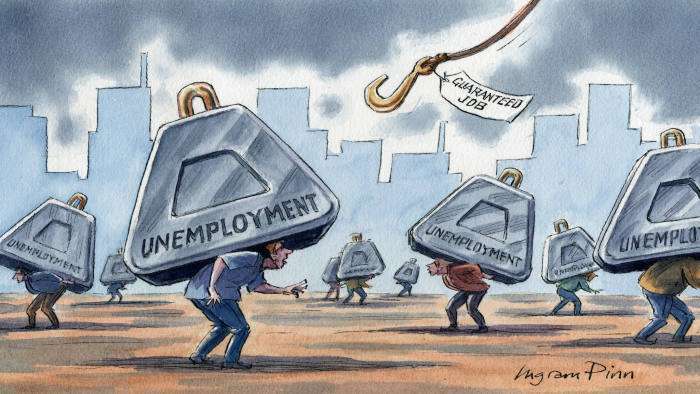
Every budget speech promises jobs, but actual creation is negligible. The gap between economic growth numbers and job growth numbers is yawning. India’s GDP can rise at 6–7%, but job growth remains at 1–2%. This mismatch has created a restless demographic time bomb.
Protection of Middlemen
Travel agents, many operating without licences, continue unchecked. Why? Because they fund political campaigns. Electoral bonds have only deepened these shadows, with migration mafias acting as financiers.
Cosmetic Youth Schemes
From “Digital India” to “Startup India,” slogans abound. But the ground reality is grim. Only a fraction of startups receive funding, mostly those backed by elites or global venture capital. Rural and small-town youth remain untouched.
Criminal Neglect of Diaspora Safety
While the government celebrates the Indian diaspora as “cultural ambassadors,” it has done little to protect those who migrate illegally. When tragedies strike, whether in Canada, the US, or Gulf nations, families are left to fend for themselves.
Prioritising Image Over Reality
Billions are spent on G20 summits, foreign visits, and glossy PR campaigns. But what about investing in skill infrastructure, rural employment, or local enterprise zones? The imbalance shows where the government’s priorities lie, i.e., in optics, not in outcomes.
The Kumar family sold two acres of farmland for ₹60 lakh to finance Amit’s trip. Let us pause and imagine what ₹60 lakh could do if opportunities existed in India:
- Set up a small-scale manufacturing unit employing 10–15 people.
- Invest in modernising agriculture with machinery, seeds, and irrigation.
- Build a franchise business in food, retail, or services.
- Fund higher education at India’s top universities.
But none of these are seen as viable, because government policies make entrepreneurship a bureaucratic nightmare. Loans are delayed, corruption eats into margins, and infrastructure fails. Families conclude that it is safer to risk America illegally than India legally. Amit’s story is shocking, but it is hardly unique. Every year, hundreds of Indian youth perish abroad due to unsafe work conditions, illegal migration, or exploitation. These deaths have become so frequent that they barely make headlines.
- In 2023, over 600 Indian migrants died in the Gulf region alone, often in construction sites.
- In North America, illegal migrants face death in deserts, freezing forests, or as in Amit’s case, unsafe jobs.
What is more disturbing is the numb acceptance of these deaths. Communities hold brief mourning, but the exodus continues. The government shrugs off responsibility, classifying them as “individual choices.” But is it truly individual choice when the system leaves no alternative?
The Cultural Mirage of “Foreign Dreams”
The government is not the only player at fault. Indian society too glorifies migration. The NRI life is marketed as glamorous, even when reality is one of menial labour, exploitation, and legal precarity. Families compete to send sons abroad, even via illegal channels, just to flaunt the label. The diaspora narrative, of wealth, cars, and houses, fuels a toxic cycle of aspiration without realism. Instead of challenging this illusion, the government embraces it. Ministers boast of India’s global diaspora as proof of “soft power.” Yet, for each Silicon Valley success story, there are thousands of silent deaths like Amit’s.
If India is truly the “world’s fastest-growing major economy”, why does it bleed its youth? Why are villages in Punjab, Haryana, and Gujarat half-empty, their young working as drivers and clerks abroad? Is GDP growth meaningful when its fruits bypass the very people who sustain the nation?
The real measure of governance is not stock market highs or summit speeches. It is whether the young feel empowered to build lives at home. On that count, India is failing catastrophically.
At the end, are we a Nation Betraying Its Own Youth?
Amit Kumar’s death in Arkansas is not a mere accident. It is the latest indictment of a government that has abandoned its youth to the mercy of agents, mafias, and foreign exploitation.

The tragedy forces us to ask:
- How many more young Indians must die before the government treats employment, safety, and dignity as non-negotiable?
- How many more families must sell their land, only to receive bodies in coffins, before migration mafias are dismantled?
- And most crucially, when will India stop pretending that the success of its diaspora excuses the failures of its governance at home?
Until then, the cycle will continue where dreams sold, money drained, lives lost. And each coffin that returns is not just a personal tragedy, but a national shame.