The War Arrives At Dubai’s Doorstep, The Sheen Fades, And The Silent Exit No One Is Talking About. Will Dubai Ever Be The Same Again?
For years, Dubai was projected as a city untouched by the chaos that surrounded it, a place where money, ambition, and luxury could thrive without interruption. That carefully built image is now facing its most serious test. As war edges closer and uncertainty begins to replace confidence, Dubai is no longer being seen as insulated from the region it sits in. What is unfolding is not just a moment of disruption, but a deeper shift in how the city is perceived by those who once saw it as untouchable.

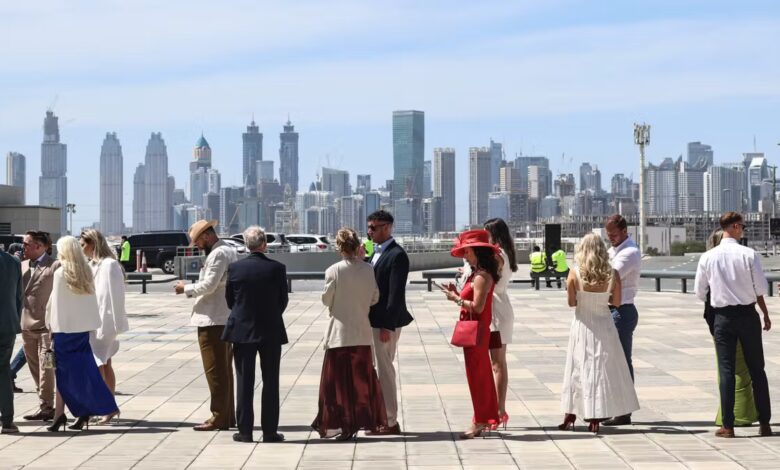
The illusion began to crack when the conflict between the United States, Israel, and Iran spilled beyond distant battle lines and into the Gulf. The United Arab Emirates, despite not being a direct participant in the conflict, found itself in the line of fire. Iranian missile and drone attacks, many of which were intercepted, still managed to pierce through the sense of distance that Dubai had long relied upon.
Reports indicate that thousands of drones and hundreds of ballistic missiles were launched towards the UAE since the conflict began. While the majority were neutralised by defence systems, some strikes reached critical points, including areas near Dubai’s airport, residential zones, and key infrastructure. The disruption was not just physical, but psychological. For a city that built its reputation on stability, even the perception of vulnerability was enough to unsettle residents and investors alike.
Daily life, once defined by predictability and excess, began to change in subtle but unmistakable ways. Emergency alerts warning of potential missile threats became part of routine existence. Flights were disrupted, airspace faced restrictions, and one of the world’s busiest aviation hubs saw operations impacted. Incidents such as strikes on data centres briefly affected digital payments, a small but symbolic reminder of how interconnected and fragile modern urban systems can be.
Even high-profile locations were not entirely spared. Reports of damage to luxury properties and hotels, including areas on Dubai’s iconic Palm Jumeirah, carried a visual weight that extended far beyond their physical impact. These were not just buildings, but symbols of the very lifestyle Dubai had marketed to the world.
What made this moment particularly significant was not just the scale of the attacks, but the fact that they reached a city that had long positioned itself as being above such realities. The war did not need to overwhelm Dubai to change it. It only needed to arrive at its doorstep.

The Economic Engine Starts Showing Strain
The first real signs of stress were not just visible in the skies, but in the numbers that have long defined Dubai’s success story. Unlike its neighbour Abu Dhabi, which sits on vast oil reserves, Dubai’s strength has always come from its ability to attract people, capital, and confidence. That model begins to falter the moment any one of those pillars weakens.
Tourism, the lifeblood of Dubai’s economy, has taken an immediate hit. Reports suggest that visitor numbers have dropped sharply, with some estimates pointing to declines of up to 80 percent. Hotels that once operated at near full capacity are now seeing significantly lower occupancy, and the usual flow of international travellers has slowed to a trickle. For a city where tourism alone contributes billions annually, this is not a temporary inconvenience but a structural shock.
The ripple effects have spread quickly across sectors. Dubai’s stock market has seen noticeable declines, reflecting growing uncertainty among investors. Real estate, often seen as a barometer of confidence in the city, has also begun to soften. Deals are being reconsidered, buyers are stepping back, and prices that once surged on demand are now facing downward pressure.
Financial institutions and multinational firms have responded with caution. Some have asked employees to work remotely, while others have temporarily relocated staff. These are not decisions taken lightly, and they signal a shift in how risk in the region is being assessed. When global firms begin to pull back, even in small ways, it raises larger questions about long-term confidence.
At the core of this slowdown is a simple reality. Dubai’s economy is deeply tied to perception. It thrives not just on what it is, but on what people believe it to be. A stable, predictable, and opportunity-rich hub. Once that perception begins to weaken, the impact is felt far beyond immediate financial losses.
What makes this moment particularly challenging is that Dubai does not have the cushion of natural resources to fall back on in the same way as other Gulf economies. Its resilience has always come from adaptability and reinvention. The question now is whether that will be enough to counter a disruption that is not internal, but geopolitical, and far less within its control.

The Great Exit: Expats, Tourists, and the Uneven Cost of Leaving
As uncertainty spread, the most immediate reaction came not from institutions, but from people. Dubai’s population, built overwhelmingly on expatriates, began to shift. Reports suggest that tens of thousands of residents and tourists have either left or are actively considering leaving, at least until the situation stabilises. For many, the very reason they chose Dubai, its promise of safety and predictability, now feels less certain.
Among those exiting are high-net-worth individuals, professionals, and the global workforce that powers Dubai’s service and financial sectors. Influencers who once projected an image of uninterrupted luxury have also begun to disappear, some quietly relocating, others openly documenting their departure. For a city that has long relied on visibility and aspiration as part of its appeal, this outward movement carries symbolic weight.
Personal accounts reflect a deeper shift in sentiment. Families who had settled in Dubai for years are reconsidering their plans. Professionals brought in for long-term roles are weighing temporary exits. Even those who remain are adjusting their expectations, no longer certain that the conditions they signed up for will hold.
However, this exit is not uniform. While some can leave at short notice, a much larger segment of Dubai’s population does not have that flexibility. Migrant workers, who form the backbone of sectors such as construction, logistics, and transport, often lack both the financial means and the freedom to simply relocate. For them, the risks remain, but the options are limited.
This contrast exposes a deeper reality beneath Dubai’s polished surface. The city’s success has always depended on a layered workforce, where mobility is not equally distributed. In times of stability, this imbalance is less visible. In moments of crisis, it becomes harder to ignore.
There is also a psychological dimension to this movement. Even if the majority of residents do not leave permanently, the act of considering departure changes how a place is perceived. Dubai has long positioned itself as a destination people move towards, not away from. The fact that this direction is now being questioned, even temporarily, signals a shift that goes beyond numbers.
The exodus, whether short-term or prolonged, is not just about physical movement. It reflects a recalibration of trust. And in a city where trust has been as important as infrastructure in driving growth, that recalibration carries consequences that may last well beyond the conflict itself.

Control, Confidence, and the Battle Over Perception
Even as signs of strain began to surface, the response from authorities has been swift and deliberate. Dubai’s leadership has worked to project continuity, emphasising that life in the city remains stable and that institutions continue to function as normal. Shopping malls have stayed open, businesses have been encouraged to operate, and official messaging has consistently reinforced a sense of calm.
This effort is not incidental. Dubai’s success has always depended as much on perception as on performance. Maintaining confidence is not just a communications strategy, it is an economic necessity. In a city built on global trust, even a temporary loss of narrative control can have lasting consequences.
At the same time, there have been visible attempts to manage the flow of information. Reports of individuals facing legal action for sharing images or commentary that contradict official statements point to a tightening grip over public discourse. Social media, which once amplified Dubai’s image of luxury and ease, has now become a space that is more carefully watched.
This creates a contrast that is difficult to ignore. On one hand, official statements emphasise resilience, continuity, and normalcy. On the other, there are quieter signals of disruption. Hotels are less crowded, business activity has slowed in certain sectors, and parts of the city that once thrived on constant movement feel noticeably subdued.
For residents, this duality can be disorienting. The city appears to function as it always has, yet underlying concerns are harder to dismiss. Daily routines continue, but they now exist alongside alerts, uncertainty, and shifting expectations.
What emerges from this moment is not a breakdown, but a tension between two realities. One is the Dubai that continues to operate, confident and outward-facing. The other is a more fragile version, shaped by geopolitical risk and the limits of control.
How long that balance can be maintained remains an open question. Because in the end, perception can be managed, but only up to a point. Beyond that, it begins to follow reality rather than shape it.
The Silent Exit No One Is Talking About
While the departure of tourists, professionals, and investors has drawn attention, there is another exit underway that has remained largely out of public conversation. This one is quieter, less visible, but equally telling. It involves the kind of networks that once found Dubai not just attractive, but ideal.
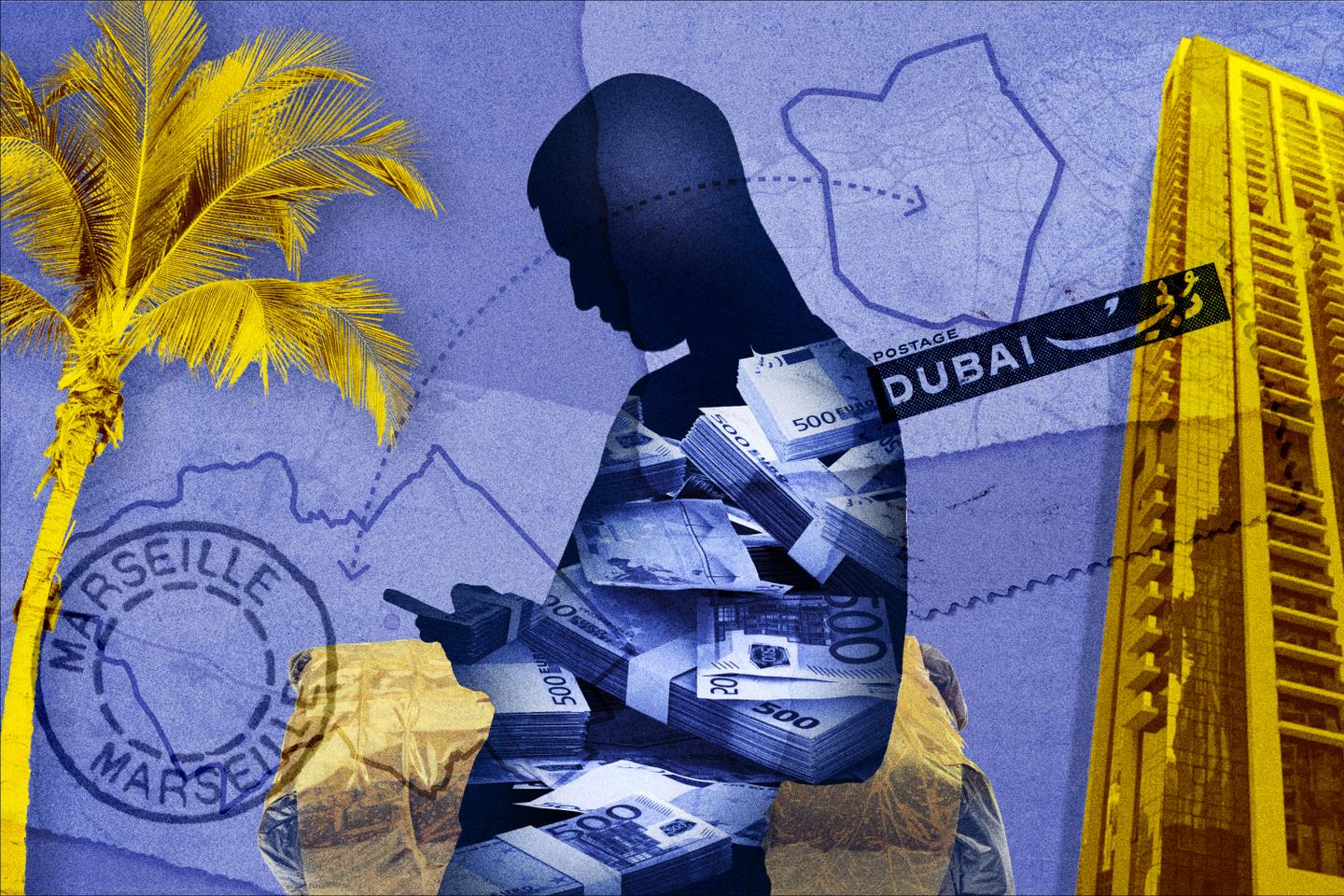
For years, Dubai functioned as more than a global business hub. It also served as a convenient base for transnational criminal networks, particularly those linked to Europe’s cocaine trade. Groups such as the Mocro Mafia operated across borders, managing logistics, finances, and coordination from locations that offered both connectivity and a degree of insulation from enforcement.
Dubai provided that environment. Its financial systems, ease of movement, and previously limited extradition enforcement made it a place where individuals could operate at a distance from the markets they controlled. The city’s global nature allowed them to blend into a broader ecosystem of wealth and mobility, where scrutiny was often diffused.
That equation, however, has begun to change. Increased pressure from European governments, particularly from countries such as the Netherlands and Belgium, has pushed the UAE toward greater cooperation on law enforcement. High-profile arrests, rising extraditions, and closer coordination with Western agencies have made Dubai a more uncertain base for those who once saw it as secure.
For these networks, the shift is significant. Their operations depend not just on scale, but on stability. The moment a location becomes unpredictable, whether due to geopolitical tensions or legal risks, it begins to lose its value as a command centre.
As a result, there are growing indications that parts of these networks are beginning to move elsewhere. Unlike the more visible departures of tourists or expatriates, this relocation does not happen in public view. There are no announcements, no visible trails. But the logic behind it is consistent with how such networks have always operated. They adapt quickly, often ahead of enforcement.
This quiet movement adds another layer to what Dubai is currently experiencing. It suggests that the shift is not limited to perception or short-term disruption. Even those who operated in the margins of the system, benefiting from its openness, are reassessing their position.
In that sense, the silent exit is not just about crime. It is an indicator. When even the least visible actors begin to move, it often signals that the environment they relied on is no longer as predictable as it once was.
Where the Shift Is Heading
As Dubai becomes less predictable, the question is not whether these networks will continue operating, but where they will move next. History suggests that such movements are rarely random. They follow opportunity, weak enforcement, and proximity to supply chains.
Increasingly, attention is turning toward parts of Africa, particularly West Africa. The region has long been a transit corridor for cocaine moving from Latin America to Europe, but it is now evolving into something more than just a passage point. Expanding port infrastructure, growing trade networks, and gaps in enforcement in certain areas make it an attractive option for groups looking to reposition.
For transnational networks, relocating closer to supply routes offers strategic advantages. It reduces dependency on distant coordination hubs and allows for tighter control over logistics. It also makes it easier to embed within local economies where oversight may be uneven and institutions still developing.
This does not mean Africa is replacing Dubai in a like-for-like manner. The roles are different. Dubai functioned as a high-end coordination and financial hub, while parts of Africa are being seen as operational bases. The shift, therefore, is not just geographic, but structural.
There are also indications that other regions, including parts of Asia, are being considered, particularly jurisdictions with limited extradition frameworks or where regulatory systems are still catching up with the scale of global illicit trade. The common thread across all these options is not geography alone, but the balance between opportunity and risk.
What this points to is a broader pattern. Crackdowns in one region do not eliminate networks; they displace them. Pressure reshapes routes, redistributes operations, and forces adaptation. The system adjusts faster than the mechanisms designed to control it.
In that context, Dubai’s tightening environment does not signal the end of these activities. It signals a transition. The centre of gravity shifts, and with it, the challenges move elsewhere.
This is why the current moment extends beyond a single city. It reflects how global networks respond to disruption, not by retreating, but by reorganising. And in doing so, they often move into spaces that are less prepared to handle them.
Can Dubai Recover, or Has Something Shifted?
Despite the disruption, it would be premature to suggest that Dubai’s position as a global hub has been fundamentally dismantled. There are strong arguments, backed by past experience, that the city has the capacity to recover. Dubai has weathered crises before, from the financial shock of 2008 to the economic standstill during the pandemic, and has often emerged with renewed momentum.
Experts and industry voices continue to point to the city’s structural strengths. Its infrastructure, regulatory efficiency, and ability to attract global capital remain largely intact. Government intervention has also been swift, with support measures aimed at stabilising businesses, extending financial relief, and preparing for a rebound once conditions improve.
There is also the advantage of regional backing. The presence of oil-rich neighbours such as Abu Dhabi provides a degree of financial cushioning that has proven valuable in past downturns. Combined with Dubai’s own adaptability, this creates a foundation for recovery that many other cities may not possess.
However, recovery in numbers is only one part of the equation. The more difficult question is whether the perception that powered Dubai’s rise can be restored in the same way. For years, the city’s appeal rested on a simple promise. It offered stability in an unstable region, opportunity without friction, and a lifestyle that appeared insulated from the tensions around it.
That promise has now been tested. Even if the war subsides and economic activity resumes, the memory of disruption does not disappear as easily. Investors may return, but with more caution. Expats may come back, but with revised expectations. Businesses may continue to operate, but with a sharper assessment of risk.
There are already signs of this recalibration. Conversations around relocation are becoming more cautious. Long-term commitments are being reconsidered. The assumption that Dubai is immune to regional shocks has been replaced, at least for now, with a more measured view of its vulnerabilities.
This does not necessarily mean decline. It may instead signal a transition into a different phase, where Dubai continues to function as a major hub, but without the same unquestioned confidence that once defined it.
The city’s future will depend not just on how quickly it recovers, but on how effectively it rebuilds trust. And trust, once shaken, tends to return more slowly than capital.
The Last Bit, More Than a City, A Test of Belief
Dubai was never just a place on the map. It was an idea, carefully built and consistently reinforced, that ambition could exist without disruption and prosperity could remain insulated from its surroundings. That idea is now being tested in a way it has not been before.
The events unfolding are not solely about conflict, economic slowdown, or even the movement of people and capital. They point to something deeper. A shift in how certainty itself is being viewed. Dubai’s appeal rested on the belief that it could offer continuity in a region often defined by volatility. That belief has not disappeared, but it is no longer unquestioned.
What makes this moment significant is not whether Dubai recovers. It likely will, in time, as it has in the past. The more important question is whether it returns as the same kind of destination, or as a more measured version of itself, one that is seen through a different lens.
The departures, both visible and silent, are not just reactions to a temporary disruption. They are signals of reassessment. When tourists reconsider, when investors hesitate, and when even those operating in the shadows begin to relocate, it suggests that something more fundamental is being recalibrated.
Dubai’s story has always been about reinvention. That may once again be its path forward. But reinvention, by its nature, acknowledges that something has changed.
The war may eventually move on. Markets may stabilise. People may return.
What remains uncertain is whether the belief that once defined Dubai will return with them, unchanged, or whether it has already begun to take on a different shape.