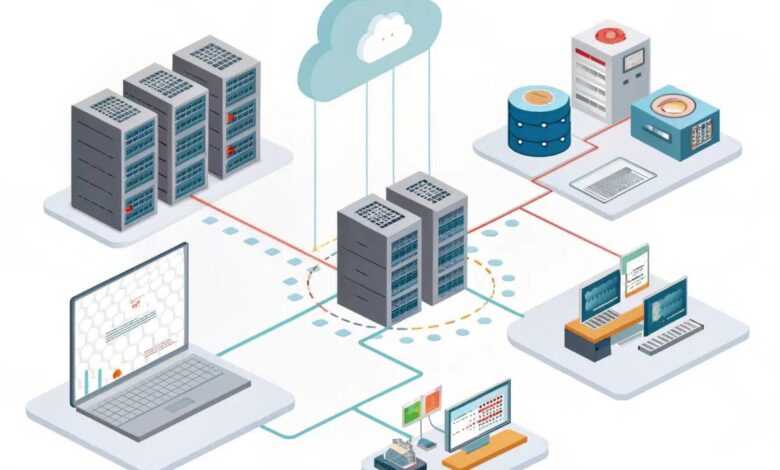
Artificial intelligence is rewriting the rules of the cloud market in India. Until recently, global brand recognition was paramount – but as we approach 2026, what matters more is where the GPUs are, how quickly AI inference runs, and whether data sovereignty is guaranteed under Indian law. In the Indian context, organizations increasingly demand local infrastructure for AI workloads due to concerns of latency, cost, and regulatory compliance.
This exhaustive guide ranks the top 10 AI infrastructure platforms in 2026, with a special focus on India. We include global cloud providers (prioritized at the top of the list for their broad capabilities and presence in India) as well as leading India-based platforms that offer cutting-edge AI infrastructure. The ranking considers compute scalability, AI/ML ecosystem support (MLOps, LLMOps, GPU availability), pricing models, enterprise adoption in India, and compliance with regional data residency laws. Each platform is evaluated on how well it caters to Indian enterprises, startups, and public sector needs for AI.
1. Amazon Web Services (AWS)
Amazon Web Services remains a dominant cloud platform for AI infrastructure, both globally and in India. AWS pioneered cloud GPU offerings and continues to deliver cutting-edge compute for AI – from general-purpose GPU instances to custom AI chips – all backed by a mature ecosystem of AI services. In India, AWS has made significant investments in local infrastructure and compliance, making it a top choice for enterprises and startups alike.
Indian Infrastructure & Compliance: AWS operates two major cloud regions in India: Mumbai (launched in June 2016) and Hyderabad (launched in late 2022). Each region consists of multiple availability zones, ensuring resilience and low latency within the country. AWS was the first global cloud provider empaneled by MeitY (Ministry of Electronics and IT) for government use in India, after the Mumbai region passed stringent audits in 2017. The newer Hyderabad region, operational since Nov 2022, is also MeitY-accredited. This means AWS meets Indian government standards of security and quality, enabling public sector agencies, banks, and enterprises with data residency needs to use AWS while keeping data on Indian soil.
Compute Scalability: AWS offers an unmatched range of compute options for AI. For deep learning training, AWS provides GPU instances like the P4d/P5 instances with NVIDIA A100 and H100 GPUs (the P5 instances with H100s were announced for global regions in 2023) and P3 instances with V100. Uniquely, AWS also designs its own AI chips – AWS Trainium for model training and AWS Inferentia for inference – which deliver high performance at lower cost for specific workloads.
Notably, in an Indian government AI compute tender, an AWS partner offered combos of AWS Trainium and Inferentia chips alongside NVIDIA GPUs to meet large-scale GPU requirements, highlighting AWS’s diverse AI hardware portfolio. Whether you need to train a billion-parameter model or serve a low-latency AI inference API, AWS’s scalable infrastructure (including up to 8+ GPU instances and distributed training support with AWS ParallelCluster) can accommodate it.
AI & MLOps Services: AWS’s ecosystem is rich with managed AI/ML services. Amazon SageMaker is a complete MLOps platform that lets data scientists build, train, and deploy models at scale – with features like distributed training, experiments tracking, model tuning, and one-click deployment. In 2023, AWS also introduced services targeting the generative AI boom – for example, Amazon Bedrock, which offers API access to foundation models (including Amazon’s own Titan models and others like Jurassic or Stable Diffusion) as a fully managed service.
This enables Indian enterprises to leverage large language models and generative AI without managing underlying GPU clusters. Additionally, AWS has AI-specific services from computer vision (Amazon Rekognition) to speech (Amazon Transcribe/Polly) and bots (Amazon Lex), which can accelerate building AI-powered applications. For big data integration, AWS’s analytics and data lake services (S3, Redshift, EMR etc.) integrate with ML workflows, which is crucial for AI training on large datasets.
Enterprise Adoption in India: AWS has a broad adoption in India across startups, large enterprises, and even government projects. According to AWS, “hundreds of thousands of customers in India” run their workloads on AWS, leveraging the cloud to save costs and innovate faster. This includes startups like Clevertap and Lendingkart, large enterprises like Dr. Reddy’s Laboratories, and even public sector initiatives.
Notably, flagship Digital India projects have used AWS – for example, the CoWIN vaccination platform (which supported 2.2 billion COVID-19 vaccine registrations) and the DigiLocker digital document service run on AWS infrastructure. Major banks such as Axis Bank have modernized customer experiences on AWS, and a consortium of public sector banks selected AWS to provide cloud services for digital banking innovations. This wide adoption is supported by AWS’s large partner network in India, including Indian IT firms and global SIs, ensuring local expertise for implementation.
Ecosystem and Tools: AWS’s strength also lies in its ecosystem. Developers in India benefit from a vast array of pre-built solutions and a supportive community. AWS Marketplace offers AI model packages and software, and programs like AWS Activate provide credits and support to startups (many Indian AI startups avail these). For hybrid needs, AWS Outposts and Local Zones can bring AWS infrastructure on-premises or closer to certain cities. AWS also collaborates with academia and government on skilling – for instance, partnering on programs to train students in cloud and AI, and even exploring quantum computing as a service for Indian researchers, showing its forward-looking approach.
Pricing & Offers: While AWS is feature-rich, cost optimization is key. AWS offers spot instances for up to 90% discounts on spare capacity – useful for non-urgent AI training jobs. Savings Plans and Reserved Instances help enterprises save on steady workloads. AWS also frequently launches more cost-efficient instance types (e.g., GPU instances with newer-gen chips offering better price-performance).
In India, AWS has committed major investments – over $16.4 billion by 2030 in its Indian cloud infrastructure – which is likely to continually improve performance and possibly pricing (economies of scale) for local customers. Moreover, having local regions means Indian customers can avoid high network egress charges for data kept and processed within India, which can be a significant cost advantage compared to sending data to overseas regions.
In summary, AWS tops the list for its comprehensive and proven AI infrastructure. It combines global-leading technology (GPUs, custom AI chips, extensive AI services) with a strong on-ground presence in India (multiple regions, MeitY compliance, local support). Whether you’re a startup building an AI-powered app or a large bank doing real-time fraud detection with machine learning, AWS provides the tools, scalability, and reliability to do it at scale. Its continued expansion and innovation in the AI domain (e.g. investing in newer chips and model hosting services) ensure that AWS will likely remain a premier choice for AI workloads in 2026.
2. Microsoft Azure
Microsoft Azure is another heavyweight cloud platform that ranks at the top for AI infrastructure, with a strong footing in India. Azure has been operating in India since 2015, making it the first global cloud to launch local data centers in the country. Today, Azure offers a robust suite of AI services (bolstered by Microsoft’s partnership with OpenAI) and a cloud environment favored by enterprises (especially those already using Microsoft software). With multiple Indian regions and full regulatory accreditation, Azure is well-positioned to support India’s AI growth.
Indian Regions & Expansion: Azure launched three cloud regions in India as early as September 2015 – located in Central India (Pune), West India (Mumbai), and South India (Chennai). This early start demonstrated Microsoft’s commitment to India’s market. These regions host Azure’s core services and even advanced features like Availability Zones (added in Central India in 2021 to enhance resiliency). Azure’s Indian regions are fully compliant with local regulations – Microsoft was among the first global providers to achieve MeitY full accreditation (empanelment) for its cloud in 2017-2018.
This accreditation means Azure’s services passed the government’s stringent security and quality checks, enabling public sector organizations to confidently use Azure for sensitive workloads. Over 20 Indian states and union territories have used Microsoft’s cloud for e-governance and citizen services as of 2018 – a testament to Azure’s deep penetration in the government sector.
AI Compute and GPUs: Azure provides a wide range of VM instance types for AI, branded under its N-series for GPU capabilities. Azure has offered NVIDIA Tesla V100 and A100 GPU instances (ND-series, NC-series) and is bringing in the latest H100 GPUs in new ND H100 v5 instances (previewed in late 2023) to support heavy AI training. Azure’s infrastructure is built to scale: it supports distributed training via its Azure ML services and offers Infiniband-connected clusters for HPC workloads.
One of Azure’s differentiators is its focus on FPGA acceleration for AI with Project Brainwave – Azure uses Intel FPGAs for low-latency AI inference (for example, in services like Azure Cognitive Search). Additionally, Microsoft’s close collaboration with OpenAI means that Azure’s hardware is optimized for large models – Microsoft invested in building AI supercomputers for OpenAI on Azure (with tens of thousands of GPUs) and those advancements trickle down to Azure’s offerings for all customers (e.g., the NDm A100v4 cluster was once among top supercomputers, made available publicly).
AI Services & Ecosystem: Azure’s AI platform is rich and getting richer. Key offerings include Azure Machine Learning – a comprehensive MLOps platform to train, deploy, and manage models. Azure ML supports automated ML, drag-and-drop pipelines, as well as a hosted Jupyter notebooks environment; it’s widely used by data science teams that want an end-to-end solution. In 2023, Microsoft brought the power of OpenAI models to Azure via the Azure OpenAI Service. This service allows Azure customers to access large pre-trained models like GPT-4, ChatGPT, and DALL-E 2 through REST APIs with Azure’s security and compliance.
Notably, Indian organizations can use Azure OpenAI service to build generative AI applications (like chatbots, content generators) while ensuring data is handled under enterprise-grade compliance. Microsoft also introduced Azure AI Studio to unify custom model grounding, enabling enterprises to combine OpenAI models with their own data securely. Beyond this, Azure offers pre-built AI solutions: Cognitive Services (vision, speech, language APIs), Azure Cognitive Search with semantic search capabilities, and Azure Databricks for integrated AI and data engineering. The ecosystem is developer-friendly – for instance, Azure has a Python SDK for ML, integrates with Visual Studio Code, and supports popular frameworks (PyTorch, TensorFlow) out-of-the-box.
Integration with Microsoft Stack: Many Indian enterprises are Microsoft shops (using Windows, Office 365, Dynamics, etc.), and Azure integrates seamlessly with this stack. For example, data from Dynamics 365 CRM can be directly used in Azure ML for AI-driven insights. Microsoft’s Power Platform (Power BI, Power Apps) also connects with Azure AI – e.g., Power BI’s cognitive services integration allows AI-enriched data visuals.
This synergy is attractive to enterprises looking to infuse AI into their existing Microsoft-based workflows with minimal friction. Azure also emphasizes hybrid cloud via Azure Arc and Azure Stack, which allow Azure services to run on-premises or at the edge. For industries like banking or telecom in India that need hybrid setups (due to latency or data locality), Azure provides a consistent infrastructure and AI tooling across on-prem and cloud.
Enterprise Adoption in India: Azure has a strong enterprise client base in India. For instance, Flipkart, India’s largest e-commerce company, chose Azure as its exclusive public cloud platform in 2017, moving away from AWS. This was a high-profile win, where Flipkart planned to use Azure’s AI capabilities (Cortana Intelligence Suite, now part of Azure AI) to improve merchandising and customer service. In the banking sector, HDFC Bank (India’s largest private bank) announced a partnership with Microsoft in 2023 to use Azure for its digital transformation, leveraging Azure for applications, AI, and security services.
Many other banks and insurance firms use Azure, especially after regulators became more comfortable with cloud – Microsoft even launched specialized Azure Blueprint for India’s BFSI compliance. Moreover, over 100 government departments had adopted Microsoft’s cloud services by 2018, in projects ranging from state e-governance portals to predictive healthcare (like an AI network for cardiac disease with Apollo Hospitals). Microsoft’s deep engagement with the public sector (all 29 states in some form) and initiatives like setting up AI labs with universities have cemented Azure’s reputation.
Compute Performance and Updates: Azure is continuously investing in its AI infrastructure. Microsoft announced in 2023 an increase in GPU capacity (reportedly hundreds of thousands of Nvidia A100/H100 GPUs added, some of which likely serve Azure OpenAI demand). Azure also developed its own AI supercomputer with NVIDIA’s DGX nodes for internal and customer use. With the impending launch of new AI chips (Microsoft has been rumored to be working on its own AI chip, Project Athena, to reduce dependence on Nvidia), Azure might offer alternative cost-effective AI accelerators by 2026. Additionally, Azure’s global network and content delivery (with Azure Front Door and edge sites in India) help minimize latency for AI inference delivered to end-users.

Pricing & Support: In terms of cost, Azure competes closely with AWS and GCP. It offers similar constructs – spot VMs (called Azure Spot Instances), reserved VM instances for 1 or 3 years, and enterprise agreements for bulk discounts. Microsoft often works via enterprise licensing; for example, customers with Microsoft enterprise agreements might get Azure credits or discounts. One advantage for existing Microsoft customers is using existing Windows Server or SQL Server licenses on Azure (Hybrid Use Benefit) to save costs.
Azure also has a robust free tier and credits for startups (via programs like M12 or Microsoft for Startups) which many Indian startups leverage. Microsoft’s local presence (offices in all major Indian cities and a large team in India) means support is accessible. Microsoft has been localizing AI as well – e.g., working on speech recognition for Hindi and other languages as part of Cognitive Services, ensuring the platform understands India’s linguistic diversity.
In summary, Microsoft Azure is a powerhouse for AI workloads, blending top-notch technology (GPUs, massive model hosting, MLOps platform) with enterprise-friendly features and a strong India presence. It especially shines for organizations already aligned with Microsoft tech or those requiring hybrid solutions. With Azure, Indian businesses get cloud regions near their customers, compliance assurances, and a rapidly growing set of AI tools – all under the umbrella of Microsoft’s trusted brand in enterprise software. Azure’s collaboration with OpenAI and continued data center expansion in India (reports hint at Microsoft building multiple new data centers by 2026 to meet cloud demand) ensure that Azure will remain at the forefront of AI infrastructure in the country.
3. Google Cloud Platform (GCP)
Google Cloud Platform (GCP) has steadily emerged as a strong contender for AI infrastructure, leveraging Google’s expertise in AI research and large-scale infrastructure. In India, GCP has expanded its footprint with multiple cloud regions and has secured the necessary clearances to serve sensitive industries. GCP’s appeal lies in its innovative AI offerings – from TPUs for custom hardware acceleration to a host of managed AI services (like Vertex AI) that simplify the end-to-end ML workflow. By 2026, Google Cloud is positioned as a go-to platform for organizations looking to build and scale AI solutions, benefitting from Google’s cutting-edge technology and open-source contributions.
Local Cloud Regions & Compliance: Google Cloud entered India a bit later than AWS/Azure but caught up quickly. Its first region in India (Mumbai) went live in 2017, and a second region in Delhi NCR was launched in July 2021. Each region has three availability zones for high availability. The addition of the Delhi region was a significant expansion, offering lower latency to north India and increased capacity for customers across sectors. Google has been proactive on compliance – the Mumbai region was made MeitY-compliant (STQC audited) early on, and Google initiated the process to certify the Delhi region soon after launch.
In October 2022, Google Cloud received full MeitY empanelment, enabling it to serve Indian government agencies and public sector units for cloud projects. With this, Google joined AWS and Microsoft in the club of approved clouds for India’s public sector. This empanelment assures that GCP meets India’s standards for data security and sovereignty, an important consideration for banking, healthcare, and government clients. Google Cloud’s India MD was quoted saying that public sector customers can now deploy on Google Cloud for critical workloads across sectors like power, BFSI, transportation, etc., thanks to this accreditation.
AI Hardware – TPUs and GPUs: Google sets itself apart by offering TPUs (Tensor Processing Units) – custom-designed accelerators for machine learning, particularly efficient for training neural networks. GCP makes TPUs available via its Google Compute Engine and Vertex AI; for example, customers can use TPU v4 pods which are among the fastest AI supercomputers (Google has claimed each TPU v4 pod can deliver exaflop-scale performance for AI). These TPUs are ideal for TensorFlow workloads and have powered Google’s own breakthroughs (e.g., AlphaGo, conversational models).
In addition to TPUs, GCP provides a range of GPU options: NVIDIA K80, P100, V100, A100, etc., through its AI Platform or as raw VM instances. Google was early to offer NVIDIA A100 GPUs in cloud and will likely offer H100 GPUs by 2026 as part of its A3 GPU supercomputer instances (Google announced A3 instances with 8x H100 GPUs and NVSwitch fabric in 2023 for Google Cloud regions). GCP’s infrastructure is optimized for distributed AI workloads – it has high-speed interconnects (Google’s Andromeda SDN fabric) enabling scaling training across hundreds of chips with near-linear performance gains.
For customers, this means whether you use TPUs or GPUs, you can train large models (like billion-parameter language models) relatively efficiently on GCP’s networked infrastructure. Vertex AI and AI Services: GCP’s flagship for AI developers is Vertex AI, an integrated machine learning platform. Vertex AI brings together various Google Cloud AI services under one roof: AutoML (for training custom models with minimal coding), Vertex Training (custom model training on managed compute, including hyperparameter tuning), Vertex Prediction (scalable model serving), Feature Store, ML Pipelines, and more. It also offers Vertex AI Workbench, a JupyterLab environment that seamlessly ties into cloud data sources.
Vertex AI’s strength is enabling a unified workflow: data engineers, data scientists, and ML engineers can collaborate in one platform, and you can move from experimentation to deployment without leaving the Google Cloud environment. Additionally, Google has been infusing Vertex AI with generative AI capabilities – e.g., Model Garden with pre-trained models from Google (like PaLM large language model, Imagen for image generation) and third-parties, accessible via APIs. This means by 2026, on Vertex AI you could select a foundation model (say a multilingual large language model suitable for Indian languages) and use Vertex AI Prompt Tuning or fine-tuning to adapt it to your needs, all within Google’s managed infrastructure.
Google Cloud also provides AI building blocks as standalone services. For instance, Translation API, Vision AI, Speech-to-Text, Dialogflow CX (for chatbot design) – these are pre-trained models that developers can call via simple APIs, which can be plugged into applications without needing ML expertise. Notably, Google’s multi-language prowess is useful in India; their Translation API supports translation for Hindi and many regional languages, and their speech recognition is tuned to accents and proper nouns common in India. Such services can expedite AI solution development for Indian user bases.
Data Analytics and AI: Google Cloud’s heritage in big data (MapReduce, BigTable origins) shows in its offerings like BigQuery – a serverless data warehouse popular for analytics at scale. BigQuery ML even allows running ML models (like regression, k-means clustering, even TensorFlow models) directly in SQL. This is a unique angle where analysts can build and serve models using SQL queries on data in BigQuery.
Furthermore, GCP has Dataproc (managed Hadoop/Spark), Dataflow (stream/batch processing via Apache Beam), and Pub/Sub for streaming – all of which integrate with AI pipelines (e.g., real-time analytics feeding into ML models for dynamic predictions). This ecosystem is attractive to companies dealing with massive datasets (think of India’s telecoms or e-commerce with millions of users) – they can harness these data services and plug into Vertex AI for modeling.
Adoption in India & Notable Users: Google Cloud has been growing its market share in India, historically behind AWS and Azure but making significant gains more recently. Notable clients include HDFC Bank, which uses Google Cloud for scale and flexibility as highlighted by Google’s CEO. ShareChat, a social media platform popular for Indian language content, uses Google Cloud to serve millions of users with low latency. In the startup ecosystem, neobanks, e-commerce, and fintech startups often choose GCP for its analytics and AI strengths.
For example, InMobi and DailyHunt (news content) are cited as GCP clients, likely leveraging Google’s BigQuery and AI to personalize content. A joint announcement by Google mentioned that Indian companies across retail, manufacturing, media, gaming and public sector are using Google Cloud for digital transformation. Google also actively partners with Indian IT services firms (TCS, Infosys, Wipro are all Google Cloud partners) to reach traditional enterprises.
In terms of public sector, after empanelment, Google started working with state-owned enterprises and public sector banks. We might see GCP play roles in initiatives like smart cities, digital agriculture, etc., given Google’s focus on AI for social impact (e.g., using AI for flood prediction in India, as Google has done via AI research collaborations – those kinds of models could be hosted on GCP for broader use).
Differentiators: Google brings some unique differentiators to AI infrastructure. One is its open-source contributions and portability – GCP services often embrace open standards (TensorFlow originated from Google and is widely supported; Kubernetes was created by Google, and Google Kubernetes Engine (GKE) is a flagship product for containerized workloads, including ML workloads). This means clients can avoid lock-in to some extent and utilize hybrid cloud strategies (e.g., Anthos can manage workloads across on-prem and multi-cloud including AWS/Azure). For AI specifically, Google’s development of KubeFlow (an open-source ML pipeline tool on Kubernetes) and things like TensorFlow Extended (TFX) for ML pipelines show its commitment to openness. Indian companies that value open-source (many tech startups here do) appreciate this aspect of GCP.
Another differentiator is pricing in certain areas: BigQuery’s pricing model (pay-as-you-use, no upfront infrastructure) can be cost-efficient for big data ML vs provisioning clusters elsewhere. Google also tends to include features like sustained usage discounts automatically for VMs and offers committed use contracts for steady workloads, which can reduce costs. As of 2025, Google was also touting lower network egress fees in some cases to encourage data analysis on its platform.
Global AI Leadership: Lastly, Google’s own leadership in AI research (DeepMind, Google Brain) often translates into early access to new AI breakthroughs on GCP. For instance, if Google develops a new state-of-the-art model for speech or vision, it often becomes available via Google Cloud’s APIs. By 2026, Google’s work on multimodal AI (combining text, image, video understanding) might reflect in GCP offerings, giving Indian developers powerful new tools to build next-gen applications (like multimodal conversational agents supporting vernacular languages, etc.). Google’s commitment that India is a “fastest growing cloud market” for them and plans to invest in expanding product and engineering here means we can expect more India-tailored AI solutions via GCP.
In summary, Google Cloud Platform stands out for its innovation in AI and data analytics, making it a top choice for organizations aiming to build AI-driven products and insights at scale. With local infrastructure in India and a demonstrated commitment to compliance and customer success, GCP is often the platform of choice for those who want Google’s cutting-edge tech (like TPUs, Vertex AI) and an open, data-centric ecosystem. As Indian businesses and government agencies aim to leverage AI – whether it’s training their own language models or deploying intelligent customer service bots – GCP provides the backbone and tools to do so effectively and efficiently in 2026.
4. Oracle Cloud Infrastructure (OCI)
Oracle Cloud Infrastructure (OCI) has rapidly evolved from a niche player to a formidable AI cloud platform, especially for enterprises with high-performance needs. Known for its “Gen 2” cloud architecture, OCI emphasizes strong isolation, high I/O performance, and cost advantages – all of which are attractive for AI and HPC workloads. In India, Oracle has made strategic investments by opening multiple cloud regions and partnering with local telecom players, signaling its commitment to the market. For organizations that require extreme performance (for example, training large models or running complex simulations) while also needing data residency in India, OCI is an option worth serious consideration in 2026.
India Footprint & Dual Regions: Oracle was among the first major clouds to implement a dual-region strategy in India, primarily to support disaster recovery and data sovereignty. OCI launched its Mumbai (India West) region in 2019, and soon after, opened a second region in Hyderabad (India South) in 2020. With two geographically separated regions, Oracle enables customers to deploy resilient architectures entirely within India – one region can back up or failover to the other – without data ever leaving the country. This is crucial for sectors like banking or government that require on-shore data replication.
Oracle explicitly highlighted that sensitive data can remain within India while still achieving high availability across the two regions. Both OCI India regions offer Oracle’s full range of cloud services (compute, storage, network, DB, etc.) and are connected via Oracle’s high-speed backbone. Oracle’s cloud is also MeitY-empaneled (it was mentioned alongside other global providers as having approval for the public sector), which means Indian government agencies can leverage OCI’s cloud services for their projects. In fact, Oracle has been aggressive in targeting the public sector: e.g., OCI is used by some Indian government initiatives (Oracle has worked with Niti Aayog on an agriculture project platform, etc.).
Compute and GPUs/NVIDIA Partnership: OCI has carved a niche in high-performance compute offerings. It provides bare-metal servers and clusters with impressive specs – for example, bare-metal GPU servers with direct hardware access, useful for squeezing maximum performance for training AI models. Oracle’s partnership with NVIDIA is a key strength: Oracle offers NVIDIA A100 GPU instances (and has announced H100 availability on OCI as well, aligning with NVIDIA’s latest tech). In fact, Oracle was the first to cloud to offer NVIDIA’s HGX A100 8-GPU bare metal servers as a service (the BM.GPU4.8 shape), enabling customers to harness 8 GPUs with NVLink in a single node – ideal for heavy training jobs.
OCI has also invested in RDMA cluster networking (RoCE v2) to allow multiple such GPU nodes to form a low-latency HPC cluster. In 2023, Oracle and NVIDIA announced a deepening partnership where Oracle would scale out its NVIDIA GPU capacity significantly to become a major provider of GPU cloud instances. Oracle’s advantage often comes in pricing – Oracle has touted that its GPU instances can be more cost-effective than comparable ones on AWS/Azure (with lower per-hour rates and no premium for using them in certain regions).
Perhaps most buzzworthy is NVIDIA’s DGX Cloud on OCI: Oracle is a key partner for NVIDIA DGX Cloud (a service where NVIDIA rents out AI supercomputer infrastructure via cloud partners). OCI’s infrastructure is used to host DGX Cloud instances, meaning customers can get a fully managed AI supercomputer (with NVIDIA handling the software stack) on Oracle’s cloud, with clusters scaling to thousands of GPUs for enterprise AI workloads. By 2026, OCI, through DGX Cloud and its own services, is likely to be supporting many cutting-edge AI deployments (e.g., automotive companies training ADAS models, or research labs doing advanced AI research) requiring serious horsepower.
Beyond GPUs, OCI provides alternatives like Intel Habana Gaudi accelerators (especially after Intel and Oracle collaboration – Oracle offers Habana Gaudi for AI training at lower cost for certain models). OCI also uniquely offers clusters of Ampere ARM CPUs (useful for AI inference at scale with better price-performance per watt in some cases).
High-Performance Architecture: One of OCI’s hallmarks is its network and storage performance. It has a flat network design with off-box virtualization, which means bare-metal servers (including GPU servers) don’t suffer from noisy neighbors and have near on-premise levels of performance. This benefits AI because data loading and checkpointing can be bottlenecks – OCI’s storage (NVMe local SSDs, fast block storage, high-throughput file storage) combined with 100 Gbps networking (per instance) ensures that GPUs stay fed with data.
Oracle also emphasizes HPC use cases: it has HPC shapes with fast interconnect for MPI workloads, often used in scientific computing. The overlap between HPC and AI means OCI is well-suited for AI researchers who may run both traditional simulations and AI training on the same platform.
Data and AI Services: While Oracle is newer to the AI services game compared to AWS/Azure/GCP, it has been building out a suite of offerings. Oracle’s strength historically is in data – especially databases. OCI offers the Oracle Autonomous Database, which can be paired with AI to do things like in-database ML. Oracle has an OCI Data Science service, which is a platform for collaborative data science (supporting Python notebooks, popular libraries, etc.) and integrates with Oracle’s data ecosystem.
There is also Oracle’s AI Services – a set of pre-trained model APIs (for vision, speech, anomaly detection, etc.), similar to other clouds’ cognitive services. Oracle might not have the breadth of AI APIs as AWS/Azure, but it focuses on enterprise-centric ones like AI for document understanding (useful in enterprise workflow automation).
A major strategic focus for Oracle is providing full-stack solutions for enterprise AI deployments. For example, Oracle’s cloud can integrate with its enterprise applications (like Oracle ERP, HCM cloud) to introduce AI features (like predictive analytics, smarter dashboards). With the rise of generative AI, Oracle introduced Oracle AI Vector Search in its database and added support for deploying open-source LLMs on OCI with optimized runtimes. Oracle’s acquisition of MosaicML (happened in mid-2023 by Databricks, competitor to note) aside, Oracle is likely to partner with companies to bolster its AI portfolio. It also launched OCI Language and Speech services (for text analytics, translation, etc.), showing it is expanding AI offerings.
Adoption and Use Cases in India: Oracle might not boast as many big logo customers as AWS/Azure in India publicly, but it has its strongholds. Given Oracle’s long history in India’s enterprise IT (many large banks, telcos run Oracle databases and enterprise software), Oracle Cloud is making inroads where those customers look to move Oracle workloads to cloud or extend them with AI. A notable example: The Indian Ministry of Electronics and IT’s IndiaAI program had a tender for GPUs where Oracle’s partner (Ishan Info) participated, indicating Oracle’s cloud GPUs are being considered for national AI infrastructure.
Oracle’s strategy of opening a second region was partly to serve public sector; e.g., states like Tamil Nadu partnered with Oracle for some cloud-based services. In telecom, Oracle’s OCI is the base for some 5G network functions (Oracle has cloud-native network offerings), and Bharti Airtel – one of India’s largest telcos – has partnered with Oracle: Airtel’s business arm announced using Oracle Cloud to host some of their solutions, and also Airtel is Oracle’s Cloud region host in Noida (the second region in India was set up in partnership with Bharti Airtel). This hints that Airtel might promote Oracle Cloud to its enterprise customers as part of Airtel’s own cloud portfolio.
In sectors like finance, Oracle Cloud’s compliance (such as obtained PCI-DSS, IRAP, etc.) and Oracle’s database pedigree make it appealing for core banking modernization with AI, though case studies in India are not heavily public. We may see more adoption in coming years as Oracle leverages its existing customer base.
Pricing & Notable Advantages: Oracle often competes on price-performance. They have a straightforward pricing structure and notably do not charge for outbound data transfer between regions in-country, facilitating active-active setups without extra cost. Also, Oracle’s base VM and storage prices are sometimes lower than equivalent from AWS (Oracle’s strategy to win customers). They offer an attractive Always Free tier on OCI which even includes some GPUs for trial and Arm instances – useful for startups to experiment. Enterprise customers in India also benefit from Oracle’s support setup – Oracle has major development centers in India, so technically knowledgeable staff are on ground.
Oracle’s push into AI is underscored by comments from industry analysts: IDC India noted that as Indian enterprises resume growth, they will look first for locally-based cloud infrastructure with low latency and data sovereignty; with its dual regions, Oracle “enhanced its position in the Indian market” offering in-country resilience. This aligns well with organizations that have strict compliance but also want advanced capabilities like GPUs.
In summary, Oracle Cloud Infrastructure is a compelling choice for AI infrastructure when performance and sovereignty are paramount. OCI’s combination of powerful hardware (top-tier GPUs, fast networks) and a dual-region in-country setup is tailor-made for Indian enterprises that want to run intensive AI workloads fully within India’s borders. Additionally, Oracle’s enterprise-savvy features – from strong security isolation to integration with Oracle applications – make it especially appealing for existing Oracle customers modernizing with AI. By 2026, with Oracle’s continuing partnership with NVIDIA and possible expansion of cloud regions (Oracle has hinted at expanding further in Asia), OCI will likely further cement its reputation as an elite “performance cloud” for AI and HPC, including in the Indian region.
5. IBM Cloud (and Watsonx)
IBM Cloud occupies a unique space in the AI infrastructure landscape, with a strong focus on hybrid cloud and an end-to-end AI stack via its Watsonx platform. While IBM’s public cloud market share is smaller compared to the big three, IBM brings decades of enterprise expertise and is often the provider of choice for mission-critical workloads in regulated industries.
In India, IBM has had a long-standing presence, and its cloud data centers coupled with IBM’s software and services make it a significant player for organizations looking at AI in a hybrid, secure manner. IBM’s strategy is not just about providing raw infrastructure; it’s about offering integrated hardware-software solutions (from mainframes to AI) and the consulting know-how to implement them – a value proposition resonating with many Indian enterprises and government projects.
IBM Cloud Data Centers in India: IBM was actually one of the earliest tech giants to set up cloud infrastructure in India. Back in October 2015, IBM launched its first SoftLayer cloud data center in Chennai, marking IBM’s cloud entry into India. IBM also had an existing data center in Mumbai which historically was used for other IBM services and later integrated into IBM Cloud. Today, IBM Cloud offers a multi-zone region (MZR) in India (likely using Mumbai as ap-south-1), and possibly additional zones via Chennai – ensuring customers can deploy applications with high availability within the country.
IBM’s cloud data center facilities in India are built to high specifications (the Chennai DC launched with capacity to support thousands of servers and had robust network links to Singapore to improve latency). IBM Cloud in India is certified for key standards and IBM has MeitY empanelment as well (IBM was listed among the global cloud providers approved for India’s public sector). This means government departments and critical infrastructure companies in India can utilize IBM Cloud for sensitive workloads, confident in its security and compliance.
Hybrid Cloud Emphasis – IBM’s Differentiator: A cornerstone of IBM’s strategy is hybrid cloud – enabling clients to run workloads across on-premises, IBM Cloud, and even other clouds in a seamless way. IBM’s Red Hat OpenShift is central to this: IBM Cloud itself offers Red Hat OpenShift Kubernetes service, and IBM’s approach is to let clients containerize and move workloads easily. For AI, this means an enterprise can train models on IBM Cloud or on their own data center interchangeably. IBM’s vision is to be the “bridge” – it has Cloud Satellite which can extend IBM Cloud services to any location, and in India, this is appealing to banks and government who might keep some data on-prem but want cloud-like management.
When it comes to AI-specific infrastructure, IBM’s lineage includes the famous IBM Watson (which won Jeopardy! and was one of the first AI-as-a-service offerings a decade ago). In 2023, IBM launched Watsonx, which is a next-gen AI and data platform comprising: – Watsonx.ai – a studio for AI model development, including a library of pre-trained AI foundation models (for language, code, geospatial, etc.) that IBM provides, and tools for data scientists to train or fine-tune models. – Watsonx.data – a fit-for-AI data store (Lakehouse architecture) optimized for governing and feeding AI models, potentially cheaper and faster for AI workloads. – Watsonx.governance – toolkits for responsible AI, bias detection, and compliance tracking.
This Watsonx platform can be consumed as a service on IBM Cloud or deployed on-premises for sensitive environments. For Indian enterprises, Watsonx offers an intriguing proposition: a one-stop environment to prepare data, build AI models (IBM even has a Hindi language foundation model “Project Vaani” in the works, which could be available via Watsonx for Indian languages), and ensure AI outcomes are trustworthy – all under the oversight that enterprise IT requires. By 2026, we can expect Watsonx to have a variety of regional language models and domain-specific models that could be extremely useful in India (e.g., models for banking documents, govt records, etc.).

Compute Infrastructure – IBM’s Hardware: IBM Cloud provides the usual assortment of VMs and containers, but IBM’s secret sauce is its own hardware excellence. IBM offers unique instance types, such as IBM Cloud Bare Metal Servers with very high specs (including GPU bare metal servers). If you need an AI training server with 4 or 8 NVIDIA A100 GPUs connected by NVLink, IBM Cloud can provision a dedicated bare metal node (no multi-tenancy) – which some enterprises prefer for performance and security isolation.
IBM also has cloud instances powered by IBM’s Power Systems (with POWER9/POWER10 CPUs and NVIDIA GPUs) – these are particularly potent for certain AI workloads and are designed to run IBM’s legacy software as well as new AI frameworks optimized for Power architecture. Interestingly, in 2025 IBM and Airtel announced that Airtel Cloud (the cloud arm of Bharti Airtel) would deploy IBM Power10-based AI hardware in their data centers as part of a partnership.
This means even outside IBM’s own data centers, IBM’s hardware and cloud software might power more services in India. Airtel plans to expand to 10 availability zones and set up new multizone regions in Mumbai and Chennai with IBM’s help, significantly growing the “IBM footprint” under the Airtel brand. The partnership includes enabling AI inference at scale using IBM’s stack (Watsonx and Red Hat) on Airtel’s cloud for industry-specific solutions.
For pure GPU needs, IBM Cloud has offered NVIDIA Tesla V100 and earlier GPUs; it’s likely now offering A100s/H100s via its Bare Metal or Virtual Server offerings as IBM often upgrades to the latest NVIDIA tech for its AI customers. IBM was also early in experimenting with FPGA acceleration (the IBM Cloud FPGA-as-a-service offering) and quantum computing (IBM Cloud offers access to IBM Quantum systems, though that’s more experimental for AI). In summary, IBM can cater to both conventional AI training on GPUs and bespoke high-performance needs via Power CPUs or even mainframes for specialized AI tasks on transactional data.
Use Cases and Adoption in India: IBM has a long list of large Indian clients in banking (SBI, ICICI, etc.), insurance, telecom (Vodafone Idea, Airtel), manufacturing (like Tata Steel), and government (state and central projects). Many of these use IBM software and hardware; IBM’s task has been helping them modernize to hybrid cloud and infuse AI.
A noteworthy example: Bharti Airtel’s partnership with IBM in 2025 (mentioned above) is explicitly aimed at enabling AI-at-scale for enterprises in regulated industries (banking, healthcare, government) by combining Airtel’s secure cloud hosting with IBM’s AI stack. They even mention allowing IBM Power-based AI cloud, with Airtel extending from 4 to 10 availability zones and creating new multi-zone regions in India as part of this. This indicates IBM tech is indirectly expanding in India through partnerships.
In government, IBM has been involved in projects like AI for agriculture (predictive insights for farmers), and some smart city initiatives where IBM’s AI helps in services like water management or traffic. They have also worked with NASSCOM to support startups (TechStartup hub). IBM’s consulting arm in India often leads AI solution implementations – e.g., deploying AI-driven supply chain optimization for large conglomerates or using Watson Assistant to create chatbots for banks (some Indian banks’ customer helplines are powered by IBM Watson underneath).
Another area IBM is tapping is telecom network AI – IBM’s network automation (with AI ops) is being tried by Indian telcos as they adopt 5G. For instance, IBM with partner Vodafone Idea implemented an AI-driven customer experience platform on IBM Cloud.
Edge and Future Outlook: IBM’s approach to AI doesn’t stop at the cloud – with the prevalence of edge computing (think of retail stores, factories), IBM leverages Edge Application Manager (based on Open Horizon) to deploy and manage AI models on edge devices, orchestrated from IBM Cloud. This is relevant in India where bandwidth can be a constraint and edge AI (like analyzing video from CCTV cameras in a remote factory in real-time) is needed.
In terms of future, IBM is betting on trustworthy AI as a selling point – it’s likely by 2026 IBM will have enhanced Watsonx governance tools to comply with upcoming AI regulations (India is formulating AI ethics guidelines too). For industries like finance and healthcare in India, this focus on transparency and bias mitigation is a differentiator.
IBM also continues to bring innovations from IBM Research into products – e.g., advanced NLP for low-resource languages (IBM did projects on Sanskrit OCR, etc.), which might become cloud services.
Pricing and Engagement: IBM tends to work on a solutions basis – not just commodity pricing. However, IBM Cloud has competitive pricing for IaaS (its virtual servers and bandwidth costs are comparable or lower in some cases). More often, IBM’s value is in packaged solutions – which might be priced higher but deliver more out-of-box for enterprise needs. For example, an IBM Watson Assistant solution might come with a team to customize it for a bank’s needs, rather than the bank doing it alone from scratch on a generic platform.
In summary, IBM Cloud – reinforced by the Watsonx AI platform – is ideal for organizations seeking a secure, hybrid-friendly AI infrastructure with deep enterprise AI capabilities. In India, where many large companies are in transitional phases of adopting AI, IBM offers the trusted hand-holding (via its consulting and industry expertise) along with robust technology (cloud or on-prem).
By 2026, through direct IBM Cloud offerings and collaborations like the Airtel Cloud partnership, IBM will likely power a significant segment of India’s AI workloads that need the highest levels of trust, compliance, and integration with existing systems. It’s not the choice for a scrappy startup looking for cheapest GPUs, but for a bank that wants to deploy an AI model analyzing millions of transactions in real-time with absolute reliability, IBM is often in the consideration set – and for good reason.
6. Yotta Shakti Cloud (AI Supercloud by Yotta)
Yotta Shakti Cloud is an emerging powerhouse in India’s AI infrastructure scene, representing the new wave of India-first, sovereign cloud providers that are building massive compute capacity within the country. Launched by Yotta (a Hiranandani Group company known for its large data centers), Shakti Cloud aims to offer global-grade AI supercomputing performance while keeping all data and operations on Indian soil.
By 2026, Yotta Shakti Cloud is positioned to be one of the largest AI-focused clouds in India, potentially even outpacing some global providers in raw GPU scale within the region. For organizations – from government to startups – that require top-tier AI hardware, extremely low latency, and full compliance with India’s data sovereignty requirements, Yotta Shakti is a game-changing entrant to consider.
Infrastructure Scale & NVIDIA Partnership: Yotta is making headlines for the sheer scale of AI infrastructure it’s deploying. In December 2023, Yotta announced the launch of Shakti Cloud with plans to stand up 16,384 NVIDIA H100 Tensor Core GPUs by mid-2024 across its data centers, effectively creating India’s largest AI supercomputer at 16 exaFLOPS of AI computing power. It planned an initial tranche of 4,096 GPUs in operation by Jan 2024, scaling to 16k by June 2024, and then doubling to 32,768 GPUs by end of 2025.
This trajectory, if achieved, would make Shakti Cloud one of the most GPU-dense cloud platforms in the world. Yotta’s approach is in direct collaboration with NVIDIA – Yotta became India’s first NVIDIA Elite Cloud Partner, and is deploying NVIDIA’s reference architecture including NVIDIA Quantum InfiniBand networking to link these GPUs in giant clusters. This essentially means Yotta’s infrastructure can handle distributed training of enormous AI models with minimal communication bottlenecks (InfiniBand + NVLink for high bandwidth). The Shakti Cloud platform is explicitly built for training large language models (LLMs) and other heavy AI workloads, targeting Indian enterprises, research institutions, and even Asia-Pacific demand.
The hardware is cutting-edge: H100 GPUs are NVIDIA’s latest flagship for AI (significantly faster for transformer models than previous A100s). Yotta also indicated it will incorporate upcoming NVIDIA chips like L40S (for graphics and AI inferencing) and next-gen B100 (Blackwell) GPUs when available. In fact, Yotta’s CEO said they are on a mission to build India’s largest sovereign AI “supercloud” powered by thousands of H100s and the next-gen B200 chips (likely meaning NVIDIA’s Blackwell generation). This forward-looking investment ensures Shakti Cloud’s users will have early access to the best AI hardware.
Data Centers and Sovereignty: Yotta operates some of Asia’s largest Tier IV certified data centers. Its NM1 data center in Navi Mumbai is an 820,000 sq. ft facility with 7,000+ rack capacity and 52 MW IT load (scalable to a gigawatt campus) – a behemoth designed for hyperscale growth. This is where the first 16k GPUs are being deployed. The next phase extends to Yotta D1 in Greater Noida (UP), another huge Tier IV facility, where a similar cluster will be installed.
Together, these give Shakti Cloud a presence in both west and north India, important for redundancy and serving customers with low latency across regions. Yotta’s data centers are carrier-neutral hubs, meaning they have direct connectivity to all major telecom networks and cloud on-ramps, which reduces latency for end-users and enables easy hybrid connectivity for enterprises. Tier IV means ultra-reliable (99.995% uptime). Also of note is Yotta’s focus on efficient cooling (immersion cooling) to handle the high-density GPU racks, which also aligns with sustainability.
Crucially, Shakti Cloud is marketed as India’s first sovereign AI cloud. All data remains in India’s jurisdiction, appealing to government and BFSI clients nervous about foreign cloud data access. Yotta is MeitY-empanelled or in process (given it serves govt projects like the Central gov’t National Informatics Centre (NIC) reportedly engaged Yotta for certain cloud needs). The emphasis is that Indian organizations can get world-class AI compute without relying on US or Chinese clouds, and thus keep strategic control over their data and models.
AI Platform & Services: Yotta isn’t just offering raw GPUs. The Shakti Cloud includes an “AI Factory” and platform services from day one. They mention providing foundational AI models and applications as PaaS for enterprises. For example, they likely offer ready-to-use models (perhaps local versions of GPT-like LLMs, vision models, etc.) that businesses can leverage. The NVIDIA partnership means Yotta can incorporate NVIDIA’s AI Enterprise software suite – including optimized AI frameworks, libraries, and even NVIDIA’s NeMo toolkit for training language models. Indeed, Yotta highlights usage of NVIDIA AI Enterprise and other stack components to accelerate deployments.
One interesting service Yotta might have is a Rudra platform (as hinted on their site) which could be a self-service cloud portal for AI workloads, possibly including sandbox environments and maybe even creative pricing models (the NVIDIA case study on Yotta mentions “flexible payment models like accepting equity instead of cash” for startups – showing Yotta’s willingness to innovate in go-to-market to onboard young AI companies).
Yotta also plans to provide specialized databases (vector databases for AI, etc.) and GPU-as-a-Service (GPUaaS) with various instance sizes (for training vs inference). The case study notes Yotta aims to democratize GPU access with on-demand availability and even consider alternate payment methods, indicating their focus on accessibility for smaller firms too, not just mega-corps.
Use Cases & Industry Impact: Shakti Cloud positions itself as the backbone for India’s AI ambitions across sectors. We can anticipate usage scenarios like: –
- Government agencies training Indian language models for translation and governance apps (instead of using foreign APIs, they could fine-tune on Shakti Cloud).
- Large IT services companies renting Shakti’s GPUs to train models for global clients (instead of sending data abroad).
- Startups in medtech, agri-tech leveraging Shakti for heavy-duty image or genomic analysis.
- Education and research – universities or research labs could partner with Yotta to use some capacity for scientific research (it could elevate India’s AI research output if made accessible).
- Media and entertainment: the Indian film/VFX industry requiring GPU rendering or generative media could use local GPU cloud for speed and IP security.
Yotta has signaled particular interest in industries like healthcare (personalized medicine AI), legal (document analysis), and gaming – pointing out these industries’ growth and their heavy GPU needs. For example, a gaming startup could use Shakti Cloud to run large-scale game AI simulations or to host latency-sensitive game servers (since Akamai/Linode might be more edge for that, but Yotta could do heavy compute for game AI like NPC behavior training etc.).
One early client example given: Sarvam AI, an Indian company building multilingual LLMs for call center and WhatsApp chatbots, saw a 20–100% throughput improvement using Yotta’s infrastructure compared to open-source alternatives. This suggests that the performance of Yotta’s NVIDIA-powered setup delivers real advantages in model serving or training efficiency.
Competitive Edge and Challenges: Yotta’s competitive edge is clearly performance-at-scale within India. It’s basically creating an India-based alternative to something like AWS Sagemaker or Google’s AI platform, but with possibly even more brute force hardware in-country. Also, being an Indian entity may ease certain government contracts (the push for “Atmanirbhar” solutions).
However, as a newer cloud provider, Yotta will be building trust and ecosystem. It might not (yet) have the breadth of managed services that an AWS has, but it is rapidly bridging that by collaboration (with NVIDIA for AI stack, possibly with software partners for databases, etc.). Yotta’s service and support quality will be watched – but given Hiranandani Group’s track record in data centers and the talent they’ve hired from the industry, they are poised to meet enterprise expectations.
Pricing could be a positive differentiator – local GPU cloud could avoid currency fluctuations and expensive data egress charges to foreign cloud. Yotta might also offer simpler pricing models (perhaps subscription-based or SaaS-like pricing for certain AI services).
By 2026, Yotta Shakti Cloud will likely be the flag-bearer of India’s sovereign AI compute capacity. Its existence may also spur global players to invest more in Indian infrastructure (to not be outdone – competition often benefits customers). For Indian organizations seeking extreme AI compute with full compliance, Shakti Cloud is an obvious consideration. In essence, it brings “hyperscaler-level” AI computing into the Indian realm, aligning perfectly with national initiatives to boost AI capabilities domestically.
7. Reliance Jio AI Cloud (AI Infrastructure by Jio)
Reliance Jio, India’s largest telecom and a digital services giant, is making a bold entry into the AI infrastructure space with plans to build its own AI cloud platform. Often simply referred to as “Jio AI Cloud,” this initiative is poised to leverage Jio’s vast network footprint and deep pockets to establish AI supercomputing facilities in India. With strong backing from NVIDIA and an ambition to serve both Jio’s 450 million telecom customers and external users, Reliance’s AI cloud could rapidly become one of India’s top AI infrastructure platforms by 2026. Jio’s foray exemplifies how Indian conglomerates are stepping up to create home-grown alternatives to global clouds, aligning with the country’s strategic tech goals.
Partnership with NVIDIA & Supercomputer Ambitions: In September 2023, NVIDIA and Reliance Industries announced a partnership to develop “India’s own foundation large language model” and AI infrastructure exceeding the power of the country’s fastest supercomputer. NVIDIA is providing Reliance Jio access to its most advanced technologies: the NVIDIA GH200 Grace Hopper Superchip (combining ARM CPUs with GPU for accelerated AI) and NVIDIA DGX Cloud services. The goal is to build AI infrastructure in India over an order of magnitude more powerful than present supercomputers.
To put that in perspective, India’s current fastest supercomputer (PARAM Siddhi-AI) is about 5 Petaflops; an order of magnitude 10× would mean 50+ Petaflops (possibly in mixed precision for AI, going into Exaflop territory for AI ops). Jio’s AI cloud will be hosted in AI-ready data centers that will eventually expand to 2,000 MW of power capacity – an astronomical figure indicating massive scale (2,000 MW is nearly the output of two nuclear power plants, aimed for future expansion, which underscores how big Jio thinks).
The collaboration effectively means NVIDIA is heavily involved in designing Jio’s AI cloud: Jio will use the latest NVIDIA GPUs and systems (like DGX) and in turn, maintain and operate them for users. This leverages Jio’s strength in running large-scale infrastructure (it built nationwide 4G in record time). Jensen Huang (NVIDIA’s CEO) himself highlighted delight in partnering with Reliance to build state-of-the-art AI supercomputers in India.
Services and Target Use Cases: Reliance’s aim with Jio AI Cloud is two-fold:
1. Internal Transformation: Use AI to enhance Jio’s own consumer services across telecom, retail, and finance. For instance, Jio could deploy AI in its mobile network for optimizing operations, or in JioMart (e-commerce) for personalized recommendations. The partnership release explicitly mentioned Reliance will create AI applications and services for their 450 million telecom customers. Think AI-driven features in Jio’s mobile apps, voice assistants on JioPhone, or generative AI experiences for JioFiber broadband customers.
2. External AI Infrastructure Provider: Offer “energy-efficient AI infrastructure” to scientists, developers, and startups across India. This indicates Jio’s platform will be open for others to rent computing power or use AI services. Essentially, Jio wants to become a cloud provider (like AWS/Azure) specifically for AI workloads, leveraging its local advantage and possibly bundling connectivity (since Jio also has data centers and an upcoming submarine cable landing, etc.).
Some potential use cases stressed include: – Agriculture/Rural: AI for farmers via cellphones in local languages (e.g., ask about weather or prices in their dialect via an AI assistant). – Healthcare: AI for medical imaging and diagnosis in areas lacking doctors (telemedicine AI). – Climate: Better cyclonic storm predictions to aid disaster management. – Chatbots: Jio likely envisions many chatbots and generative AI services in retail, banking, etc., served through its cloud.
Reliance also brings domain data – for instance, Jio’s mobile and retail businesses generate troves of data that could fuel AI models (with proper privacy). Jio could fine-tune large models on uniquely Indian scenarios (like voice recognition tuned to Indian accents – Jio has the data from its mobile network).
Edge and Network Integration: Being a telco, Jio can integrate AI workloads at the edge of the network. They have thousands of cell tower sites and edge data centers. We might see Jio’s AI cloud not just centralized in a few big data centers but also distributed so certain AI tasks (especially those needing low latency, like augmented reality or IoT analytics) run close to users. Jio’s 5G rollout will also support AI at edge (for smart cities, connected cars – which need local processing).
Data Center Locations & Capacity: While specifics are scant, one can assume Jio will repurpose or build data centers in key locations like Mumbai, Jamnagar, maybe Chennai (Reliance has large data centers connected to their undersea cable landing). With 2,000 MW eventual capacity aims, they are thinking very big – likely multiple large campuses.
It’s possible Jio is tying this AI push with its data center subsidiary (Jio has a unit building large data center parks in Navi Mumbai, and partnership with Microsoft earlier for Azure datacenters on Jio sites – that 2019 deal with Microsoft might still be on for general cloud, separate from Jio’s own AI cloud).
Competition and Complementarity: Jio has a history of partnering when needed (like with Microsoft for general cloud, Facebook for some digital apps, etc.) and going solo when strategic. For AI, they chose NVIDIA – showing they want the best tech but keep the cloud under their branding. This will compete with global clouds for Indian AI workloads, but also many startups might multi-cloud, using Jio for heavy compute and others for general services.
Timeframe and Current Status: As of late 2023, the partnership was just inked. By 2024-2025, one can expect initial offerings. For instance, perhaps a Jio-NVIDIA “GPU cloud” where you can rent H100 instances similarly to how one does on AWS, but running in India’s Jio facilities. Possibly also a platform to build and deploy models (NVIDIA’s stack like NeMo could be offered, or even open-source model hosting like Stable Diffusion via APIs).
Given Reliance’s fast execution track record (how Jio rolled out 4G in months), we can anticipate rapid progress. The Reuters report suggests Jio is indeed serious: it mentioned Reliance’s Mukesh Ambani sees AI infrastructure as crucial and they might even consider manufacturing AI chips in India down the line (though that’s a different angle).
Enterprise Adoption Potential: Many Indian corporates might trust Reliance Jio for cloud services as an Indian entity with huge resources. Jio has relationships with most businesses (as telecom clients). Government, too, might find Jio Cloud palatable for certain projects given the “atmanirbhar” angle, though there will be caution to avoid too much private concentration. But Reliance often partners on national initiatives (like Jio was involved in a 5G partnership with govt for private networks, etc.).
One highlight: Tata Consultancy Services (TCS) also announced a partnership with NVIDIA on the same day as Reliance, to build and process generative AI applications with NVIDIA’s help. This shows even IT service giants want to leverage such infrastructure. It’s plausible TCS might utilize Jio’s AI cloud for some of its projects (TCS as an integrator, Jio as the platform).
Challenges: Jio is new to the cloud business. Ensuring reliability, building a software ecosystem, and providing ease-of-use comparable to AWS will be challenges. But they can hire talent and partner (maybe they will use a lot of NVIDIA’s ready solutions or even something like VMware/NVIDIA frameworks to manage the cloud). They must also navigate data privacy – handling data from so many sectors responsibly. Given Reliance’s scale, not doubt they’ll address these systematically.
In essence, Reliance Jio’s AI Cloud has the potential to quickly climb into the top tier of AI infrastructure platforms in India, by virtue of the company’s scale, strategic commitment, and NVIDIA’s backing. It’s a very significant development because it means a purely Indian company is investing to build world-class AI compute capacity domestically – adding competition and capacity that will benefit India’s digital ecosystem. By 2026, if Jio’s plans stay on track, we might see them powering everything from advanced conversational AI services in local languages to AI-driven innovations in industries, all under the Jio umbrella.
8. DigitalOcean (with Paperspace)
DigitalOcean is well-known as a developer-friendly cloud platform popular among startups and small-to-medium businesses (SMBs). Traditionally focusing on simple virtual servers and managed services at affordable prices, DigitalOcean has in recent years pivoted to support AI workloads more robustly – notably through its acquisition of Paperspace in 2023. By 2026, DigitalOcean’s cloud, strengthened by Paperspace’s GPU infrastructure and AI tooling, stands out as an attractive “simplified AI cloud” for developers and smaller companies, including those in India, who need GPU power and MLOps capabilities without the complexity or cost of larger providers. With a data center region in Bangalore and a loyal user base in India, DigitalOcean is firmly on the list of AI infrastructure platforms to consider.
India Presence – Bangalore Datacenter: DigitalOcean has been serving Indian developers for a long time; it was one of the first developer clouds to open an India region. DigitalOcean’s BLR1 (Bangalore) region launched in 2016, responding to community demand for a local region in India. This region offers the same pricing as DO’s other regions (they keep prices uniform globally), which means users in India don’t pay a premium for local hosting.
Having local droplets (VMs) in Bangalore appeals due to lower latency within India and compliance for data residency. Many Indian startups have hosted web apps, blogs, and services on DO Bangalore because of its simplicity and performance for the price. As of 2025, DigitalOcean continues to operate BLR1, and with the growing demand, they might expand capacity there (or add another Indian location, but none announced yet publicly). The benefit is that Indian customers can deploy AI workloads on DO and keep data in-country, which might help with basic compliance (though DO is not MeitY empanelled as a CSP, it’s more geared to private sector SMB).
Paperspace Acquisition – GPU & AI Capabilities: Recognizing the trend towards AI and needing to support more compute-intensive apps, DigitalOcean made a strategic move by acquiring Paperspace – a cloud startup known for providing GPU-based VMs and a platform for AI development – for $111 million in mid-2023. Paperspace brought to DigitalOcean: – GPU infrastructure: Paperspace ran its own data centers with custom GPU servers, offering on-demand GPU instances for tasks like training neural nets or running GPU-accelerated apps.
These included both desktop-grade GPUs for lighter jobs and high-end NVIDIA Tesla GPUs for heavy training. – Gradient AI Platform: Paperspace’s software suite (called Gradient) provides a streamlined MLops experience – with features like Jupyter notebooks in the cloud, one-click model deployments, collaboration tools, and pre-built model templates. Essentially, it was a simplified competitor to AWS SageMaker or Google’s Vertex AI, aimed at smaller teams. – User-friendly ML tools: e.g., the ability to spin up a notebook with a certain framework pre-configured, or run a job that trains a model on multiple GPUs without having to manage all the underlying drivers and libraries – Paperspace handled a lot of that.
DigitalOcean has integrated these under its brand. Now customers can avail “DigitalOcean AI” which is basically Paperspace’s offerings on DO’s platform. The company stated that once integrated, Paperspace will enable DO customers to “more easily test, develop, and deploy AI applications,” complementing DO’s existing services like databases, storage, etc. For Paperspace’s existing user base (which included indie developers, small AI startups, and even students), DO promised a smooth continuity and the added reliability of DO’s global cloud services and support.
In practice, a developer on DigitalOcean can now: – Launch a GPU droplet (VM) with, say, an NVIDIA A10 or A100, using either the DO control panel or through the Gradient interface. – Use DigitalOcean’s “AI Quickstart” templates to get an environment with popular ML frameworks (PyTorch, TensorFlow) ready to go. – Manage datasets and experiments via DO’s platform and easily deploy a trained model to an endpoint for inference (like a REST API) – very similar to how one would on larger clouds but with potentially less overhead.
Simplicity and Cost Advantage: DigitalOcean’s hallmark is simplicity. The UI is clean, documentation is beginner-friendly, and pricing is straightforward (fixed monthly rates for droplets, etc.). For AI, this ethos continues. For example, DO offers a Managed Kubernetes service (K8s) which with GPU support means even containerized AI workloads can be run easily. They have a serverless Functions offering too – while not typically for training, one could deploy light AI inference there for event-driven scenarios.
Cost-wise, DO usually undercuts the big players for comparable smaller instances and bandwidth. They also give free credits to new users ($200 for 60 days) which can be used to trial GPU VMs – attractive for students/hobbyists. Post-Paperspace, DO now offers GPU instances at competitive rates – e.g., around $0.52/hr for an NVIDIA RTX 4000 Ada with 16GB (a mid-range GPU), which can be great for model development and moderate training tasks. This is a boon for indie AI practitioners who can’t afford the steep minimum spends on AWS.
Indian User Base and Community: DigitalOcean historically has a strong developer community in India – many devs learning cloud or deploying their first app have used DO (owing to its tutorials and sponsorship of developer events like Hacktoberfest). This community now is empowered to venture into AI using the same platform. An Indian startup that might have hosted its website on DO can now also train its ML models there, ensuring tighter integration and possibly cost savings (no expensive data egress between different clouds).
Also, DO’s marketplace might feature one-click apps for AI (like a pre-configured stable diffusion environment or a Hugging Face Space container etc.) – making it easy to spin up common AI use cases.
Managed Services and Integration: Alongside raw compute, DO provides managed databases (MongoDB, PostgreSQL), Spaces object storage (S3-compatible), load balancers, etc. These can all play into AI pipelines (store training data on Spaces, use a managed Postgres for logging results or metadata, etc.) at small scale. For instance, an AI startup can have its inference API running on a GPU droplet behind a DO Load Balancer, with model weights stored in Spaces – all with minimal sysadmin effort.
Typical Use Cases: DigitalOcean AI cloud is ideal for: – Startups prototyping ML – They can train models on DO GPUs and deploy them without heavy DevOps burden. – Web apps needing some AI – e.g., a SaaS app that offers an image recognition feature can call a model hosted on a DO droplet with GPU. – Students and Hackathons – ephemeral GPU instances to do coursework or hackathon projects (with free credits). – SMBs modernizing – say a small medical practice wants to run an open-source AI model for X-ray analysis, they could do so on DO without engaging big enterprise contracts.
One real example: A small Indian AI company doing, say, social media analytics with NLP might choose DO because they can control costs tightly and don’t need the breadth of AWS – just some GPUs and a Python environment, which DO provides easily. Also, DO’s Indian datacenter means quick access for the team and better performance if they serve local clients.
Limitations: While DO is developer-friendly, it doesn’t match the scale of others for extremely large training (it’s unlikely someone will train a GPT-4 scale model on DO; they would go to a big cluster on AWS or Yotta Cloud etc.). DO also has fewer enterprise features (no on-prem hybrid solution like Outposts, etc.). So it’s focused on the vast middle of the market: from hobbyists up to mid-sized companies.
Community and Support: DO’s documentation and community Q&A are excellent for troubleshooting. They also have an India presence in terms of support and evangelism. Their community tutorials often cover ML topics (for instance, how to deploy a HuggingFace model on DO, etc.), which lowers the entry barrier.
New Offerings: After Paperspace, DO might roll out features like “Team accounts for AI” to collaborate on notebooks, a model registry, or one-click deployment of stable diffusion (like how Paperspace had a popular “Stable Diffusion Notebook” that many used to generate images with a GPU on the cheap). By 2026, we can expect DO to refine these as core offerings.
In summary, DigitalOcean has transformed into a cloud where small teams can do big AI things, without needing cloud gurus on staff. In India, where budget and simplicity are key for many startups, DO’s accessible AI cloud (with local Bangalore hosting) hits a sweet spot. It won’t rival the raw GPU count of a Jio or Yotta, but it democratizes AI infrastructure for the masses. For top-notch developer experience and cost-effectiveness in AI experiments and deployments, DigitalOcean is a top 10 player and a beloved one in the Indian dev community.
9. Akamai Connected Cloud (Linode)
Akamai, globally known for its content delivery network (CDN) services, has expanded into cloud computing through its acquisition of Linode in 2022. The result is the Akamai Connected Cloud, which combines Akamai’s extensive edge network with Linode’s developer-friendly cloud instances. While not a traditional hyperscaler, Akamai’s cloud offers some unique advantages for AI workloads, particularly when it comes to deployment and inference at the edge. In India, Akamai has set up cloud sites in Mumbai and Chennai, giving developers local cloud resources that are well-integrated with Akamai’s global network. By 2026, for certain AI use cases – especially those requiring distributed, low-latency inference – Akamai Connected Cloud stands out as an innovative platform to consider.
India Cloud Regions and Edge Presence: Post acquisition, Akamai announced a major expansion of its cloud computing footprint. In 2023, it launched new core cloud computing sites, including Mumbai and Chennai in India. Mumbai was Linode’s original Indian data center (launched prior to acquisition), and Akamai built on that by adding Chennai as a second location. These sites mean that developers can choose to run their compute in either western or southern India, whichever is closer to their users, reducing latency.
Beyond these core sites, remember that Akamai has an extensive edge network in India – caching servers in dozens of ISP networks across the country (for CDN). While those edge nodes are not full cloud data centers, Akamai is knitting together the edge and core; for example, one could deploy an AI inference service in a Chennai node and have Akamai’s edge deliver responses even faster to various cities.
The LinkedIn top-10 by Cyfuture specifically noted that Akamai Connected Cloud expanded into Mumbai and Chennai and provides developer-friendly AI environments, excelling at edge delivery and low-latency inference. The “GPU density” in India is lighter relative to others, meaning Akamai’s cloud might not offer the massive GPU clusters that others do – indeed, Linode historically offered modest GPU plans (and only introduced GPU instances in 2019 on a small scale). Currently, Akamai Cloud’s GPU instances are based on NVIDIA RTX series (like RTX 6000 Ada) which are good for model deployment or smaller training, but they aren’t the A100s or H100s meant for cutting-edge large model training.
However, what Akamai lacks in heavy HPC it makes up in distributed infrastructure. With over 4,100+ POPs worldwide (some in India), Akamai can run lightweight AI logic at the edge. For instance, using their EdgeWorkers (JavaScript on CDN edge) or eventually WASM on edge, one could do things like run a small ML model for personalization or anomaly detection right near users. By 2026, this convergence of CDN and cloud means an app developer could have their main AI logic on Akamai’s Mumbai cloud and also push smaller models or pre-processing out to many edge locations in India, achieving ultra-low response times.
Developer-Friendly Services (Linode legacy): Linode was beloved by developers for simplicity (like DO). It offered easy virtual machines, block storage, etc. Post-merger, Akamai has kept this simplicity while adding more. The Akamai cloud portal (formerly Linode) offers one-click app deployments, including some AI/ML stacks. They have a Marketplace – for example, one can deploy a pre-configured TensorFlow notebook or an AI API backend on a Linode VM easily.
Pricing is transparent: Akamai/Linode often had cheaper bandwidth and instance costs compared to big clouds. Even their GPU instance pricing, as gleaned, starts around $0.50/hr for an RTX 4000, which is quite accessible. The cost advantage can be significant for continuous inference services or moderate training jobs.
Use Cases suited for Akamai Cloud: – AI Inference for Web Services: If you have a web app or API that uses an ML model and your user base is spread out, deploying on Akamai’s cloud in India plus using Akamai’s CDN can speed up content delivery and perhaps use edge logic for caching responses. For example, an AI-driven personalization API could run in Chennai and use Akamai’s network to quickly reach users on Jio or Airtel networks. –
Edge AI for IoT: Imagine a network of smart cameras across cities. The video can be analyzed in near-real-time by sending it to the nearest Akamai cloud instance (Chennai/Mumbai) rather than a far-off region. Or small models could even run on Akamai edge servers co-located with ISP. – Latency-Sensitive ML: Gaming-related AI (like AI for NPCs or anti-cheat) could benefit from edge compute. Fintech applications doing fraud detection on transactions could use an Akamai PoP near the payment gateway’s data center to run quick checks.
Integration with Akamai Security and CDN: Another aspect is that Akamai is big on security (web application firewall, DDoS protection). AI APIs can be protected by these services easily when hosted on Akamai’s platform. Additionally, Akamai’s global traffic management can route requests dynamically to the healthiest or nearest location. For an AI app, that means if your instance in Mumbai is busy, Akamai could route new requests to Chennai instance or vice versa, balancing load – something developers would have to set up manually on other clouds.
Enterprise and Adoption: Many Indian companies use Akamai for CDN (streaming, e-commerce acceleration). With the integrated cloud, Akamai might cross-sell to those customers: e.g., an OTT video service using Akamai CDN could also host their recommendation engine on Akamai’s Mumbai cloud to be closer to where user data streams in, and then deliver recommendations faster via the same network.
While Akamai’s brand in cloud compute is new, Linode had an Indian user base (particularly startups and indie devs). The LinkedIn article placed Akamai at #10 for 2025 focusing more on inference and edge, implying it’s a niche but important role. By 2026, as edge computing demand grows (with 5G and IoT), Akamai’s positioning looks stronger.
Limitations: For heavy training or large-scale data storage, one might not pick Akamai as first choice. They have limited managed services (no proprietary AI service like a managed training platform or AutoML – it’s more infrastructure centric). Also, being relatively smaller in cloud, certain enterprise features like advanced IAM or compliance certifications might be limited (though Akamai likely has compliance from its CDN side that extends to cloud).
Summary: Akamai Connected Cloud (Linode) offers an “edge-enhanced” cloud platform that is particularly useful for deploying AI models closer to users. In the Indian region, its twin sites and huge edge network give it a latency advantage for certain AI applications. It’s a natural pick for developers who value simplicity and cost, and especially for those whose AI workloads involve a lot of data being served to end-users (like content or inference results) where Akamai’s CDN roots shine.
It might not replace a giant cloud for training a massive neural net, but it can complement others or serve smaller-scale needs extremely well. In the context of India’s top AI platforms, Akamai earns its spot by excelling in the delivery and deployment phase of AI – ensuring that AI-powered experiences reach users swiftly and smoothly.
10. Cyfuture Cloud (Cyfuture.ai)
Cyfuture Cloud is a rising Indian cloud service provider that has aggressively positioned itself as an end-to-end AI infrastructure and platform company. Headquartered in Noida, Cyfuture operates its own Tier III/Tier IV data centers in India and has gained prominence by offering GPU cloud services and a comprehensive AI stack under the brand Cyfuture.ai. For organizations that prioritize data sovereignty, compliance (MeitY empanelment), and access to the latest AI hardware within India, Cyfuture Cloud has become an attractive option. By 2026, Cyfuture aims to be the “face of India’s AI infrastructure,” catering especially to public sector and enterprise clients that need a fully India-based solution.
Infrastructure and Compliance: Cyfuture runs multiple data centers in India which are MeitY-empanelled, PCI-DSS and ISO 27001 certified. This means they have been audited and approved to host Indian government data and meet strict security standards. Being an Indian company, they emphasize “sovereign cloud” – data stays in India, managed by Indian entities, which appeals to government agencies and certain enterprises (like in BFSI) that are concerned about foreign cloud oversight. Cyfuture has publicized that it built these data centers specifically with government needs in mind, aligning with the Indian government’s Digital India and IndiaAI initiatives to promote local cloud ecosystems.
GPU Cloud Offering: Cyfuture’s hardware portfolio for AI is impressively broad. Their GPU cloud spans top-end NVIDIA GPUs including H100, upcoming H200, A100, V100, P100, T4, and even older K80. This range means they can serve everything from cutting-edge deep learning training (H100s for large transformers) to more budget inference or legacy workloads (T4s, etc.). They claim to be able to power “everything from heavy model training to lightweight inference” due to this range.
Notably, Cyfuture is also bringing in new GPU vendors: as per an Economic Times blurb, Cyfuture has placed orders not only for NVIDIA GPUs (H100, L40S, A100) but also AMD MI300 GPUs and Intel Gaudi2/Gaudi3 accelerators. This multi-vendor approach could be to hedge against supply constraints or to offer options potentially free of US export restrictions. It also shows Cyfuture’s ambition to stay vendor-agnostic and possibly optimize for cost (Intel and AMD GPUs could be cost-competitive alternatives for certain workloads).
Being “MeitY empanelled” and having this GPU capacity made Cyfuture one of the companies shortlisted for the government’s large GPU procurement tenders under IndiaAI Mission. Although they didn’t win the first round, they have scaled up for subsequent rounds, indicating their commitment to be a key player in national AI infrastructure builds.
Cyfuture.ai Platform: Beyond raw infrastructure, Cyfuture’s differentiator is offering a full AI platform: – They provide an AI App Wizard/Builder – likely a tool or framework to quickly create AI-powered applications (maybe a low-code interface or templates for common AI tasks). – Fine-tuning and Model Training tools – enabling customers to fine-tune large models on their data (important for enterprises that want custom AI without exposing data externally). – Vector databases and RAG (Retrieval Augmented Generation) pipelines – these are modern AI stack components used to build systems like chatbots that can refer to proprietary data.
Having this in their platform means an enterprise could, for example, build a chatbot that uses their internal documents, all hosted within Cyfuture’s cloud (ensuring data residency). – A library of pre-trained models including presumably open models like Llama 2/3, BLOOM, etc., which clients can deploy or adapt. Indeed, the LinkedIn article mentions they offer a library including “Llama 3” (a forward-looking reference to a potential next-gen Llama model). – They even tout zero-latency inference across clusters – suggesting they have achieved optimizations to scale inference on GPU clusters without added latency. This could be via techniques like multi-GPU model parallelism or smart routing.
In effect, Cyfuture is not just renting VMs with GPUs; it’s trying to provide an AI-as-a-service environment. This is reminiscent of large cloud offerings but tailored for India-first usage. It’s like an Indian version of Azure’s suite or AWS Sagemaker, but built locally.
Target Audience and Adoption: Cyfuture explicitly targets: – Public sector agencies: with its government-ready cloud, Cyfuture has likely won contracts to host certain e-gov applications or state government clouds. For example, some state data centers or Digital India projects might use Cyfuture as an empanelled vendor. – Enterprises (especially those with compliance needs): Banks, fintechs, healthcare providers that want to leverage AI but are concerned about data leaving the country. Cyfuture can say: we offer compliance + AI expertise. – Startups: Particularly those who need powerful GPUs at lower cost and maybe support. Cyfuture is smaller and might provide more personalized support to startups than a big hyperscaler. Plus, they might have more negotiable pricing in INR avoiding dollar fluctuations.

The LinkedIn Top10 crowned Cyfuture Cloud as #1 in 2025 for India’s AI cloud providers (excluding hyperscalers), highlighting how fast it moved to become a leading face of India’s AI infrastructure. It noted Cyfuture’s appeal as an “end-to-end AI cloud built in India” and said “for organizations seeking a sovereign, end-to-end AI cloud built in India, Cyfuture Cloud leads the pack.”.
Strengths and Example: An example of Cyfuture’s momentum: they were shortlisted in IndiaAI’s 15,000 GPU tender. The CEO mentioned an order for 1,184 GPUs of various kinds. This indicates they are actively investing to compete even with partnerships like AWS or Oracle for government contracts. Even though in first round they didn’t get through technically, it shows a startup-like agility – they lost one round, they loaded up on more tech and likely improved their offerings, coming back stronger.
For a hypothetical use case: A large Indian bank wants to implement a private GPT chatbot for customer support, but must ensure data stays internal. They could go to Cyfuture, deploy the model on Cyfuture.ai platform, fine-tune it with their data in a Cyfuture data center, and integrate with their systems – all without touching a foreign cloud. Cyfuture can provide the GPUs, the fine-tuning toolkit, and even guidance on optimizing the model (since they have AI experts in-house).
Future Outlook: By 2026, Cyfuture will likely expand its cloud locations (maybe adding west/south India sites for DR, if not already) and perhaps collaborate with global players indirectly (like being a local partner to host certain foreign AI services for compliance). It might also incorporate more AI chip options (if say Indian-designed RISC-V AI chips emerge, they might include them – speculating, given their openness to Intel/Amd).
They may also create specialized offerings, e.g., Cyfuture Cloud Appliance for on-prem (like a mini version for organizations that want hybrid – not sure if they do that yet, but it could happen to compete with Azure Stack etc.).
Challenge: They face competition from giants (AWS, Azure now all MeitY cleared and upping presence), and other local players (like Yotta, CtrlS, etc.). But their advantage is focus – they are very focused on AI cloud specifically and can tailor solutions (like helping a client build a pipeline with their platform, etc.).
In summary, Cyfuture Cloud exemplifies the new breed of Indian cloud providers that combine local trust with cutting-edge AI tech. It has the hardware muscle (modern GPUs), the compliance badges, and an integrated AI platform that can greatly shorten time-to-value for Indian enterprises adopting AI. For any organization in India that wants cloud flexibility but does not want to depend on a foreign hyperscaler for AI, Cyfuture is a top choice – providing confidence that one can innovate with AI “Made in India, for India.”
Conclusion and Key Takeaways
For Indian enterprises and government agencies, the takeaway is encouraging: you no longer have to compromise on AI capabilities to meet compliance. You can get cutting-edge AI infrastructure in India itself, often supported by experts who understand local requirements. For startups and developers, the playground is bigger and better than ever – you can start on a shoestring with DigitalOcean or Akamai, and scale up to a Yotta or AWS as you need, all while focusing on building AI solutions rather than worrying about hardware.
As India marches towards becoming a $5 trillion digital economy, these AI infrastructure platforms form the backbone of that growth – powering everything from smart governance and inclusive fintech to next-gen entertainment and healthcare. The “AI cloud” is the new electricity of our era, and thanks to these top 10 platforms, it’s lighting up innovation across India, from startups in Bengaluru to government labs in Delhi.