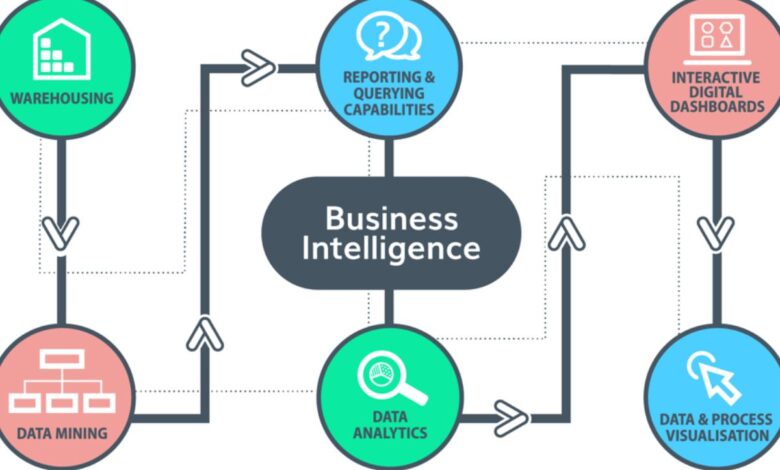
The business intelligence landscape has undergone dramatic transformation as organizations recognize that data represents more than information storage, it constitutes a strategic asset demanding sophisticated analytical capabilities. In 2026, business intelligence software has evolved beyond simple reporting tools into comprehensive platforms integrating artificial intelligence, natural language processing, and predictive analytics that empower users across organizational hierarchies to extract actionable insights from complex data environments.
With over three hundred fifty thousand organizations globally deploying business intelligence solutions and more than six million developers actively working with these platforms, selecting the appropriate tool requires careful evaluation of analytical capabilities, ease of use, integration ecosystems, and total cost considerations. This comprehensive examination explores ten leading business intelligence platforms defining the current market, providing detailed insights into features, pricing structures, and optimal deployment scenarios.
1. Microsoft Power BI: Accessible Analytics for the Microsoft Ecosystem
Microsoft Power BI continues dominating the business intelligence market in 2026, serving as the preferred analytics platform for organizations deeply embedded within Microsoft technology environments. The platform has achieved recognition from major analyst firms as a leader in business intelligence, praised particularly for its innovation trajectory, intuitive interface design, and vibrant user community that facilitates knowledge sharing and problem-solving. Following a significant pricing update implemented in April 2025, Power BI Pro licenses now cost fourteen dollars per user monthly, while Premium Per User subscriptions reach twenty-four dollars per user monthly, representing the first substantial price adjustment since the platform’s 2015 launch.
The pricing structure reflects Microsoft’s continued investment in platform capabilities, including deep integration with Microsoft Fabric, enhanced AI-powered features through Copilot, and expanded connectivity supporting over one hundred data sources. Power BI Pro provides essential capabilities for creating, sharing, and collaborating on data visualizations and reports, enabling organizations to democratize data access across business units. The Premium Per User tier expands these capabilities with access to larger model sizes, increased refresh frequencies supporting up to forty-eight refreshes daily, and advanced analytical features that prove valuable for power users requiring sophisticated data manipulation.
What distinguishes Power BI in the competitive landscape is its exceptional value proposition for organizations already licensing Microsoft 365, as certain subscription tiers including Microsoft 365 E5 bundle Power BI Pro licenses within their packages. This integration creates compelling economics for Microsoft-centric organizations while ensuring seamless interoperability with Excel, Teams, SharePoint, and other productivity applications that business users access daily. The platform’s natural language query capabilities through Q&A features and AI-driven visualizations including key influencers and decomposition trees lower barriers to analytical insight for non-technical users, supporting the broader organizational objective of data democratization.
2. Tableau: Visual Analytics Excellence with Enterprise Readability
Tableau maintains its reputation as the gold standard for data visualization, serving over three hundred thousand business teams globally and more than half of Fortune 500 companies. Following its acquisition by Salesforce, the platform has strengthened its enterprise capabilities while maintaining the intuitive drag-and-drop interface that initially distinguished it within the business intelligence category. Current pricing for 2026 positions Tableau Creator licenses at seventy-five dollars per user monthly when billed annually, providing complete access to Tableau Desktop, Tableau Prep Builder for data preparation, and full authoring capabilities for creating sophisticated visualizations and dashboards.
Tableau Explorer licenses, priced at forty-two dollars per user monthly, target business users requiring self-service analytics capabilities without the complexity of building reports from scratch, allowing interaction with published data sources and creation of custom views through browser-based interfaces. Tableau Viewer licenses at fifteen dollars per user monthly serve casual users who primarily consume and interact with published content, offering compelling interactivity including filtering, exporting, and subscription capabilities at accessible price points. This tiered licensing structure allows organizations to optimize costs by assigning appropriate license types based on actual user requirements rather than providing uniform access across all employees.
The platform’s integration of Tableau Pulse introduces intelligent technology prescribing next-best actions using artificial intelligence, while Einstein Analytics capabilities borrowed from the Salesforce ecosystem enhance predictive capabilities. Tableau excels in scenarios demanding rich data storytelling paired with analytical depth, though organizations should recognize that the platform assumes availability of clean, analysis-ready data. Industry research consistently indicates that analysts spend sixty to eighty percent of their time preparing data before Tableau can effectively visualize it, suggesting that organizations may benefit from complementary data preparation solutions or investment in Tableau Prep to maximize platform value.
3. Qlik: Associative Analytics for Complex Data Relationships
Qlik has established itself through its unique associative analytics engine that distinguishes it from query-based business intelligence platforms. Rather than requiring users to predetermine analytical pathways through hierarchical navigation or predefined queries, Qlik’s associative model allows users to explore data freely, with the platform dynamically highlighting relationships, associations, and exclusions across entire datasets. This approach proves particularly valuable in exploratory analytics scenarios where users may not know precisely what questions to ask, enabling serendipitous discovery of insights that traditional linear analytical approaches might miss.
The platform’s extensive cloud infrastructure consolidates data from diverse cloud and hybrid environments, automating data-driven workflows while enriching understanding through embedded artificial intelligence capabilities. Qlik reaches a broad user base across numerous countries, providing powerful data solutions designed to adapt to changing organizational requirements. The platform’s strength lies in making data easily accessible and utilizable for enhanced business outcomes, with particular emphasis on enabling business users to perform sophisticated analyses without requiring technical expertise in database queries or programming languages.
Qlik supports deployment flexibility spanning on-premises installations, private cloud environments, and public cloud platforms, accommodating diverse organizational preferences regarding data sovereignty and infrastructure control. The platform’s data integration capabilities through Qlik Sense and QlikView enable organizations to consolidate information from disparate sources including enterprise resource planning systems, customer relationship management platforms, and operational databases, creating unified analytical environments that eliminate data silos hampering cross-functional insights.
4. ThoughtSpot: Natural Language Analytics for Business Users
ThoughtSpot has pioneered search-based analytics that fundamentally transforms how business users interact with data. The platform describes itself as the Agentic Analytics Platform company for the enterprise, empowering everyone within organizations to ask data questions, receive answers, and take action using natural language and artificial intelligence. This Google-like search experience eliminates the traditional barriers separating business users from data insights, allowing employees to type questions in plain English and receive immediate analytical responses without writing SQL queries or depending on data teams for report generation.
The platform maintains a dual approach supporting code-first workflows for data teams while remaining code-free for business users, creating an intuitive experience accessible to anyone while handling large, complex cloud data at scale. ThoughtSpot’s self-service model proves most effective when paired with centralized data warehouses that eliminate manual extract, transform, and load processes, enabling real-time query execution against current data rather than static snapshots. The platform’s AI-powered insights automatically surface anomalies, trends, and patterns that users might overlook, proactively delivering relevant information rather than waiting for specific queries.
ThoughtSpot’s strength in democratizing analytics makes it particularly valuable for organizations seeking to distribute analytical capabilities broadly across business units, enabling marketing teams to analyze campaign performance, sales representatives to understand pipeline dynamics, and operations managers to monitor efficiency metrics without technical intermediaries. The platform supports embedded analytics scenarios where organizations can integrate ThoughtSpot’s search and visualization capabilities directly into custom applications, extending analytical access to customers and partners beyond internal users.
5. Zoho Analytics: Comprehensive BI for Budget-Conscious Organizations
Zoho Analytics provides a self-service business intelligence platform combining extensive functionality with accessible pricing that appeals particularly to small and medium-sized businesses seeking enterprise-grade capabilities without corresponding enterprise costs. Starting at twenty-four dollars monthly, the platform delivers data integration capabilities supporting hundreds of popular applications including Salesforce, Google Drive, QuickBooks, Zendesk, HubSpot, and Mailchimp, enabling organizations to consolidate information from diverse sources into unified analytical environments.
The platform’s AI-driven management module through Zia, Zoho’s artificial intelligence assistant, helps users augment data to predict future trends and generate insights that might require advanced statistical expertise using traditional approaches. Zia can answer questions about data, perform cognitive analysis, execute what-if scenarios, and create personalized reports, effectively serving as a virtual data analyst accessible to business users. Zoho Analytics distinguishes itself through white-label solutions for embedded analytics, allowing organizations to fully brand analytical experiences with custom logos, colors, images, and URLs that deliver consistent brand experiences to end users.
The platform includes robust data visualization capabilities spanning diverse chart types, interactive dashboards, and customizable reporting frameworks that accommodate varied presentation requirements. Zoho Analytics supports collaborative workflows enabling teams to share data stories, annotate visualizations, and coordinate around analytical findings. The platform’s fifteen-day free trial allows prospective users to evaluate capabilities using actual organizational data before financial commitment, reducing adoption risk for budget-conscious organizations evaluating multiple platforms.
6. Looker: Modeling-Driven Analytics from Google Cloud
Looker, now integrated within Google Cloud’s ecosystem, provides business intelligence distinguished by its modeling layer that enables consistent metric definitions across organizations and git-based development workflows appealing to technically sophisticated teams. The platform’s LookML modeling language creates reusable data definitions ensuring that when different teams reference metrics like customer lifetime value or monthly recurring revenue, they employ identical calculation logic eliminating the metric inconsistencies that plague many analytical environments.
This modeling approach proves particularly valuable in complex organizational structures where multiple departments might otherwise develop divergent understandings of fundamental business metrics, creating confusion during strategic discussions and undermining confidence in data-driven decision making. Looker’s git-based version control for analytical content brings software development best practices into business intelligence, enabling teams to track changes, review modifications before deployment, and roll back problematic updates that introduce errors.
The platform’s browser-based interface eliminates desktop software installations, allowing users to access analytical capabilities from any device with internet connectivity. Looker supports embedded analytics scenarios where organizations can integrate dashboards and visualizations directly into custom applications, extending analytical capabilities to customer-facing contexts. Integration with Google Cloud Platform services including BigQuery creates optimized performance for organizations standardizing on Google’s cloud infrastructure, though the platform maintains connectivity with diverse data sources beyond the Google ecosystem.
7. Domo: Cloud-Native Business Intelligence for Executive Visibility
Domo has positioned itself as a cloud-based, mobile-first business intelligence platform helping organizations drive value from data by improving integration, interpretation, and utilization across business functions. The platform emphasizes executive-level visibility with real-time dashboards providing leadership teams with current operational metrics without waiting for periodic report generation. Domo’s strength lies in its ability to enhance existing data warehouse and business intelligence investments rather than requiring wholesale replacement of current analytical infrastructure.
The platform allows users to build custom applications, automate data pipelines, and democratize data science through automated insights shareable with internal and external stakeholders. Domo’s connector ecosystem supports integration with hundreds of data sources including cloud applications, on-premises databases, and file-based systems, enabling comprehensive data consolidation without extensive custom integration development. The platform’s mobile-first design ensures that executives and business users can access critical metrics from smartphones and tablets, supporting decision-making regardless of physical location.
Domo’s approach to data visualization emphasizes clarity and accessibility over technical complexity, creating dashboards that communicate key performance indicators effectively to non-technical audiences including board members and senior executives. The platform supports alerts and notifications configured to trigger when metrics exceed thresholds or exhibit unusual patterns, enabling proactive response to emerging issues rather than retrospective analysis of problems after they escalate.
8. Oracle Analytics Cloud: Enterprise-Grade Intelligence with Augmented Capabilities
Oracle Analytics Cloud represents Oracle’s comprehensive business intelligence suite within its broader data services portfolio, distinguished particularly by augmented analytics capabilities that leverage machine learning to surface insights automatically. The platform provides embedded business intelligence enabling organizations to integrate analytical capabilities into custom applications and operational workflows, with natural language insights accessible through single-click interactions that lower barriers to analytical access for business users.
Oracle Analytics excels in mobile analytics, outperforming many competitors through natural language queries and podcast-style audio briefings that allow users to consume insights while commuting or traveling. The platform’s integration with Oracle’s extensive application portfolio including enterprise resource planning, human capital management, supply chain, and customer experience systems creates streamlined analytical workflows for organizations standardized on Oracle technology stacks. Oracle’s cloud infrastructure provides enterprise-grade security, compliance certifications, and governance capabilities satisfying requirements in regulated industries including finance, healthcare, and government sectors.
The platform addresses data silos through comprehensive data integration capabilities consolidating information from diverse sources into unified analytical environments. Oracle Analytics supports both self-service analytics for business users and governed analytics for IT-managed scenarios, accommodating organizational preferences regarding centralized control versus distributed analytical capabilities. The platform’s augmented analytics features automate pattern detection, anomaly identification, and predictive modeling, democratizing advanced analytical techniques previously requiring specialized data science expertise.
9. SAP Analytics Cloud: Unified Planning and Intelligence
SAP Analytics Cloud provides an all-in-one software-as-a-service business intelligence platform delivering comprehensive analytics functionality specifically designed for SAP business users. Built on the HANA Business Intelligence platform, the solution provides analytics from data collected from multiple sources including SAP enterprise resource planning systems, Microsoft SQL databases, and Salesforce among numerous other solutions. The platform distinguishes itself by unifying business intelligence, planning, and predictive analytics within a single environment, eliminating the fragmentation that occurs when organizations deploy separate tools for historical analysis, forward planning, and forecasting.
SAP Analytics Cloud’s strength lies particularly in scenarios where organizations require tight integration between analytical insights and planning processes, enabling users to analyze historical performance, identify trends, and immediately translate findings into forward-looking plans without switching between disparate applications. The platform’s embedded machine learning capabilities surface smart insights automatically, highlighting anomalies and patterns that warrant attention. SAP’s extensive industry-specific content and best practice templates accelerate deployment for organizations in sectors including manufacturing, retail, healthcare, and financial services where SAP maintains deep domain expertise.
The platform supports collaborative planning workflows enabling distributed teams to contribute to budgets, forecasts, and strategic plans while maintaining version control and audit trails documenting changes. SAP Analytics Cloud’s data modeling capabilities allow business users to create analytical models without deep technical expertise, though IT teams can apply governance controls ensuring data quality and security. The platform’s mobile applications extend analytical and planning capabilities to smartphones and tablets, supporting field-based decision making and approvals.
10. TIBCO Spotfire: Advanced Analytics for Complex Industrial Applications
TIBCO Spotfire represents a versatile data analytics platform capable of handling large datasets with deployment flexibility spanning on-premises installations and cloud environments. The platform distinguishes itself through dynamic reporting capabilities, easy creation of highly interactive dashboards, and extensive customization options that prove particularly valuable for process data analysis, industrial performance dashboards, and problem root cause analysis. Spotfire’s strength in technical and industrial applications stems from advanced analytical capabilities including statistical analysis, predictive modeling, and geospatial analytics that exceed typical business intelligence requirements.
The platform proves especially popular in energy sector applications for real-time analytics processing Internet of Things device data, manufacturing environments requiring operational intelligence, and research organizations analyzing scientific datasets. Spotfire’s data visualization capabilities span traditional business charts and specialized technical visualizations including heat maps, control charts, and 3D scatter plots appropriate for engineering and scientific contexts. The platform’s scripting capabilities through IronPython and R integration enable data scientists to implement custom analytical algorithms while maintaining accessibility for business users through guided analytics and dashboard interfaces.
TIBCO Spotfire supports streaming analytics processing real-time data feeds, enabling organizations to monitor operational metrics continuously and respond immediately to emerging conditions rather than relying on batch-processed historical analysis. The platform’s extensive connector ecosystem supports integration with industrial control systems, laboratory information management systems, and specialized scientific instruments alongside traditional business data sources. Spotfire’s embedded analytics capabilities allow organizations to integrate analytical dashboards directly into operational applications, providing contextualized insights within existing workflows.
Choosing the Right Business Intelligence Platform
Selecting optimal business intelligence software requires thoughtful evaluation extending beyond feature checklists to encompass organizational culture, technical capabilities, and strategic objectives. Organizations prioritizing ease of use and broad analytical democratization should examine platforms like ThoughtSpot with natural language interfaces or Power BI with familiar Microsoft-aligned experiences that minimize learning curves. Technically sophisticated teams comfortable with modeling languages may prefer Looker’s structured approach that ensures metric consistency across organizational boundaries.
Budget considerations naturally influence platform selection, though organizations should evaluate total cost of ownership encompassing not just licensing fees but also implementation expenses, training requirements, data preparation investments, and ongoing administration overhead. Platforms like Zoho Analytics provide accessible entry points for budget-conscious organizations, while enterprise solutions like Oracle Analytics Cloud or SAP Analytics Cloud justify premium pricing through comprehensive capabilities and deep integration with corresponding application ecosystems.
Integration requirements deserve careful consideration as business intelligence platforms serve as consumption layers atop organizational data infrastructure. Organizations standardized on specific cloud platforms should prioritize business intelligence solutions offering optimized connectivity, such as Looker for Google Cloud environments or Power BI for Microsoft Azure deployments. Companies managing diverse technology portfolios require platforms like Qlik or Tableau supporting extensive connector ecosystems that accommodate heterogeneous data sources.
The distinction between internal analytics and customer-facing embedded analytics significantly impacts platform selection. Organizations primarily supporting internal decision making can prioritize different capabilities than those requiring white-label embedded analytics for customer portals or product integrations. Platforms like Zoho Analytics and TIBCO Spotfire explicitly support embedded scenarios, while others may require additional licensing or architectural considerations for external user access.
Most leading platforms offer free trials or limited-feature versions allowing hands-on evaluation before financial commitment. Organizations should leverage these opportunities to test platforms using representative datasets and actual business scenarios rather than relying exclusively on vendor demonstrations or third-party reviews. Involving diverse stakeholders including business users, IT administrators, and executive sponsors during evaluation ensures selected platforms satisfy varied requirements across organizational hierarchies.
The business intelligence landscape in 2026 offers unprecedented choice spanning from accessible, affordable solutions democratizing analytics for small organizations to comprehensive enterprise platforms supporting complex analytical requirements at global scale. By carefully evaluating organizational needs against platform capabilities, businesses can identify intelligence solutions enhancing decision making, optimizing operations, and supporting strategic objectives while remaining within budgetary constraints and technical capabilities. The right choice balances immediate functionality requirements with growth projections, ensuring selected platforms can evolve alongside expanding analytical maturity without forcing disruptive migrations in future years.