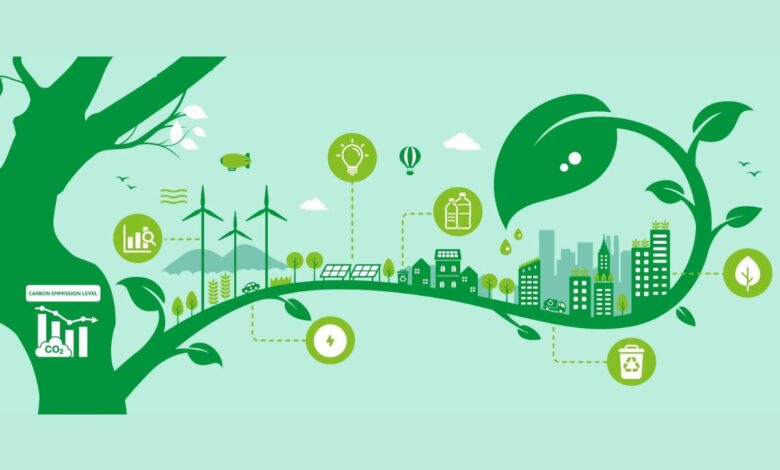
As businesses around the world confront the urgent reality of climate change, a new category of essential software has emerged from what was once a niche concern into a fundamental business requirement. Carbon accounting platforms have become as crucial to modern enterprises as financial accounting systems, and understanding why this shift has occurred helps us appreciate the sophisticated tools that have evolved to meet this challenge.
Think of carbon accounting as similar to financial accounting, but instead of tracking dollars and cents, organizations track greenhouse gas emissions across their entire value chain. Just as a company cannot manage its finances without knowing its revenue and expenses, it cannot effectively reduce its environmental impact without accurately measuring its carbon footprint. This parallel becomes increasingly important as investors, regulators, and consumers demand transparency about corporate climate impacts.
1. Watershed: Building Climate Intelligence
Watershed has established itself as one of the most comprehensive carbon accounting platforms by approaching the challenge from a foundation of deep climate science combined with enterprise-grade software design. Founded by former executives from technology companies who witnessed firsthand how businesses struggled with climate data, Watershed built a platform that translates complex environmental science into actionable business intelligence.
What makes Watershed particularly powerful is its ability to automatically collect data from across an organization’s systems, including financial software, procurement databases, and operational systems. The platform uses sophisticated algorithms and emission factors from authoritative databases to convert this raw data into accurate carbon measurements. Companies using Watershed can see their emissions broken down by business unit, product line, or geographic region, making it much easier to identify where reduction efforts will have the greatest impact.
The platform goes beyond simple measurement by incorporating scenario modeling tools that allow companies to test different decarbonization strategies before implementing them. If a manufacturer wonders whether switching to renewable energy or redesigning products for lower-carbon materials would reduce emissions more effectively, Watershed’s modeling capabilities can provide data-driven answers. This forward-looking functionality transforms carbon accounting from a compliance exercise into a strategic planning tool.
2. Persefoni: Financial-Grade Carbon Management
Persefoni approached carbon accounting with a provocative question: what if we built climate disclosure software with the same rigor and auditability that financial accounting software provides? This philosophy has made Persefoni particularly popular among publicly traded companies and financial institutions that need carbon data meeting the stringent standards that auditors and regulators demand.
The platform’s architecture treats carbon data with the same governance and controls as financial data, including detailed audit trails showing exactly how every emission calculation was performed and what source data supported it. This becomes crucial when companies face external audits of their sustainability reports or need to defend their climate disclosures to skeptical stakeholders. Persefoni maintains extensive libraries of emission factors that are regularly updated and traceable to authoritative sources like government agencies and scientific bodies.
Financial institutions have found Persefoni especially valuable for understanding the carbon intensity of their investment portfolios. Banks and asset managers can use the platform to measure financed emissions, which represent the greenhouse gases associated with the companies and projects they fund. This capability has become essential as financial regulators worldwide begin requiring climate risk disclosures from financial institutions.
3. Normative: European Precision Meets Global Reach
Emerging from Sweden with a distinctly European approach to sustainability, Normative has built a platform emphasizing scientific accuracy and accessibility for companies of all sizes. The platform’s strength lies in its extensive database of region-specific emission factors that account for the different carbon intensities of electricity grids, manufacturing processes, and transportation modes around the world.
Understanding why region-specific factors matter requires appreciating how dramatically energy sources vary globally. Electricity generated in Norway, which relies heavily on hydropower, has a vastly different carbon footprint than electricity from coal-dependent grids. Normative’s platform automatically applies the appropriate factors based on where activities occur, ensuring that a company’s global footprint accurately reflects these regional differences.
The platform has also distinguished itself through user-friendly design that makes carbon accounting accessible to sustainability teams without requiring extensive technical training. Normative provides guided workflows that walk users through data collection and calculation processes, explaining why certain information is needed and how it translates into emissions measurements. This educational approach helps build organizational understanding of carbon accounting rather than treating it as a black box.
4. Sweep: Comprehensive Value Chain Engagement
Sweep has carved out a unique position by focusing intensively on the collaborative aspects of carbon accounting, particularly the challenge of scope three emissions. The platform recognizes that no company operates in isolation, and meaningful emissions reductions require coordination across entire value chains from suppliers through customers.
The platform’s supplier engagement tools allow companies to efficiently collect carbon data from hundreds or thousands of suppliers, automating what would otherwise be an overwhelming manual process. Sweep provides suppliers with simplified interfaces for reporting their emissions, then aggregates and analyzes this data to give companies clear visibility into their supply chain footprint. This capability becomes essential for consumer goods companies, retailers, and other businesses where purchased goods and services represent the majority of total emissions.
Beyond measurement, Sweep incorporates supplier development programs that help partners reduce their own emissions. The platform can identify high-impact suppliers where focused reduction efforts will deliver the greatest overall benefits, then provide those suppliers with resources and guidance for improvement. This collaborative approach transforms carbon accounting from a reporting exercise into a tool for driving systemic change.
5. Plan A: End-to-End Decarbonization Platform
Plan A approaches carbon accounting as one component of a broader decarbonization journey, integrating measurement with action planning and progress tracking in a unified platform. This holistic design reflects the reality that measuring emissions is merely the starting point; the ultimate goal is reduction, and Plan A structures its platform around this objective.
After establishing a baseline carbon footprint, Plan A guides companies through developing science-based reduction targets aligned with climate science recommendations for limiting global warming. The platform then helps identify and prioritize specific reduction initiatives, from switching energy suppliers to redesigning logistics networks. Each potential initiative includes estimated costs, emission reduction potential, and implementation timelines, enabling companies to build comprehensive decarbonization roadmaps.
What sets Plan A apart is its emphasis on tracking progress over time and adjusting strategies based on results. The platform provides dashboards showing how actual emissions compare to reduction targets, highlighting areas where initiatives are succeeding or falling short. This continuous monitoring and adjustment process treats decarbonization as an ongoing management discipline rather than a one-time planning exercise.
6. Sphera: Industrial Sustainability Expertise
For companies in heavy industry, manufacturing, and complex supply chains, Sphera brings decades of environmental health and safety software experience to carbon accounting. The platform emerged from Sphera’s established position in environmental compliance and risk management, extending those capabilities to address climate challenges.
Sphera’s strength lies in handling the complexity of industrial operations where emissions come from diverse sources including chemical processes, energy consumption, fugitive emissions from equipment, and transportation logistics. The platform integrates with industrial control systems and enterprise resource planning software to capture detailed operational data, then applies sophisticated calculation methodologies appropriate for industrial contexts.
The platform also addresses product carbon footprinting, helping manufacturers understand the emissions associated with individual products from raw material extraction through manufacturing and distribution. This product-level visibility enables companies to make informed decisions about design changes, material substitutions, and process improvements that reduce product carbon intensity while maintaining quality and performance.
7. Salesforce Net Zero Cloud: CRM Integration Advantage
Salesforce leveraged its dominant position in customer relationship management to create Net Zero Cloud, a carbon accounting platform that integrates seamlessly with the broader Salesforce ecosystem millions of companies already use. This integration advantage allows organizations to connect carbon accounting with their existing business processes rather than operating it as a separate system.
Companies using Salesforce for customer management, sales operations, or supply chain coordination can extend those workflows to incorporate carbon considerations. For example, procurement teams can see supplier carbon data alongside pricing and delivery information when making purchasing decisions. Sustainability metrics can be incorporated into executive dashboards alongside revenue and profit metrics, elevating climate performance to the same visibility as financial performance.
Net Zero Cloud benefits from Salesforce’s extensive partner ecosystem, with specialized consulting firms and implementation partners helping companies customize the platform for their specific industries and use cases. This ecosystem approach addresses the reality that carbon accounting implementations often require significant customization to align with unique business processes and data sources.
8. IBM Environmental Intelligence Suite: AI-Powered Insights
IBM brought its artificial intelligence and data analytics capabilities to carbon accounting through the Environmental Intelligence Suite, a platform that combines traditional carbon measurement with predictive analytics and climate risk assessment. This broader scope reflects IBM’s perspective that companies need to understand not just their own emissions but also how climate change will impact their operations and value chains.
The platform’s AI capabilities help identify patterns and anomalies in emissions data that might indicate measurement errors or unexpected changes in operations. Machine learning algorithms can predict future emissions based on planned business activities, enabling more accurate forecasting and target setting. IBM has also incorporated climate risk modeling that helps companies understand how factors like extreme weather events or regulatory changes might affect their operations.
For large enterprises with complex global operations, IBM’s platform provides the scalability and security architecture needed to handle massive data volumes while maintaining data governance and access controls. The platform integrates with IBM’s broader sustainability software portfolio, creating a comprehensive system for managing environmental performance across multiple dimensions beyond just carbon.
9. Microsoft Cloud for Sustainability: Enterprise Integration
Microsoft’s entry into carbon accounting leverages the company’s Azure cloud platform and Microsoft 365 productivity suite to create deeply integrated sustainability management capabilities. The platform recognizes that effective carbon accounting requires data from across an organization, and Microsoft’s existing presence in corporate IT infrastructure provides unique integration advantages.
The platform can automatically pull data from Microsoft systems that companies already use, including Dynamics enterprise resource planning software, Teams collaboration tools, and Azure infrastructure services. This reduces the manual data collection burden that often slows carbon accounting implementations. Microsoft has also built connectors to hundreds of other business systems, creating a data integration layer that simplifies the technical challenges of carbon accounting.
Beyond measurement and reporting, Microsoft Cloud for Sustainability incorporates tools for goal setting, action tracking, and stakeholder reporting. Companies can create custom sustainability scorecards that combine carbon metrics with other environmental and social indicators, providing a comprehensive view of corporate responsibility performance. The platform’s reporting tools generate disclosure-ready documents aligned with common frameworks including the Task Force on Climate-related Financial Disclosures and the Global Reporting Initiative.
10. Workiva: Disclosure and Assurance Excellence
Workiva approaches carbon accounting from the perspective of corporate disclosure and regulatory compliance, bringing expertise honed through years of helping companies prepare financial filings and regulatory reports. This disclosure-focused approach makes Workiva particularly valuable for publicly traded companies facing increasing pressure to provide auditable, accurate climate information to investors and regulators.
The platform’s strength lies in its controlled collaboration capabilities that allow multiple stakeholders across an organization to contribute to carbon calculations and sustainability reports while maintaining version control and audit trails. As companies prepare climate disclosures that will face the same scrutiny as financial statements, these governance controls become essential for ensuring data quality and defensibility.
Workiva has built extensive templates aligned with emerging climate disclosure standards including those being developed by the International Sustainability Standards Board and various national regulators. These templates help companies structure their climate reporting to meet regulatory requirements while telling a coherent story about their climate strategy and performance. The platform also facilitates external assurance processes by providing auditors with complete transparency into data sources and calculation methodologies.
Choosing the Right Platform
Selecting among these sophisticated platforms requires understanding your organization’s specific needs, resources, and objectives. Companies early in their sustainability journey might prioritize platforms offering strong educational resources and simplified workflows, while enterprises with established climate programs may need advanced features for complex supply chains or detailed scenario modeling.
Industry context matters significantly in platform selection. Manufacturing companies need robust product carbon footprinting capabilities, financial institutions require portfolio emissions analysis, and technology companies might prioritize scope two emissions from data centers and cloud services. Geographic considerations also play a role, with some platforms offering stronger capabilities in specific regions or better alignment with particular regulatory frameworks.

The carbon accounting landscape continues evolving rapidly as climate disclosure requirements expand and companies deepen their decarbonization commitments. These platforms represent not just software tools but partners in the critical work of understanding and reducing corporate climate impacts. By bringing rigor, automation, and intelligence to carbon measurement, they enable organizations to move beyond vague sustainability commitments toward meaningful, measurable climate action.