
The race to remove carbon from our atmosphere has evolved from theoretical discussions into a high-stakes technological competition. As the world acknowledges that reducing emissions alone will not solve climate change, carbon capture has become essential infrastructure for a sustainable future. These ten startups represent the cutting edge of technologies designed to either prevent industrial emissions from reaching the atmosphere or remove carbon dioxide that is already there.
Understanding carbon capture requires recognizing it encompasses multiple approaches. Point-source capture attaches to industrial facilities like cement plants or steel mills where emissions are concentrated. Direct air capture extracts carbon dioxide from ambient air where it exists at just over four hundred parts per million. Other methods accelerate natural mineralization processes or use biological systems to sequester carbon. Each approach has distinct advantages regarding cost, energy requirements, storage permanence, and scalability.
1. Climeworks: Direct Air Capture Pioneer
Climeworks has become synonymous with direct air capture technology, operating the world’s largest facilities for removing carbon dioxide directly from the atmosphere. The Swiss company’s technology uses large fans to draw air through filters containing materials that selectively bind with carbon dioxide molecules. Once saturated, the system heats these filters to release concentrated carbon dioxide for storage or utilization.
The company’s Orca and Mammoth facilities in Iceland, developed in partnership with Carbfix, represent the state of the art in permanent carbon removal. They capture carbon dioxide from the air and inject it deep underground into basalt rock formations where it mineralizes into solid carbonate within a few years. This permanence addresses a critical challenge in carbon removal by ensuring captured carbon cannot leak back into the atmosphere.
Climeworks has attracted major corporate customers including Microsoft, Stripe, and Shopify who purchase carbon removal credits. While costs remain high, the company has demonstrated a clear pathway for price reductions as production scales, similar to how solar panel costs declined dramatically over decades of manufacturing improvements.
2.Carbon Engineering: Synthetic Fuels from Air
Carbon Engineering pursues direct air capture with a focus on creating useful products rather than just storing carbon underground. The Canadian company, backed by investors including Bill Gates and Occidental Petroleum, captures atmospheric carbon dioxide and combines it with hydrogen to create synthetic liquid fuels suitable for vehicles and aircraft.
This approach addresses aviation’s unique challenge. Unlike automobiles that can transition to batteries, aircraft require energy-dense liquid fuels for long-distance flight. Carbon Engineering’s fuels are essentially carbon-neutral because emissions from burning them equal the carbon captured from air to make them, creating a closed loop rather than adding new atmospheric carbon.
The company’s first commercial-scale facility in Texas aims to demonstrate that synthetic fuels can compete economically with conventional petroleum. This project represents a crucial test of whether direct air capture can move beyond niche applications into mainstream energy markets.

3. Carbfix: Permanent Mineralization Storage
Carbfix accelerates a natural geological process that ordinarily takes thousands of years. The Icelandic company injects carbon dioxide dissolved in water deep underground into basalt rock formations where it reacts with minerals to form stable carbonates. Essentially, they convert gaseous pollution into permanent stone.
The elegance of this approach lies in its security. Once mineralized, carbon cannot leak back regardless of surface conditions, unlike storage in porous reservoirs where gas might escape through geological faults. The transformation is chemical and permanent, requiring extreme heat to reverse.
While Carbfix benefits from Iceland’s unique geology and abundant geothermal energy, the company works to demonstrate that similar basalt formations exist worldwide. Partnerships with Climeworks and industrial emitters showcase the technology’s versatility for both air-captured and point-source carbon.
4. Charm Industrial: Agricultural Waste to Carbon Storage
Charm Industrial recognized that agricultural waste represents carbon recently pulled from the atmosphere through photosynthesis. Rather than letting crop residues decompose and release this carbon, Charm converts them into stable bio-oil through pyrolysis, then permanently stores this liquid underground.
The company collects agricultural residues like corn stalks and forest thinnings, heats them in low-oxygen environments, and produces carbon-rich bio-oil suitable for geological storage. This approach addresses multiple challenges simultaneously by providing waste management solutions for farmers while creating carbon removal revenue streams.
Charm’s distributed model uses mobile pyrolysis units transported to biomass sources, avoiding expensive centralized infrastructure and transportation emissions. The company has delivered carbon removal credits to corporate buyers and continues expanding across agricultural regions.
5. LanzaTech: Microbes Transform Industrial Emissions
LanzaTech developed a biological carbon capture approach using engineered microorganisms that consume carbon-rich industrial waste gases and convert them into valuable chemicals and fuels. The process resembles industrial-scale fermentation where specialized bacteria metabolize carbon monoxide and carbon dioxide from steel mills or chemical plants.
The company captures gases that would otherwise be flared or vented, flowing them through bioreactors containing proprietary bacteria that produce ethanol and other chemicals. This ethanol becomes fuel or building blocks for plastics, cosmetics, and textiles. Major brands including Zara and Lululemon have incorporated LanzaTech materials into their products.
With commercial facilities operating across China, India, and Belgium, LanzaTech has proven that captured industrial carbon can genuinely compete with virgin fossil resources in global supply chains while generating economic value beyond environmental benefits.

6. Heirloom Carbon: Enhanced Mineral Weathering
Heirloom Carbon Technologies accelerates mineral weathering, a natural process where rocks absorb atmospheric carbon dioxide over geological timescales. The company speeds this from thousands of years to days using engineered limestone materials optimized for carbon uptake.
The process crushes limestone into fine powder spread across trays exposed to air. High surface area enables rapid carbon dioxide absorption. Once saturated, Heirloom heats the material using renewable energy to release concentrated carbon dioxide for storage while regenerating the limestone for reuse.
By working with abundant, well-understood materials already produced at massive scales for construction and agriculture, Heirloom taps into existing supply chains rather than building entirely new industrial ecosystems. The company has demonstrated its technology in California and attracted significant climate investment.
7. Verdox: Electrochemical Carbon Capture
Emerging from Massachusetts Institute of Technology research, Verdox developed an electrochemical approach that dramatically reduces energy requirements compared to conventional thermal processes. Instead of using heat to release captured carbon dioxide, the technology uses electricity to switch specialized materials between carbon-absorbing and carbon-releasing states.
The company’s capture cells contain electrode materials that bind carbon dioxide when voltage flows in one direction and release it when reversed. This electrochemical swing requires significantly less energy than heating materials to high temperatures and runs on renewable electricity rather than requiring heat sources.
Verdox targets industrial facilities with concentrated carbon dioxide streams in exhaust gases, focusing initially on cement plants, steel mills, and other heavy industrial sources difficult to decarbonize through other means. The company has raised substantial funding and works toward commercial-scale demonstration projects.
8. CarbonCure Technologies: Carbon-Storing Concrete
CarbonCure developed an elegantly simple approach by injecting carbon dioxide into concrete during mixing. The carbon reacts with calcium in cement to form calcium carbonate minerals that permanently embed in the concrete while improving compressive strength.
This addresses a crucial challenge since concrete production generates roughly eight percent of global emissions yet remains essential for construction. CarbonCure enables concrete producers to reduce cement content while simultaneously storing captured carbon dioxide. The mineralized carbon becomes part of building structures for their entire lifespan.
The technology retrofits onto existing concrete mixing equipment with minimal workflow changes, enabling rapid adoption across hundreds of facilities. Major projects by Microsoft and Amazon have incorporated CarbonCure concrete, demonstrating market acceptance for carbon-storing building materials.
9. Running Tide: Ocean-Based Carbon Sequestration
Running Tide enhances natural ocean carbon cycles through systems that deploy biomass into deep waters for long-term sequestration. Founded by commercial fishermen and engineers, the company grows kelp and other fast-growing biomass, then sinks it to ocean depths where extremely slow decomposition rates keep carbon stored for centuries or millennia.
The approach also incorporates alkalinity enhancement using limestone to counteract ocean acidification while enhancing carbon storage potential. Running Tide conducts extensive monitoring using autonomous vessels and sensors to verify carbon sequestration and avoid unintended ecological impacts.
Ocean-based carbon removal faces unique verification challenges since tracking deep ocean carbon is inherently difficult. Running Tide has invested heavily in developing monitoring methodologies that provide confidence to carbon credit buyers while satisfying scientific scrutiny.
10. Twelve: Electrochemical Carbon Conversion
Twelve developed an electrochemical process converting carbon dioxide and water into useful chemicals including ethylene for plastics and jet fuel components. The technology uses renewable electricity to drive chemical reactions that transform captured carbon into products replacing those currently made from fossil fuels.
The company’s reactors employ specialized catalysts and electrode designs to efficiently convert carbon dioxide into target molecules. This represents circular carbon use where the same atoms cycle through the economy multiple times rather than following a one-way path from underground reserves to the atmosphere.
Partnerships with Alaska Airlines for sustainable aviation fuel and consumer goods companies demonstrate that carbon-based products can meet quality standards of conventional fossil-derived materials while offering superior environmental profiles.
The Future of Carbon Capture
These ten companies represent diverse philosophies for addressing the same urgent challenge: removing excess atmospheric carbon dioxide and preventing new emissions. Some focus on permanent geological or mineralized storage, others pursue utilization pathways creating economic value, and still others enhance natural carbon cycling processes.
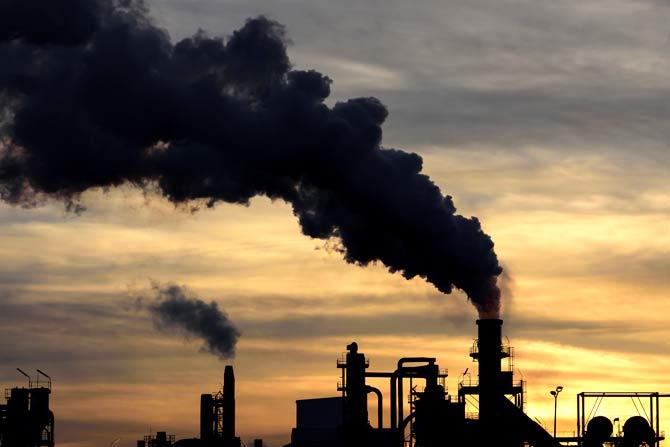
This diversity reflects reality. No single solution will address the massive scale of climate challenges. We will likely need all these technologies deployed across different contexts where each approach’s particular strengths align with local conditions and requirements. Direct air capture suits locations with abundant renewable energy and suitable geology. Point-source capture fits industries continuing emissions during energy transition. Utilization pathways create economic incentives accelerating deployment.
What unites these startups is recognition that carbon capture has transitioned from speculative technology to essential climate infrastructure. The question is no longer whether we need carbon removal but rather how quickly we can deploy it at meaningful scales. These companies race to answer through innovation, demonstration, and commercial deployment proving carbon capture belongs alongside renewable energy and electrification as foundational pillars of climate action.