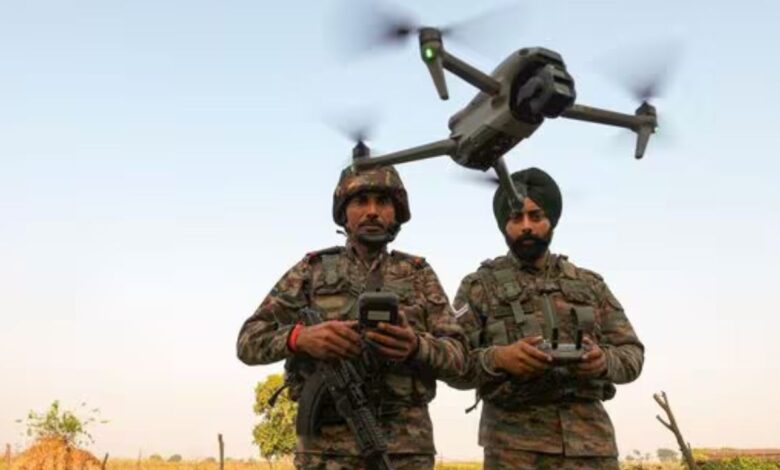
India has undergone a remarkable transformation in defence technology, evolving from the world’s largest arms importer to an emerging hub of indigenous defence innovation. With over one thousand defence startups now operating and funding surging sixty-one times from three million dollars in 2016 to nearly two hundred million dollars in 2025, India’s defence tech ecosystem has reached an inflection point. This explosive growth stems from the government’s Atmanirbhar Bharat initiative, the transformative iDEX program launched in 2018, and growing recognition that national security demands homegrown technological capabilities.
The strategic imperative became evident during the 2020 Galwan Valley clash, which accelerated adoption of indigenous drone technology and catalyzed investment in autonomous systems and AI-powered surveillance. India’s defence budget has climbed from two point five three lakh crore rupees in 2013-14 to six point eight one lakh crore rupees in 2025-26, with nearly seventy percent of capital expenditure reserved for domestic suppliers. India now hosts approximately four hundred eighty-seven defence technology startups, with one hundred thirty-two having secured funding and twenty-eight having raised Series A or higher rounds.
Perhaps most significantly, India’s defence exports have skyrocketed from six hundred eighty-six crore rupees in 2014 to twenty-three thousand six hundred twenty-two crore rupees in 2025, with the Ministry targeting fifty thousand crore rupees in exports by 2029. The first quarter of fiscal 2024-25 witnessed a seventy-eight percent surge in defence exports, reaching six thousand nine hundred fifteen crore rupees and underscoring accelerating international competitiveness.
1. ideaForge Technology
ideaForge stands as the undisputed pioneer and market leader of India’s defence drone industry, commanding fifty percent market share in the domestic unmanned aerial vehicle segment. Founded in 2007 by IIT Bombay alumni, the company emerged from engineering experiments and a vision for national security that found validation after the 26/11 Mumbai attacks highlighted urgent surveillance needs. The company’s SWITCH UAV operates in extreme conditions from minus thirty degrees at six thousand meter altitudes to desert environments, while NETRA Series provides tactical surveillance and the Q Series handles mapping applications.
ideaForge achieved a historic milestone in June 2023 as the first Indian defence tech startup to list on the stock exchange, raising five hundred sixty-seven crore rupees at over fifty times subscription. Shares listed at one thousand three hundred five rupees, a ninety-four percent premium over the issue price, providing crucial validation for defence tech investments. Revenues grew from three hundred forty-seven million rupees in fiscal 2021 to one thousand eight hundred sixty million rupees in fiscal 2023. Beyond commercial success, ideaForge has become an ecosystem builder, taking stakes in companies like GalaxEye, a spacetech startup developing multi-sensor satellite imaging.
2. Tonbo Imaging
Tonbo Imaging has established itself as India’s premier developer of advanced imaging and sensor systems for defence applications. Founded in 2012 by Arvind Lakshmikumar, Ankit Kumar, Cecilia D’Souza, and Sudeep George, the company specializes in electro-optical surveillance systems, thermal imaging, and long-range monitoring critical for military operations. Unlike many Indian defence startups focused initially on domestic markets, Tonbo built its business from inception to serve global markets, with early contracts from South Korea, Australia, and Singapore.
The company’s night vision systems, thermal sensors, and long-range surveillance platforms address critical gaps in situational awareness. Platforms provide real-time intelligence while keeping operators safely removed from threats, making them invaluable for border security and counter-terrorism. Tonbo supplies products to the Defence Research and Development Organisation, Indian Air Force, and numerous international agencies. The company raised one hundred seventy-five crore rupees in Series D pre-IPO funding in April 2025 at a valuation of one thousand five hundred crore rupees, signaling IPO readiness expected in early 2026.
3. Digantara
Digantara operates at the intersection of space surveillance, missile tracking, and orbital security. The Bengaluru startup raised fifty million dollars in Series B funding in December 2025 from investors including 360 ONE Asset, SBI Investment, Ronnie Screwvala, Peak XV Partners, and Kalaari Capital, bringing total capital to sixty-four point five million dollars. The company addresses space situational awareness challenges in an increasingly crowded orbital environment with thousands of active satellites and millions of debris pieces.
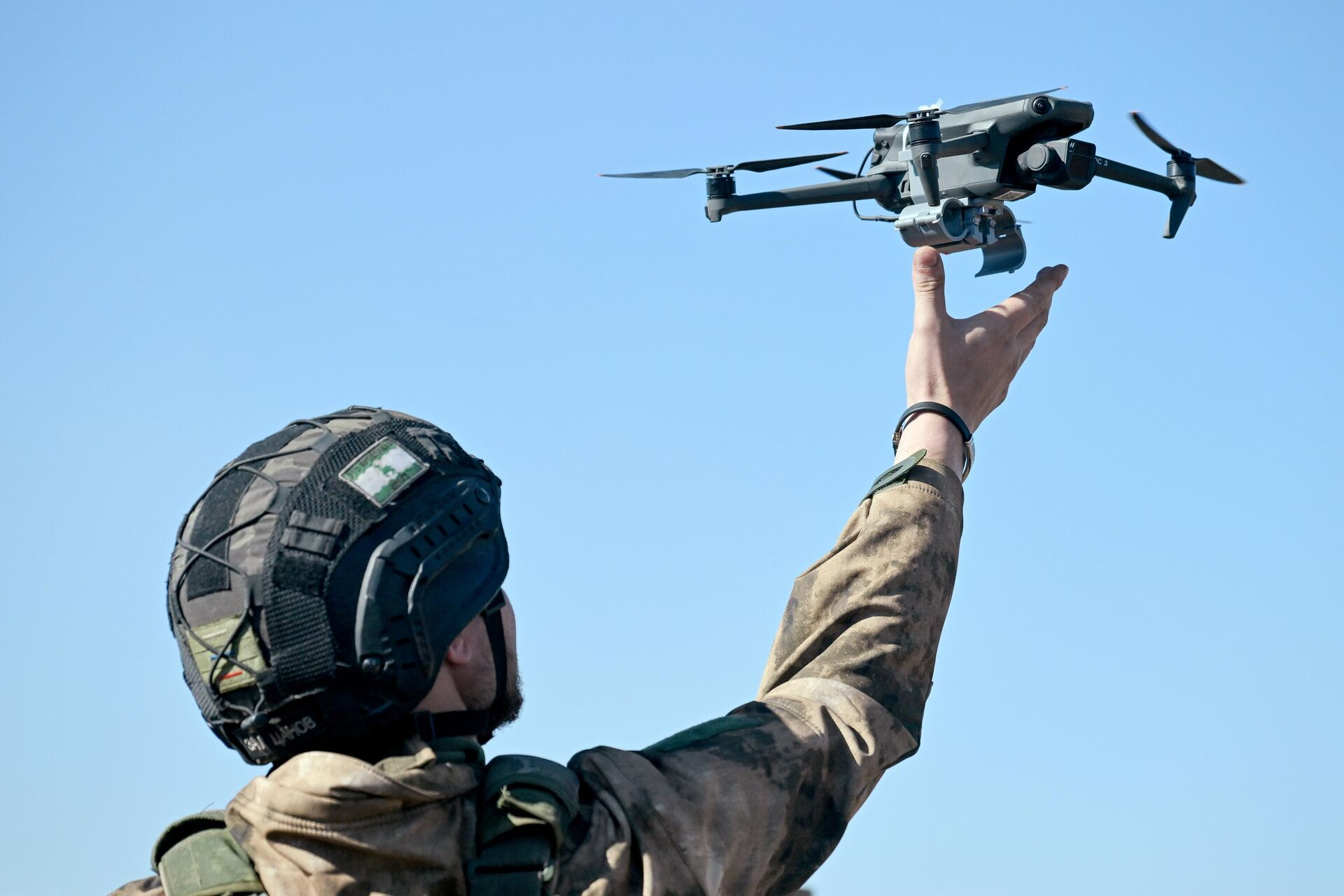
Digantara’s constellation of electro-optical and lidar satellites provides persistent surveillance of objects across all orbital altitudes, enabling satellite operators and defence agencies to make informed decisions about maneuvers and threat assessment. The company has evolved beyond space surveillance into missile defence applications, providing early warning of ballistic launches faster than traditional ground-based radar. Digantara operates a twenty-five thousand square foot manufacturing facility producing up to five satellites simultaneously, with plans to scale to thirty satellites through a new Andhra Pradesh facility in 2026.
4. Garuda Aerospace
Garuda Aerospace has emerged as one of India’s most versatile drone manufacturers, offering comprehensive unmanned aerial vehicle solutions across defence, agriculture, surveillance, and industrial inspection. The company emphasizes customization, allowing customers to specify payload requirements and mission profiles rather than selecting off-the-shelf solutions. Defence offerings focus on surveillance, reconnaissance, and logistics, carrying payloads including high-resolution cameras, thermal imagers, communications relay equipment, and cargo containers.
Garuda raised one hundred crore rupees in Series B funding in 2025 ahead of its planned IPO, following ideaForge’s successful precedent. The company provides complete solutions including pilot training through Garuda Academy, which has certified thousands of drone pilots across India. The business model extends beyond hardware sales to drone-as-a-service offerings where customers pay for specific services, creating recurring revenue streams that provide more predictable cash flows than hardware sales alone.
5. NewSpace Research and Technologies
NewSpace Research operates at the frontier of unmanned systems development for defence and civilian applications. The company raised thirty-three million dollars in Series B funding in 2025, reflecting strong investor confidence. NewSpace focuses on high-performance unmanned aerial vehicles for demanding missions including high-altitude surveillance, long-endurance reconnaissance, and precision capabilities. The engineering approach emphasizes indigenous development of critical subsystems including flight control, propulsion, payload integration, and communications equipment.
Vertical integration reduces dependence on imported components while enabling rapid customization for specific missions. Platforms incorporate artificial intelligence for autonomous navigation, target recognition, and mission planning, allowing operation with minimal human oversight even in communications-denied environments. Strong relationships with defence research establishments through iDEX participation provide immediate revenue and valuable product development feedback.
6. EyeROV
EyeROV has carved out a specialized niche in underwater unmanned systems, addressing the Indian Navy’s and Coast Guard’s requirements for submarine detection, mine countermeasures, underwater infrastructure inspection, and maritime domain awareness. Founded in 2016 by Johns T Mathai and Kannappa Palaniappan, the Kochi-based marine robotics startup develops remotely operated vehicles providing real-time underwater intelligence where human divers face significant risks.
Underwater drones incorporate sonar systems for object detection, high-resolution cameras, robotic manipulators, and specialized equipment for mine detection. Platforms operate at depths and durations impossible for human divers while providing continuous video feed to surface operators. EyeROV secured ten crore rupees in Pre-Series A funding in August 2024 led by Unicorn India Ventures. The company serves defence contractors in South Korea, Australia, and Singapore beyond Indian agencies, demonstrating international applicability in a relatively underserved segment compared to aerial platforms.
7. Raphe mPhibr
Raphe mPhibr emerged as a significant force through its landmark one hundred million dollar Series B funding round in 2025, the largest single investment in an Indian military tech startup. The Noida-based company develops specialized drone platforms optimized for challenging operational environments and complex missions. Technology focuses on extended flight endurance for persistent surveillance, heavy payload capacity, operation in adverse weather, and resilience to electronic warfare countermeasures.

Platforms incorporate redundant systems, encrypted communications, and autonomous operation capabilities allowing continued mission execution even if communications are disrupted. Substantial funding provides runway for aggressive expansion including manufacturing capacity, research and development for next-generation capabilities, and pursuing international markets where demand for sophisticated unmanned systems is growing rapidly.
8. AjnaLens
AjnaLens brings innovation through mixed reality and augmented reality systems for military training and operational applications. Platforms create immersive training environments where personnel practice complex procedures and tactical scenarios in realistic but safe virtual settings, dramatically reducing training costs compared to live exercises while enabling repetition and scenario variations impossible in physical training.
Defence applications extend beyond training to operational support. Maintenance technicians use augmented reality to overlay repair procedures and diagnostic information onto physical equipment, reducing errors and accelerating repairs. Combat personnel receive real-time tactical information and threat indicators projected onto helmet-mounted displays, enhancing situational awareness. AjnaLens has secured multiple contracts with defence agencies for pilot programs and operational deployments.
9. Sagar Defence Engineering
Sagar Defence Engineering specializes in unmanned surface vessels and underwater vehicles for naval applications, addressing growing importance of unmanned systems in maritime domain awareness. The company raised twenty-five point four million dollars in Series A funding in 2025 for scaling manufacturing and accelerating product development. Platforms include autonomous patrol boats for harbor security, mine countermeasure vehicles, and underwater drones for submarine detection.
The maritime domain presents unique technical challenges including saltwater corrosion, wave action, underwater acoustics, and three-dimensional naval warfare requiring specialized engineering. Sagar has developed expertise in marine-grade materials, waterproofing, autonomous navigation in GPS-denied underwater environments, and integration with naval command systems. Platforms operate independently or as coordinated swarms, multiplying effectiveness through distributed sensing.
10. Big Bang Boom Solutions
Big Bang Boom Solutions focuses on advanced artificial intelligence applications in defence through autonomous combat drones and unmanned armored vehicles. The company raised twenty-nine point nine million dollars in Series C funding for expanding its product line and manufacturing. Platforms incorporate sophisticated AI systems for target recognition, threat assessment, and mission planning, pushing boundaries of autonomous weapon systems potentially operating with limited human oversight.
Unmanned tanks and combat drones address reducing casualties in ground combat by replacing human-crewed vehicles in dangerous roles such as initial assault, close reconnaissance, or operation in chemical or radiological environments. The company works closely with military research establishments to ensure systems comply with developing legal frameworks while delivering operational advantages, placing it at the forefront of transformative technology in modern warfare.
Conclusion and Future Outlook
India’s defence technology startup ecosystem has reached a critical juncture where early successes validate the model while substantial challenges remain in scaling from prototypes to sustained production and export competitiveness. The successful IPO of ideaForge, massive funding rounds secured by Raphe mPhibr and Digantara, and growing international customer bases of firms like Tonbo Imaging demonstrate that Indian defence startups can compete globally with superior technology and cost-effective solutions.

The path forward requires continued government support through programs like iDEX, sustained investment from venture capital and strategic investors, development of specialized manufacturing capabilities, and cultivation of deep technical expertise in artificial intelligence, advanced materials, and precision engineering. As geopolitical tensions persist and defence spending rises globally, Indian defence technology startups are positioned to capture increasing market share while contributing to national security through reduced import dependence. The journey from import-dependent to innovation leader represents one of India’s most significant industrial transformations, with the current generation of defence tech startups leading this historic transition.