India’s eyewear market is one of the most compelling retail growth stories of the decade. Fuelled by a rapidly expanding base of people requiring vision correction — conservative estimates place India’s uncorrected vision impairment burden at over 550 million people — combined with a rising culture of eyewear as a fashion accessory, the country’s optical industry is projected to surpass ₹25,000 crore by 2026. The penetration of organised retail, the explosive growth of D2C (direct-to-consumer) e-commerce, and the entry of global luxury brands have together transformed a largely fragmented, unbranded market into one where brand identity, design, and omnichannel experience are decisive.
Whether you are shopping for a pair of prescription spectacles, performance sunglasses, blue-light blocking computer glasses, or a luxury fashion frame, the Indian market in 2026 offers more choice, more innovation, and more price stratification than at any point in its history. This guide profiles the Top 10 Eyewear Brands in India in 2026, covering what each brand stands for, who it is designed for, and why it has earned its place in the market.
1. Lenskart
Type: Omnichannel eyewear retailer and brand | Founded: 2010 | Headquarters: New Delhi | Segment: Mass-premium, tech-driven
Lenskart is, by almost every metric, India’s dominant eyewear brand and one of the most successful consumer startups the country has produced. Founded by Peyush Bansal — who gained nationwide recognition as a Shark Tank India investor — along with co-founders Amit Chaudhary and Sumeet Kapahi, Lenskart began as an online optical retailer and has since grown into a vertically integrated eyewear powerhouse with 2,000+ stores across India and an international presence in Singapore, Japan, Dubai, and the US.
What makes Lenskart exceptional is its full-stack model: it designs its own frames, manufactures lenses at its Bhiwadi (Rajasthan) facility, and controls retail through both its own stores and its marketplace. Its proprietary 3D face-scanning technology allows customers to virtually try frames, and its home eye-check service brings optometrists to the customer’s doorstep — a particularly transformative offering for a country where optical retail penetration outside major cities has historically been very low. Lenskart’s in-house brands — including John Jacobs, Hooper, Vincent Chase, and Lenskart Air — cover everything from fashion-forward acetate frames to ultra-lightweight titanium designs. In 2026, Lenskart continues to define the gold standard for tech-enabled, affordable premium eyewear in India.
2. Titan Eye Plus (Titan Company Limited)
Type: Retail chain and house of brands | Founded: 2007 | Headquarters: Bengaluru | Segment: Mid-market to premium
Titan Eye Plus is the eyewear retail arm of Titan Company Limited — the Tata Group company that also owns Tanishq (jewellery) and Fastrack (youth lifestyle accessories). With over 900+ stores across India and deep brand equity inherited from the broader Tata ecosystem, Titan Eye Plus occupies a critical position in the organised eyewear retail space, particularly in Tier 2 and Tier 3 cities where consumer trust in the Tata brand translates directly into footfall and conversion.
The brand offers a comprehensive range of prescription spectacles, sunglasses, and contact lenses, with its in-house frame designs supplemented by licensed international brands. Titan Eye Plus has invested significantly in its eye-testing infrastructure — its stores are known for thorough, technologically assisted eye examinations — which builds a trust-based relationship with customers that drives loyalty and repeat purchases. Its mid-market pricing, combined with the quality assurance that comes from Tata Group association, makes it the eyewear brand of first choice for a large segment of Indian consumers who want reliability over fashion.

3. Ray-Ban (EssilorLuxottica)
Type: Global luxury-mass brand | Parent: EssilorLuxottica | Segment: Premium sunglasses and prescription frames
Ray-Ban is the world’s most recognisable eyewear brand, and in India it occupies the top rung of the aspirational premium sunglasses market. Owned by the Franco-Italian eyewear giant EssilorLuxottica — which also owns Oakley, Persol, and Oliver Peoples — Ray-Ban’s Aviator, Wayfarer, Clubmaster, and Round Metal silhouettes are among the most widely worn and widely imitated designs in Indian fashion.
In India, Ray-Ban distributes through its own brand stores, multi-brand optical chains (including Lenskart), premium department stores, and e-commerce platforms. The brand’s price range — broadly from ₹4,000 to ₹20,000+ for its core collection — positions it as an accessible luxury for India’s growing upper-middle class. The rise of Instagram-driven fashion culture has significantly amplified Ray-Ban’s brand equity among young Indian consumers, for whom an authentic Ray-Ban frame is a recognisable status signal. Its collaboration with Meta on smart glasses — the Ray-Ban Meta collection — has also created buzz among India’s tech-forward consumer segment.
4. Specsmakers
Type: Value-focused retail chain | Founded: 2007 | Headquarters: Chennai | Segment: Value and mass market
Specsmakers is South India’s largest optical retail chain and one of the fastest-growing eyewear brands in India, built entirely on a high-volume, low-margin philosophy that has made eyewear genuinely accessible to middle-income India. Founded by T. Sudhir in Chennai, Specsmakers operates with a signature “Starting at ₹999 — frame and lens” proposition that directly addresses the primary barrier to eyewear adoption in India: price.
With over 600+ stores concentrated across Tamil Nadu, Karnataka, Andhra Pradesh, Telangana, and Kerala — and expanding northward — Specsmakers has demonstrated that a value brand can maintain consistent quality and service standards at scale. The company operates its own lens manufacturing and cutting laboratories, which gives it tight cost control and fast turnaround times. For millions of first-time spectacle buyers in Tier 2 and Tier 3 South Indian cities, Specsmakers is the entry point into organised optical retail — a position of immense long-term strategic value.
5. Fastrack (Titan Company Limited)
Type: Youth lifestyle brand | Segment: Fashion sunglasses, youth accessories
Fastrack, another Titan Company brand, occupies a completely different market niche from Titan Eye Plus. Positioned squarely at Indian youth between 15 and 30 years old, Fastrack’s sunglasses are designed as fast-fashion accessories — bold, colourful, trend-driven, and priced accessibly between ₹500 and ₹3,000. Rather than precision optics or prescription correction, Fastrack’s eyewear story is entirely about personal style, self-expression, and affordability.
The brand’s strong presence across Fastrack exclusive stores, Shoppers Stop, Lifestyle, and major e-commerce platforms makes its sunglasses one of the most widely distributed fashion eyewear products in the country. Fastrack has successfully positioned sunglasses as impulse-buy fashion items for college students and young professionals — a segment previously dominated by unbranded products from street vendors. The brand’s active social media presence and collaborations with youth influencers have kept it culturally relevant through the 2020s.
6. Coolwinks
Type: Online D2C eyewear brand | Founded: 2015 | Headquarters: Gurugram | Segment: Value online segment
Coolwinks is India’s second-largest online eyewear retailer and one of the defining stories of how D2C commerce has disrupted traditional optical retail. Founded in 2015, the brand competes directly with Lenskart in the online value segment, offering prescription glasses with complete lenses at prices starting as low as ₹299. Its success is built on relentless price competitiveness combined with a functional home try-on service, wide frame variety, and strong performance marketing.
In 2026, Coolwinks continues to serve the large and growing population of price-sensitive online shoppers who need basic vision correction without the overhead of a physical store visit. While it does not match Lenskart’s brand equity or omnichannel depth, it serves a critical market function — keeping the online prescription glasses segment competitive and accessible. For consumers who know their prescription and prioritize price above all, Coolwinks remains a compelling go-to option.
7. Oakley (EssilorLuxottica)
Type: Performance and sport eyewear | Parent: EssilorLuxottica | Segment: Premium sport and active lifestyle
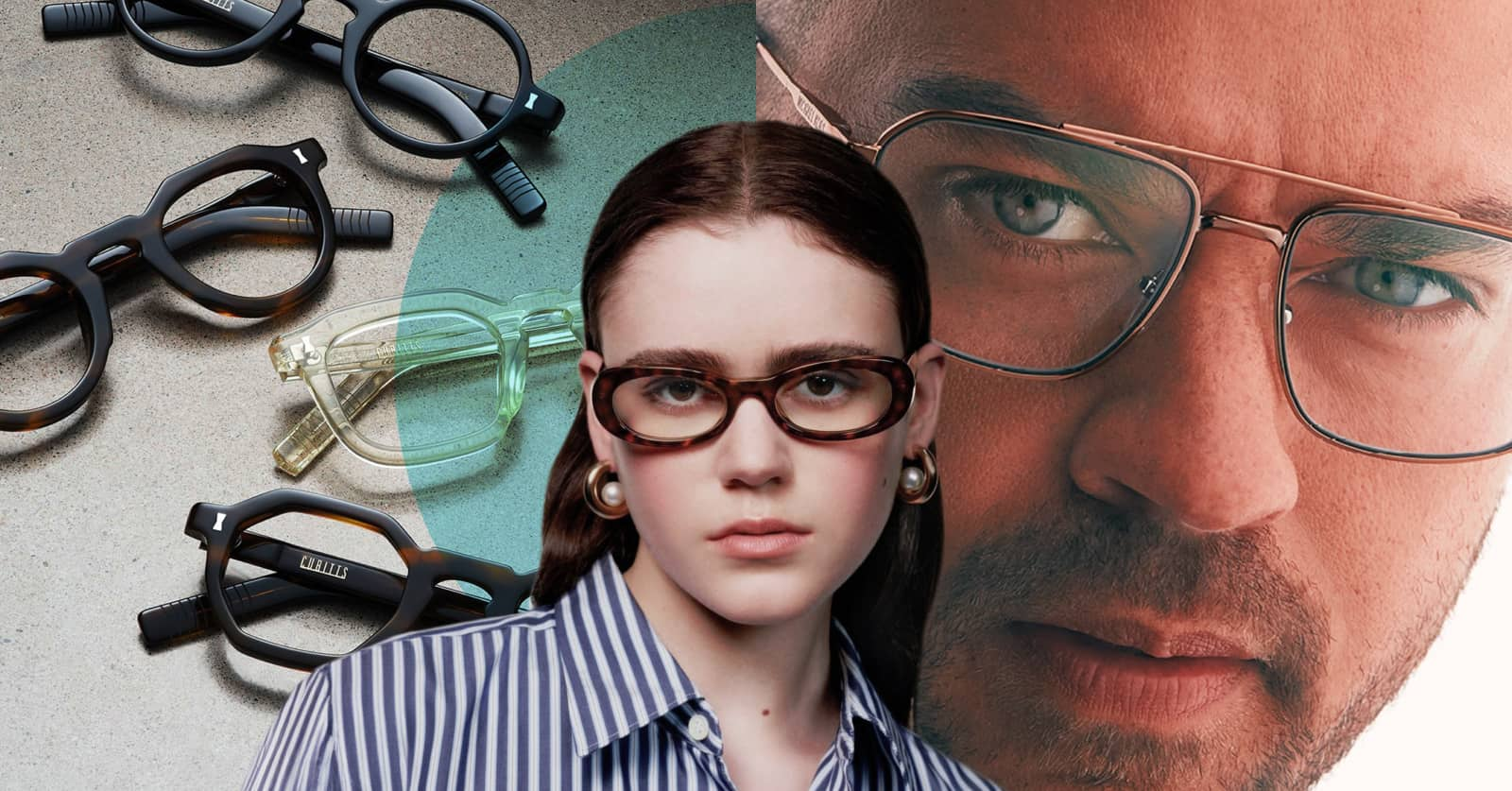
Oakley occupies the performance eyewear category in India in a way that no other brand currently matches. Known globally for its patented Unobtanium grip technology, Prizm lens technology — which enhances specific colors and contrast for different sports environments — and its distinctive, futuristic frame designs, Oakley is the eyewear of choice for Indian athletes, adventure sports enthusiasts, cricketers, cyclists, and premium fitness culture adherents.
Oakley’s India presence has grown significantly as premium sports retail (through Decathlon, Sports Station, and EssilorLuxottica-operated stores) has expanded into Tier 1 and Tier 2 cities. The brand’s association with Indian cricket — several prominent cricketers wear Oakley on the field — has given it cultural visibility that extends well beyond the sports niche. Priced between ₹8,000 and ₹30,000+, Oakley is a considered purchase, but one that a growing segment of health-conscious, aspirational Indian consumers is increasingly willing to make.
8. IDEE (Indo Optical)
Type: Indian fashion eyewear brand | Founded: 1997 | Headquarters: Mumbai | Segment: Mid-market fashion frames
IDEE is one of India’s most successful homegrown fashion eyewear brands and a name that has been quietly building equity in the optical trade for nearly three decades. Launched by Indo Optical Private Limited under the vision of founder Abhilasha Mimani, IDEE was positioned as an Indian alternative to international fashion frame brands — offering design-forward, well-crafted acetate and metal frames at accessible price points in the ₹1,500–₹5,000 range.
IDEE is primarily distributed through independent optical stores — of which India still has an estimated 100,000+ — making it one of the most widely available fashion eyewear brands in the country’s unorganised but massive optical trade channel. In 2026, IDEE has supplemented its trade presence with its own e-commerce platform and increased omnichannel investments. For opticians looking to offer a credible domestic fashion alternative to imported European brands, IDEE remains a preferred stocking choice.
9. Carrera (Safilo Group)
Type: International fashion sunglasses and optical brand | Parent: Safilo Group | Segment: Premium fashion
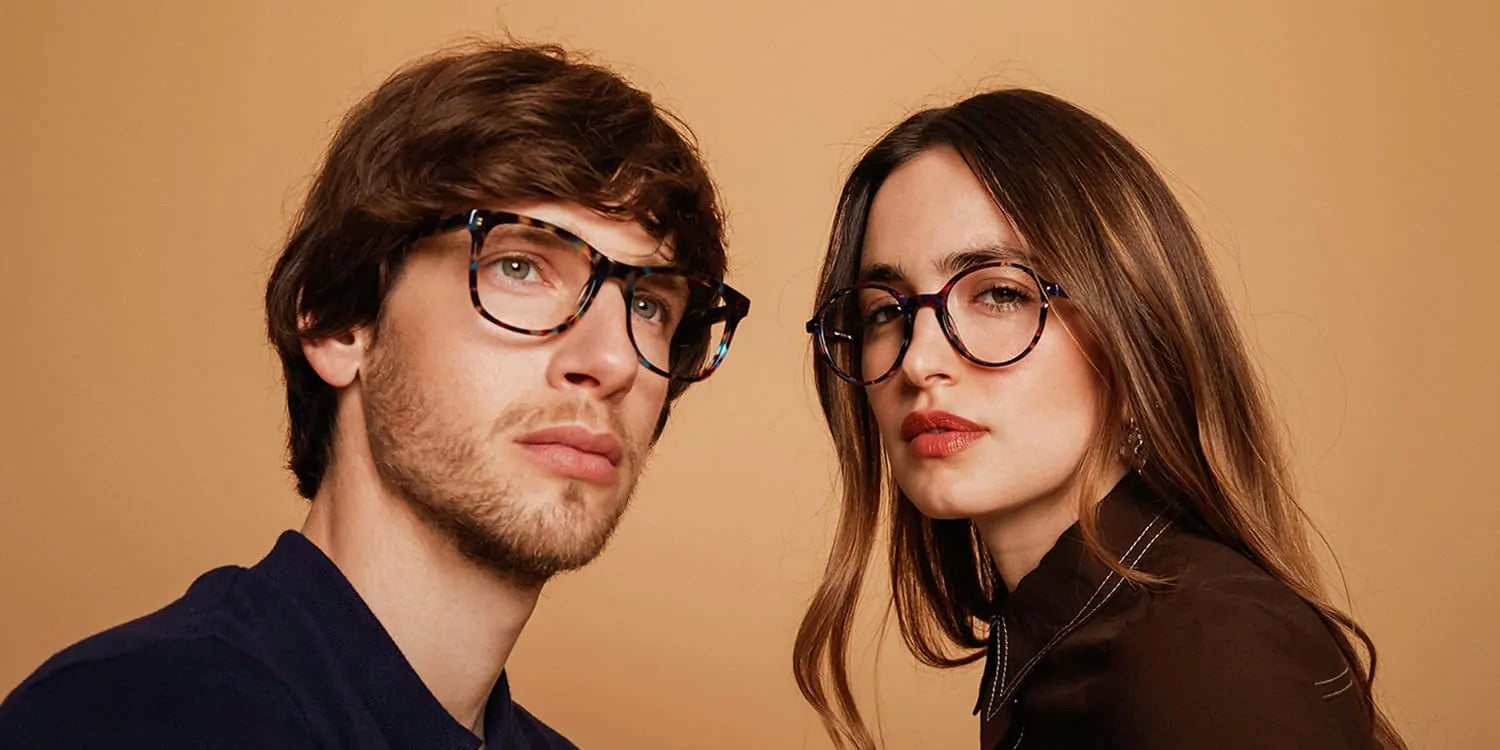
Carrera, the Italian eyewear brand under the Safilo Group — one of the world’s three largest eyewear manufacturing groups alongside EssilorLuxottica and Marchon — has built a meaningful premium presence in India’s growing luxury and fashion eyewear segment. Carrera’s design DNA is rooted in motorsport aesthetics: bold, angular, sport-luxe frames that sit at the intersection of performance and fashion, a positioning that resonates strongly with India’s young affluent professional demographic.
In India, Carrera is distributed through premium optical chains, multi-brand luxury boutiques, and its e-commerce presence. Priced between ₹5,000 and ₹15,000, it occupies the “affordable luxury” tier below full luxury fashion houses — a sweet spot in India’s rapidly expanding premium eyewear market. Carrera’s brand ambassadorship strategy in India, which has historically leveraged Bollywood associations, keeps it visible in aspirational consumer culture.
10. GKB Opticals
Type: Legacy optical retail chain | Founded: 1958 | Headquarters: Kolkata | Segment: Multi-brand retail, mid-premium
GKB Opticals holds the distinction of being India’s oldest organised optical retail chain, founded in Calcutta in 1958 by the Gupta family. Over seven decades, GKB has expanded to over 200+ stores across Eastern and Northern India, evolving from a traditional optician to a modern multi-brand optical retailer stocking international and domestic frame brands alongside its own GKB-label products.
What GKB brings to this list is institutional trust: in markets where consumers are still navigating the difference between organised and unorganised optical retail, GKB’s legacy and its reputation for rigorous, doctor-prescribed eye testing are powerful differentiators. The brand’s strength in the eastern India market — particularly in West Bengal, Jharkhand, and Odisha — fills a geographic gap that many newer national chains have not fully addressed. In 2026, GKB has accelerated its digital transformation, launching an e-commerce platform and integrating digital eye-testing tools in its stores.
What the Indian Eyewear Market Tells Us About Consumer India in 2026
Looking across these ten brands, the Indian eyewear market in 2026 reveals a consumer landscape that is simultaneously stratified, aspirational, and value-conscious. At the bottom of the pyramid, Specsmakers and Coolwinks are democratising vision correction by making it genuinely affordable. In the mid-market, Lenskart, Titan Eye Plus, and IDEE are competing on technology, trust, and design. At the premium and luxury tier, Ray-Ban, Oakley, and Carrera are capturing the spending of India’s rapidly expanding upper-middle class for whom eyewear is no longer a medical necessity but a statement of personal identity.
Three structural trends will define this market through the rest of the decade. The first is premiumisation — as disposable incomes rise, Indian consumers are trading up from generic unbranded frames to branded, design-conscious eyewear. The second is blue-light and digital wellness awareness — with the average Indian spending 7+ hours daily on screens, the demand for computer glasses and blue-light blocking lenses is becoming mainstream. The third is vision correction penetration — with hundreds of millions of Indians still uncorrected, the addressable market for organised eyewear brands remains vast, and the brand that can crack affordable, trusted distribution in Tier 3 and rural India will find the most transformative growth opportunity of the decade.
Disclaimer: Brand information, store counts, and market estimates are based on data available through mid-2025. For the most current figures, readers are encouraged to refer to respective company websites and IAPB (International Agency for the Prevention of Blindness) India data reports.