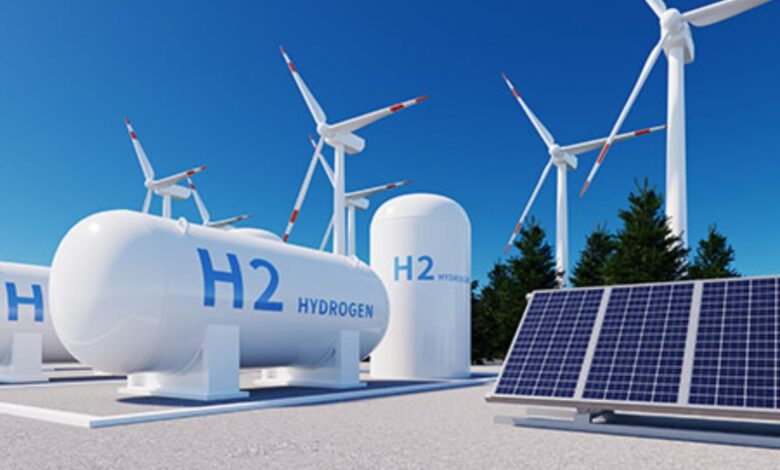
To understand what makes a hydrogen tech startup different from a hydrogen energy company, it helps to think about where technology actually creates leverage in the hydrogen value chain. Green hydrogen is not a single product — it is a system. Producing it requires electrolyzers. Storing it requires either high-pressure compression, liquefaction, or novel materials that can absorb and release hydrogen safely. Transporting it requires pipelines, tube trailers, or chemical carriers like ammonia and methanol. Using it requires fuel cells, combustion turbines, or industrial process integration. And cutting across all of these layers are software systems for monitoring, safety, optimisation, and asset management.
A hydrogen tech startup, in the truest sense, is a company that has identified a specific, painful technical problem within one or more of these layers and is building a novel technology-based solution to it. What distinguishes these companies from large engineering corporations pursuing hydrogen is the focus, speed, and originality of their technical approach. They are not adapting legacy product lines — they are building from first principles, often with founding teams who came from academia, aerospace, or advanced materials research.
India’s National Green Hydrogen Mission, launched in 2023 with a Rs 19,744 crore government outlay, has created the policy pull that gives these startups a reason to build here rather than elsewhere. Combined with the country’s deep pool of engineering talent from the IITs, NITs, and CSIR laboratories, India has the foundational ingredients for a world-class hydrogen tech startup ecosystem. That ecosystem is still young, but the companies described below are among its most credible and active builders.
1. Ohmium International
Think of green hydrogen production the way you might think of solar power a decade ago — the technology existed, but the manufacturing economics needed to be cracked domestically before it could scale. Ohmium International is attempting to do for hydrogen electrolyzers what Indian solar manufacturers did for solar panels: build the core hardware domestically at competitive cost and quality. Founded in the United States but strategically anchored in India through its manufacturing facility in Dobaspet near Bengaluru, Ohmium produces Proton Exchange Membrane electrolyzers — the devices that use renewable electricity to split water into hydrogen and oxygen.
Its decision to manufacture in India rather than import makes it genuinely infrastructure-defining for the entire ecosystem, because a domestic electrolyzer supply chain is a prerequisite for India achieving its green hydrogen targets at reasonable cost.
Core technology: PEM electrolyzer manufacturing with domestic production capability.
2. H2e Power Systems
If Ohmium solves the production side of the hydrogen equation, H2e Power Systems addresses the consumption side — specifically, how hydrogen is converted back into useful electricity through fuel cells. The Pune-based startup has been engineering PEM fuel cell systems that work reliably under Indian climatic conditions, which sounds straightforward until you appreciate that most global fuel cell systems were designed and validated for cooler, less humid, less dusty environments than India presents.
H2e’s engineering contribution is adaptation — taking the electrochemical principles of fuel cell technology and redesigning the thermal management, sealing, and control systems to function across Indian operating extremes. Its target applications span stationary backup power for telecom and data infrastructure and mobility powertrains for commercial vehicles. In the long arc of India’s hydrogen transition, companies like H2e that do the unglamorous but essential work of local adaptation are as important as those developing the headline electrolyzer technology.
Core technology: India-adapted PEM fuel cell systems for stationary and mobility applications.
3. Hygenco
There is a category of startup whose technology is not hardware or software but rather the project architecture itself — the sophisticated commercial and financial engineering that assembles land rights, renewable energy agreements, electrolyzer contracts, and offtake commitments into a bankable green hydrogen project. Hygenco is the clearest Indian example of this type.
The startup develops green hydrogen production projects specifically for industrial customers who need to replace fossil-fuel-derived hydrogen in their processes — refineries, fertiliser plants, steel mills. What is technically sophisticated about Hygenco’s work is its ability to design integrated hydrogen systems that are optimised simultaneously for production cost, reliability, and the specific purity and pressure specifications of industrial processes. This systems-level technical work, while less visible than a new electrolyzer design, is the difference between a green hydrogen pilot and a commercially viable industrial deployment.
Core technology: Integrated green hydrogen project development for industrial decarbonisation, combining system design with commercial structuring.

4. Log 9 Materials
Every fuel cell runs on a membrane electrode assembly — a layered structure where electrochemical reactions actually occur and which determines the cell’s efficiency, durability, and cost. The catalyst layer within that assembly typically uses platinum, one of the world’s rarest and most expensive metals. Reducing platinum loading without sacrificing performance is one of the fundamental unsolved problems in making fuel cells commercially competitive with combustion alternatives.
Log 9 Materials, the Bengaluru-based advanced materials startup founded by IIT Roorkee alumni, has built the materials science capability to work on exactly this kind of foundational challenge. While the company’s primary commercial revenue in 2026 comes from its aluminium-air battery technology, its electrode materials research — involving nanomaterials, graphene derivatives, and novel carbon architectures — is directly applicable to fuel cell catalyst optimisation. For a hydrogen technology ecosystem to mature, it needs companies working at this level of scientific depth, and Log 9 is one of very few Indian startups currently equipped to do so.
Core technology: Advanced nanomaterials research for electrochemical systems including fuel cell catalyst layers and membrane electrode assemblies.
5. Eden Clean Energy
The hydrogen economy requires not just production technology but distribution infrastructure — and one of the most underappreciated technical challenges in hydrogen distribution is the economics of serving small and medium industrial consumers who need hydrogen but cannot justify a large on-site production facility. Eden Clean Energy is tackling this problem through modular, right-sized hydrogen production systems that can be economically deployed close to distributed demand.
The startup’s technology stack combines electrolyzer integration, on-site compression and storage, and the monitoring and safety systems required for industrial hydrogen handling — all packaged into a deployable unit that is designed for the specific realities of Indian industrial parks and clusters. In textile clusters, small chemical plants, and food processing facilities across India, Eden’s approach provides a practical on-ramp to green hydrogen adoption that the large-scale export-oriented projects simply cannot serve.
Core technology: Modular green hydrogen production and distribution systems for small and medium industrial consumers.
6. Atmos Energy Systems
Atmos Energy Systems is an Indian deep-tech startup working on one of the most technically challenging segments of the hydrogen value chain — hydrogen storage. Here is why storage matters so much: hydrogen has the highest energy density by weight of any fuel, but an extremely low energy density by volume in its gaseous state. To store meaningful quantities, you must either compress it to very high pressures (typically 350 to 700 bar), cool it to cryogenic temperatures for liquefaction (minus 253 degrees Celsius), or bind it chemically into a carrier material.
Each approach has significant engineering complexity and cost. Atmos has been developing advanced compressed hydrogen storage systems — specifically the high-pressure composite cylinders and integrated valve and regulator assemblies that are central to hydrogen vehicle tanks and portable storage applications. Its work on type-4 composite cylinders (carbon-fibre-reinforced polymer tanks that are significantly lighter than steel alternatives) is particularly relevant as Indian vehicle OEMs seek domestically sourced storage solutions for their fuel cell vehicle programmes.
Core technology: High-pressure composite hydrogen storage cylinders and storage system integration for mobility and stationary applications.
7. Caspian Automation and Controls
Caspian Automation and Controls is a Hyderabad-based industrial automation and safety systems startup whose hydrogen-specific work addresses the often-overlooked but critically important domain of hydrogen safety technology. Hydrogen is an exceptional fuel — it burns with a nearly invisible flame, has a very wide flammability range, and is the smallest molecule in existence, meaning it leaks through openings that contain other gases. Managing hydrogen safely in production facilities, refuelling stations, and vehicles requires specialised sensor technologies, leak detection systems, emergency shutdown protocols, and monitoring software that are distinct from those used with conventional fuels.
Caspian has been developing these safety and control systems with a focus on the Indian regulatory environment and the specific safety standards that are emerging as India’s hydrogen infrastructure scales. This is deeply unglamorous but foundational work — a hydrogen economy that experiences serious safety incidents will face regulatory and public confidence setbacks that can set back the entire sector by years.
Core technology: Hydrogen safety systems, leak detection sensors, and automated safety controls for hydrogen production and refuelling infrastructure.

8. Gensol Engineering
Gensol Engineering is a solar energy engineering, procurement, and construction company that has been systematically building its hydrogen technology capabilities as a strategic extension of its renewable energy business. The logic is intuitive — green hydrogen is produced using renewable electricity, and a company that already masters the installation and optimisation of large solar plants has a natural adjacency into the electrolyzer systems and hydrogen infrastructure that consume that electricity.
Gensol has been developing integrated solar-to-hydrogen projects where the entire value chain from photovoltaic generation to hydrogen compression and storage is engineered, installed, and commissioned as a single system under one responsible party. This integration capability reduces interface risk between system components — a common cause of performance shortfalls in early-stage projects where different vendors’ equipment must work together seamlessly. The company’s growing hydrogen project portfolio is building the execution track record that is essential for winning larger hydrogen EPC contracts as the market matures.
Core technology: Integrated solar-to-hydrogen engineering, procurement, and construction with end-to-end system optimisation.
9. GPS Renewables
GPS Renewables brings a perspective to the hydrogen technology conversation that is both technically distinct and strategically important: biohydrogen, produced from organic waste through biological and thermochemical pathways. The Bengaluru-based startup has built its primary business on biogas production from agricultural waste, municipal solid waste, and industrial effluents — converting material that is currently a pollution and disposal problem into clean gas through anaerobic digestion. The hydrogen pathway from this foundation involves either directly reforming biogas (which is primarily methane) into hydrogen through steam methane reforming, or upgrading it further through biological hydrogen fermentation processes that some research groups are developing.
GPS Renewables’ significance in the hydrogen tech ecosystem is that it demonstrates how India’s enormous biomass resource — the country generates hundreds of millions of tonnes of agricultural residue annually — can contribute to hydrogen supply alongside electrolytic green hydrogen, providing a distributed, waste-valorising production pathway that complements rather than competes with large centralised electrolysis plants.
Core technology: Biogas production and upgrading from organic waste as a pathway to renewable hydrogen, combining waste management with clean energy generation.
10. Panache Digilife
Panache Digilife is perhaps the most unexpected name on this list, and its inclusion reflects an important principle about where technology leverage in the hydrogen economy actually resides in 2026. The company is primarily known as an electronics manufacturing and technology solutions provider, but its work in hydrogen encompasses the design and manufacture of hydrogen sensors, monitoring electronics, and IoT-enabled asset management systems for hydrogen infrastructure.
Consider what running a hydrogen production facility or refuelling station actually requires operationally: continuous real-time monitoring of hydrogen concentration across dozens of measurement points, pressure and temperature telemetry from storage vessels and pipelines, automated alert and shutdown triggers when parameters deviate, and remote management capabilities that allow operators to oversee multiple sites from a central control room. These electronics and software systems are the nervous system of any hydrogen installation, and their reliability is inseparable from the safety and uptime of the facility itself. Panache’s capabilities in embedded systems design, sensor integration, and IoT platform development position it as a potential provider of exactly this operational technology layer as India’s hydrogen infrastructure scales.
Core technology: Hydrogen monitoring sensors, IoT-enabled safety electronics, and remote asset management systems for hydrogen infrastructure.
What This Ecosystem Is Actually Building
Reading across these ten companies, a useful mental model is to think of them as working on four distinct layers of the hydrogen technology stack, all of which must develop simultaneously for the system to work.
The first layer is production — the electrolyzers and biohydrogen systems that generate hydrogen from renewable energy or organic waste. Ohmium and GPS Renewables are the clearest representatives here. The second layer is storage and distribution — the high-pressure cylinders, compression systems, and transport infrastructure that get hydrogen from where it is produced to where it is needed. Atmos Energy Systems is working at this layer.
The third layer is utilisation — the fuel cells and integration systems that convert hydrogen into useful energy for transport and stationary power. H2e Power, Log 9, and KPIT Technologies in the broader ecosystem work here. And the fourth layer is the enabling infrastructure — the project development, safety systems, monitoring electronics, and operational technology that make the whole system function safely and economically. Hygenco, Eden Clean Energy, Caspian Automation, Gensol, and Panache Digilife are all working at this enabling layer in different ways.
The important insight from this model is that the hydrogen economy cannot scale if any single layer is missing or severely underdeveloped. India can build the world’s largest electrolyzers, but if it does not have domestic high-pressure storage cylinder manufacturing, safe monitoring systems, and competent project developers to assemble the pieces, the system will not function at the scale the National Green Hydrogen Mission envisions. What the startups on this list are collectively doing is filling in the layers of a technology stack that India needs to own domestically rather than import piecemeal from abroad.
Conclusion
India’s hydrogen tech startup ecosystem in 2026 is young enough that the companies on this list are still writing the first chapters of what will eventually be a much larger story. They are working on hard problems with long development timelines in a market where policy support is strong but commercial demand at scale is still emerging.

None of that diminishes what they are building — if anything, it makes the work more important, because the technical foundations being laid now will determine whether India becomes a genuine global player in hydrogen technology or remains a buyer of foreign-developed solutions. The startups on this list are doing the foundational work that the second outcome requires avoiding, and that is precisely why they deserve close attention.