The Internet of Things has quietly become one of the most consequential technology shifts reshaping how Indian businesses, cities, and industries operate. From connected factory machines that self-report their health status to smart meters that communicate energy consumption in real time, the thread running through all of it is the same — physical objects instrumented with sensors, communicating over networks, and generating data that drives smarter decisions.
But deploying IoT at scale is not simply a matter of buying sensors and plugging them in. It requires deep integration expertise, robust connectivity infrastructure, edge computing capabilities, AI-powered analytics, and the operational know-how to make hardware and software work reliably in Indian environments that range from air-conditioned server rooms to sun-baked agricultural fields.
IoT service providers — as distinct from IoT analytics startups or device manufacturers — are the companies that take an organisation’s IoT ambitions and turn them into functioning, scalable deployed reality. They design the architecture, manage the connectivity, integrate the data, and in many cases provide the ongoing managed services that keep complex IoT ecosystems running over time. In India’s 2026 landscape, this category spans global technology giants with significant India operations, large Indian IT services firms that have built dedicated IoT practices, and specialised mid-size players with deep vertical expertise. This article profiles the top 10 IoT service providers actively and credibly operating in India in 2026.
1. Tata Consultancy Services (TCS)
TCS needs no introduction as a technology services company, but its IoT practice specifically deserves recognition as one of the most comprehensive and deployment-mature in the country. TCS has invested heavily in what it calls its “Connected Intelligence” platform — a suite of IoT frameworks, accelerators, and integration layers built to address industrial IoT, smart cities, connected vehicles, and retail intelligence use cases at enterprise scale.
What gives TCS a structural advantage in IoT services is the combination of breadth and depth that only a company of its size can sustain. It has dedicated practices for each major vertical — manufacturing, utilities, retail, healthcare, and transportation — staffed by engineers who understand not just the technology but the domain-specific operational context in which that technology must function.
TCS has deployed IoT solutions for some of India’s largest manufacturers, utilities, and public sector organisations, and its global delivery model means that an IoT program designed for an Indian manufacturing client can be replicated across that client’s global facilities with the same methodology and quality standard. For enterprises seeking a single partner who can take full accountability for a complex, multi-year IoT transformation, TCS is one of the most capable and trusted providers available.
2. Wipro
Wipro’s IoT and engineering services practice has grown into one of the most technically sophisticated in the Indian IT industry, and its acquisition of several engineering and IoT-specialist firms over the past few years has meaningfully accelerated that evolution. Wipro’s IoT offerings sit within its broader “Wipro Engineering Edge” practice, which covers embedded systems, product engineering, connected device development, and IoT platform integration.
Particularly notable is Wipro’s strength in IoT for the manufacturing and process industries — it has built dedicated solutions for predictive maintenance, digital twin creation, energy management, and quality analytics that are deployed at large Indian and multinational manufacturing facilities. Wipro also has meaningful capabilities in connected healthcare IoT, including remote patient monitoring infrastructure and medical device connectivity, which positions it well in a segment that is growing rapidly as India’s healthcare sector modernises. Its ability to handle both the hardware-software integration complexity of IoT and the enterprise IT integration requirements makes it a genuinely full-stack IoT services partner.
3. Infosys
Infosys has positioned IoT as a central pillar of its “Cobalt” cloud and digital transformation practice, recognising that cloud and IoT are increasingly inseparable in how large enterprises modernise their physical operations. The company’s IoT service portfolio spans smart manufacturing, connected supply chains, intelligent buildings, and utilities — delivered through a combination of proprietary accelerators, hyperscaler partnerships (with AWS, Azure, and Google Cloud), and deep systems integration expertise.
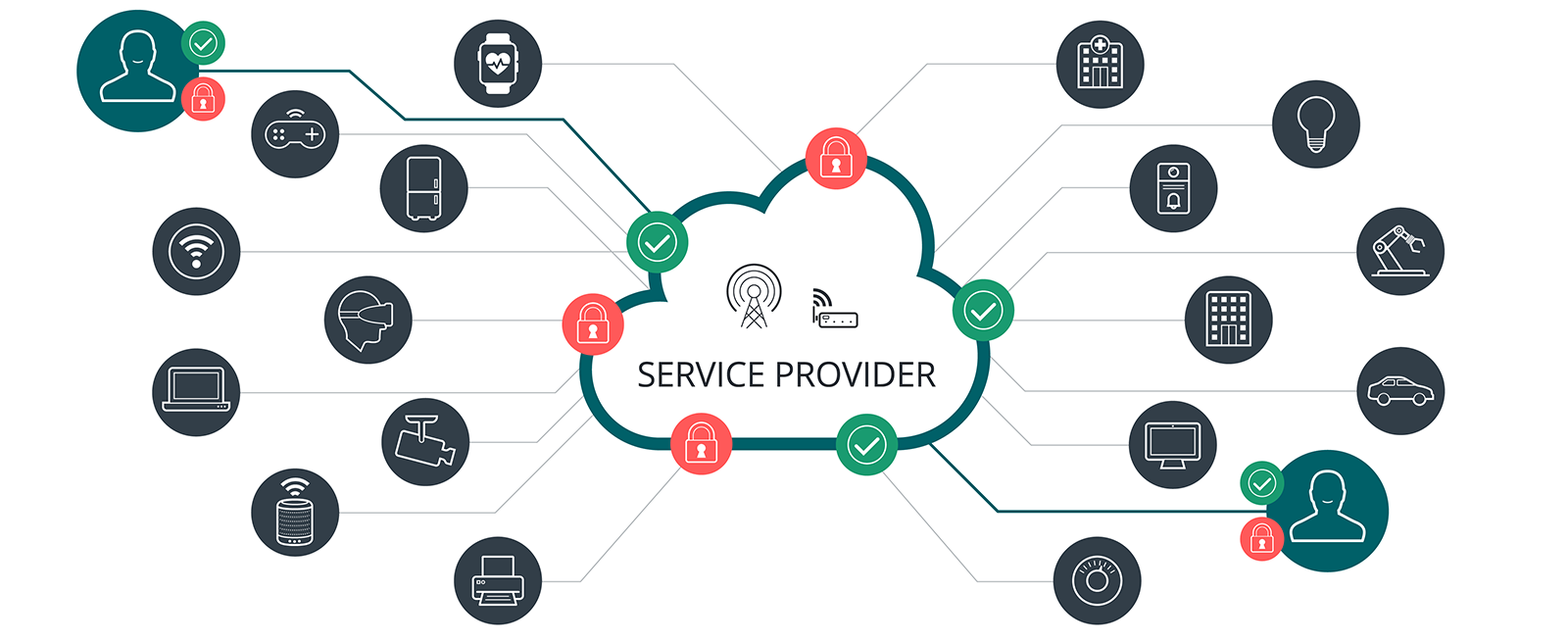
Infosys’s particular strength in the IoT domain is its ability to bridge the OT-IT divide — the longstanding gap between Operational Technology (the industrial systems that run physical assets) and Information Technology (the enterprise systems that run business processes). Closing this gap is one of the hardest problems in enterprise IoT, requiring engineers who understand both PLCs and cloud APIs, both SCADA systems and data lakes. Infosys has built dedicated OT-IT integration capabilities that allow it to connect legacy industrial assets to modern cloud analytics platforms without disrupting ongoing operations — which is a commercially critical capability for large Indian manufacturers and utilities undergoing digital transformation.
4. HCL Technologies
HCL Technologies has built one of the most distinctive IoT service offerings among India’s large IT companies, anchored by its “IoT WoRKS” practice — a dedicated horizontal unit focused entirely on delivering IoT engineering and services across industries including automotive, telecom, manufacturing, and smart infrastructure. What makes HCL’s IoT practice particularly credible is its heritage in engineering services and embedded systems, which means the company is comfortable working at the hardware-firmware layer of IoT deployments, not just the cloud analytics tier.
HCL’s strength in the automotive IoT and connected vehicle segment is especially notable — it has deep relationships with global OEMs and tier-1 automotive suppliers, and its work on vehicle telematics, connected mobility platforms, and OTA (Over-The-Air) update infrastructure positions it well as India’s automotive sector increasingly embraces vehicle connectivity. Beyond automotive, HCL’s telecom IoT capabilities — particularly around network slicing for private 5G deployments and edge computing infrastructure for industrial IoT — reflect genuine investment in the connectivity layer that underpins all other IoT applications.
5. Tech Mahindra
Tech Mahindra’s IoT services practice benefits enormously from the company’s deep roots in the telecommunications industry — an industry that is not merely an IoT customer but a fundamental enabler of IoT at scale. As one of India’s leading telecom technology services partners, Tech Mahindra has front-row visibility into how 5G, LPWAN, and private network deployments are changing what IoT deployments can actually achieve in terms of latency, bandwidth, and device density.
The company’s “TechMNxt” innovation charter has placed IoT, AI, and 5G as its three core technology investment pillars, and the intersections between them are where Tech Mahindra’s most interesting work happens — private 5G-enabled factory automation, AI-driven predictive maintenance on 5G connected infrastructure, and smart city deployments that use low-power wide-area networks to connect thousands of sensors across urban environments. For organisations that see connectivity architecture as a strategic decision rather than a commodity choice, Tech Mahindra’s unique position at the telecom-IoT intersection makes it a provider with genuinely distinctive insight.
6. Bosch India (Bosch Connected Industry)
Bosch’s India operations occupy a fascinating and somewhat underappreciated position in the country’s IoT services landscape. Bosch is simultaneously a manufacturing company, a technology company, and an IoT solutions provider — and its “Bosch Connected Industry” practice in India draws on all three identities to deliver manufacturing IoT solutions with a credibility that pure IT services firms struggle to match. When Bosch implements an IoT-driven predictive maintenance solution in a manufacturing facility, it does so with the experience of a company that has been manufacturing complex industrial equipment for over a century.
Bosch’s NEXEED industrial IoT platform, which the company deploys across its own manufacturing plants globally (including several in India) before offering it to external clients, represents a particularly compelling “eat your own cooking” validation. The platform covers machine connectivity, production performance analytics, intralogistics optimisation, and energy management — all battle-tested in Bosch’s own high-complexity manufacturing environments. For Indian manufacturers in automotive components, electronics, and capital goods, Bosch’s combination of manufacturing domain expertise and IoT platform capability makes it one of the most credible and trustworthy partners available.

7. Siemens India (Digital Industries)
Siemens India’s Digital Industries division is one of the most comprehensive industrial IoT and automation solution providers operating in the country, combining hardware automation, software platforms, and professional services into an integrated capability that spans the full lifecycle of industrial digitalisation. Siemens’s MindSphere industrial IoT platform — now rebranded under the Siemens Xcelerator portfolio — provides the cloud connectivity, data management, and analytics infrastructure that connects Siemens hardware assets to enterprise intelligence layers.
What distinguishes Siemens in the IoT services landscape is its unmatched depth in industrial automation — it is the provider that has been connecting machines, drives, sensors, and control systems for decades, and its IoT solutions build naturally on that embedded hardware expertise rather than approaching connectivity as a new problem. For Indian manufacturers in process industries, pharmaceuticals, food and beverage, and infrastructure — particularly those already running Siemens automation hardware — the pathway to IoT-enabled operations through Siemens Digital Industries is the most architecturally coherent and least disruptive option available.
8. Jio (Reliance Jio IoT Platform)
Reliance Jio has progressively moved from being a connectivity provider to being a platform and solutions company, and its IoT service ambitions are a significant part of that evolution. Jio’s IoT platform — which leverages its own nationwide 4G/5G network, its fibre infrastructure, and its Jio Cloud backbone — positions the company as a uniquely integrated IoT service provider that owns both the connectivity layer and the platform layer, giving it structural advantages in cost and integration that no third-party IoT services firm can fully replicate.
Jio’s IoT offerings span smart agriculture (soil and weather monitoring, precision irrigation), smart utilities (smart metering, grid monitoring), industrial IoT, and smart building management, all delivered over the Jio network with the reliability and scale that comes from India’s largest telecom infrastructure. The company’s deep relationships with Indian enterprises through its enterprise division, JioBusiness, give it a distribution advantage that it is actively leveraging. For organisations that want an IoT service provider who also owns the connectivity infrastructure — eliminating the SIM management, network reliability, and integration complexity that multi-vendor IoT deployments typically involve — Jio’s integrated offering is one of the most practically compelling propositions in the market.
9. Sterlite Technologies (STL)
Sterlite Technologies — operating as STL — is a Pune-headquartered network technology company that has evolved far beyond its origins as an optical fibre manufacturer into a comprehensive digital network solutions provider with a meaningful and growing IoT services practice. STL’s IoT work is concentrated in two areas where it has genuine structural advantages: smart city connectivity infrastructure and rural/agricultural IoT deployments.
In the smart cities space, STL’s experience in designing and deploying the network backbone for multiple Indian smart city projects — under the Government of India’s Smart Cities Mission — gives it an operational understanding of the connectivity architecture requirements for urban IoT deployments that few other providers can match. Its work in rural connectivity, including the deployment of optical fibre networks under BharatNet, similarly gives it unique insight into how to design IoT systems that function reliably in low-connectivity rural environments. For government bodies, municipalities, and organisations deploying IoT across India’s diverse geographic and connectivity landscape, STL’s combination of network infrastructure expertise and IoT solutions capability makes it a genuinely differentiated partner.
10. Tata Communications
Tata Communications rounds out this list as one of India’s most credible enterprise IoT connectivity and platform service providers. Unlike the IT services firms on this list, Tata Communications’ IoT strength is anchored specifically in its global network infrastructure — it owns and operates one of the world’s largest subsea cable networks, a substantial private IP network, and a global IoT connectivity platform called MOVE — which provides multi-network SIM management, eSIM capabilities, and intelligent connectivity routing for IoT deployments across more than 180 countries.
For Indian enterprises deploying IoT devices across multiple geographies — manufacturers with global supply chains, logistics companies with international fleets, healthcare organisations with connected devices across markets — Tata Communications’ ability to manage device connectivity at global scale from a single platform is a genuinely rare capability in the Indian market. Its MOVE platform handles SIM provisioning, network switching, data management, and security monitoring for IoT device fleets, reducing the operational complexity of managing connectivity across multiple carrier agreements and regulatory environments. In a 2026 landscape where more Indian enterprises are deploying IoT at global scale, Tata Communications’ infrastructure assets give it a positioning that no purely domestic provider can match.
Choosing the Right IoT Service Provider for Your Organisation
The diversity of providers on this list reflects the genuine diversity of IoT service needs across different organisations and deployment contexts. Understanding which provider is right for your situation comes down to a few fundamental questions. If you are a large enterprise seeking end-to-end IoT program management across a complex, multi-site deployment, the large IT services firms — TCS, Wipro, Infosys, HCL, and Tech Mahindra — offer the scale, methodology, and accountability structures to handle that complexity.
If you are a manufacturer specifically, and domain credibility matters as much as technical capability, Bosch and Siemens bring a depth of manufacturing knowledge that IT generalists cannot replicate. If you are building IoT infrastructure for an Indian government or smart city project, STL’s network infrastructure background and public sector experience give it a distinctive advantage. If connectivity management is your primary challenge — particularly across geographies — Tata Communications’ global network assets deserve serious consideration. And if you want an integrated connectivity-plus-platform provider with deep India penetration and cost advantages, Jio’s expanding IoT practice is difficult to ignore.

Conclusion
India’s IoT service provider landscape in 2026 reflects both the maturity of the market and the diversity of the challenges Indian organisations are trying to solve with connected technology. The ten providers profiled here span the full range — from global IT services giants to industrial automation specialists to telecom infrastructure companies — and each occupies a distinctive position based on its core strengths, heritage, and areas of deepest expertise. For any organisation navigating its IoT journey, the most important first step is not choosing a technology; it is choosing a partner who deeply understands both the technology and the specific operational reality in which it needs to work.